Switching From Petrol or Diesel to an Electric Car in the UK
Everything you need to know before making the move to electric
Quick answers
- Switching from petrol or diesel to an electric car is the biggest change most UK drivers will make in their motoring lives. It is not as complicated as the headlines suggest.
- Is now the right time to switch: That said, the right time to switch depends on your circumstances.
- What does switching actually cost: The upfront price of an EV is higher on average than a comparable petrol car.
- How different is driving an EV: More different than you expect at first, and less different than you fear within a month.
- What do you need to know before switching: Read the full guide: Can you live with an electric car without a driveway?
- What are the biggest myths: The myths that stop drivers switching are mostly outdated or overstated.
Switching from petrol or diesel to an electric car is the biggest change most UK drivers will make in their motoring lives. It is not as complicated as the headlines suggest. This pillar page pulls together everything you need to know: the costs, the charging, the myths, the best cars to buy, and the honest trade-offs. Read the overview here, then follow the links to whichever topic needs more depth.
Is now the right time to switch?
Yes, for most UK drivers. The electric car market has matured considerably. In 2025, 473,348 new battery electric vehicles were registered in the UK, pushing market share to 23.4% of all new cars sold, according to SMMT data. By April 2026, that share had risen to 26.2% of monthly registrations. Prices have fallen, ranges have increased, and the public charging network has grown from around 17,000 devices in 2020 to more than 119,000 by early 2026.
That said, the right time to switch depends on your circumstances. If you have a driveway and charge at home, the case is strong today. If you rely entirely on public charging, you will pay more per mile and the convenience calculation is less clear-cut.
For a more detailed answer to whether now is the right moment for you, read our explainer: Is now a good time to switch to an electric car?
What does switching actually cost?
The upfront price of an EV is higher on average than a comparable petrol car. The average new EV in the UK costs around £43,896 against roughly £28,000 for a typical petrol model. However, the picture changes fast once you look at running costs.
Home charging on a standard Ofgem tariff costs around 24.67p per kWh (April to June 2026 price cap). At a real-world efficiency of around 3.5 miles per kWh, that works out at roughly 7p per mile. Switch to a dedicated off-peak EV tariff such as Octopus Intelligent Go and you can cut that to 2p to 3p per mile. Petrol at today’s average of 159.6p per litre in a car achieving 40mpg costs around 18p per mile. Diesel at 184.9p per litre at 50mpg costs around 16p per mile.
For a driver covering 10,000 miles per year, the annual fuel saving from switching to a home-charged EV ranges from roughly £900 to £1,600 depending on tariff and petrol comparison. Add lower servicing costs (EVs have no oil changes, fewer brake wear issues, and fewer moving parts) and the running cost advantage is real and significant.
The break-even on the purchase price premium typically lands somewhere between three and eight years depending on the price gap, your mileage, and how cheaply you can charge. High-mileage drivers break even fastest.
Read the full numbers in our cost explainers:
- How long until an EV pays back its price in fuel savings?
- Do you really save money switching from diesel to electric?
How different is driving an EV?
More different than you expect at first, and less different than you fear within a month. The biggest changes are:
One-pedal driving. Lift off the accelerator and the car slows itself through regenerative braking. It feels odd for the first few days and becomes second nature within a week.
Instant torque. Even modest EVs feel brisk off the line. A car with 100kW feels livelier than a 1.5-litre petrol with the same power on paper because the torque arrives immediately.
Silence. Road and wind noise remain, but the engine drone disappears. Motorway journeys in particular feel noticeably calmer.
Refuelling. The most fundamental shift. You stop thinking about petrol stations and start thinking about a charging routine. For most drivers this means plugging in at home overnight. Public charging is for longer trips.
For a full driving comparison, read: How different is driving an EV compared to petrol?
What do you need to know before switching?
The key practical questions before you switch:
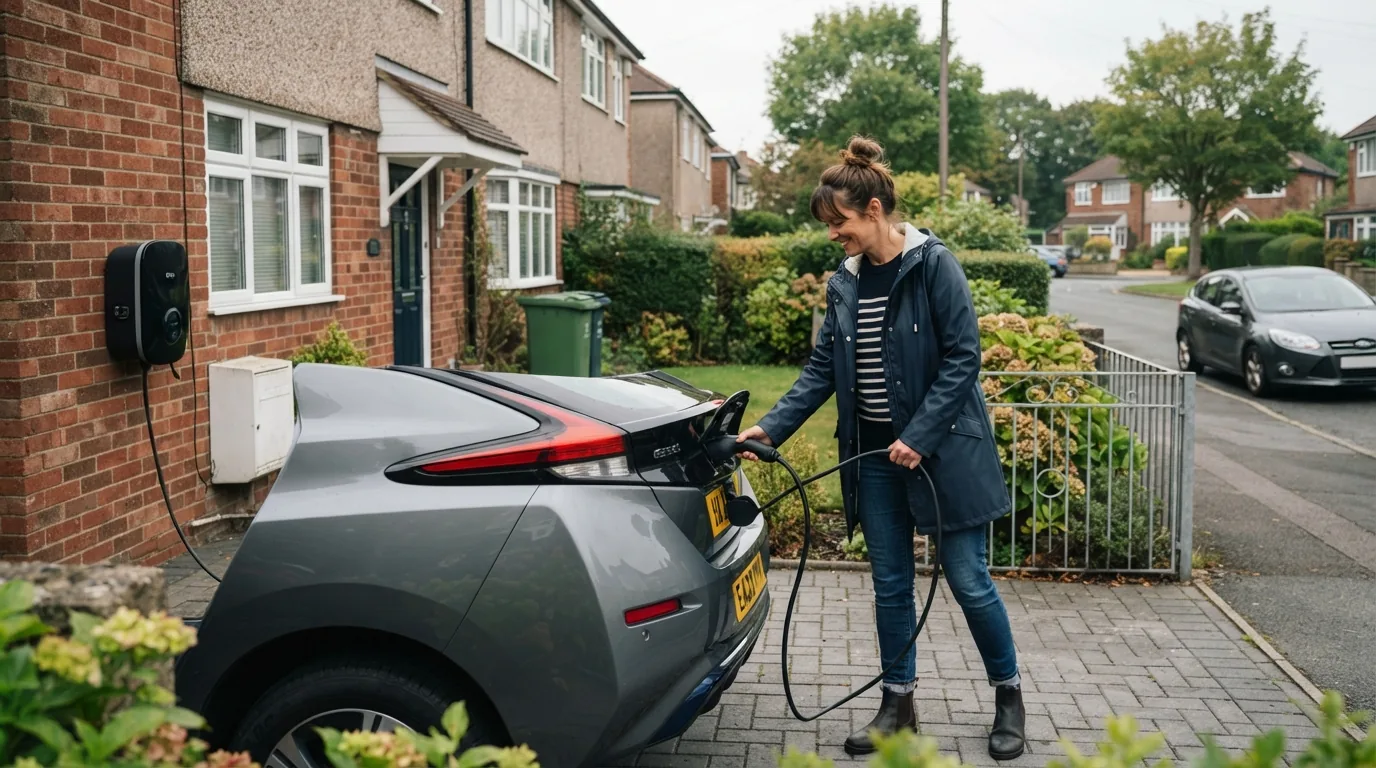
Do you have somewhere to charge at home? Around 70% of UK EV charging happens at home. A dedicated 7.4kW wallbox adds roughly 25 to 30 miles of range per hour. If you have a driveway, this is the foundation of affordable EV ownership.
What if you have no driveway? Roughly 40% of UK households park on the street. The good news is that options are improving. Over 40% of local authorities plan to offer cross-pavement charging by the end of 2026. On-street lamp post chargers, workplace charging, and destination charging at supermarkets and car parks are all growing. It requires more planning than home charging, but it is workable.
Read the full guide: Can you live with an electric car without a driveway?
What range do you need? Most new EVs offer between 200 and 350 miles of real-world range in 2026. The average UK driver covers fewer than 150 miles per week, according to RAC data, meaning even a modest 200-mile EV covers two weeks of typical driving without a charge. Range anxiety is real as a feeling; the data suggests it is rarely a practical barrier.
What about longer trips? Rapid charging networks on motorways have grown substantially. At the end of March 2026 there were 27,372 rapid or ultra-rapid chargers across 6,785 UK locations. A 20- to 30-minute stop at a 150kW+ charger typically adds 100 to 150 miles of range.
Read the full guide for petrol drivers: What do petrol drivers need to know before going electric?
What are the biggest myths?
The myths that stop drivers switching are mostly outdated or overstated. Here are the most common:
| Myth | Reality |
|---|---|
| ”EVs always run out of battery” | Fewer than 2% of EV breakdowns are caused by running out of charge (RAC 2024 data) |
| “There are no chargers” | 119,080 public charge points in the UK as of March 2026, including 27,372 rapid or ultra-rapid |
| ”EVs take hours to charge” | A 150kW rapid charger can add 100 miles in under 20 minutes |
| ”EVs are not good for long journeys” | Most modern EVs do 250 to 350 miles; rapid charging stops are 20 to 30 minutes |
| ”EVs are too expensive” | New EVs start from under £15,000; the Electric Car Grant restores up to £3,750 off eligible models |
| ”EV batteries degrade quickly” | Modern batteries are designed to retain 80%+ capacity for 100,000 miles or more |
Read the full myth-bust: What are the biggest myths about switching to an EV?
Which electric car should you choose?
The right first EV depends on your priorities. Here is the cluster of best-of pages that cover each use case:
| Your situation | Recommended page |
|---|---|
| First-time EV buyer, unsure where to start | Best first electric cars for switching from petrol |
| Nervous about range, reliability or charging | Best electric cars for nervous first-time EV drivers |
| Replacing a diesel estate | Best EVs to replace a diesel estate |
| No driveway at home | Best electric cars for drivers without a driveway |
| Want the easiest possible daily life | Best easy-to-live-with EVs for beginners |
| Coming from an SUV or 4x4 | Best electric cars for former SUV and 4x4 drivers |
| Budget is the priority | Best value EVs for switching on a budget |
| Rural driver, worried about charging | Best electric cars for rural UK drivers |
Petrol, diesel, hybrid, or full electric?
Not sure whether to go fully electric or step via a hybrid first? These comparison pages set out the evidence:
- Petrol vs electric: which is right for UK drivers in 2026?
- Diesel vs electric for high-mileage UK drivers
- Hybrid vs full electric: which should you switch to?
- Electric vs petrol city car: best switch for UK urban drivers?
What will your first month look like?
The first week involves recalibrating habits. Most new EV owners report that worries about range and charging largely disappear within two to four weeks. The routine of plugging in at home becomes automatic. Public charging stops become as unremarkable as petrol station stops once you have done a few.
The surprises are almost always positive: lower bills, quieter journeys, instant acceleration. The negatives are usually practical: finding the right app, locating chargers on unfamiliar routes, or adjusting range expectations in cold weather (expect 15 to 25% less range in freezing temperatures).
Read the full guides:
- What surprises new EV drivers most in the first month?
- First week with an EV: a new owner’s survival guide
Can a diesel work for long commutes?
If you cover high annual mileage, the saving from switching is largest. A diesel at 50mpg and 184.9p per litre costs around 16p per mile. A home-charged EV on an off-peak tariff costs around 2p to 5p per mile. On 20,000 miles per year, that is a fuel saving of around £2,200 to £2,800 annually.
The question for long-commute drivers is whether rapid public charging on the route adds cost. If the route has reliable rapid chargers and you can charge to top up rather than from empty, the saving remains large. If you rely heavily on rapid public charging, costs rise to around 19p to 23p per mile, narrowing the advantage over diesel.
Read the detailed comparison: Can an electric car replace a diesel for long commutes?
UK policy context
The government’s Zero Emission Vehicle (ZEV) mandate requires 80% of new car sales to be electric by 2030 and 100% by 2035. New petrol and diesel cars cannot be sold after 2035. The Electric Car Grant, reintroduced in July 2025, provides up to £3,750 off eligible models priced at £37,000 or under.
Electric cars registered from April 2025 pay £190 per year in Vehicle Excise Duty (VED), the same as most petrol cars. The expensive car supplement threshold was raised to £50,000 for EVs in November 2025, exempting more models from the additional £425 per year charge.
For company car drivers, the BiK rate for EVs is 4% for 2026/27, rising gradually to 9% by 2030/31, against rates of 25% to 37% for petrol and diesel equivalents.
Where to go next
Start with the best first electric cars for switching from petrol if you want a shortlist. Work through the explainers above for whichever question is holding you back. The switch is not for everyone right now, particularly if you have no home charging and do high daily mileage. But for the majority of UK drivers, the data says the moment is now.
Sources: SMMT vehicle registration data, Ofgem price cap April to June 2026, RAC Breakdown Report 2024, GOV.UK EV chargepoint statistics March 2026, GOV.UK Vehicle Excise Duty rates 2025/26.
How we test and where our numbers come from
Range figures are official WLTP combined values taken from manufacturer UK specification pages, with real-world estimates drawn from independent comparative testing. Prices are UK list prices at the time of the latest update. Tax, grant and charging-scheme figures come from GOV.UK and HMRC publications. We re-check every guide when pricing, specification or policy changes. Last checked 11 August 2026.
Frequently asked questions
Is now the right time to switch?
Yes, for most UK drivers. The electric car market has matured considerably.
What does switching actually cost?
The upfront price of an EV is higher on average than a comparable petrol car. The average new EV in the UK costs around £43,896 against roughly £28,000 for a typical petrol model.
How different is driving an EV?
For a full driving comparison, read: How different is driving an EV compared to petrol?
What do you need to know before switching?
Read the full guide: Can you live with an electric car without a driveway?
What are the biggest myths?
Read the full myth-bust: What are the biggest myths about switching to an EV?

EV Compared
The EV Compared editorial team tracks the UK electric vehicle market full time: new model launches, list prices, WLTP and real-world range, public charging tariffs and the tax rules that decide what an EV actually costs to run. Every guide is checked against manufacturer specifications and official GOV.UK figures, and updated whenever the numbers move.
Related reading
View all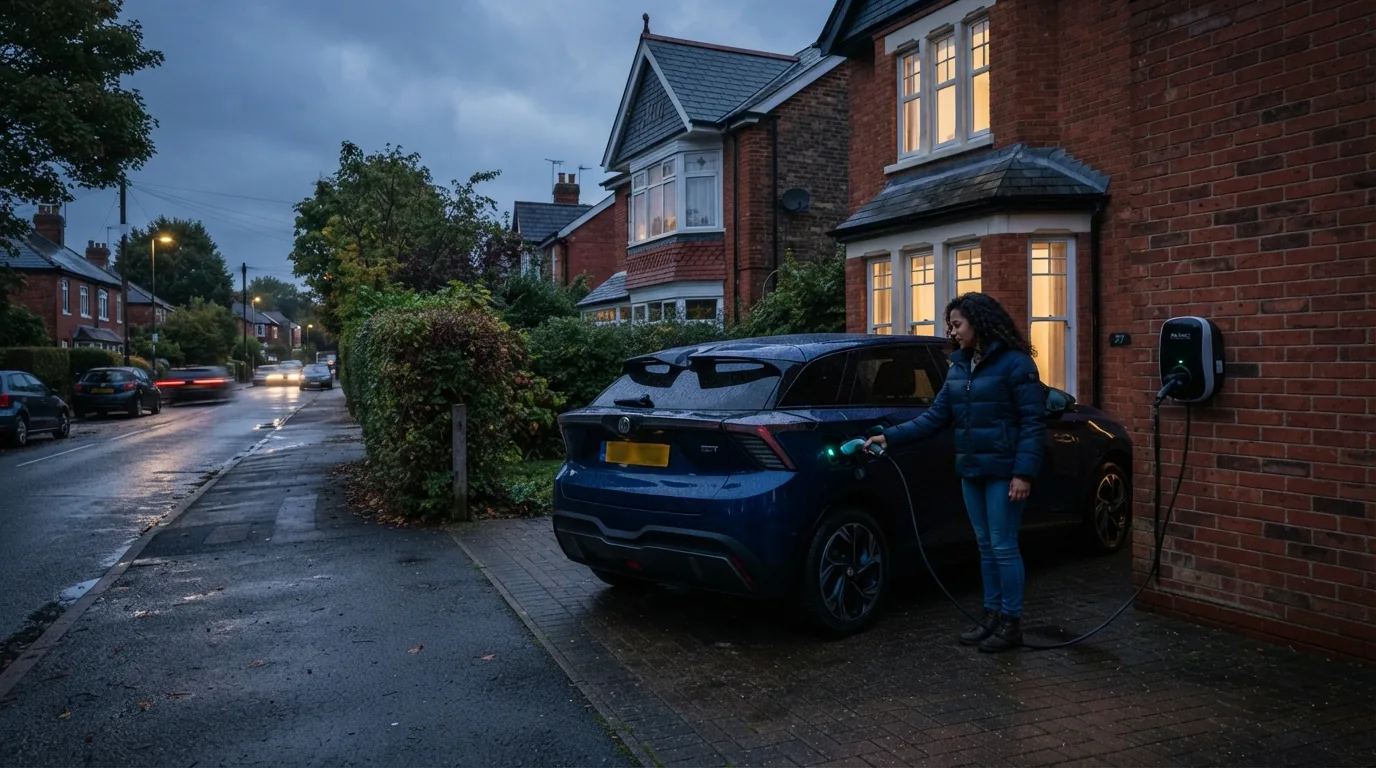
What Are the Biggest Myths About Switching to an EV?
The claims that put UK drivers off going electric, and what the evidence actually says
Should You Buy an EV in 2026 or Wait for Cheaper Models?
An honest look at where EV prices are heading and whether the wait is worth it for UK buyers
Buying and Owning an Electric Car in the UK: The Complete 2026 Guide
Everything you need to know about costs, charging, depreciation and day-to-day life with an EV