Diesel vs Electric for High Mileage UK Drivers
A direct comparison for drivers doing 15,000 miles or more per year
Quick answers
- For high-mileage UK drivers, the financial case for switching from diesel to electric is the strongest in the entire market. The savings grow with every mile.
- Defining "high mileage" in this comparison: High mileage in this context means 15,000 miles per year or more.
- At 20,000 miles per year on an off-peak home tariff (7p per kWh), an EV saves roughly £3,500 to £3,900 per year in fuel and servicing compared to a diesel.
- For any high-mileage driver on a company car scheme, the BiK tax comparison is decisive.
- If you have home charging and cover 15,000 or more miles per year, diesel is no longer a rational default.
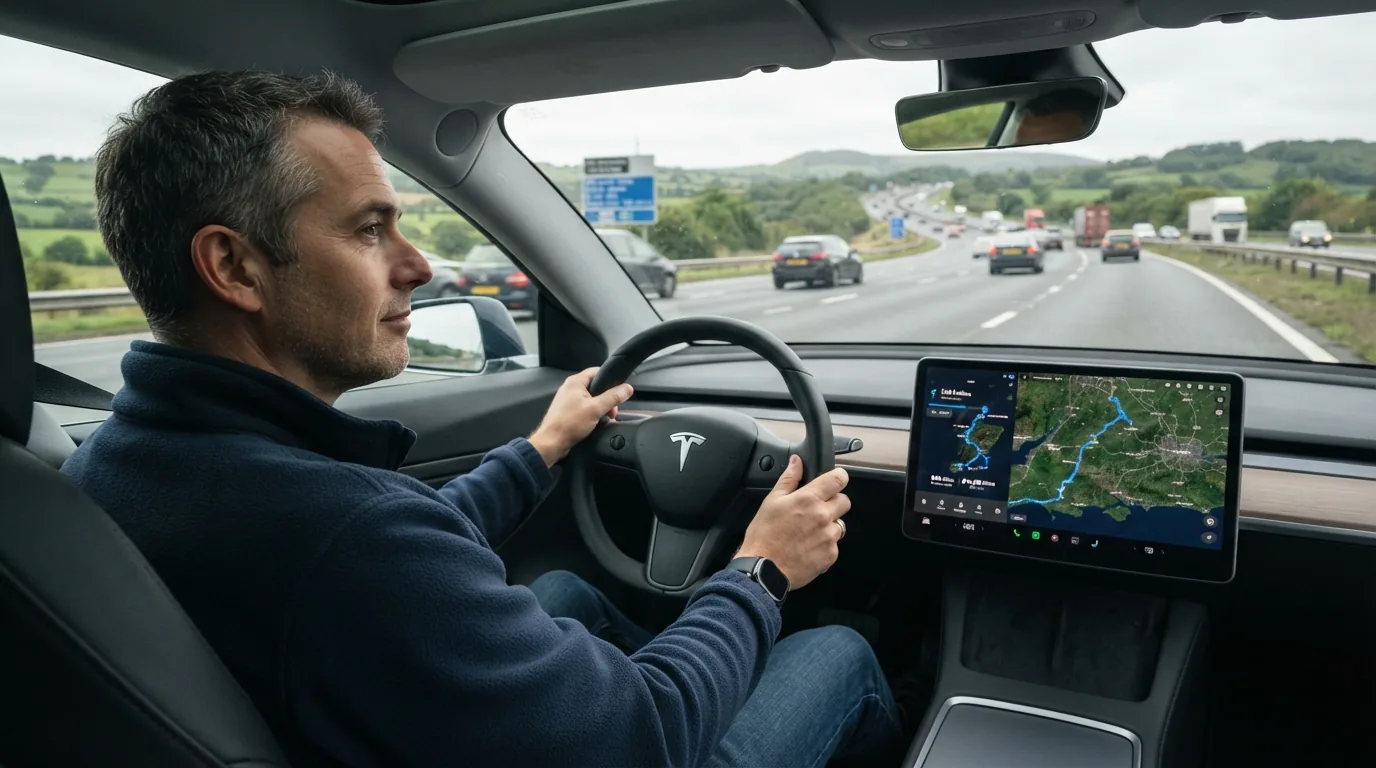
For high-mileage UK drivers, the financial case for switching from diesel to electric is the strongest in the entire market. The savings grow with every mile. If you drive 20,000 miles per year with home charging, the annual running cost advantage of a modern EV over a diesel is often £3,000 to £5,000. The question is not really whether to switch, but which car to buy and how to manage longer journeys.
Defining “high mileage” in this comparison
High mileage in this context means 15,000 miles per year or more. The national average for UK drivers is around 7,400 miles per year. Sales reps, field engineers, regional managers, long-distance commuters, and tradespeople regularly cover 20,000 to 40,000 miles annually. This group has historically been the core diesel customer, and it is the group where the EV case is now most decisive.
The direct cost comparison at 20,000 miles per year
| Cost category | Diesel (50mpg) | EV (home, off-peak tariff) | EV (home, standard rate) | EV (mixed 50% rapid) |
|---|---|---|---|---|
| Fuel/energy cost (20,000 miles) | £3,698 | £400 | £1,410 | ~£2,800 |
| Annual servicing | £500–£800 | £200–£300 | £200–£300 | £200–£300 |
| Road tax (VED) | £190 | £190 | £190 | £190 |
| Total annual running cost | £4,388–£4,688 | £790–£890 | £1,800–£1,900 | £3,190–£3,290 |
| Saving vs diesel (off-peak charging) | , | ~£3,500–3,900/yr | ~£2,500–2,900/yr | ~£1,100–1,500/yr |
At 20,000 miles per year on an off-peak home tariff (7p per kWh), an EV saves roughly £3,500 to £3,900 per year in fuel and servicing compared to a diesel. That annual saving repays most EV purchase premiums within two to three years.
Diesel prices at 184.9p per litre (May 2026) are significantly higher than they were in 2019 (typically 130 to 135p per litre). This has dramatically worsened diesel’s running cost position.
The diesel’s remaining advantages for high mileage
The diesel still wins in two specific scenarios:
High-speed motorway miles with no home charging. If your 20,000 miles is predominantly at 70mph on motorways and you rely on public rapid charging, your EV cost per mile rises to 22 to 23p (at 79p per kWh ultra-rapid), versus 16 to 18p for diesel. The diesel remains cheaper under these conditions.
Irregular charging access. If your work pattern means staying at different locations regularly, and overnight workplace or destination charging is not reliably available, you may be forced to use public rapid chargers most of the time. In this scenario, the EV’s cost advantage shrinks significantly.
Remote areas without rapid charging. Though this is improving, parts of Scotland, Wales, and rural England still have 30 to 50-mile gaps between rapid chargers. A driver covering these routes regularly needs to plan carefully.
Head to head: diesel vs electric on key criteria
| Factor | Diesel | Electric | Winner |
|---|---|---|---|
| Fuel cost per mile (home off-peak) | ~16–18p | ~2p | Electric by large margin |
| Fuel cost per mile (public rapid) | ~16–18p | ~19–23p | Diesel |
| Annual servicing (high mileage) | £500–800 | £200–300 | Electric |
| Company car BiK (40% taxpayer) | 28–37% BiK = £4,000–6,000+/yr | 4% BiK = ~£640–1,600/yr | Electric (decisive) |
| Long-distance refuelling speed | 3–5 min | 20–35 min | Diesel |
| Reliability at 100,000 miles | Very good (diesel proven) | Very good (modern EV batteries) | Tie |
| DPF and AdBlue issues | Common above 80,000 miles | Not applicable | Electric |
| Range per charge/tank | ~440–550 miles | ~250–380 miles | Diesel |
| Towing capacity | Up to 3,500kg | Up to 2,500kg (best EVs) | Diesel |
Company car high-mileage drivers: electric is the clear winner
For any high-mileage driver on a company car scheme, the BiK tax comparison is decisive. At 20,000 miles per year in a £45,000 company car:
| Diesel (35% BiK, 40% taxpayer) | EV (4% BiK, 40% taxpayer) | |
|---|---|---|
| Annual BiK tax | £6,300 | £720 |
| Annual fuel/energy | ~£3,698 (diesel) | ~£400 (EV, home off-peak) |
| Combined annual cost | £9,998 | £1,120 |
| Annual saving with EV | , | ~£8,878 |
That is an annual saving approaching £9,000 for a higher-rate taxpaying company car driver on a £45,000 car. The EV does not just pay back its purchase premium: it saves money from month one of ownership.
Private high-mileage drivers without a company car scheme save less dramatically but still significantly, typically £3,000 to £4,000 per year on a combination of fuel and servicing.
Which EVs suit high-mileage drivers?
High-mileage drivers need specific characteristics:
- Long real-world range (270-plus miles minimum, ideally 300-plus). You want to minimise charging frequency.
- Fast DC rapid charging (150kW or faster). When you do need to top up, you need it to be quick.
- Reliable navigation with charging integration. Long daily mileage means frequent long journeys; the car must manage route planning efficiently.
- Robust warranty. High annual mileage eats through mileage-limited warranties quickly. Look for warranties with high or unlimited mileage caps.
| Model for high-mileage | Real-world range | Max DC rapid | Warranty | Notes |
|---|---|---|---|---|
| Tesla Model 3 Long Range | ~310–340 miles | 170kW | 8yr/150,000 miles | Best charging network; good for high mileage |
| Hyundai Ioniq 6 (LR RWD) | ~310–340 miles | 220kW | 5yr/unlimited | Ultra-fast charging; exceptional efficiency |
| Kia EV6 (LR AWD) | ~280–310 miles | 240kW | 7yr/100,000 miles | 800V platform; fast and capable |
| Volkswagen ID.7 Pro S | ~330–360 miles | 200kW | 3yr/100,000 miles | Smooth long-distance touring |
| BMW i5 | ~280–320 miles | 205kW | 3yr/unlimited | Best driving quality; premium experience |
| Audi A6 e-tron | ~350–380 miles | 270kW | 3yr/unlimited | Fastest charging; best premium option |
For high-mileage drivers, we lean towards the Hyundai Ioniq 6 or Tesla Model 3 Long Range. The Ioniq 6’s 800V platform means ultra-rapid charging at up to 220kW (10 to 80% in around 18 minutes) and exceptional real-world efficiency. The Tesla Model 3’s access to the Supercharger network provides the most reliable charging infrastructure for drivers covering the entire UK regularly.
Managing high-mileage charging on the road
The practical strategy for a high-mileage EV driver:
-
Charge overnight at home as the base. Even if you do a 300-mile day, starting full each morning from home minimises your public charging reliance.
-
Use workplace and hotel charging. If you stay at hotels regularly, choose ones with charging (National Brands including Hilton, IHG, and Premier Inn have expanded EV charging provision substantially). If you work from different offices, register with the charging networks those offices use.
-
Plan charge stops on major routes. The Gridserve Electric Highway, BP Pulse, and Tesla Supercharger networks cover most major UK motorways and A-roads. A stop for 20 to 25 minutes every 200 to 250 miles is the typical high-mileage EV rhythm.
-
Get a rapid-charge network membership. Pay-as-you-go rapid charging (54 to 79p per kWh) is more expensive than membership rates. Most major networks offer monthly memberships at 10 to 15% lower rates. For high-mileage drivers, this adds up.
The honest verdict for high-mileage drivers
If you have home charging and cover 15,000 or more miles per year, diesel is no longer a rational default. The running cost saving from switching to an EV is the largest in the driver population, the servicing saving is significant, and for company car drivers, the BiK tax reduction can exceed the cost of the car itself within a few years.
The legitimate concerns for high-mileage drivers are charging stop frequency and, in some cases, rural route charging availability. Choose a long-range EV (300-plus miles), plan your routes, and use fast chargers when you do stop. These are manageable inconveniences that most high-mileage EV drivers adapt to within a month.
For the complete switching guide, return to the switching from petrol or diesel hub. For model recommendations, see best first electric cars for switching from petrol.
Sources: RAC fuel watch data May 2026, Ofgem energy price cap Q2 2026, HMRC BiK rates 2026/27, EV Database UK range data 2026, GOV.UK EV chargepoint statistics March 2026, Kia UK warranty documentation, Tesla UK warranty data.
How we test and where our numbers come from
Range figures are official WLTP combined values taken from manufacturer UK specification pages, with real-world estimates drawn from independent comparative testing. Prices are UK list prices at the time of the latest update. Tax, grant and charging-scheme figures come from GOV.UK and HMRC publications. We re-check every guide when pricing, specification or policy changes. Last checked 11 August 2026.

EV Compared
The EV Compared editorial team tracks the UK electric vehicle market full time: new model launches, list prices, WLTP and real-world range, public charging tariffs and the tax rules that decide what an EV actually costs to run. Every guide is checked against manufacturer specifications and official GOV.UK figures, and updated whenever the numbers move.
Related reading
View all
What Are the Biggest Myths About Switching to an EV?
The claims that put UK drivers off going electric, and what the evidence actually says

Should You Buy an EV in 2026 or Wait for Cheaper Models?
An honest look at where EV prices are heading and whether the wait is worth it for UK buyers
Buying and Owning an Electric Car in the UK: The Complete 2026 Guide
Everything you need to know about costs, charging, depreciation and day-to-day life with an EV