What Are the Biggest Myths About Switching to an EV?
The claims that put UK drivers off going electric, and what the evidence actually says
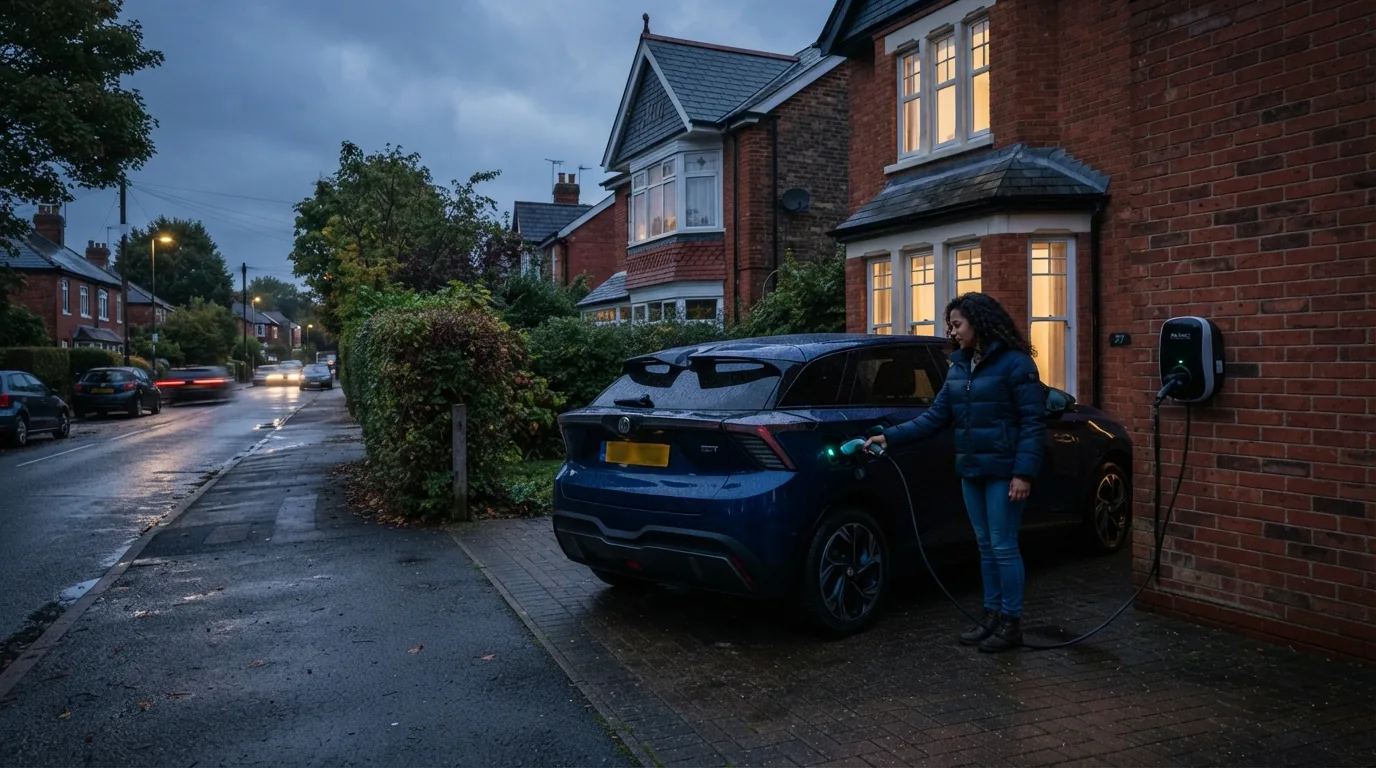
Quick answers
- More misinformation circulates about electric cars than almost any other consumer product. Some myths are based on genuine concerns that were valid in 2018 but have since been overtaken by reality.
- Myth 1: "EVs always run out of battery": RAC data from 2024 shows that EVs running out of battery accounted for just 1.85% of EV breakdown callouts.
- Myth 2: "There are no chargers": That includes 27,372 rapid or ultra-rapid chargers at 6,785 sites.
- Myth 3: "EVs take forever to charge": Most EV drivers never use a rapid charger for a "full charge." The typical approach is a 20 to 30-minute stop to add enough range to complete the journey, similar in concept to a petrol stop but longer.
- A 300-mile WLTP car typically delivers 225 to 250 miles on a motorway run.
- Myth 5: "EVs are too expensive": The Leapmotor T03 is available from £14,495 after the grant.
More misinformation circulates about electric cars than almost any other consumer product. Some myths are based on genuine concerns that were valid in 2018 but have since been overtaken by reality. Others were never true. Here are the ten biggest myths UK drivers repeat, with the actual evidence.
Myth 1: “EVs always run out of battery”
Reality: Fewer than 2% of EV breakdowns are caused by running out of charge.
RAC data from 2024 shows that EVs running out of battery accounted for just 1.85% of EV breakdown callouts. In 2015, when the EV market was tiny and ranges were short, the figure was 8.26%. The decline reflects longer ranges, better infrastructure, and smarter navigation that alerts drivers to low range in advance.
The average UK driver covers fewer than 150 miles per week. A modern EV with 250 miles of real-world range covers that week of driving without a single charge.
Myth 2: “There are no chargers”
Reality: The UK had 119,080 public charging devices at 46,107 locations as of March 2026.
That includes 27,372 rapid or ultra-rapid chargers at 6,785 sites. Virtually every motorway service area in the UK now has multiple 150kW or faster chargers. The network grew from around 17,000 devices in 2020 to 119,000 in 2026, a sevenfold increase in six years.
The real concern in 2026 is reliability, not availability. The question has shifted from “is there a charger?” to “will it be working when I get there?” That is a legitimate concern, but a different one from the original myth.
Myth 3: “EVs take forever to charge”
Reality: A 20-minute rapid charging stop adds 100 to 150 miles of range.
| Charger speed | Time to add 100 miles | Where found |
|---|---|---|
| 7kW home wallbox | ~4 hours | Home |
| 50kW rapid | ~35 to 45 minutes | Service stations, car parks |
| 150kW ultra-rapid | ~12 to 18 minutes | Motorway hubs, dedicated charging sites |
| 350kW ultra-rapid | ~7 to 10 minutes | Selected premium charging sites |
Most EV drivers never use a rapid charger for a “full charge.” The typical approach is a 20 to 30-minute stop to add enough range to complete the journey, similar in concept to a petrol stop but longer. At home, charging is overnight: plug in at 11pm, full by 6am.
Myth 4: “EVs are not suitable for long journeys”
Reality: Most modern EVs do 250 to 380 miles on a charge; rapid charging enables any journey.
A 300-mile WLTP car typically delivers 225 to 250 miles on a motorway run. A London to Edinburgh journey (400 miles) requires one charge stop of 20 to 30 minutes. A London to Manchester journey (200 miles) requires no stop at all on most current EVs.
The RAC’s 2026 data shows that 74% of UK drivers drive less than 150 miles per week. Long journeys are the exception, not the rule.
Myth 5: “EVs are too expensive”
Reality: New EVs start from under £15,000 in 2026; the Electric Car Grant provides up to £3,750 off eligible models.
The Leapmotor T03 is available from £14,495 after the grant. The Dacia Spring starts at around £15,000. The Fiat Grande Panda Electric is £20,995. The Renault 5 E-Tech (UK Car of the Year 2026) starts from £22,995.
Running cost savings of £900 to £1,600 per year on fuel, plus lower servicing costs, mean that the total cost of ownership over three to five years is competitive with, or cheaper than, a petrol equivalent for drivers with home charging.
Myth 6: “EV batteries degrade quickly and become useless”
Reality: Modern EV batteries are engineered to retain at least 70 to 80% capacity for 100,000 miles or 8 to 10 years.
Manufacturers including Hyundai, Kia, Tesla, and Volkswagen typically warranty EV batteries for 8 years or 100,000 miles, guaranteeing a minimum of 70% of original capacity. Real-world data from high-mileage EVs shows degradation of around 1 to 2% per year in typical use, so a five-year-old EV typically retains 90 to 95% of its original range.
Extreme rapid charging repeatedly from near-empty to full does accelerate degradation slightly. Modern battery management systems limit charge to 80% by default and manage temperature to protect long-term health.
Myth 7: “EVs are worse for the environment than petrol cars”
Reality: Over a full lifecycle, EVs produce significantly less CO2 than petrol equivalents, including battery manufacture.
A 2023 analysis by the European Energy Agency, covering models sold in the UK, found that a typical EV produces around 60 to 65% less CO2 over its full lifecycle (including manufacture) than a comparable petrol car when charged on the UK electricity grid. The UK grid has become progressively cleaner: renewable energy contributed over 40% of UK electricity generation in 2025.
The claim that “making an EV battery produces more carbon than a petrol car ever emits” is demonstrably false for any car with a reasonable range that is driven for more than three or four years.
Myth 8: “You cannot tow with an electric car”
Reality: Multiple EVs are approved for towing with ratings of 1,500 to 2,500kg.
The Volkswagen ID.4, Skoda Enyaq, Audi Q4 e-tron, Tesla Model 3, Kia EV6, Hyundai Ioniq 5, BMW iX, and Mercedes EQC all have towing capacities of 1,500kg or more. The Rivian R1T (available in the UK from some importers) has a 4,990kg towing capacity.
Towing does reduce EV range significantly (by 30 to 50%), which is a genuine consideration for long-distance towing. For most UK towing use cases (caravans, trailers, horse boxes on regular UK routes), capable EVs handle the job.
Myth 9: “You need a smart home and technical expertise to run an EV”
Reality: Plugging in an EV is simpler than operating most smartphones.
You park the car, pick up the cable from the boot or from the wallbox, plug one end into the car and the other into the charger. For home charging, that is the entire process. Public charging requires a network app or contactless payment for most chargers. The learning curve is measured in minutes, not weeks.
The complexity concern often comes from confusion between hardware (the cable and charger) and software (apps, tariffs, scheduling). The hardware could not be simpler. The software layer rewards a small amount of setup: choosing an EV electricity tariff and setting a charging schedule saves meaningfully on electricity costs.
Myth 10: “EVs are impractical in winter”
Reality: Range reduces by 15 to 25% in cold weather, which is a real factor but rarely a deal-breaker.
A car rated at 280 miles WLTP might deliver 210 to 230 miles in a cold January. If you are charging overnight at home, the car is full each morning regardless. Preconditioning (heating the cabin and battery while still plugged in) is available on most modern EVs and means you lose virtually no range to cabin warming on the road.
The myth that EVs “don’t work in winter” or become stranded in cold spells is not supported by real-world breakdown data or by the experience of millions of EV drivers in Norway, Sweden, and Finland, where cold winters are the norm and EV ownership rates far exceed the UK.
What concerns are genuinely real?
The genuine concerns about EV ownership in 2026 are:
- Public charger reliability: chargers that fail to start or drop connections mid-charge are a real irritant. The best charger networks (Osprey, Osprey Charge, Gridserve, Tesla Supercharger) have significantly higher reliability rates than the worst.
- Home charging without a driveway: still harder than it should be, though improving. See our guide on EV ownership without a driveway.
- Higher purchase prices: the gap is closing but still exists, particularly for like-for-like models.
- Public rapid charging costs: at 79p per kWh, this undermines the financial case for drivers without home charging.
These are genuine trade-offs worth understanding. They are not show-stoppers for most drivers, but they are worth knowing before you commit.
For model recommendations that minimise the genuine concerns, see best first electric cars for switching from petrol. For the full topic guide, return to the switching from petrol or diesel hub.
Sources: RAC Breakdown Report 2024, GOV.UK EV chargepoint statistics March 2026, Ofgem energy price cap Q2 2026, European Energy Agency lifecycle analysis 2023, SMMT registration data 2026.
How we test and where our numbers come from
Range figures are official WLTP combined values taken from manufacturer UK specification pages, with real-world estimates drawn from independent comparative testing. Prices are UK list prices at the time of the latest update. Tax, grant and charging-scheme figures come from GOV.UK and HMRC publications. We re-check every guide when pricing, specification or policy changes. Last checked 11 August 2026.
Frequently asked questions
What concerns are genuinely real?
These are genuine trade-offs worth understanding. They are not show-stoppers for most drivers, but they are worth knowing before you commit.

EV Compared
The EV Compared editorial team tracks the UK electric vehicle market full time: new model launches, list prices, WLTP and real-world range, public charging tariffs and the tax rules that decide what an EV actually costs to run. Every guide is checked against manufacturer specifications and official GOV.UK figures, and updated whenever the numbers move.
Related reading
View all
Should You Buy an EV in 2026 or Wait for Cheaper Models?
An honest look at where EV prices are heading and whether the wait is worth it for UK buyers
Buying and Owning an Electric Car in the UK: The Complete 2026 Guide
Everything you need to know about costs, charging, depreciation and day-to-day life with an EV
Should You Buy a Used EV With a Leased Battery?
Battery leasing was once common on the Renault Zoe and early Nissan Leaf. Here is what it means for used car buyers in 2026 and whether to proceed