Best Affordable EVs Under the Electric Car Grant
The electric cars that combine a government grant with the lowest purchase prices in the UK market right now
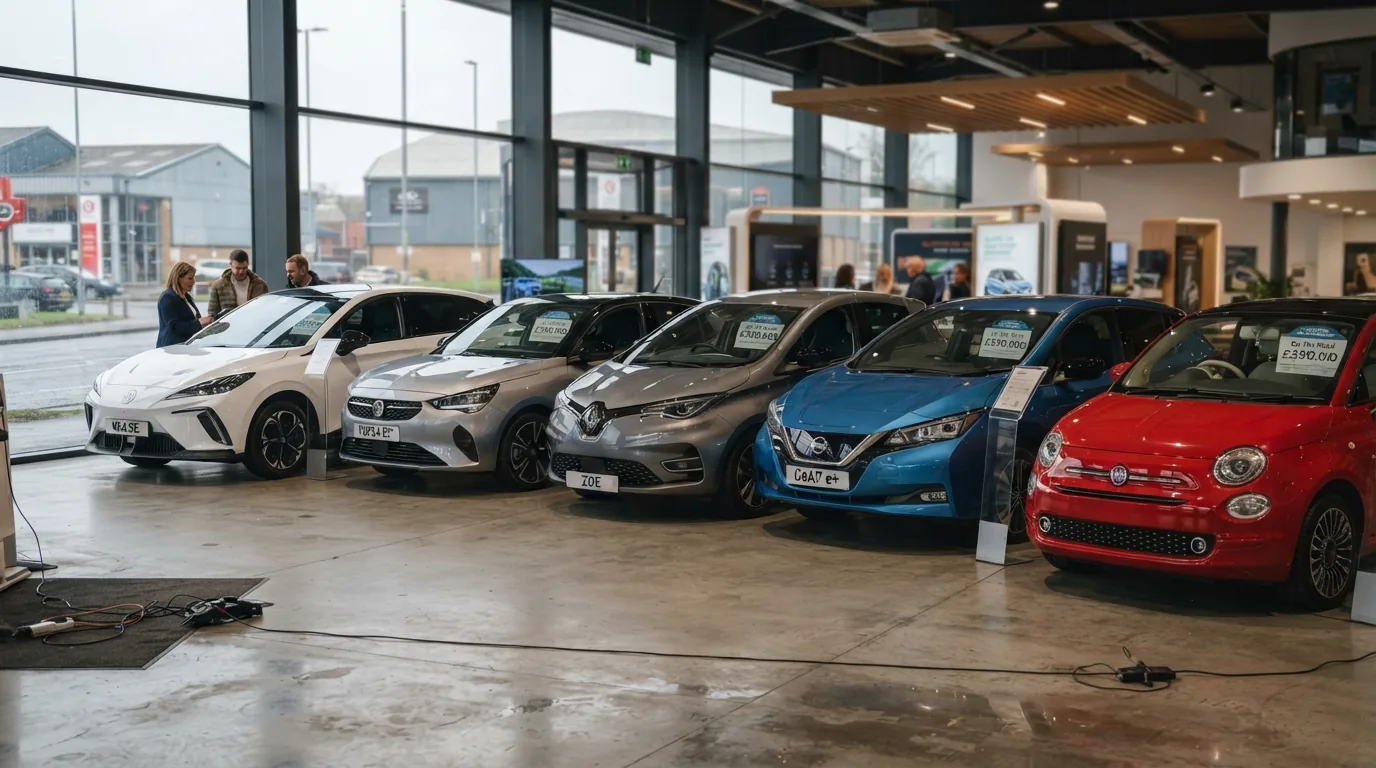
Quick answers
- The most affordable Electric Car Grant-eligible EV in the UK in 2026 costs around £19,250 after the £3,750 Band 1 discount is applied.
- Most affordable grant-eligible EVs ranked: All prices are approximate and depend on trim level and options; always verify with the dealer and confirm on the current OZEV eligible vehicle list.
- The standout: Renault 5 (52kWh): The Renault 5 earns its place at the top of this list comprehensively.
- Strong runner-up: Nissan Micra (52kWh): The revived Nissan Micra shares its CMF-EV platform with the Renault 5, offering a subtly different interior character with 260 miles of WLTP range.
- The Renault 4 offers more rear legroom and a larger boot than the Renault 5 at a starting price of around £23,250 after the Band 1 grant.
- The e-C3 Aircross earns Band 1 status and the full £3,750 grant, coming in at around £21,250 after discount.
The most affordable Electric Car Grant-eligible EV in the UK in 2026 costs around £19,250 after the £3,750 Band 1 discount is applied. That is the Renault 5 (52kWh), and it represents a genuine step change in affordable EV ownership: a real-world capable electric car with 239 miles of range, priced competitively with the cheapest new petrol superminis. Below it, the Citroën e-C3 Aircross brings its post-grant price to around £21,250 with a large boot and a comfortable ride. These are not stripped-out compromises; they are credible first cars and everyday cars at prices that were previously impossible in the EV market.
This page ranks the most affordable grant-eligible options, explains how to squeeze additional savings through salary sacrifice and sets out which cheap-looking EVs are excluded from the grant (and why).
How the Electric Car Grant affects prices
The Electric Car Grant (ECG) operates on a two-band system:
- Band 1: £3,750 off. Cars that score best on OZEV’s sustainability assessment.
- Band 2: £1,500 off. Cars that meet basic criteria but score lower on sustainability.
The price cap is £37,000. The discount is applied at the point of sale by the dealer; you never handle the grant payment. As of May 2026, nine models are in Band 1 and 36 are in Band 2 across 45 eligible models total.
Most affordable grant-eligible EVs ranked
| Model | Band | Grant | Price before grant | Price after grant | WLTP range |
|---|---|---|---|---|---|
| Renault 5 (52kWh) | Band 1 | £3,750 | ~£23,000 | ~£19,250 | 239 miles |
| Citroën e-C3 Aircross | Band 1 | £3,750 | ~£25,000 | ~£21,250 | 199 miles |
| Nissan Micra (52kWh) | Band 1 | £3,750 | ~£24,000 | ~£20,250 | 260 miles |
| Renault 4 (52kWh) | Band 1 | £3,750 | ~£27,000 | ~£23,250 | 290 miles |
| Cupra Raval | Band 2 | £1,500 | ~£28,000 | ~£26,500 | 250 miles |
| Renault Alpine A290 | Band 1 | £3,750 | ~£34,000 | ~£30,250 | 258 miles |
| MINI Countryman Electric | Band 1 | £3,750 | ~£34,000 | ~£30,250 | 250 miles |
| VW ID.3 | Band 2 | £1,500 | ~£33,000 | ~£31,500 | 264 miles |
All prices are approximate and depend on trim level and options; always verify with the dealer and confirm on the current OZEV eligible vehicle list.
The standout: Renault 5 (52kWh)
The Renault 5 earns its place at the top of this list comprehensively. At around £19,250 after the £3,750 Band 1 grant, it is cheaper than many well-equipped petrol hatchbacks. It won the Carwow Car of the Year Urban Living Award for 2026 with judges praising its design, cabin quality and driving experience. The 52kWh battery delivers 239 miles of WLTP range, which is more than enough for daily use and most weekend trips without charging anxiety. The 40kWh entry version is priced lower but sits outside Band 1, so specify the 52kWh to get the maximum grant.
Best for: First EV buyers, urban and suburban drivers, anyone wanting maximum grant impact.
Strong runner-up: Nissan Micra (52kWh)
The revived Nissan Micra shares its CMF-EV platform with the Renault 5, offering a subtly different interior character with 260 miles of WLTP range. The 52kWh version earns Band 1 status (£3,750 grant), starting from around £20,250 after discount. If the Renault 5’s styling does not appeal, the Micra is a compelling alternative with the same core ownership proposition.
Best for: Buyers who want the Renault 5 platform with a different brand and design.
Best for families on a tight budget: Renault 4 (52kWh)
The Renault 4 offers more rear legroom and a larger boot than the Renault 5 at a starting price of around £23,250 after the Band 1 grant. For families who need five usable seats and boot space for a weekly shop, the Renault 4 delivers at a price that genuinely undercuts most rival family hatchbacks, electric or petrol.
Best for: Families who cannot justify a premium EV but need space beyond a supermini.
Best budget crossover: Citroën e-C3 Aircross
The e-C3 Aircross earns Band 1 status and the full £3,750 grant, coming in at around £21,250 after discount. It has a notably large boot for a car at this price point and a comfortable ride over potholed urban surfaces. WLTP range of 199 miles is the shortest on this list, but it covers most daily commuting and shopping runs with ease. A weekly fast charge at a public rapid charger is all that is needed for typical use.
Best for: Urban and suburban drivers who need a practical boot and want to minimise upfront spend.
What about the £1,500 Band 2 options?
Band 2 models attract only £1,500 rather than £3,750, which means their effective price is higher for a given list price. The most affordable Band 2 options start around £26,500 after grant (Cupra Raval) rising to £31,500 (VW ID.3). These are not cheap cars in the traditional sense but offer more power, capability or range than the Band 1 options above.
If you are choosing between a Band 1 car at £20,000 and a Band 2 car at £27,000, consider whether the additional £7,000 buys something you actually need in terms of range, interior quality or capability. For most urban and suburban drivers, Band 1 models are more than adequate.
The trap: cheap-looking EVs that do not qualify
Several electric cars are priced competitively but are not eligible for the Electric Car Grant because they are manufactured in Chinese factories that do not meet OZEV’s sustainability criteria:
- BYD Dolphin (from ~£25,000)
- BYD Seal (from ~£32,000)
- MG4 (most configurations)
- GWM Ora 03
These are not bad cars and are still worth considering, but if you are counting on the grant to make the numbers work, they will disappoint. Always verify on the OZEV eligible vehicle list before making any decision.
Making the numbers work: salary sacrifice
The Electric Car Grant cuts the purchase price. Salary sacrifice cuts the monthly cost. Used together, the combination dramatically changes the affordability equation for employed buyers.
Under salary sacrifice, your employer leases the car and you give up gross salary equal to the monthly cost, before income tax and National Insurance are applied. The Benefit in Kind rate for EVs is 4% in 2026/27. A basic-rate taxpayer can save 30 to 40% on monthly costs; a higher-rate taxpayer, 40 to 60%. For a car that qualifies for the Band 1 grant, the grant reduces the lease base, which reduces the monthly sacrifice further.
A rough example: an employee on £35,000 gross taking a Renault 5 through salary sacrifice might find the effective monthly cost comes to £180 to £220 after tax and NI savings, compared with £350+ for the same car on a private personal contract hire deal. The combined effect of grant and salary sacrifice is transformational for affordability.
Running costs matter too
Beyond purchase price, affordable EVs compare extremely well with petrol cars on running costs:
- Electricity at an overnight EV tariff: approximately 7p to 9p per kWh (Octopus Go, Intelligent Octopus or equivalent)
- Typical EV efficiency: approximately 3.5 miles per kWh for an urban-focused car
- Effective cost: approximately 2p to 3p per mile
- Petrol equivalent: approximately 12p to 15p per mile (petrol at 150p/litre, 40mpg)
- Annual saving at 8,000 miles: £800 to £1,000 on fuel alone
Add lower servicing costs (no oil changes, fewer brake replacements due to regenerative braking) and the total cost of ownership argument for even the cheapest EVs is strong relative to petrol alternatives.
What to do next
Check the current OZEV eligible vehicle list for the specific model and trim you are considering; the grant applies to specific configurations, not entire model ranges. Then ask your employer whether a salary sacrifice scheme is in place.
For the full policy context including the ZEV Mandate, 2030 ban timeline and tax changes, return to the grants, policy and legislation hub.
For a broader ranking of grant-eligible EVs across all price points, see our guide to best value EVs that qualify for UK grants.
How we test and where our numbers come from
Range figures are official WLTP combined values taken from manufacturer UK specification pages, with real-world estimates drawn from independent comparative testing. Prices are UK list prices at the time of the latest update. Tax, grant and charging-scheme figures come from GOV.UK and HMRC publications. We re-check every guide when pricing, specification or policy changes. Last checked 11 August 2026.
Frequently asked questions
What about the £1,500 Band 2 options?
Band 2 models attract only £1,500 rather than £3,750, which means their effective price is higher for a given list price. The most affordable Band 2 options start around £26,500 after grant (Cupra Raval) rising to £31,500 (VW ID.3).
Sources and further reading
- gov.ukGOV.UK OZEVPrimary source referenced in this article.

EV Compared
The EV Compared editorial team tracks the UK electric vehicle market full time: new model launches, list prices, WLTP and real-world range, public charging tariffs and the tax rules that decide what an EV actually costs to run. Every guide is checked against manufacturer specifications and official GOV.UK figures, and updated whenever the numbers move.
Related reading
View all
What Does the 2030 Petrol and Diesel Ban Actually Mean?
Separating the facts from the myths: what changes in 2030, what does not, and what it means for your next car

What Is the Benefit in Kind Rate for Electric Cars?
The electric car BiK rate is 4% for 2026/27, rising to 9% by 2029/30 on a confirmed schedule. Here is what that means for your tax bill, with worked examples and a full multi-year projection.
Which UK Cities Have Clean Air Zones in 2026?
The definitive 2026 map of UK Clean Air Zones, what they charge, which vehicles pay and how EVs are treated