How Different Is Driving an EV Compared to Petrol?
What changes, what stays the same, and what surprises first-time EV drivers
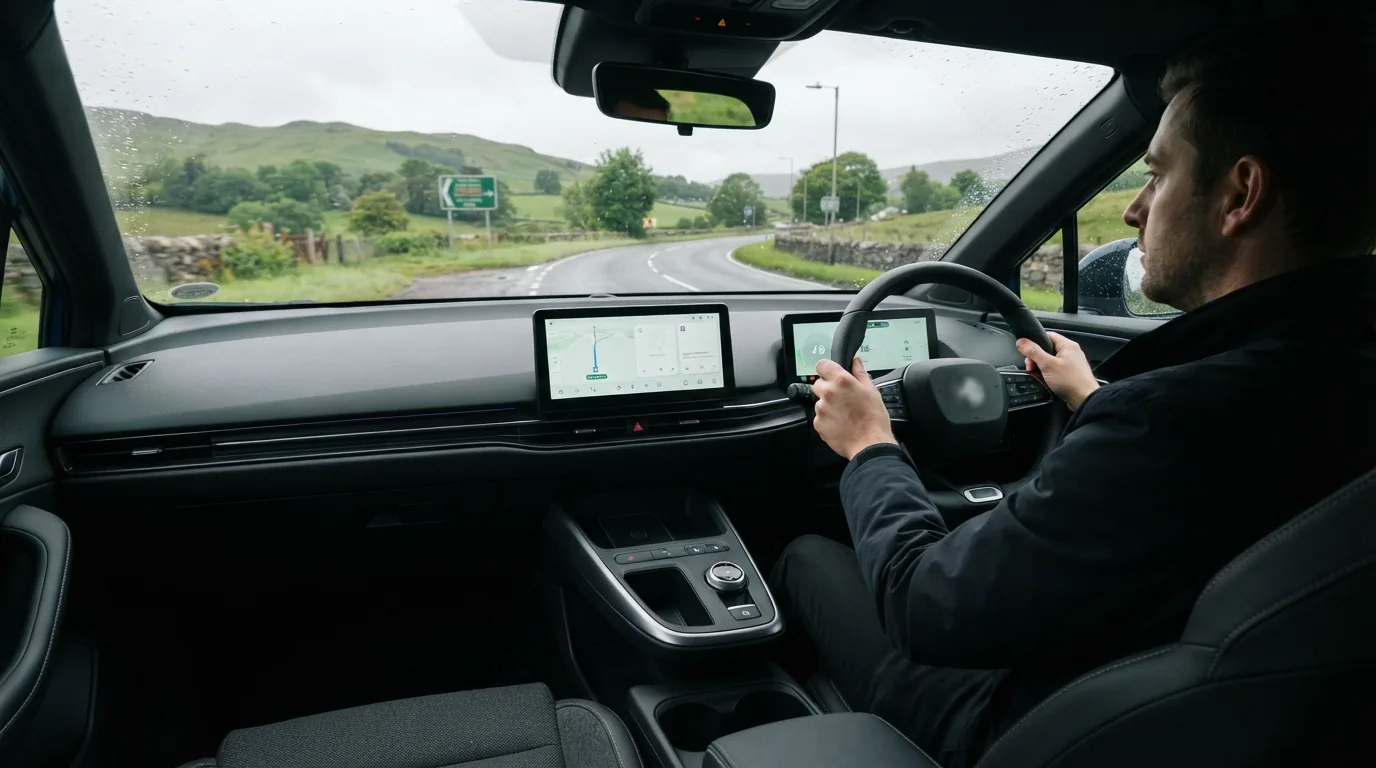
Quick answers
- Driving an electric car is noticeably different from driving a petrol car. Most of the differences are better.
- The short answer: An EV is quieter, faster off the line, and smoother than an equivalent petrol car.
- Acceleration and throttle response: This is where the EV experience diverges most dramatically from petrol, and in almost every case the EV wins.
- Regenerative braking and one-pedal driving: One-pedal driving describes the technique where you modulate the accelerator to both accelerate and slow down, rarely needing the brake pedal except for sharp stops.
- Noise and refinement: Petrol engines generate significant mechanical and combustion noise.
- Driving position, steering, and handling: Steering is usually power-assisted in the same way as a modern petrol car.
Driving an electric car is noticeably different from driving a petrol car. Most of the differences are better. A few require adjustment. Within two weeks of ownership, most drivers report that EV driving simply feels normal, and returning to a petrol car feels sluggish and noisy. Here is an honest account of every significant difference.
The short answer
An EV is quieter, faster off the line, and smoother than an equivalent petrol car. The throttle response is instant. The braking behaviour is different: lifting off the accelerator slows the car, which takes a few days to feel natural. The refuelling routine is entirely different: you plug in at home overnight rather than visiting a petrol station. Everything else, steering, cornering, seats, controls, is broadly similar to a modern petrol car.
Acceleration and throttle response
This is where the EV experience diverges most dramatically from petrol, and in almost every case the EV wins.
Electric motors produce maximum torque from zero rpm. There is no need to build revs, no gear change, no lag between pressing the accelerator and the car moving. Press the throttle in an EV and the car responds immediately. In a petrol car, particularly at low speeds or from a standstill, there is a brief moment where the engine responds and revs climb before the car accelerates meaningfully.
Even mid-range EVs feel quick. A car with 150kW (about 200bhp) of electric power typically reaches 60mph faster than a 2.0-litre petrol car with similar power, because the torque arrives all at once rather than building through the rev range.
The experience in everyday driving is that overtakes feel easier, merging onto motorways is effortless, and urban acceleration from traffic lights feels immediate.
Regenerative braking and one-pedal driving
This is the adjustment that takes the most time. When you lift off the accelerator in most EVs, the motor switches to generator mode and slows the car. This is regenerative braking: it harvests kinetic energy back into the battery.
The strength of regeneration varies. Many EVs offer adjustable regen levels. Some, particularly Korean and Hyundai Group cars, have paddle-controlled regen that lets you dial in exactly how aggressively the car slows.
One-pedal driving describes the technique where you modulate the accelerator to both accelerate and slow down, rarely needing the brake pedal except for sharp stops. Most experienced EV drivers find this intuitive within a week. It also means brake pads last longer because they are used less.
In the first few days, the main adjustment is getting used to the car slowing when you did not press the brake. By the end of the first week, most drivers report that driving a petrol car feels odd because it coasts when you lift off rather than slowing purposefully.
Noise and refinement
Petrol engines generate significant mechanical and combustion noise. EVs have none of that. The motor is virtually silent at all speeds. What remains is tyre noise, wind noise, and road surface noise.
On a motorway, this makes a substantial difference. A petrol car at 70mph has a constant engine drone layered under road noise. An EV at 70mph has only road and wind noise, and the overall experience is significantly quieter. Conversations are easier. Music is clearer.
In town, the silence is more noticeable to pedestrians than to the driver, which is why UK law requires EVs to emit an artificial warning sound (AVAS) at speeds below 20kph.
The flip side of the quiet cabin is that road and tyre noise becomes more prominent on coarse or worn surfaces. An EV on a rougher road surface can feel louder than a comparable petrol car because there is no engine background noise to mask it.
Driving position, steering, and handling
In most cases, these feel similar to the petrol equivalent. Weight distribution differs because battery packs are mounted in the floor, giving EVs a low centre of gravity. Many EV drivers notice improved cornering stability compared to petrol cars in the same class.
Steering is usually power-assisted in the same way as a modern petrol car. There is no significant difference in steering feel or turning circle.
The extra weight of the battery (typically 300 to 500kg compared to a petrol equivalent) can sometimes be noticed in high-speed cornering or over undulations, but most mainstream EVs are tuned to manage this well.
Long journeys and charging stops
This is where the experience differs most practically from petrol.
In a petrol car, a long journey means driving until the fuel gauge drops, then pulling into a petrol station, spending three to five minutes filling up, and continuing. In an EV, most drivers plan a charge stop at a motorway service area or charging hub, typically for 20 to 30 minutes at a 150kW or faster charger.
| Charge speed | Time to add 100 miles |
|---|---|
| 7kW home wallbox | Around 4 hours |
| 50kW rapid charger | Around 35 to 45 minutes |
| 100kW rapid charger | Around 20 minutes |
| 150kW ultra-rapid charger | Around 15 minutes |
| 350kW ultra-rapid charger | Around 7 to 10 minutes |
The key insight for long journeys: plan where you will charge and stop when the battery is at around 20 to 30%, rather than waiting until nearly empty. Charging speeds on most EVs slow significantly above 80% charge (because lithium-ion batteries charge fastest in the middle of their range). A 20 to 80% charge is typically faster than trying to fill from 5 to 100%.
Many EV navigation systems now route automatically via suitable chargers and precondition the battery to optimal charging temperature before you arrive. On capable cars, long journeys require almost no extra effort compared to petrol.
Cold weather
Cold temperatures reduce EV range more than petrol. A typical reduction in freezing weather is 15 to 25% of normal range. This is because batteries are less efficient at low temperatures, and because cabin heating draws significant energy.
The countermeasure is preconditioning: using the car’s app to warm the cabin and battery while the car is still plugged in at home. Most modern EVs support this. It costs electricity rather than range, so you start a cold morning with a full battery and a warm cabin, losing little range to heating en route.
In practice, most UK drivers in most UK winters do not experience severe cold often enough for this to be a major barrier. A car that does 250 miles in mild weather might do 200 in January. That is still sufficient for almost all everyday use.
What petrol drivers most commonly notice on day one
Based on widespread owner reports and surveys, the top surprises in the first week:
- How fast it is. Even everyday family EVs feel noticeably quicker than expected.
- How quiet it is. The cabin silence takes some adjustment.
- The regen braking. Lifting off the accelerator slows the car in a way that feels unfamiliar initially.
- How easy refuelling becomes. Plugging in at home overnight removes the petrol station routine entirely.
- The range display changes constantly. The estimated remaining range fluctuates with speed and temperature. This is normal and the car does not lie to you; driving at 80mph will show less range than driving at 60mph.
What does not change
The fundamentals of driving a car remain the same. You steer, brake, accelerate, park. Indicators, lights, wipers, and all the secondary controls work identically. Motorway driving is motorway driving. Parking sensors, cameras, and driver assistance systems are the same across petrol and electric versions of the same model.
The layout of controls may differ, particularly on purpose-built EV platforms that use the floor space freed by the absence of a gearbox and transmission tunnel. But there is no learning curve for the basics.
Ready to make the switch?
For model recommendations suited to first-time EV drivers, start with best first electric cars for switching from petrol. For the complete topic guide including costs, charging, and myths, return to the switching from petrol or diesel hub.
Sources: RAC Breakdown Report 2024, Ofgem energy price cap Q2 2026, SMMT registration data 2026, GOV.UK EV chargepoint statistics March 2026.
How we test and where our numbers come from
Range figures are official WLTP combined values taken from manufacturer UK specification pages, with real-world estimates drawn from independent comparative testing. Prices are UK list prices at the time of the latest update. Tax, grant and charging-scheme figures come from GOV.UK and HMRC publications. We re-check every guide when pricing, specification or policy changes. Last checked 11 August 2026.
Frequently asked questions
Ready to make the switch?
For model recommendations suited to first-time EV drivers, start with best first electric cars for switching from petrol. For the complete topic guide including costs, charging, and myths, return to the switching from petrol or diesel hub.

EV Compared
The EV Compared editorial team tracks the UK electric vehicle market full time: new model launches, list prices, WLTP and real-world range, public charging tariffs and the tax rules that decide what an EV actually costs to run. Every guide is checked against manufacturer specifications and official GOV.UK figures, and updated whenever the numbers move.
Related reading
View all
What Are the Biggest Myths About Switching to an EV?
The claims that put UK drivers off going electric, and what the evidence actually says
Should You Buy an EV in 2026 or Wait for Cheaper Models?
An honest look at where EV prices are heading and whether the wait is worth it for UK buyers
Buying and Owning an Electric Car in the UK: The Complete 2026 Guide
Everything you need to know about costs, charging, depreciation and day-to-day life with an EV