What Do Petrol Drivers Need to Know Before Going Electric?
The practical facts that make the difference between a smooth switch and a frustrating one
Quick answers
- Petrol drivers going electric for the first time need to understand four things above everything else: how charging works, how range really behaves, how the running costs compare, and what day-to-day driving actually feels like. Everything else is detail.
- How charging actually works: The biggest mindset shift is that an EV is not refuelled the way a petrol car is.
- How range actually behaves: The range figure quoted in a car's WLTP specification is a laboratory estimate.
- What the running costs really look like: Petrol at 159.6p per litre (May 2026 average) and a car doing 40mpg costs roughly 18p per mile.
- What driving feels like: Petrol drivers are often surprised by how different and how quickly normal an EV feels.
- What about road tax and insurance: From April 2025, new EVs pay £190 per year in Vehicle Excise Duty, the same as most petrol cars.
Petrol drivers going electric for the first time need to understand four things above everything else: how charging works, how range really behaves, how the running costs compare, and what day-to-day driving actually feels like. Everything else is detail. Get these four right and the switch is smooth. Ignore them and you set yourself up for unnecessary frustration.
Here is the honest brief.
How charging actually works
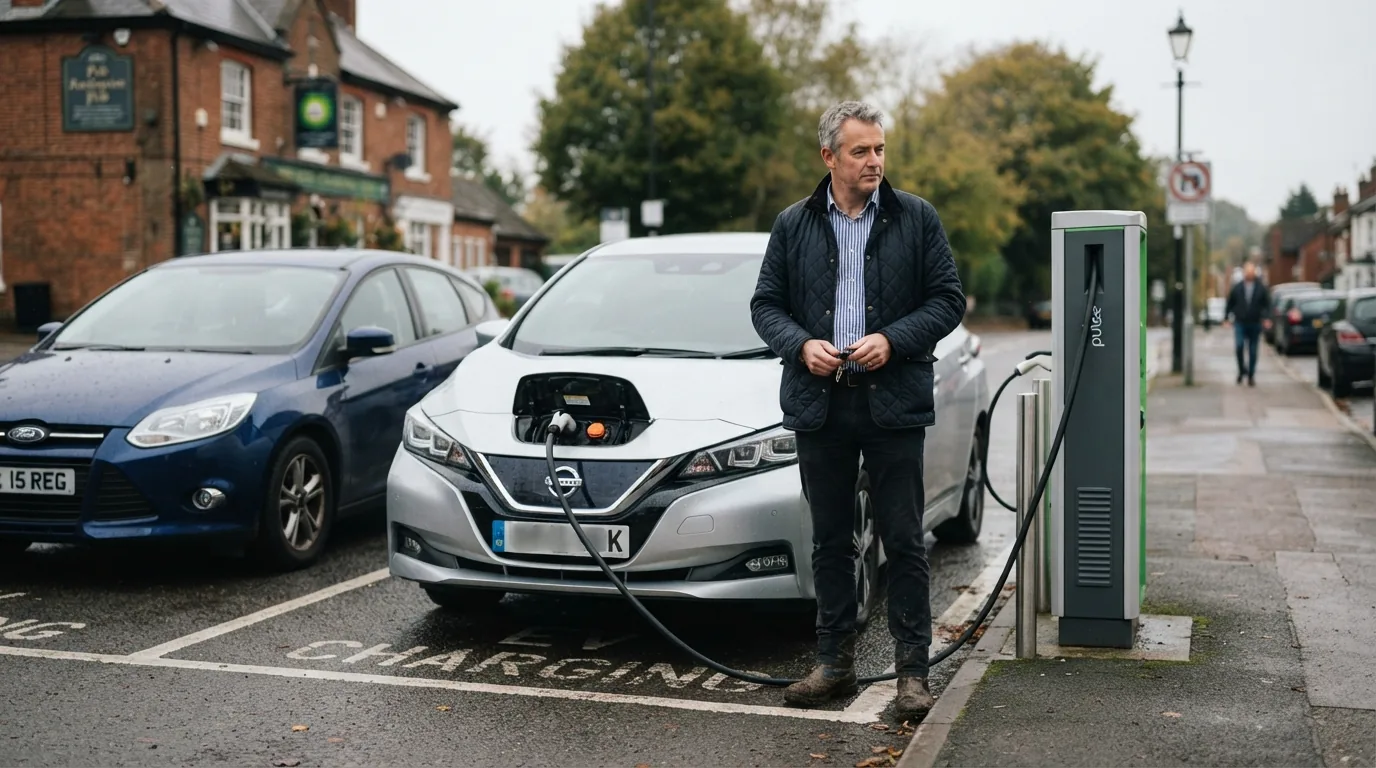
The biggest mindset shift is that an EV is not refuelled the way a petrol car is. You do not wait until the tank is nearly empty and then drive somewhere to fill it up. Instead, you top up at home while you sleep, and the car is full every morning.
Around 70% of UK EV charging happens at home. A dedicated 7.4kW wallbox charger is the standard domestic setup. It adds roughly 25 to 30 miles of range per hour, so plugging in overnight gives you a full battery by morning regardless of where you started. A wallbox installation typically costs between £800 and £1,200 once hardware and labour are included.
If you do not have a driveway, options are improving. Over 40% of UK local authorities plan to offer cross-pavement charging solutions by the end of 2026. Workplace charging, on-street lamp post chargers, and destination charging at supermarkets, leisure centres, and car parks are all expanding. It requires more planning than home charging, but it works. Read our guide to living with an EV without a driveway for the full picture.
Public charging comes in several speeds:
- Slow chargers (3 to 7kW): found at car parks, hotels, workplaces. Add 10 to 25 miles per hour.
- Fast chargers (7 to 22kW): common on-street and in public locations. Add 25 to 75 miles per hour.
- Rapid chargers (50 to 100kW): found at service stations and dedicated charging hubs. Add roughly 100 miles in 30 to 45 minutes.
- Ultra-rapid chargers (150kW and above): becoming standard on major routes. Add 100 miles in 10 to 20 minutes.
The UK had 119,080 public charging devices at 46,107 locations as of March 2026, including 27,372 rapid or ultra-rapid chargers at 6,785 sites.
How range actually behaves
The range figure quoted in a car’s WLTP specification is a laboratory estimate. Real-world range is lower, sometimes significantly. Here is what affects it:
| Factor | Impact on range |
|---|---|
| Motorway driving at 70mph | Reduces range by 20 to 30% vs WLTP |
| Cold weather (below 5°C) | Reduces range by 15 to 25% |
| Heating or air conditioning | Can reduce range by 5 to 15% |
| Urban driving (slow speeds) | Increases range vs WLTP due to regeneration |
| Driving style (smooth vs aggressive) | Can vary range by 15 to 20% |
A car rated at 300 miles WLTP might deliver 220 to 240 miles on a motorway run in winter. In mild weather on mixed roads, it might achieve 260 to 280 miles. In urban stop-start driving, it could exceed the WLTP figure.
The practical point is this: buy based on real-world range, not WLTP. And think about your actual journeys. Most UK drivers cover fewer than 150 miles per week. Even a 200-mile real-world EV covers the average driver’s entire week on a single charge.
Range anxiety is common before you go electric and rarely persists after. RAC data shows fewer than 2% of EV breakdowns in 2024 were caused by running out of charge, down from over 8% in 2015.
What the running costs really look like
Petrol at 159.6p per litre (May 2026 average) and a car doing 40mpg costs roughly 18p per mile. Diesel at 184.9p per litre at 50mpg costs around 16p per mile.
An EV charged at home on the Ofgem standard tariff of 24.67p per kWh costs around 7p per mile. On a dedicated off-peak EV tariff from a provider like Octopus Energy (Intelligent Go), the rate can fall to around 7p per kWh, cutting the per-mile cost to roughly 2p. That is less than one-eighth of petrol’s running cost per mile.
For a driver covering 10,000 miles per year:
- Petrol car fuel cost: approximately £1,800
- EV on standard home tariff: approximately £700
- EV on off-peak EV tariff: approximately £200
The saving is real. Add reduced servicing costs (no oil changes, less brake wear due to regenerative braking, fewer moving parts) and the annual cost advantage of an EV is typically £1,000 to £2,000 over petrol for a driver with home charging.
The one scenario where the saving shrinks is relying heavily on public rapid chargers. At around 79p per kWh for ultra-rapid charging in 2026, the cost per mile rises to roughly 23p, close to petrol. Public charging is for top-ups and long trips, not everyday refuelling.
What driving feels like
Petrol drivers are often surprised by how different and how quickly normal an EV feels.
Throttle response is instant. Electric motors deliver maximum torque from zero rpm. In a petrol car, there is a slight lag while the engine revs build. In an EV you press the accelerator and the car goes, immediately. Even a modest family EV often feels quicker than expected.
Regenerative braking takes adjustment. When you lift off the accelerator in an EV, the motor acts as a generator and slows the car. The strength of this effect varies by car and can usually be adjusted. Many EV drivers adapt to one-pedal driving within a few days, using the regenerative braking to slow down without touching the brake pedal in most situations.
The cabin is noticeably quieter. No engine drone means road noise, wind noise, and tyre noise are more prominent than you might expect. The overall experience is significantly calmer on motorways and in town alike.
In cold weather, prepare the car first. Pre-conditioning, heating the cabin and battery while the car is still plugged in, is available on most modern EVs via an app. It costs electricity rather than range and means you climb into a warm car with full battery capacity.
What about road tax and insurance?
From April 2025, new EVs pay £190 per year in Vehicle Excise Duty, the same as most petrol cars. The free road tax era is over. Cars priced above £50,000 also pay an expensive car supplement of £425 per year for years two to six of ownership (the threshold was raised from £40,000 to £50,000 for EVs in November 2025).
Insurance premiums for EVs are typically 5 to 15% higher than for equivalent petrol cars, though the gap is narrowing as insurers gain more data and repair costs become more predictable. Shop around: the range between the cheapest and most expensive EV insurer for a given model is substantial.
If you drive a company car, the BiK rate for EVs is 4% for 2026/27 versus 25% to 37% for petrol and diesel equivalents. That difference can save thousands of pounds per year in tax.
The one thing petrol drivers most commonly get wrong
The most common mistake made by first-time EV buyers is choosing a car with too little range for occasional longer journeys, not for everyday use. Your daily 20-mile commute will work fine on any EV. The problem comes when you plan a 300-mile trip and discover that your 150-mile real-world range car needs two lengthy charging stops on a route where charger availability is patchy.
The rule of thumb: buy at least 50 miles more real-world range than your longest regular journey. If you regularly do 200-mile trips, aim for a car with 250-plus miles of genuine real-world range.
For model recommendations, start with our best first electric cars for switching from petrol page. For the full topic guide, return to our switching from petrol or diesel hub.
Sources: RAC Breakdown Report 2024, Ofgem energy price cap Q2 2026, GOV.UK EV chargepoint statistics March 2026, RAC fuel watch data May 2026, GOV.UK Vehicle Excise Duty rates.
How we test and where our numbers come from
Range figures are official WLTP combined values taken from manufacturer UK specification pages, with real-world estimates drawn from independent comparative testing. Prices are UK list prices at the time of the latest update. Tax, grant and charging-scheme figures come from GOV.UK and HMRC publications. We re-check every guide when pricing, specification or policy changes. Last checked 11 August 2026.
Frequently asked questions
What about road tax and insurance?
From April 2025, new EVs pay £190 per year in Vehicle Excise Duty, the same as most petrol cars. The free road tax era is over.

EV Compared
The EV Compared editorial team tracks the UK electric vehicle market full time: new model launches, list prices, WLTP and real-world range, public charging tariffs and the tax rules that decide what an EV actually costs to run. Every guide is checked against manufacturer specifications and official GOV.UK figures, and updated whenever the numbers move.
Related reading
View all
What Are the Biggest Myths About Switching to an EV?
The claims that put UK drivers off going electric, and what the evidence actually says
Should You Buy an EV in 2026 or Wait for Cheaper Models?
An honest look at where EV prices are heading and whether the wait is worth it for UK buyers
Buying and Owning an Electric Car in the UK: The Complete 2026 Guide
Everything you need to know about costs, charging, depreciation and day-to-day life with an EV