Best Easy to Live With EVs for UK Beginners
The electric cars that make daily life simplest for first-time EV drivers in 2026
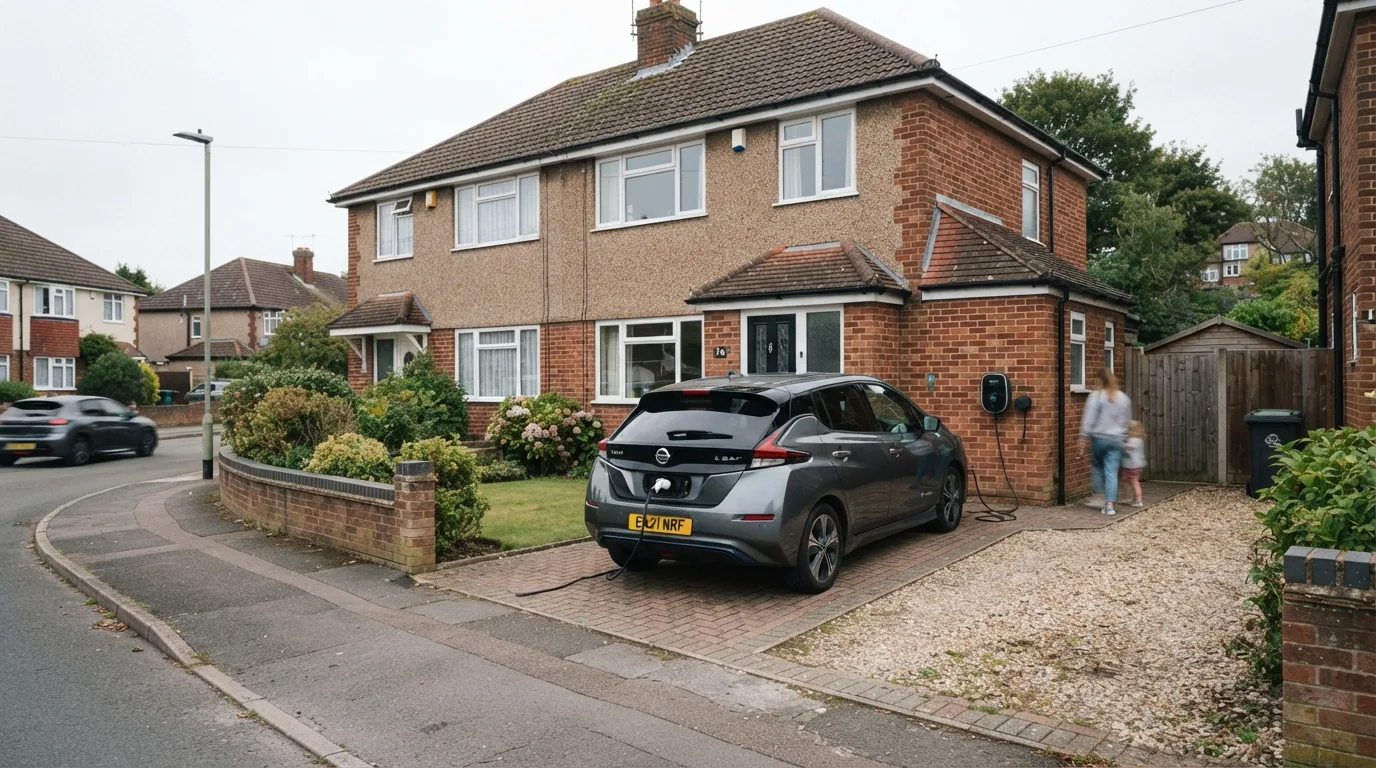
Quick answers
- What makes an EV easy to live with: For an EV beginner, ease of living comes from a combination of factors that are different from the usual road test criteria.
- Our top pick: Volkswagen ID.3 Neo: The ID.3 Neo earns its place at the top of this list because it is the EV that feels most like owning a mature, well-resolved car rather than living with experimental technology.
- The Hyundai Kona Electric is the most proven model on this list.
- Best value easy-life EV: Renault 5 E-Tech: The Renault 5 E-Tech at £24,995 for the 52kWh version is the easiest car on this list to justify financially.
- The EV3's 81.4kWh battery and 280 to 310 miles of real-world range means that for most drivers, range becomes a non-issue almost immediately after ownership begins.
- Best for families: Skoda Enyaq: The Skoda Enyaq brings the biggest interior space on this list.
“Easy to live with” means something specific for an EV: a car that charges without drama, covers your daily journeys with range to spare, has an interface you understand without reading the manual, is comfortable enough to enjoy every day, and does not demand constant attention to range management. Here is the shortlist that genuinely delivers all of this for UK beginners in 2026.
What makes an EV easy to live with?
For an EV beginner, ease of living comes from a combination of factors that are different from the usual road test criteria. Performance and sharp handling are largely irrelevant. What matters is:
Generous everyday range. A car with 250-plus miles of real-world range means you rarely think about charging during the week. You plug in at home when convenient, not because you are anxious.
Simple, reliable software. A touchscreen that responds immediately, a navigation system that routes via chargers automatically, and a charging schedule that you set once and forget.
Comfortable everyday driving. Smooth, quiet, and composed. An EV that is joyful to drive in traffic, relaxed on motorways, and easy to park.
Predictable public charging. When you do need to use a public charger, the car’s navigation sends you to the right one, and the charging process is straightforward.
Low-maintenance reality. No oil changes, no timing belt, no complex servicing schedule. The car goes to a service centre once a year for a check rather than every few months for maintenance.
The shortlist
| Model | Price from | Real-world range | Strongest “easy to live with” quality | Verdict |
|---|---|---|---|---|
| Volkswagen ID.3 Neo (58kWh) | £33,995 | ~265–270 miles | Best software and fit; most car-like | Our top pick |
| Hyundai Kona Electric | £34,995 | ~250 miles | Proven reliability, easiest UX | Best for reliability-first buyers |
| Renault 5 E-Tech (52kWh) | £24,995 | ~210–225 miles | Simplest cabin, joyful to drive | Best value easy-life EV |
| Kia EV3 | ~£32,000 | ~280–310 miles | Best range buffer in class | Best for those who hate range management |
| Skoda Enyaq (58kWh) | ~£40,000 | ~275–290 miles | Most practical interior layout | Best for family use |
| BMW i4 | £51,995 | ~300–330 miles | Best driving experience; very intuitive | Best premium easy-life EV |
Our top pick: Volkswagen ID.3 Neo
The ID.3 Neo earns its place at the top of this list because it is the EV that feels most like owning a mature, well-resolved car rather than living with experimental technology. After early model-year software issues, the 2026 Neo has addressed most of the concerns that troubled owners of earlier ID.3 variants.
The 2026 operating system is cleaner, faster, and more logical. The most-used functions (climate, range, charging) are accessible without digging through menus. The 10.9-inch touchscreen is responsive and well-positioned. The driver’s display is clear.
The driving experience is excellent for a family hatchback: smooth ride quality, calm motorway presence, and light steering in town that makes it easy to place. The 58kWh battery delivers around 265 to 270 miles of real-world range, which covers most weekly driving with a comfortable margin. The 130kW rapid charging rate is fast enough for a 20-minute motorway top-up to add 100-plus miles.
VW’s charging navigation automatically routes via compatible chargers on longer journeys, accounting for your current charge state and the required arrival charge level. This is the feature that beginners value most: the car handles the charging planning so you do not have to.
Price from £33,995 (58kWh). The 79kWh version (up to 340 miles real-world) from around £40,000.
Best for reliability-first beginners: Hyundai Kona Electric
The Hyundai Kona Electric is the most proven model on this list. Its multi-year track record in the UK provides exactly what nervous beginners want: evidence that the car works reliably over time.
The Kona’s interface is genuinely intuitive. The 10.25-inch infotainment screen responds well, the climate control layout is logical, and the dashboard clutter is minimal. The compact crossover shape makes it easy to park, easy to judge its dimensions, and comfortable to drive in town.
Hyundai’s 5-year/unlimited-mileage warranty removes the residual concern about reliability. Combined with a 250-mile real-world range and 100kW rapid charging, the Kona covers everyday use without drama.
For beginners who want the least risk option, the Kona is our recommendation.
Best value easy-life EV: Renault 5 E-Tech
The Renault 5 E-Tech at £24,995 for the 52kWh version is the easiest car on this list to justify financially. It is also one of the most pleasant to drive daily: its light steering, smooth low-speed delivery, and compact proportions make urban and suburban life genuinely easy.
The cabin is well-designed. The central touchscreen handles the main functions without the complexity of some larger cars’ systems. There are physical climate controls supplementing the screen, which many first-time EV owners appreciate.
The 210 to 225 miles of real-world range suits most everyday use. For beginners whose longer trips are rare, the trade-off of slightly less range for a significantly lower purchase price is well worth making.
Best for those who never want to think about range: Kia EV3
The EV3’s 81.4kWh battery and 280 to 310 miles of real-world range means that for most drivers, range becomes a non-issue almost immediately after ownership begins. You charge when it is convenient, not when it is urgent.
This is the most effective cure for first-month range anxiety: buying so much range that the anxiety is irrelevant. The EV3’s 7-year/100,000-mile warranty adds the reliability assurance, and the interior is well-specified and sensibly laid out.
The 135kW charging is fast enough for practical top-ups. At around £32,000 to £38,000, it is well-priced for the equipment and range on offer.
Best for families: Skoda Enyaq
The Skoda Enyaq brings the biggest interior space on this list. Based on the Volkswagen Group MEB platform (shared with the ID.4 and Audi Q4 e-tron), the Enyaq offers a genuinely large rear cabin, 585 litres of boot space, and the kind of family-friendly practicality that makes daily life genuinely easy.
The 85kWh long-range version delivers around 300 to 325 miles of real-world range with 175kW rapid charging. The cabin is logically designed, the boot is large, and the ride quality is smooth and composed.
For a family upgrading from a Skoda Octavia estate or VW Tiguan diesel, the Enyaq is the most natural transition.
What makes life harder than it needs to be
A few factors that complicate everyday EV life for beginners, worth knowing before you buy:
- A car with software that is still being resolved: early-production models of new platforms sometimes have frustrating glitches. Choose well-established models or wait for the second-year revision.
- A small battery combined with slow public charging: if home charging is not always available, a small battery with slow public charging creates inconvenience.
- A complex interface with no physical controls: entirely touchscreen-controlled cars feel fine after you are familiar with them, but the learning curve is steeper for beginners.
For model recommendations across specific use cases, see best first electric cars for switching from petrol. For nervous first-time buyers in particular, see best electric cars for nervous first-time EV drivers. Return to the switching from petrol or diesel hub for the complete guide.
Sources: Volkswagen ID.3 Neo specifications 2026, Hyundai UK Kona Electric pricing, Renault UK R5 specifications, Kia UK EV3 data, Skoda UK Enyaq, EV Database UK range data 2026, Auto Express 2026 EV reviews.
How we test and where our numbers come from
Range figures are official WLTP combined values taken from manufacturer UK specification pages, with real-world estimates drawn from independent comparative testing. Prices are UK list prices at the time of the latest update. Tax, grant and charging-scheme figures come from GOV.UK and HMRC publications. We re-check every guide when pricing, specification or policy changes. Last checked 11 August 2026.
Frequently asked questions
What makes an EV easy to live with?
For an EV beginner, ease of living comes from a combination of factors that are different from the usual road test criteria. Performance and sharp handling are largely irrelevant.

EV Compared
The EV Compared editorial team tracks the UK electric vehicle market full time: new model launches, list prices, WLTP and real-world range, public charging tariffs and the tax rules that decide what an EV actually costs to run. Every guide is checked against manufacturer specifications and official GOV.UK figures, and updated whenever the numbers move.
Related reading
View all
What Are the Biggest Myths About Switching to an EV?
The claims that put UK drivers off going electric, and what the evidence actually says
Should You Buy an EV in 2026 or Wait for Cheaper Models?
An honest look at where EV prices are heading and whether the wait is worth it for UK buyers
Buying and Owning an Electric Car in the UK: The Complete 2026 Guide
Everything you need to know about costs, charging, depreciation and day-to-day life with an EV