Best Electric Cars for Drivers Without a Driveway
The EVs best suited to UK drivers who rely on public and on-street charging
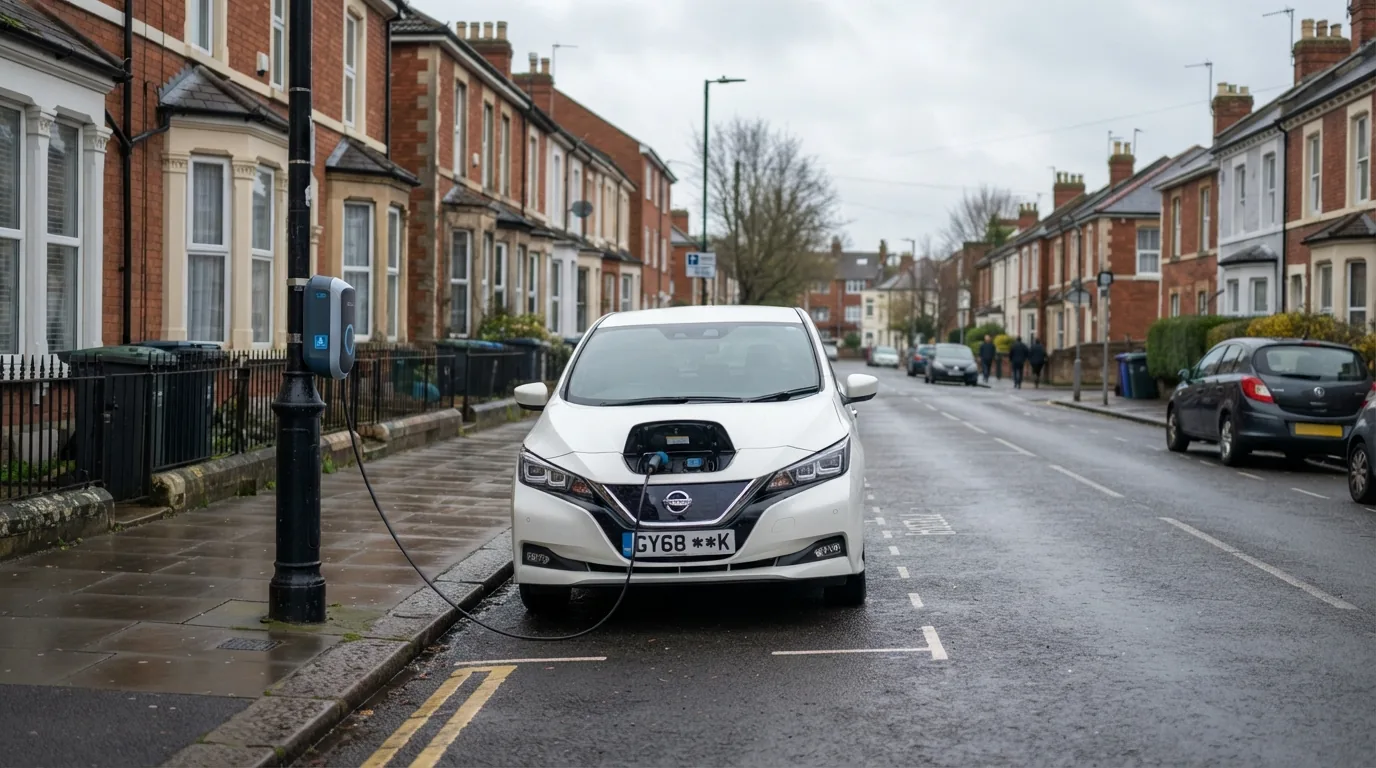
Quick answers
- If you cannot charge at home, the right electric car matters more than it does for someone with a private driveway.
- A driver with home charging can choose almost any EV: even a short-range car charged overnight is full every morning.
- The charging cost reality: Without home charging, your cost per mile is higher than for drivers who can use cheap off-peak electricity.
- Our top pick: Hyundai Ioniq 5 or Kia EV6: The Hyundai Ioniq 5 and Kia EV6 share an 800V electrical architecture that is the key differentiator for driveway-less drivers.
- The Model 3 charges at up to 170kW at a Tesla Supercharger, which is not as fast as the 800V cars above, but the Supercharger network's reliability is significantly higher than most third-party networks.
- Best value long-range option: Kia EV3: The Kia EV3 at around £32,000 to £38,000 offers the best real-world range-to-price ratio in 2026 for the driveway-less driver.
If you cannot charge at home, the right electric car matters more than it does for someone with a private driveway. You need a car that minimises the number of public charging stops you make, charges as quickly as possible when you do stop, and works reliably on the charging networks available to you. Here is the shortlist.
Why the car matters more when you have no driveway
A driver with home charging can choose almost any EV: even a short-range car charged overnight is full every morning. A driver without home charging cannot rely on that buffer. Every mile of real-world range matters more because you cannot top up cheaply and effortlessly overnight.
The two critical specs for driveway-less EV owners are:
- Generous real-world range. The larger the battery, the fewer charging stops you need. Aim for 250-plus miles of real-world range as a minimum.
- Fast DC rapid charging. A car that charges at 150kW or faster means a 20-minute public charging stop adds 100-plus miles. A car that charges at only 50kW needs 40 to 50 minutes for the same top-up.
The charging cost reality
Without home charging, your cost per mile is higher than for drivers who can use cheap off-peak electricity. Here is the cost landscape as of May 2026:
| Charging method | Typical cost | Cost per mile (3.5 miles/kWh) |
|---|---|---|
| Home wallbox, off-peak tariff | 7p/kWh | ~2p |
| Home wallbox, standard Ofgem rate | 24.67p/kWh | ~7p |
| Lamp post / on-street slow charger | 35–55p/kWh | ~10–16p |
| Public fast charger (7–22kW) | 40–60p/kWh | ~11–17p |
| Public rapid charger (50–100kW) | ~54p/kWh | ~15p |
| Ultra-rapid charger (150kW+) | ~79p/kWh | ~23p |
The public rapid charging rate (15 to 23p per mile) is broadly comparable to petrol. The saving comes primarily from lamp post, workplace, or destination charging, and from the residual tax and servicing advantages of EV ownership.
For drivers with no driveway, the strategy is to minimise the proportion of charging done at ultra-rapid rates, and maximise the use of workplace, destination, and slow on-street chargers.
The shortlist for driveway-less drivers
| Model | Price from | Real-world range | Max DC rapid | Notes |
|---|---|---|---|---|
| Hyundai Ioniq 5 | £44,995 | ~285–310 miles | 220kW | Fastest charging in class; 10–80% in 18 min |
| Kia EV6 (Standard Range) | ~£40,000 | ~270–295 miles | 240kW | 800V platform; excellent rapid charging |
| Tesla Model 3 | £39,990 | ~295 miles | 170kW | Access to Supercharger network; best reliability |
| Volkswagen ID.7 | £53,990 | ~320–350 miles | 200kW | Very long range; fewer stops needed |
| Kia EV3 | ~£32,000 | ~280–310 miles | 135kW | Best value long-range option |
| Hyundai Ioniq 6 (long range) | ~£46,000 | ~310–340 miles | 220kW | Highly efficient; exceptional real-world range |
Our top pick: Hyundai Ioniq 5 or Kia EV6
The Hyundai Ioniq 5 and Kia EV6 share an 800V electrical architecture that is the key differentiator for driveway-less drivers. The 800V system enables ultra-rapid charging at up to 220kW (Ioniq 5) or 240kW (EV6), meaning a 10 to 80% charge takes around 18 minutes.
For a driver relying primarily on public chargers, the difference between an 18-minute stop and a 40-minute stop at every charge session is transformative. Eighteen minutes is a coffee stop. Forty minutes is an event that requires planning.
Hyundai Ioniq 5: From £44,995. Real-world range around 285 to 310 miles on the long-range version. Distinctive styling, very spacious cabin, Vehicle-to-Load (V2L) capability allows you to power external devices.
Kia EV6: Similar 800V architecture and charging speeds. Real-world range around 270 to 295 miles (Standard Range). Available from around £40,000. Sportier shape than the Ioniq 5, similar space inside.
Both have access to Ionity, Osprey, Gridserve, and other high-power UK charging networks at full speed, which is where the 800V advantage shows.
Best charging network access: Tesla Model 3
The Model 3 charges at up to 170kW at a Tesla Supercharger, which is not as fast as the 800V cars above, but the Supercharger network’s reliability is significantly higher than most third-party networks. For driveway-less drivers who rely on chargers working every time, that reliability premium is worth serious consideration.
With around 1,000 Supercharger stalls at over 170 UK locations, the Model 3 driver has access to the most consistently available network in the UK. Payment is automatic. Reliability is industry-leading.
For drivers without home charging, a charger that always works is worth more than a charger that is slightly faster but sometimes doesn’t.
Best value long-range option: Kia EV3
The Kia EV3 at around £32,000 to £38,000 offers the best real-world range-to-price ratio in 2026 for the driveway-less driver. Its 81.4kWh battery delivers around 280 to 310 miles of real-world range, meaning the car needs charging less frequently than most competitors.
Charging at up to 135kW DC, a 10 to 80% top-up takes around 30 minutes. This is not as fast as the Ioniq 5 or EV6, but the car’s range is large enough that you charge less often. The 7-year/100,000-mile warranty is the best in its segment.
For drivers who cannot charge at home and want to minimise the cost and inconvenience of public charging through sheer battery size, the EV3 is the most cost-effective route in 2026.
What to avoid if you cannot charge at home
- Cars with maximum DC charging below 100kW: public rapid charging stops become disproportionately long and inconvenient.
- Short-range EVs (under 200 miles real-world): you charge more frequently, every charge costs more at public rates, and the running cost advantage of EV ownership shrinks significantly.
- Cars from brands with limited Zap-Map coverage or charging network partnerships: some older or cheaper EVs are limited to slower chargers or less reliable networks.
Charging strategy for driveway-less EV owners
The practical approach for drivers without home charging:
- Workplace charging first. If your employer has chargers, this is your cheapest daytime charging option. Lobby for it if it does not exist.
- Destination charging. Build charging into journeys you already make: top up while shopping, at the gym, at restaurants with chargers.
- Lamp post charger account. Set up an account with the on-street network in your area (often Ubitricity, Connected Kerb, or BP Pulse). Use this for overnight or daytime slow charging when possible.
- Rapid charging for longer trips only. Reserve 150kW+ rapid chargers for when you need range quickly: longer journeys, emergencies, or when other options are not available.
For the full guide on charging without a driveway, read Can you live with an electric car without a driveway?. For the complete switching guide, return to the switching from petrol or diesel hub. For broader model recommendations, see best first electric cars for switching from petrol.
Sources: Hyundai UK Ioniq 5 pricing and specifications, Kia UK EV6 and EV3 data, Tesla UK Supercharger network, EV Database UK range data 2026, Ofgem energy price cap Q2 2026, RAC fuel watch data May 2026, GOV.UK EV chargepoint statistics March 2026.
How we test and where our numbers come from
Range figures are official WLTP combined values taken from manufacturer UK specification pages, with real-world estimates drawn from independent comparative testing. Prices are UK list prices at the time of the latest update. Tax, grant and charging-scheme figures come from GOV.UK and HMRC publications. We re-check every guide when pricing, specification or policy changes. Last checked 11 August 2026.

EV Compared
The EV Compared editorial team tracks the UK electric vehicle market full time: new model launches, list prices, WLTP and real-world range, public charging tariffs and the tax rules that decide what an EV actually costs to run. Every guide is checked against manufacturer specifications and official GOV.UK figures, and updated whenever the numbers move.
Related reading
View all
What Are the Biggest Myths About Switching to an EV?
The claims that put UK drivers off going electric, and what the evidence actually says
Should You Buy an EV in 2026 or Wait for Cheaper Models?
An honest look at where EV prices are heading and whether the wait is worth it for UK buyers
Buying and Owning an Electric Car in the UK: The Complete 2026 Guide
Everything you need to know about costs, charging, depreciation and day-to-day life with an EV