What Surprises New EV Drivers Most in the First Month?
The things first-time EV owners genuinely did not expect, good and bad
Quick answers
- Every new EV driver goes through a similar recalibration in the first month. The fears that seemed large before the car arrived turn out to be smaller than expected.
- The most common positive surprise among new EV drivers is how much cheaper daily running feels.
- New EV owners almost universally describe a period in the first two to three weeks of obsessively watching the range display, planning charges in advance, and mildly stressing about whether they will make it.
- Most new EV owners worry about charging before they own the car and almost never worry about it after a month of ownership.
- The cold weather surprise: The solution that many EV owners discover later than they should: preconditioning.
- Most modern EVs come with a manufacturer app that allows remote monitoring and control.
Every new EV driver goes through a similar recalibration in the first month. The fears that seemed large before the car arrived turn out to be smaller than expected. Things nobody mentioned turn out to matter more than any review article suggested. Here is an honest account of the surprises, drawn from what UK EV owners consistently report.
The biggest positive surprise: how cheap it is to run
The most common positive surprise among new EV drivers is how much cheaper daily running feels.
The moment this hits home is usually the first electricity bill after getting the EV. A petrol driver accustomed to spending £80 to £120 per month at the pump might spend £20 to £40 charging at home instead, even more so if they have switched to a dedicated off-peak EV electricity tariff.
The maths: at 7p per kWh (a typical off-peak EV rate), filling a 60kWh battery from empty costs around £4.20. At the standard Ofgem rate of 24.67p per kWh, it costs £14.80. A petrol car covering the same 200 miles of range would consume around 22 litres at 159.6p per litre, costing £35.
The psychological effect of plugging in at home and waking up to a “full tank” every morning, at a fraction of petrol cost, hits new EV drivers hard. Many describe it as one of the main reasons they would never go back.
The surprise that takes adjustment: range thinking
New EV owners almost universally describe a period in the first two to three weeks of obsessively watching the range display, planning charges in advance, and mildly stressing about whether they will make it. This is normal and it passes.
Within four to six weeks, the same drivers typically report that they no longer think about range in the same way. They know their car’s real-world range, they know their daily needs, and the routine of plugging in at home removes almost all the daily anxiety.
The trigger for this anxiety is often the range display fluctuating. An EV’s displayed range changes with speed, temperature, and driving style. Driving at 70mph on a cold morning might show 180 miles remaining from a full battery. Slowing to 50mph, the estimate might jump to 220. This is the car accurately reporting what is likely; it is not lying. Understanding that the display is a prediction based on current consumption, not a fixed promise, is the key mental adjustment.
The surprise about charging: it is simpler than feared
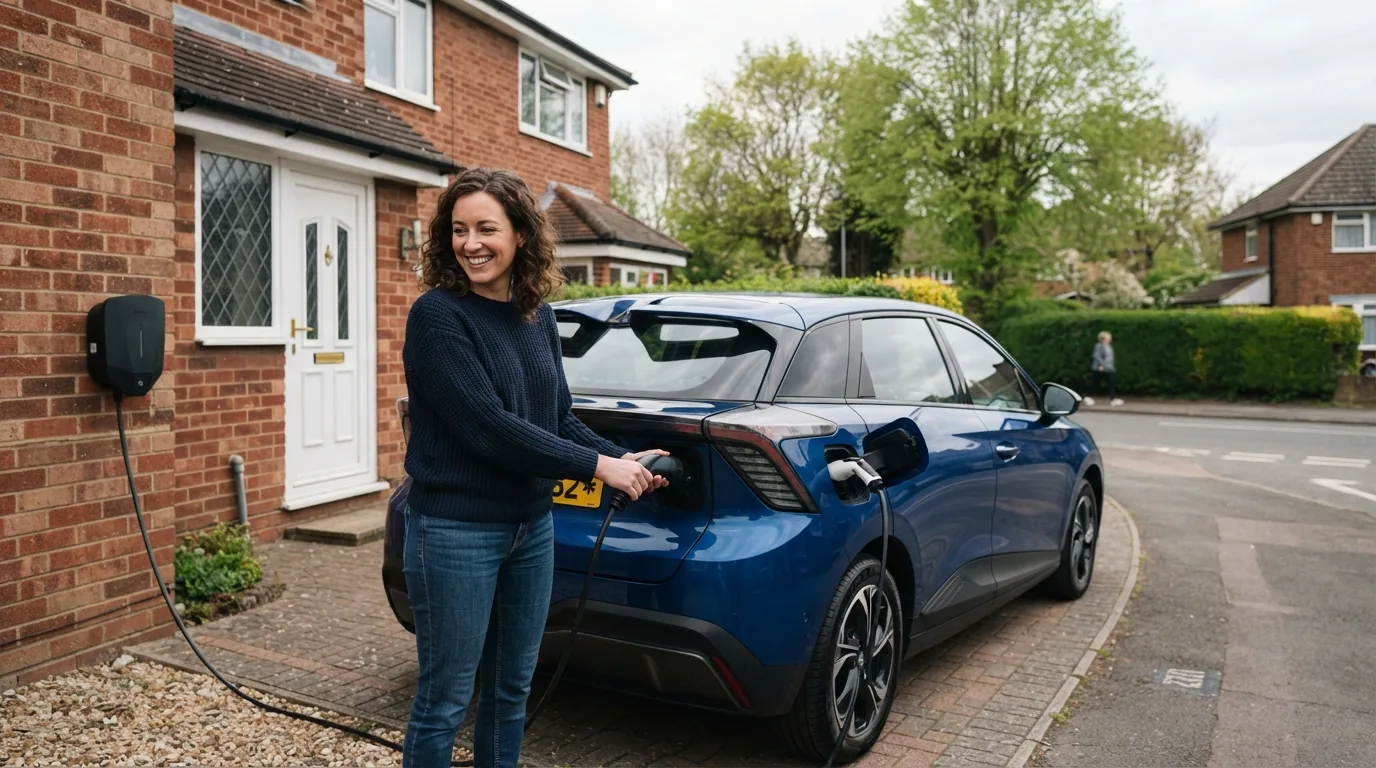
Most new EV owners worry about charging before they own the car and almost never worry about it after a month of ownership. The routine of plugging in at home is genuinely simple: park the car, connect the cable, walk inside. Nothing to pay, nothing to wait for.
The surprises on public charging are mixed. The good news: the network is bigger and easier to use than most people expect. The charging apps (Zap-Map, Osprey, Gridserve) are straightforward, and contactless payment on most newer chargers removes the need for multiple accounts.
The bad news: charger reliability remains genuinely patchy. Around one in five public chargers experiences some form of issue, whether a failed payment system, a cable that will not lock, or a charger that shows available on the app but does not start. Experienced EV drivers learn to have a backup plan: know the nearest alternative charger, do not arrive at a rapid charger with less than 10% battery, and have two or three network accounts rather than relying on one.
The cold weather surprise
The first cold spell catches many new EV owners off guard. A car that showed 270 miles of range in October might show 200 miles in January in freezing temperatures. This is normal and is caused by reduced battery efficiency at low temperatures and energy consumed by heating the cabin.
The solution that many EV owners discover later than they should: preconditioning. Most modern EVs allow you to schedule the cabin and battery to warm up while the car is still plugged in at home. You use grid electricity rather than battery power for the warm-up, and you start the journey with a full battery and a warm car, losing much less range to heating once on the road. Setting this up takes about five minutes and becomes a winter habit within days.
The surprises about driving
New EV drivers commonly report these driving-related discoveries:
One-pedal driving converts almost everyone. Most drivers are sceptical about regenerative braking before they try it. Within two weeks, most describe it as superior to conventional braking, particularly in traffic and urban driving. The sense of control and the habit of slowing smoothly without the brake pedal becomes instinctive very quickly.
The acceleration is genuinely surprising. Even buyers of modest family EVs are surprised by how quick the car feels. There is no hesitation, no waiting for revs to build, no gearchange. Press the accelerator and the car responds immediately. Overtaking on A-roads and merging onto motorways become notably more relaxed.
Motorways use more range than expected. New EV owners who drove conservatively around town and watched the range hold steady often get a shock on their first long motorway run. The range display drops more quickly at 70mph than at 30mph. This is not a fault; it is aerodynamics. The car is accurate; the driver’s expectation was calibrated on urban use.
The app ecosystem: more useful than expected
Most modern EVs come with a manufacturer app that allows remote monitoring and control. New owners typically discover that they use these more than expected:
- Checking charge level without going to the car
- Setting the charge schedule to take advantage of off-peak tariffs
- Preconditioning on cold mornings
- Checking range before a journey
- Locking the car remotely
Third-party apps like Zap-Map become essential for longer journeys, showing charger locations, speed, compatibility, real-time availability, and user reviews. Some owners use A Better Route Planner (ABRP) for journey planning, which optimises routing around charging stops based on your specific car model.
What most new EV owners say after a month
Based on consistent patterns from owner surveys and community reports:
| What they worried about before | What they discovered after one month |
|---|---|
| Running out of charge | Almost never happened; home charging means starting full every morning |
| Charging taking too long | Home charging is overnight and effortless; public charging is for trips |
| Public charger shortages | Better than expected, though reliability varies |
| Winter range loss | Real but manageable with preconditioning |
| The car feeling different | Faster, quieter, and smoother than petrol; prefer it |
| Cost savings | Usually larger than expected |
The consensus is that the mental adjustment is harder than the practical adjustment. Most of the real worries dissolve in the first two to four weeks of ownership.
What new owners wish someone had told them
The advice new EV owners most commonly wish they had received before buying:
- Get a dedicated EV electricity tariff immediately. Do not wait months to set it up. The off-peak rate transforms the running cost.
- Download Zap-Map before your first long journey. Know where the chargers are on your route before you set off.
- Set a charging limit of 80% for daily use. Charging to 100% regularly is fine occasionally but not necessary; 80% is better for long-term battery health and most cars make this easy to set.
- Try one-pedal driving in “B” mode or maximum regen from week one. Most drivers who try it immediately prefer it.
- Precondition the car in winter. Five minutes of setup saves range and means you start every cold morning comfortable and fully charged.
For the step-by-step guide to your first week with an EV, see First week with an EV: a new owner’s survival guide. For model recommendations, see best first electric cars for switching from petrol. Return to the switching from petrol or diesel hub for the complete guide.
Sources: RAC EV owner surveys 2024 and 2025, GOV.UK EV chargepoint statistics March 2026, Ofgem energy price cap Q2 2026, RAC fuel watch data May 2026.
How we test and where our numbers come from
Range figures are official WLTP combined values taken from manufacturer UK specification pages, with real-world estimates drawn from independent comparative testing. Prices are UK list prices at the time of the latest update. Tax, grant and charging-scheme figures come from GOV.UK and HMRC publications. We re-check every guide when pricing, specification or policy changes. Last checked 11 August 2026.

EV Compared
The EV Compared editorial team tracks the UK electric vehicle market full time: new model launches, list prices, WLTP and real-world range, public charging tariffs and the tax rules that decide what an EV actually costs to run. Every guide is checked against manufacturer specifications and official GOV.UK figures, and updated whenever the numbers move.
Related reading
View all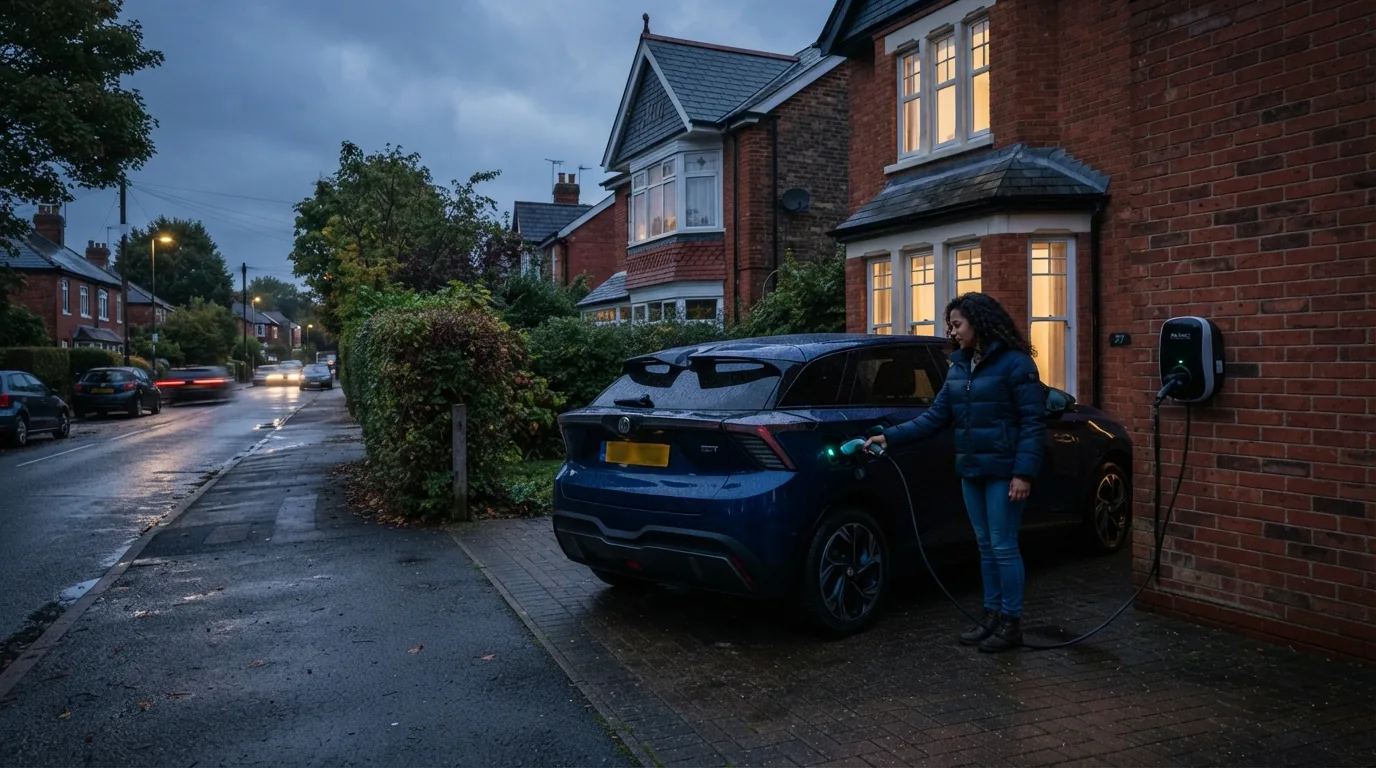
What Are the Biggest Myths About Switching to an EV?
The claims that put UK drivers off going electric, and what the evidence actually says
Should You Buy an EV in 2026 or Wait for Cheaper Models?
An honest look at where EV prices are heading and whether the wait is worth it for UK buyers
Buying and Owning an Electric Car in the UK: The Complete 2026 Guide
Everything you need to know about costs, charging, depreciation and day-to-day life with an EV