Public EV Charging in the UK: Networks, Costs and How It Works
Everything you need to know about charging your electric car away from home
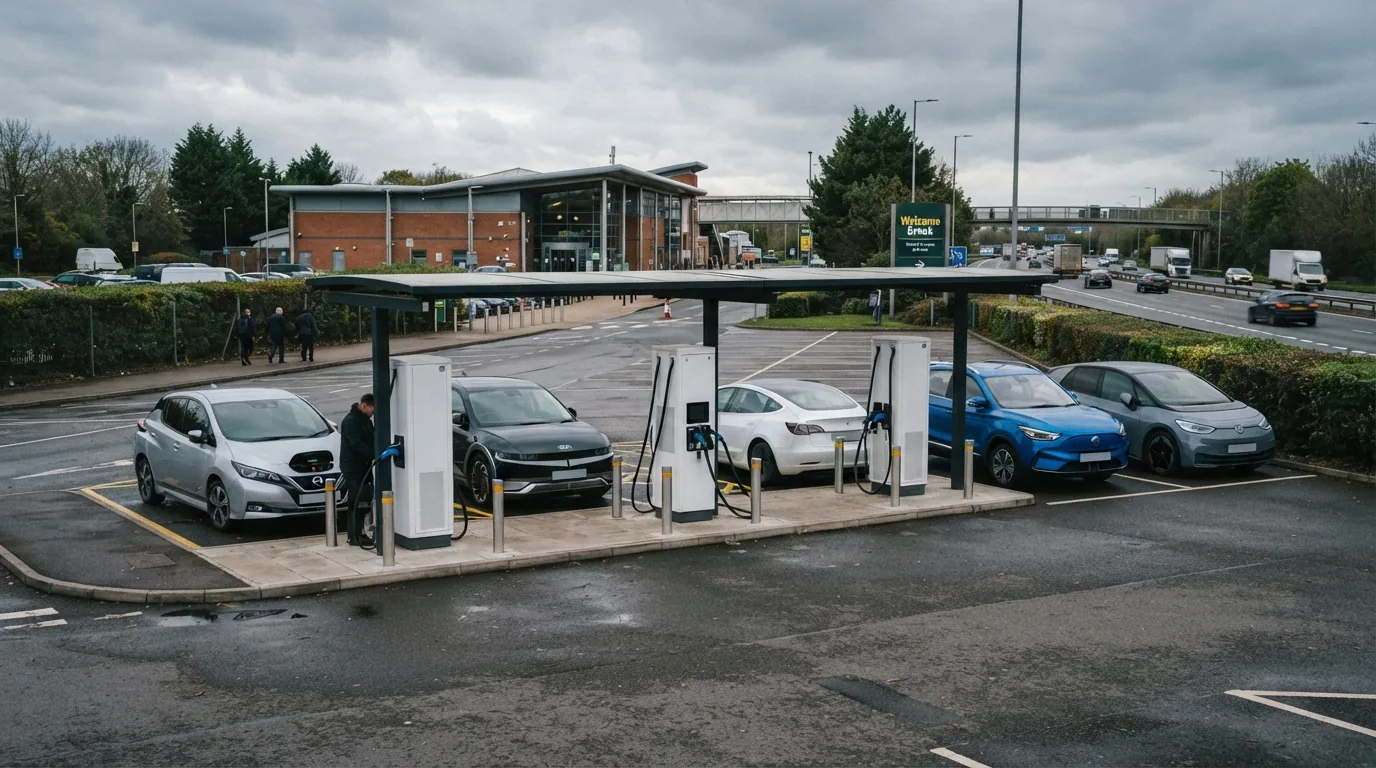
Quick answers
- The UK public charging network passed 120,000 chargepoints in April 2026, according to Zap-Map. That is 11% more than a year earlier, and ultra-rapid chargers above 150 kW have grown by 40% year-on-year.
- What exactly is public EV charging: Public EV charging means plugging your electric car into a charger that is available to any driver, as opposed to a private home or workplace unit.
- What types of public charger exist: Most EV owners use standard or standard plus chargers as a top-up while shopping, and rapid or ultra-rapid chargers when covering long distances.
- Which connector do you need: Tesla has its own connector standard but opened a significant portion of its UK Supercharger network to non-Tesla EVs in 2025 and 2026 using a CCS adapter.
- How much does public charging cost: The weighted average pay-as-you-go price for rapid and ultra-rapid charging was 79p per kWh in April 2026, according to Zap-Map's price index.
- How do you pay: Since November 2024, every rapid charger on a public network (50 kW and above) is legally required to accept contactless bank card or device payment.
The UK public charging network passed 120,000 chargepoints in April 2026, according to Zap-Map. That is 11% more than a year earlier, and ultra-rapid chargers above 150 kW have grown by 40% year-on-year. Despite that progress, public charging is still the aspect of EV ownership that draws the most questions. This guide covers how it works, what it costs, and how to use it confidently.
What exactly is public EV charging?
Public EV charging means plugging your electric car into a charger that is available to any driver, as opposed to a private home or workplace unit. Chargepoints are installed in car parks, retail parks, supermarkets, hotels, motorway services and on-street, and they are operated by dozens of different companies called charge point operators (CPOs).
There is no single unified network. Instead, you deal with whichever operator has installed the hardware at the location you visit. That said, regulations introduced in late 2024 now require all rapid chargers (50 kW and above) to accept contactless bank card payment without an app or membership, which has made the experience much simpler than it was two or three years ago.
What types of public charger exist?
Zap-Map’s 2026 reporting uses updated naming conventions:
| Speed band | Power range | Typical session time* | Common locations |
|---|---|---|---|
| Standard | 3 kW to 7.9 kW | 4 to 8 hours | Residential streets, car parks |
| Standard Plus | 8 kW to 49 kW | 1 to 4 hours | Supermarkets, retail parks, workplaces |
| Rapid | 50 kW to 149 kW | 30 to 60 minutes | Motorway services, forecourts |
| Ultra-rapid | 150 kW and above | 15 to 30 minutes | Dedicated hubs, motorway services |
*Based on a typical 60 kWh battery from 20% to 80% state of charge.
Most EV owners use standard or standard plus chargers as a top-up while shopping, and rapid or ultra-rapid chargers when covering long distances. The higher the power, the more important battery condition and state of charge become to actual speed, which is why real-world ultra-rapid sessions sometimes feel slower than the headline figure.
Which connector do you need?
The UK has settled on two main standards. AC charging (standard and standard plus) uses a Type 2 inlet on every modern EV. DC rapid charging uses CCS Combo 2 on almost all EVs sold in the UK from 2020 onwards. If you own an older Nissan Leaf you may have a CHAdeMO port, which is becoming increasingly rare on public networks.
Tesla has its own connector standard but opened a significant portion of its UK Supercharger network to non-Tesla EVs in 2025 and 2026 using a CCS adapter. Tesla owners still get substantially lower per-kWh rates than non-Tesla users at Superchargers.
How much does public charging cost?
The weighted average pay-as-you-go price for rapid and ultra-rapid charging was 79p per kWh in April 2026, according to Zap-Map’s price index. Standard and standard plus chargers averaged 54p per kWh. That works out at roughly 23p per mile on rapid chargers and 16p per mile on slower units, for a typical EV with 3.5 miles per kWh efficiency.
Membership plans on most networks trim prices by 10 to 20p per kWh but cost a monthly fee, usually £7 to £10. For drivers who charge on the public network once or twice a week, the maths often favours membership. For occasional users, PAYG contactless is simpler and still cheaper than a petrol equivalent.
Read our full breakdown: How Much Does Public EV Charging Cost?
How do you pay?
Since November 2024, every rapid charger on a public network (50 kW and above) is legally required to accept contactless bank card or device payment. Most networks now accept contactless on slower chargers too, though a handful of older units still need an app or RFID card.
The three main payment routes are:
- Contactless tap, no sign-up, just tap and charge. Usually the most expensive tariff.
- Network app, download the operator’s app, create an account, and get a slightly lower rate. Often needed for off-peak pricing on networks like InstaVolt.
- RFID card, a physical card linked to your account. Faster than an app at the charger but requires signing up first.
Roaming between networks using a single account is growing but not universal. Electroverse and similar roaming platforms let you access multiple networks from one app and one bill, which is useful for drivers who regularly use different operators.
Who are the main charging networks?
The UK has many operators. The largest by chargepoint count include Shell Recharge (which absorbed Ubitricity’s on-street network and has around 14,500 chargepoints), Pod Point (around 8,200), and Connected Kerb (around 7,000, mainly on-street). For rapid and ultra-rapid, MFG EV Power, Osprey, BP Pulse, GRIDSERVE and InstaVolt are the biggest names.
For motorway-speed long-distance journeys, GRIDSERVE Electric Highway covers around 85% of the UK motorway network, Tesla Supercharger has around 2,900 chargers across the UK (with roughly half open to non-Tesla EVs), and IONITY has 788 ultra-rapid chargers at Extra service stations and village hotels.
Our in-depth ranking is at Best Public EV Charging Networks in the UK.
Is the network reliable?
Reliability has improved but remains patchy. The government’s 2024 regulations require rapid networks to maintain 99% average annual uptime, but a 2026 review found that only around 16 of 38 operators audited appeared compliant. Premium networks such as InstaVolt, Tesla Supercharger, and Osprey consistently post high uptime figures. Older on-street infrastructure from some legacy operators still suffers from higher fault rates.
If you arrive at a broken charger, check the Zap-Map app for the next-nearest alternative and report the fault directly to the operator using the number on the unit. Networks are legally required to display contact information on every chargepoint.
Common myths corrected
“You need a membership to charge in public.” Not true for rapid chargers since late 2024. Contactless is always available.
“All chargers work with all cars.” Almost true for CCS cars, but connector compatibility still matters. Always check before visiting an unfamiliar charger type.
“Rapid charging damages your battery.” Occasional rapid charging is fine. It is prolonged, repeated charging to 100% that causes more wear, not the charge speed itself.
What should I read next?
- How to Pay for Public EV Charging, all the payment methods explained
- Rapid vs Ultra-Rapid Charging, what the numbers really mean in practice
- How to Find Working EV Chargers on a Road Trip, apps and strategies
- Best Public EV Charging Networks in the UK, ranked by use case
The UK public network is expanding at pace, and for the majority of journeys the experience is now genuinely straightforward. The complexity lies in understanding which network suits your habits and which plan, if any, is worth paying for.
How we test and where our numbers come from
Range figures are official WLTP combined values taken from manufacturer UK specification pages, with real-world estimates drawn from independent comparative testing. Prices are UK list prices at the time of the latest update. Tax, grant and charging-scheme figures come from GOV.UK and HMRC publications. We re-check every guide when pricing, specification or policy changes. Last checked 11 August 2026.
Frequently asked questions
What exactly is public EV charging?
Public EV charging means plugging your electric car into a charger that is available to any driver, as opposed to a private home or workplace unit.
What types of public charger exist?
Most EV owners use standard or standard plus chargers as a top-up while shopping, and rapid or ultra-rapid chargers when covering long distances.
Which connector do you need?
The UK has settled on two main standards. AC charging (standard and standard plus) uses a Type 2 inlet on every modern EV.
How much does public charging cost?
The weighted average pay-as-you-go price for rapid and ultra-rapid charging was 79p per kWh in April 2026, according to Zap-Map's price index. Standard and standard plus chargers averaged 54p per kWh.
How do you pay?
Since November 2024, every rapid charger on a public network (50 kW and above) is legally required to accept contactless bank card or device payment. Most networks now accept contactless on slower chargers too, though a handful of older units still need an app or RFID card.
Sources and further reading
- zapmap.comZap-MapPrimary source referenced in this article.

EV Compared
The EV Compared editorial team tracks the UK electric vehicle market full time: new model launches, list prices, WLTP and real-world range, public charging tariffs and the tax rules that decide what an EV actually costs to run. Every guide is checked against manufacturer specifications and official GOV.UK figures, and updated whenever the numbers move.
Related reading
View all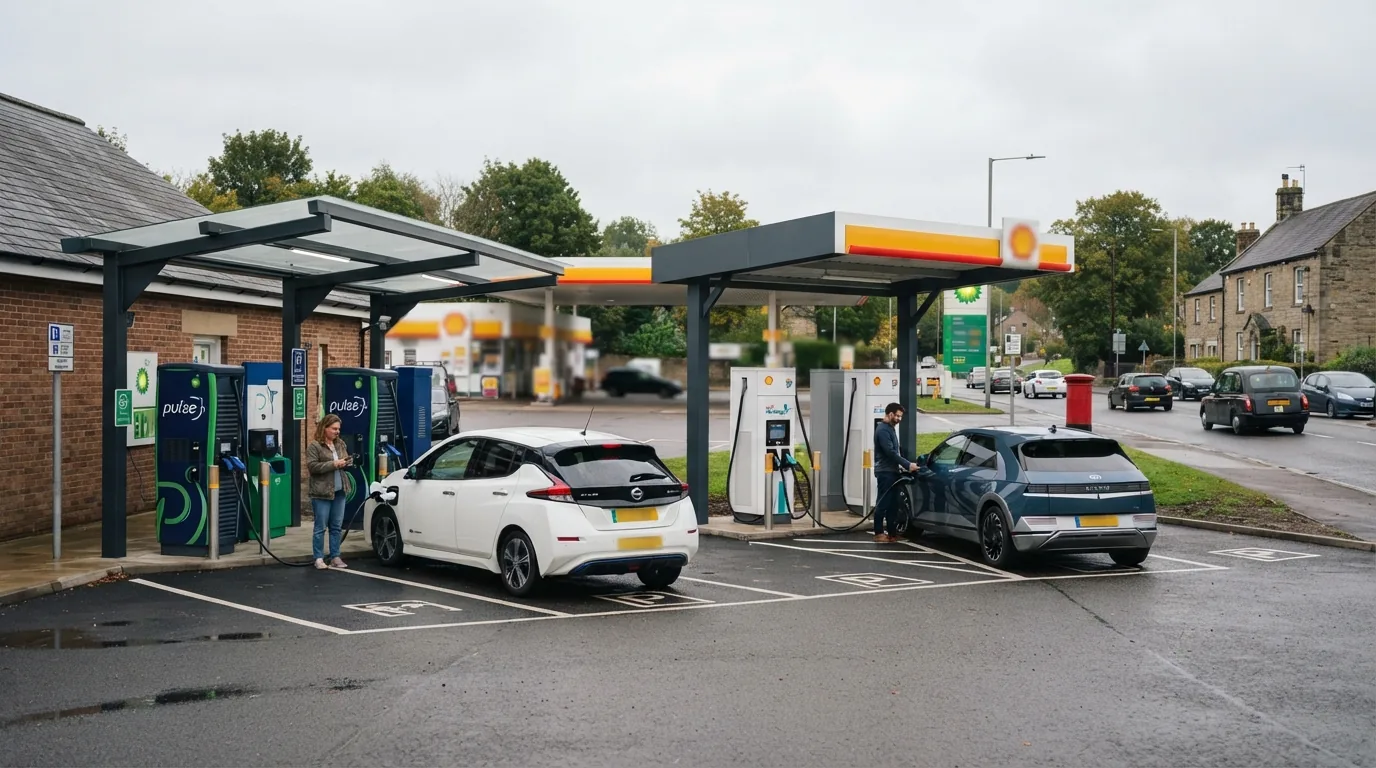
BP Pulse vs Shell Recharge: Which UK Network Wins?
Two of the UK's biggest charging networks compared on price, reliability and which type of driver each suits
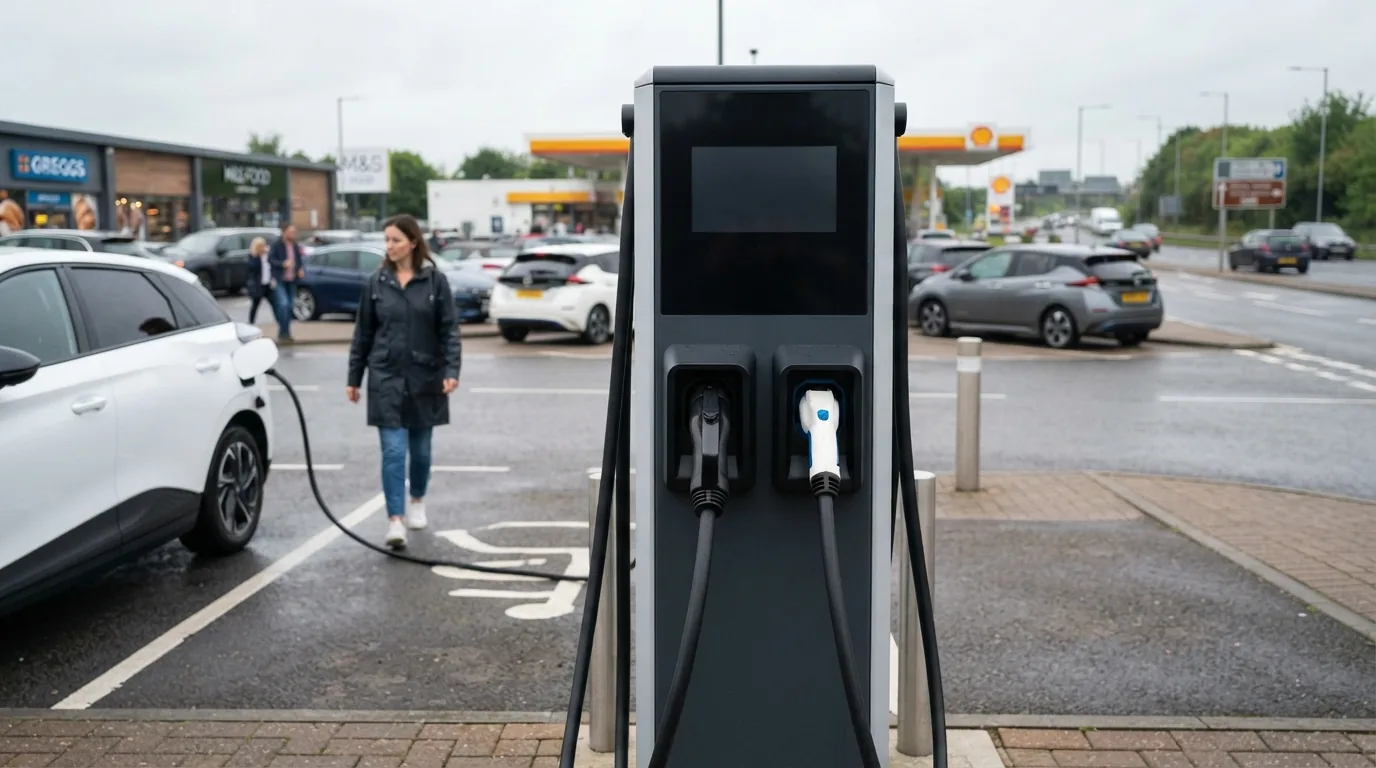
Can You Charge Any EV at Any Public Charger in the UK?
Why almost any new EV works at almost any UK public charger, and the two exceptions you need to know
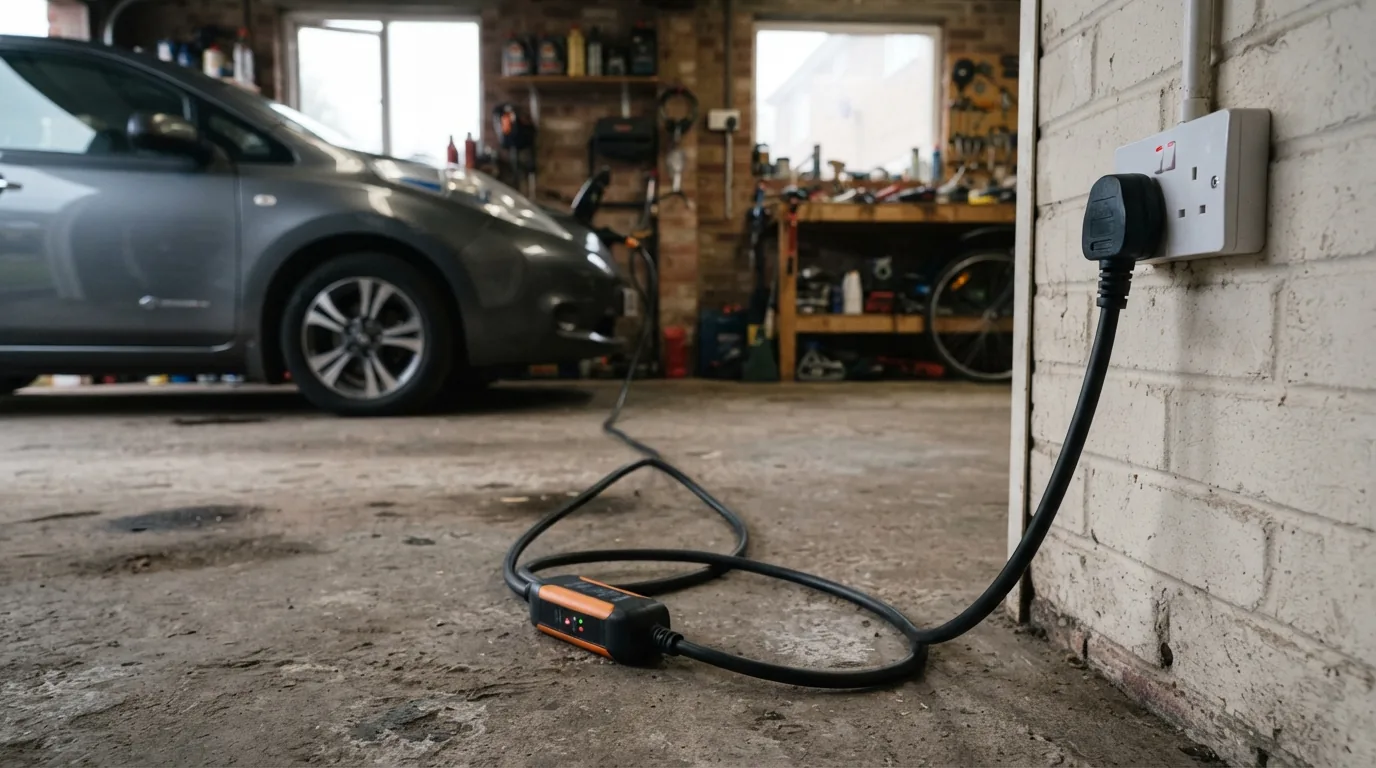
Can You Charge an EV From a Three-Pin Plug in the UK?
Yes, most cars ship with the cable, but speed and safety limits mean it works best for occasional or emergency use