How to Find Working EV Chargers on a UK Road Trip
Apps, planning strategies and backup options to avoid being stranded between charges
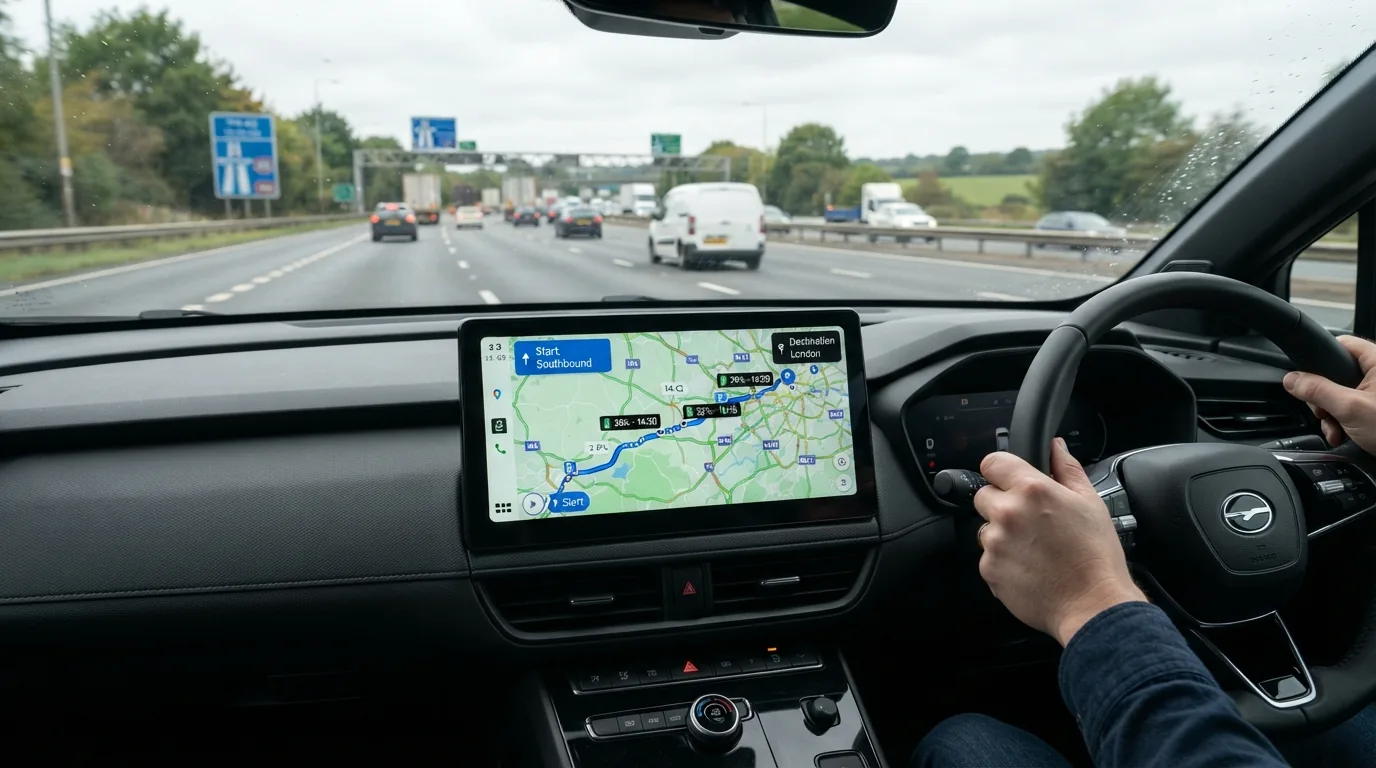
Quick answers
- There are now over 120,000 public charge points across the UK, according to Zap-Map's April 2026 figures. The challenge is no longer whether a charger exists near your route; it is knowing which ones are working, available, and compatible with your car.
- Using the car's planner and Zap-Map together is the most robust approach: the in-car planner handles preconditioning and gives turn-by-turn directions, while Zap-Map lets you check live status, user comments and pricing before you commit to a stop.
- The most common road trip mistake is planning one charging stop with no fallback.
- For coverage in Scotland and remote areas, ChargePlace Scotland has historically provided the most rural chargers, though its network is transitioning to ScottishPower and other operators through 2026.
- What to do if a charger is out of service: Most networks' helplines respond within a few minutes for remote resets.
- Does time of day matter: Zap-Map shows occupancy in real time for many sites, which helps you decide whether to push on to a quieter alternative or wait a few minutes at a busy hub.
There are now over 120,000 public charge points across the UK, according to Zap-Map’s April 2026 figures. The challenge is no longer whether a charger exists near your route; it is knowing which ones are working, available, and compatible with your car. A bit of planning before departure reduces the chance of arriving at a dead screen or a full forecourt, and costs nothing beyond a few minutes and a free app download.
Start with Zap-Map for route planning
Zap-Map is the UK’s dominant charging map and the official data partner for the Department for Transport. It shows over 120,000 chargepoints with live availability status on around 80% of units, connector types, network, pricing and user-reported status updates.
For a road trip, use Zap-Map’s route planner:
- Enter your start and destination
- Select your car model (so the app knows your range and connector type)
- Choose from “Autoroute” (the app picks stops for you), “Suggest chargers” or “Show all chargers” (for manual selection)
- The app shows which chargers are available, at what speed, and what they charge per kWh
Zap-Map’s free version is sufficient for most drivers. Zap-Map Premium (paid) adds Apple CarPlay and Android Auto integration and a 5% charging credit on sessions at chargers below 50 kW per month.
Use your car’s built-in planner if it has one
Several cars have route planning with automatic charging stops built into their navigation systems, and some of these also precondition the battery for faster charging as you approach:
| Car | Route planner | Automatic preconditioning |
|---|---|---|
| Tesla Model 3 / Y / S / X | Native (Supercharger focused) | Yes |
| Hyundai Ioniq 5 / 6 | Native (any charger) | Yes |
| Kia EV6 / EV9 | Native | Yes |
| Polestar 2 / 3 | Android Automotive + Google Maps | Yes |
| Volkswagen ID.4 / 5 | We Connect | Partial |
| BMW iX / i4 | BMW Maps | Yes |
Using the car’s planner and Zap-Map together is the most robust approach: the in-car planner handles preconditioning and gives turn-by-turn directions, while Zap-Map lets you check live status, user comments and pricing before you commit to a stop.
Other useful apps alongside Zap-Map
Electroverse: Aggregates multiple charging networks into one app, useful if you regularly use different operators. Also shows live charger status and handles payment across networks.
PlugShare: Particularly useful for user-submitted photos, check-ins and real-time comments. If you want to know whether a charger at a rural campsite has been working this week, PlugShare comments from other drivers are often the most current source.
Bonnet: Similar roaming approach to Electroverse, with a growing list of partner networks.
ABRP (A Better Route Planner): A specialist web and mobile route planner that lets you model your specific car, starting state of charge, weather conditions and charging strategy. It handles multi-stop routes in granular detail and is particularly popular with drivers doing challenging long trips.
How to check if a specific charger is working
Before driving to a remote charger, check three things:
-
Zap-Map live status: Green means available, orange means in use, red means reported faulty. Not all networks stream live data, so treat a green icon as “no reported fault” rather than a guarantee.
-
User comments on Zap-Map: Tap the chargepoint, scroll to comments. Drivers post check-ins and flag problems. A comment saying “working fine this morning” from three hours ago is a strong positive signal.
-
Network app: For networks where you have an account, the app usually shows real-time charger status for that network’s units, often more reliably than third-party maps because it draws on direct backend data.
Plan at least one alternative stop for each leg
The most common road trip mistake is planning one charging stop with no fallback. UK charger availability is not 100% guaranteed. The government’s reliability regulations require rapid networks to hit 99% annual uptime, but a 2026 audit found that only around half of rapid operators appeared to be meeting this threshold.
For each planned stop on a long route, know the next nearest alternative of the same speed or faster. Zap-Map makes this easy: zoom out from your planned stop and note the nearest other rapid or ultra-rapid sites.
Which networks are most reliable for road trips?
For motorway driving, the networks with the widest coverage and highest reliability in 2026:
| Network | Motorway coverage | Charger count (UK) | Typical speed |
|---|---|---|---|
| GRIDSERVE Electric Highway | ~85% of motorways | ~2,100 | 90–350 kW |
| Tesla Supercharger | Good (urban + motorway) | ~2,900 | 72–250 kW |
| IONITY | Extra motorway services | ~788 | 150–350 kW |
| Osprey | Good on A-roads and retail | ~2,838 | 50–150 kW |
| BP Pulse | Motorway services + forecourts | ~2,491 rapid | 7–150 kW |
| MFG EV Power | Forecourt hubs | ~2,866 rapid | 150–360 kW |
For coverage in Scotland and remote areas, ChargePlace Scotland has historically provided the most rural chargers, though its network is transitioning to ScottishPower and other operators through 2026. Coverage exists but reliability in remote Highland areas has been more variable than urban locations.
What to do if a charger is out of service
If you arrive and a charger is broken:
- Call the operator helpline, displayed on every charger by law. Many issues (frozen screen, communication fault) can be resolved remotely by the operator while you wait.
- Try a different bay at the same site. If one unit is down, others may be working.
- Report the fault on Zap-Map so other drivers know immediately.
- Check your car’s charge level before heading to the next option, always know how far you can reach, and plan your next nearest charger before you need it.
Most networks’ helplines respond within a few minutes for remote resets. If the charger has a hardware fault, they cannot fix it remotely, but they can confirm that and direct you to the nearest working alternative.
Does time of day matter?
Yes, particularly at motorway services on holiday weekends. GRIDSERVE, IONITY and BP Pulse rapid charger bays at popular service stations can fill up completely at peak times (typically 10am to 2pm on summer Saturdays and around school half-term dates). If you have any flexibility in your departure time, leaving earlier in the morning reduces the chance of queuing.
Zap-Map shows occupancy in real time for many sites, which helps you decide whether to push on to a quieter alternative or wait a few minutes at a busy hub.
The trip habit that saves most time
The most useful habit for long-distance EV driving is never waiting until you are nearly empty to charge. Setting a “plug in at 20%” rule for motorway stops rather than “plug in at 10%” gives you enough buffer to reach the next alternative if your first choice is full or broken. This costs very little in extra range anxiety but prevents the genuine stress of arriving at a red-flagged charger on 5%.
Further reading
For a full guide to the UK’s public charging network and how to use it day-to-day, visit our Public Charging overview.
For ranked comparisons of the best networks for long-distance travel, see Best EV Charging Networks for Long Journeys and Best Public EV Charging Networks in the UK.
How we test and where our numbers come from
Range figures are official WLTP combined values taken from manufacturer UK specification pages, with real-world estimates drawn from independent comparative testing. Prices are UK list prices at the time of the latest update. Tax, grant and charging-scheme figures come from GOV.UK and HMRC publications. We re-check every guide when pricing, specification or policy changes. Last checked 11 August 2026.
Frequently asked questions
Which networks are most reliable for road trips?
For coverage in Scotland and remote areas, ChargePlace Scotland has historically provided the most rural chargers, though its network is transitioning to ScottishPower and other operators through 2026. Coverage exists but reliability in remote Highland areas has been more variable than urban locations.
Does time of day matter?
Yes, particularly at motorway services on holiday weekends. GRIDSERVE, IONITY and BP Pulse rapid charger bays at popular service stations can fill up completely at peak times (typically 10am to 2pm on summer Saturdays and around school half-term dates).
Sources and further reading
- zapmap.comZap-MapPrimary source referenced in this article.

EV Compared
The EV Compared editorial team tracks the UK electric vehicle market full time: new model launches, list prices, WLTP and real-world range, public charging tariffs and the tax rules that decide what an EV actually costs to run. Every guide is checked against manufacturer specifications and official GOV.UK figures, and updated whenever the numbers move.
Related reading
View all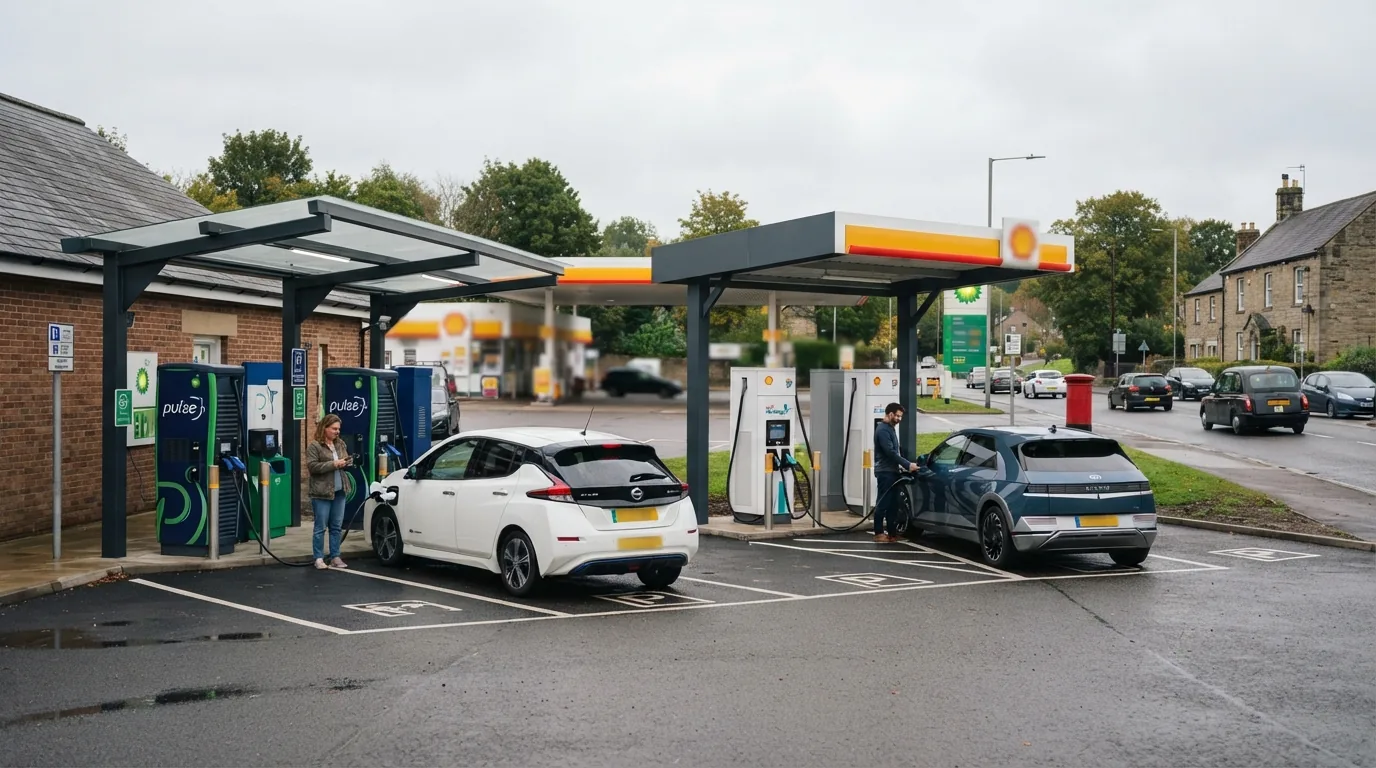
BP Pulse vs Shell Recharge: Which UK Network Wins?
Two of the UK's biggest charging networks compared on price, reliability and which type of driver each suits
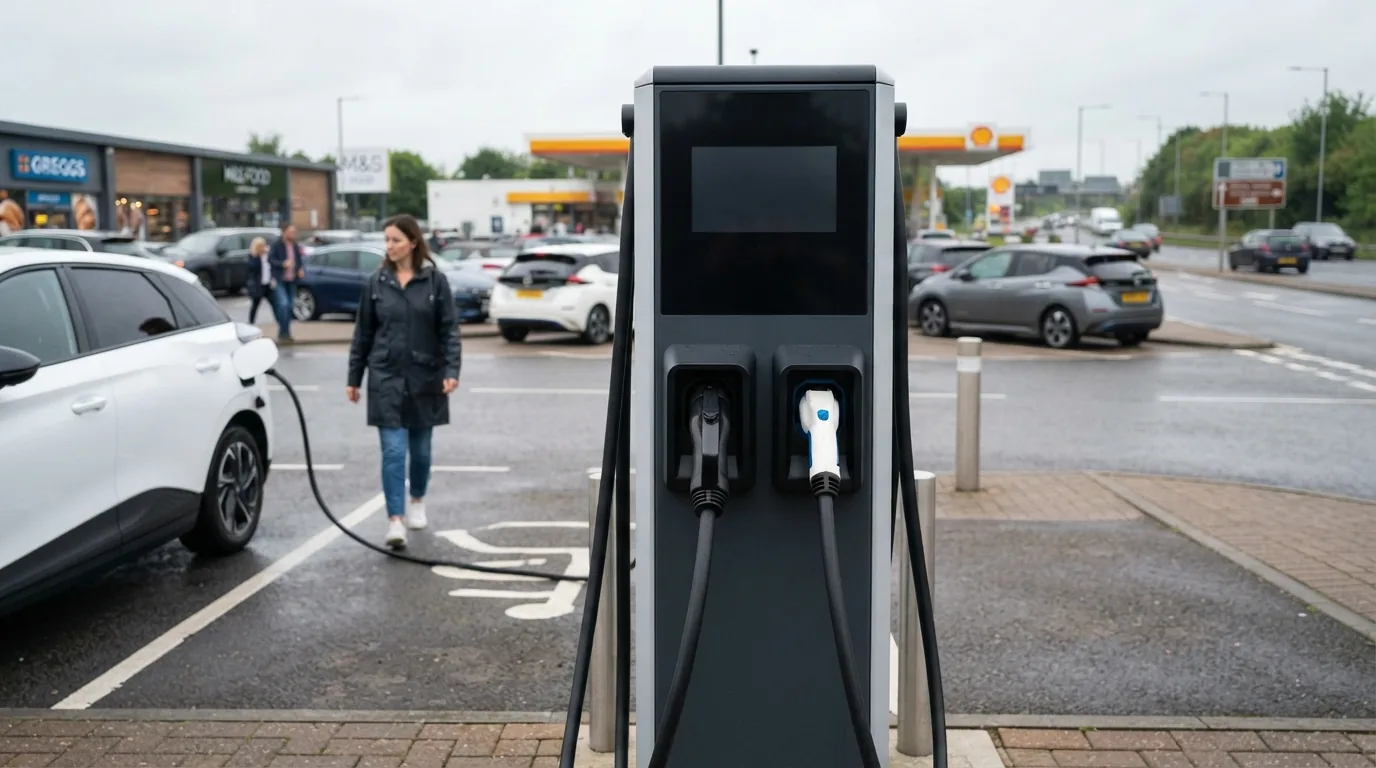
Can You Charge Any EV at Any Public Charger in the UK?
Why almost any new EV works at almost any UK public charger, and the two exceptions you need to know
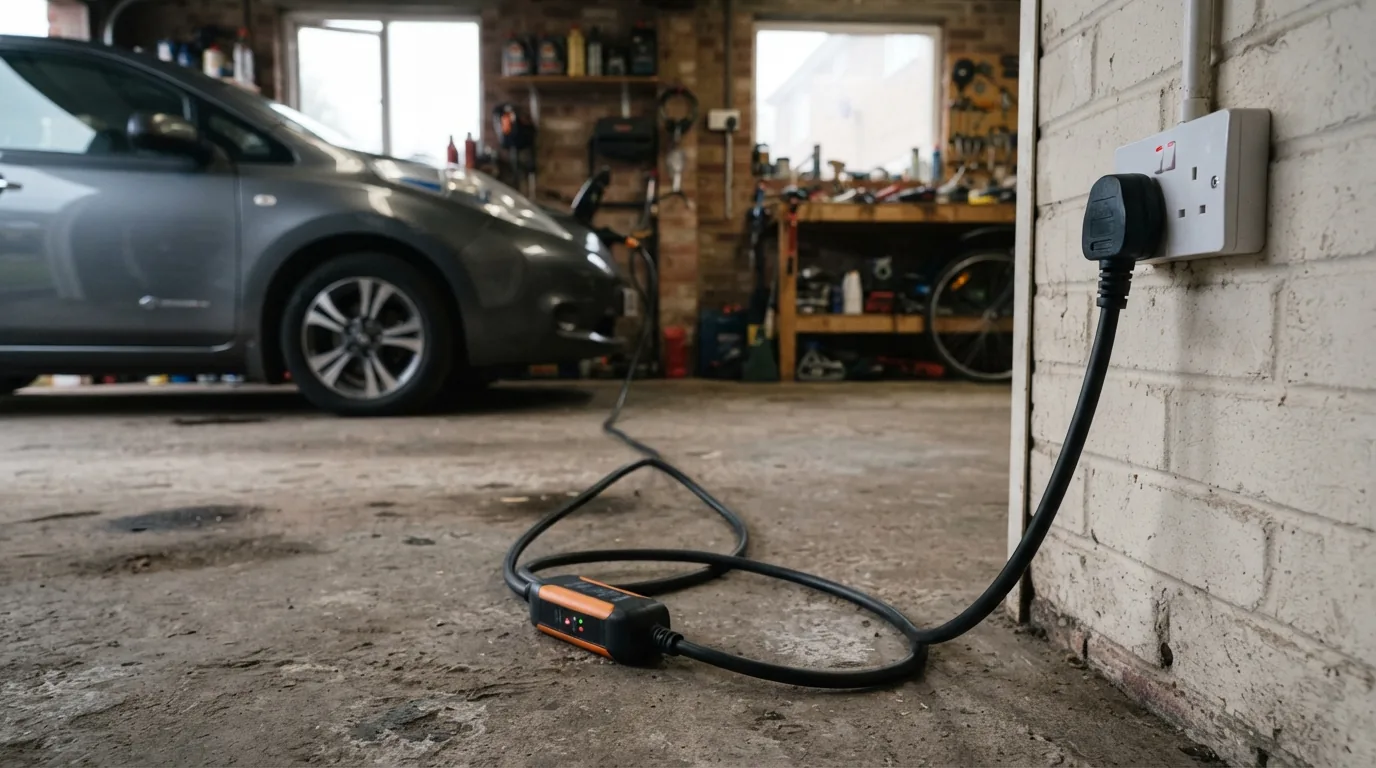
Can You Charge an EV From a Three-Pin Plug in the UK?
Yes, most cars ship with the cable, but speed and safety limits mean it works best for occasional or emergency use