What to Do When a Public EV Charger Is Broken or Blocked
A step-by-step guide for the scenarios every EV driver will eventually face
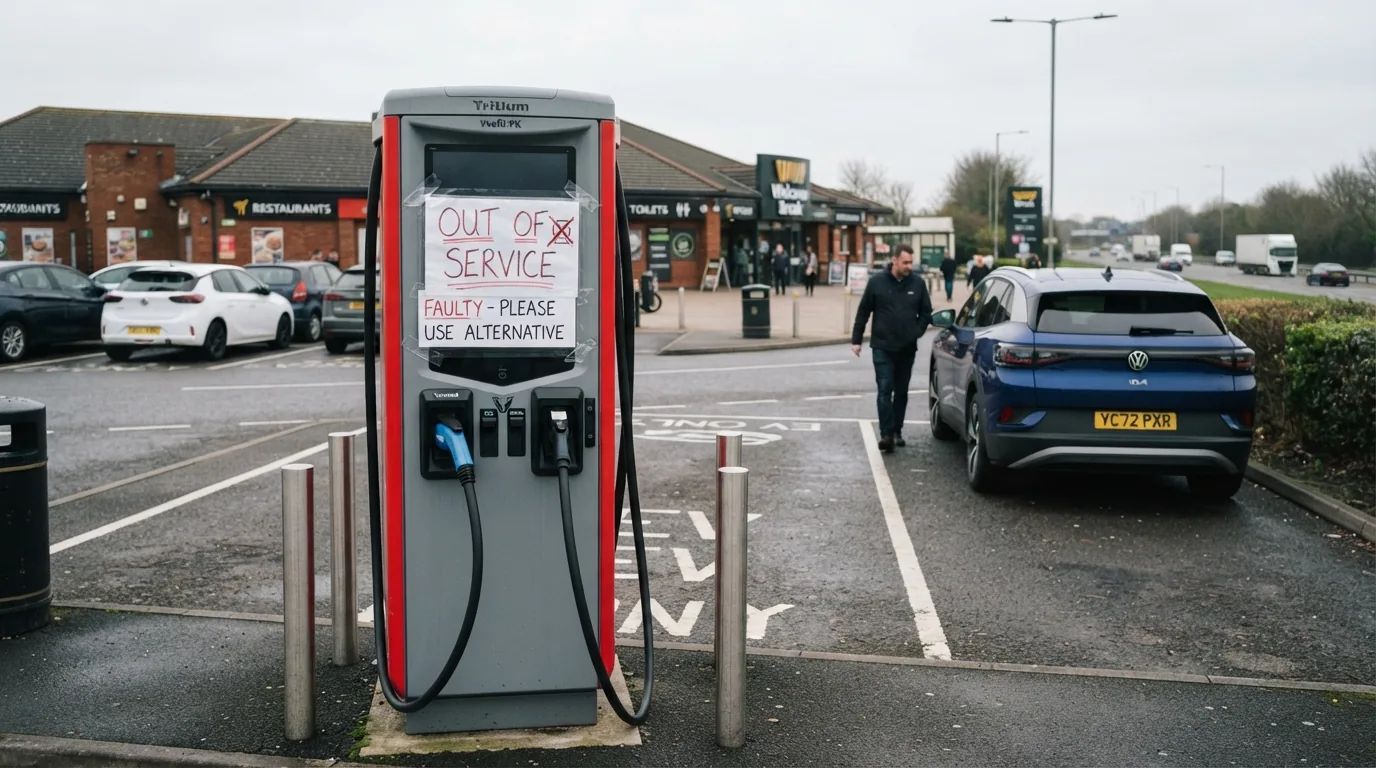
Quick answers
- Around 17% of reported public charging problems in early 2026 involved broken chargers, and a 2026 audit found that only about 16 of 38 rapid charging operators appeared to be meeting the government's 99% reliability target.
- Why do chargers fail: Most charger faults are software or communication problems rather than hardware failures.
- Step 2: Call the operator helpline: Every public charger in the UK is legally required to display a contact number.
- Step 3: Report the fault on Zap-Map: Once you have called the helpline, open Zap-Map and mark the charger as having a problem.
- If you are in a hurry, move to the next charger and report it from there rather than waiting.
- Always have a Zap-Map account and backup charger options identified before setting off on a long journey.
Around 17% of reported public charging problems in early 2026 involved broken chargers, and a 2026 audit found that only about 16 of 38 rapid charging operators appeared to be meeting the government’s 99% reliability target. The UK public network has improved substantially, but faults remain a fact of EV life. Knowing what to do when you encounter one saves time, avoids stress and helps other drivers.
Why do chargers fail?
Most charger faults are software or communication problems rather than hardware failures. The most common causes include:
- Payment terminal error: The contactless reader freezes, fails to connect, or gives an incorrect error message
- Network communication loss: The charger loses its connection to the operator’s backend system and cannot authorise a session
- Software hang: The charger’s operating software crashes and needs a remote or physical reboot
- Cable damage: The tethered cable or connector is physically damaged and the charger refuses to start
- Power supply fault: Less common, but site-level electrical problems can take multiple units offline simultaneously
Physical hardware failure is less frequent and harder to resolve quickly. Software and communication faults, which account for most issues, can often be fixed while you wait.
Step 1: Try a different approach before assuming a fault
Before declaring a charger broken, try:
- Try a different payment method: If contactless failed, try the network app (or vice versa). Payment system and charger authorisation system are sometimes separate, and one may work when the other does not.
- Wait and retry: Some communication faults are intermittent. Waiting 2 to 3 minutes and trying again resolves a surprising number of apparent faults.
- Try a different cable or bay: At dual-bay chargers, the adjacent unit or cable may be fully functional even if one is reporting an error.
- Restart the session from the app: If you have the network’s app, try cancelling and restarting a session remotely. Some operators allow this via the app.
Step 2: Call the operator helpline
Every public charger in the UK is legally required to display a contact number. Call it. Most major networks have 24/7 helplines staffed by engineers who can:
- Reset the charger remotely: Many software and communication faults are resolved by a remote system restart, which takes a few minutes and does not require anyone to visit the site
- Unlock a stuck cable: If your cable is stuck and will not release at the end of a session, the helpline can remotely release the lock on most modern chargers
- Confirm the fault type: If it is a hardware fault they cannot fix remotely, they will tell you so you can leave for the next charger without waiting unnecessarily
Major network helplines (all available 24/7):
| Network | Helpline |
|---|---|
| BP Pulse | 0330 016 5126 |
| GRIDSERVE | 0330 460 1000 |
| InstaVolt | 0333 012 0565 |
| Osprey | 0333 444 6006 |
| Pod Point | 0207 247 4114 |
| Shell Recharge | 0207 183 7749 |
| IONITY | Via in-app support or website |
Step 3: Report the fault on Zap-Map
Once you have called the helpline, open Zap-Map and mark the charger as having a problem. Select the relevant fault type (out of order, screen blank, payment failure, etc.) and add a comment. This takes 60 seconds and immediately warns every other driver who checks that location before visiting.
The Zap-Map community reporting system is one of the most genuinely useful tools in the UK EV ecosystem. Its accuracy depends on drivers doing this after encountering a problem.
What if the charger bay is blocked by a petrol or diesel car?
If a non-EV is parked in an EV charging bay blocking your access:
- Private car park (supermarket, retail park): Contact the site’s car park management or the operator’s helpline. Private parking operators can issue a PCN of typically £50 to £100.
- Council car park or on-street: Report to the council parking hotline. This is a parking contravention; the council can issue a Penalty Charge Notice of £70 to £130.
- Do not move or interact with the blocking vehicle. You have no legal right to do so.
If you are in a hurry, move to the next charger and report it from there rather than waiting.
What if a charged EV is overstaying and blocking the bay?
This is increasingly common as EV adoption grows. Options:
- Some networks allow you to contact the operator helpline to remotely end a session that has finished, which may cause the cable to unlock and allow you to move the vehicle (or prompt the owner to move it if they receive a notification).
- Idle fee policies are growing. At Tesla Superchargers, a 50p per minute idle fee applies when the station is more than 50% full. Other networks are introducing similar policies.
- If the vehicle is overstaying in a pay-and-display or time-limited car park, the parking management company may be able to act.
Do not unplug another driver’s car yourself.
What to do if you are left unable to charge and running low
If you cannot charge at your planned stop and your battery is getting low:
- Calculate your range carefully: most EVs give a conservative range estimate; also consider whether your planned final destination has charging.
- Open Zap-Map immediately and find the next nearest charger within your current range, not your planned destination.
- Reduce speed: dropping from 70 to 55 mph on a motorway can add 15 to 25% range, buying time to reach the next charger.
- Turn off non-essential systems: switching off heated seats and cabin heating can add a few miles of range in winter.
- Contact the network you had planned to use: in some circumstances, operators can help identify nearby alternatives.
Always have a Zap-Map account and backup charger options identified before setting off on a long journey. Range anxiety rarely comes from a lack of chargers on a route; it comes from arriving at a planned charger and finding it unavailable without a backup plan.
Can you get compensation for a broken charger?
The UK’s charger regulations require operators to publish reliability statistics and maintain 99% uptime on rapid chargers. If a broken charger causes you a genuine, demonstrable financial loss (a missed appointment with quantifiable cost, for example), you could theoretically raise a complaint with the operator. In practice, most operators offer a gesture of goodwill (free credit) for significant inconvenience rather than formal compensation.
There is currently no independent ombudsman for EV charging complaints. ChargeUK, the trade body for the industry, is developing industry-wide standards, but formal dispute resolution for consumers remains limited. Registering complaints with the operator and leaving reviews on Trustpilot and Zap-Map creates a useful record and encourages operators to improve.
Further reading
For the full picture on how public charging works and who the main operators are, see our Public Charging guide.
For a ranked guide to the most reliable networks, see Best EV Charging Networks for Reliability in Britain and Best Public EV Charging Networks in the UK.
How we test and where our numbers come from
Range figures are official WLTP combined values taken from manufacturer UK specification pages, with real-world estimates drawn from independent comparative testing. Prices are UK list prices at the time of the latest update. Tax, grant and charging-scheme figures come from GOV.UK and HMRC publications. We re-check every guide when pricing, specification or policy changes. Last checked 11 August 2026.
Frequently asked questions
Why do chargers fail?
Physical hardware failure is less frequent and harder to resolve quickly. Software and communication faults, which account for most issues, can often be fixed while you wait.
What if the charger bay is blocked by a petrol or diesel car?
If you are in a hurry, move to the next charger and report it from there rather than waiting.
Can you get compensation for a broken charger?
The UK's charger regulations require operators to publish reliability statistics and maintain 99% uptime on rapid chargers. If a broken charger causes you a genuine, demonstrable financial loss (a missed appointment with quantifiable cost, for example), you could theoretically raise a complaint with the operator.
Sources and further reading
- chargeuk.orgChargeUKPrimary source referenced in this article.

EV Compared
The EV Compared editorial team tracks the UK electric vehicle market full time: new model launches, list prices, WLTP and real-world range, public charging tariffs and the tax rules that decide what an EV actually costs to run. Every guide is checked against manufacturer specifications and official GOV.UK figures, and updated whenever the numbers move.
Related reading
View all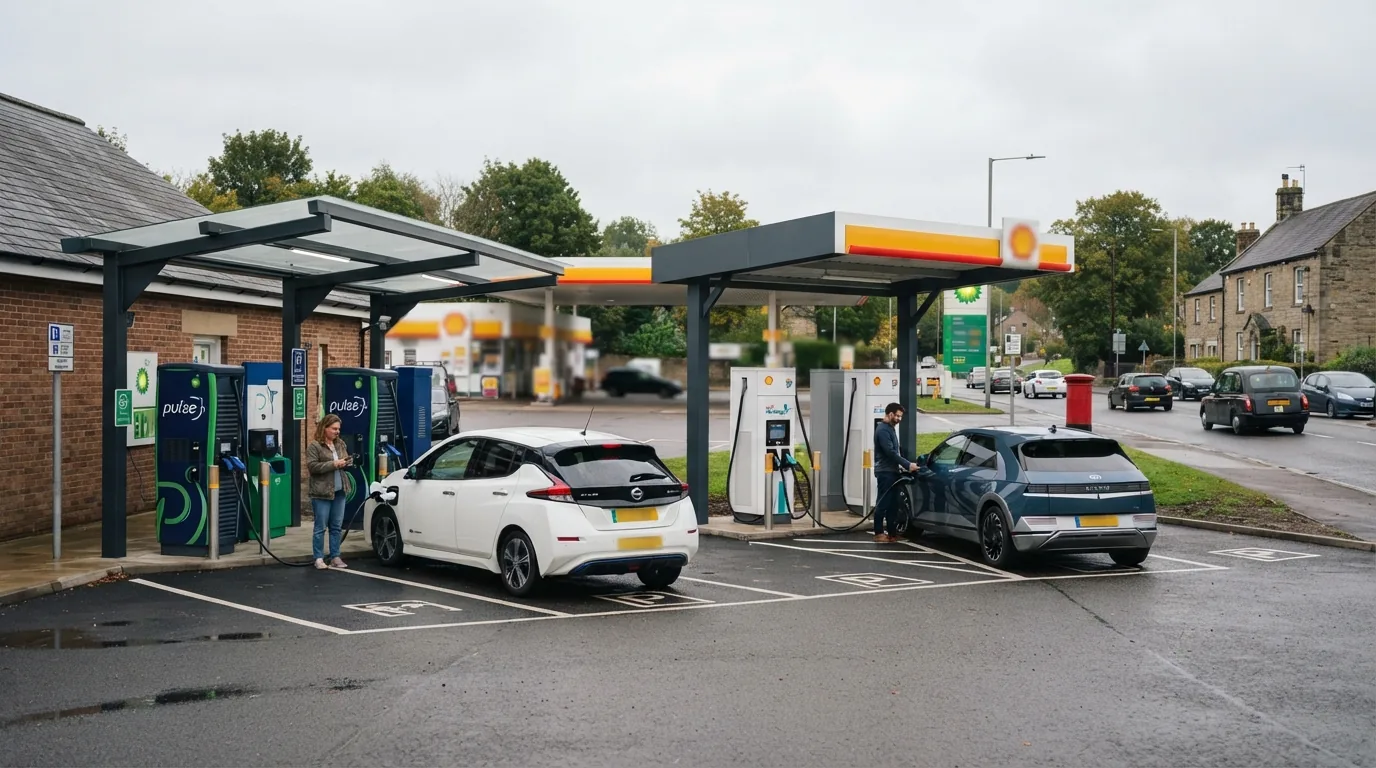
BP Pulse vs Shell Recharge: Which UK Network Wins?
Two of the UK's biggest charging networks compared on price, reliability and which type of driver each suits
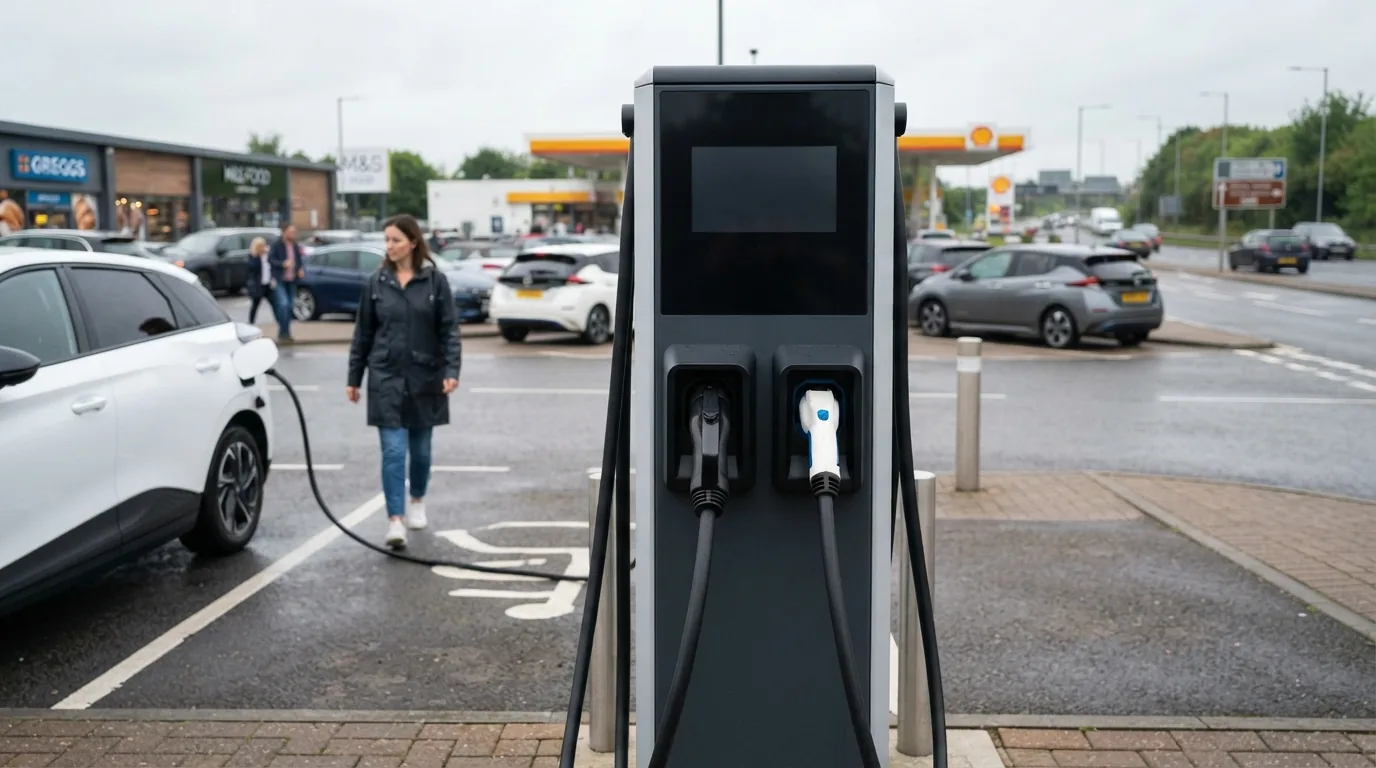
Can You Charge Any EV at Any Public Charger in the UK?
Why almost any new EV works at almost any UK public charger, and the two exceptions you need to know
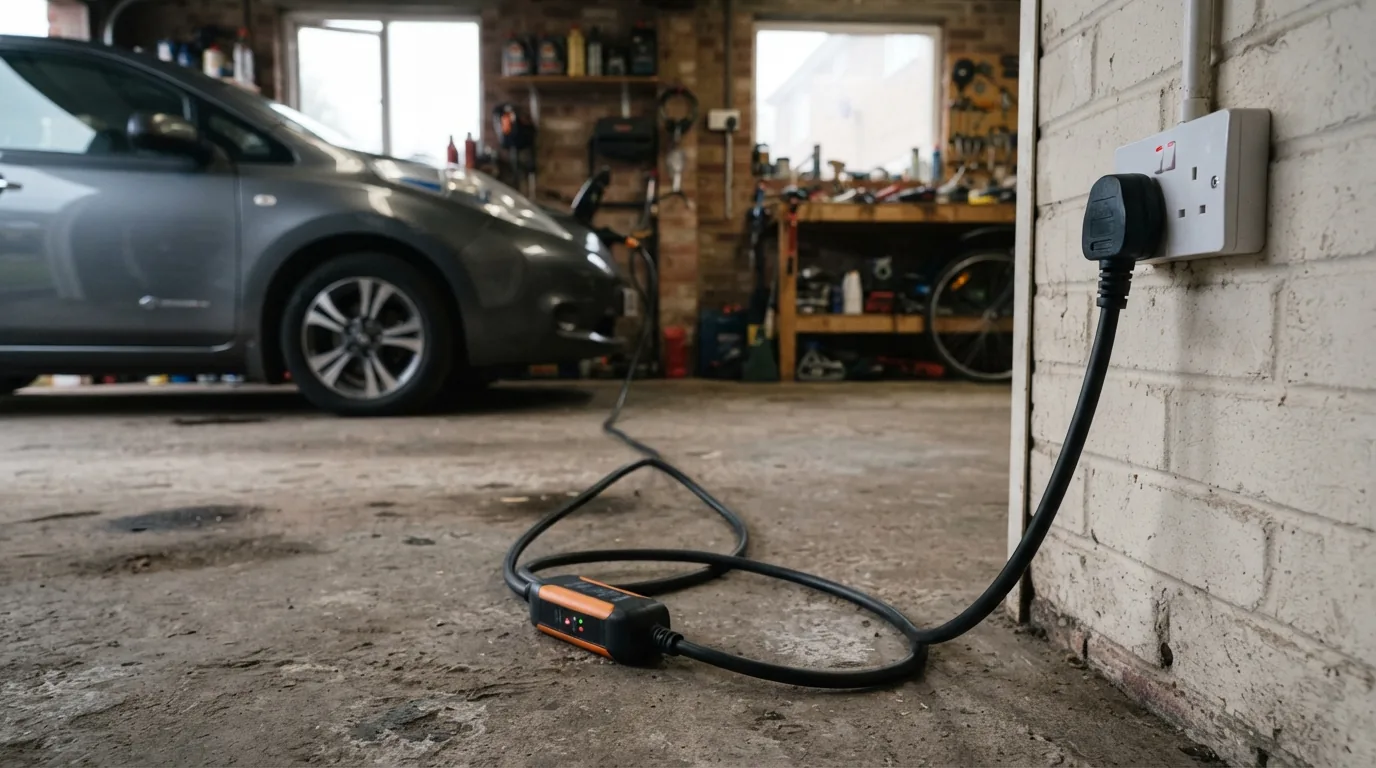
Can You Charge an EV From a Three-Pin Plug in the UK?
Yes, most cars ship with the cable, but speed and safety limits mean it works best for occasional or emergency use