Best EV Charging Networks for Reliability in Britain
Which networks actually hit the 99% uptime target, and which ones to trust on a long journey
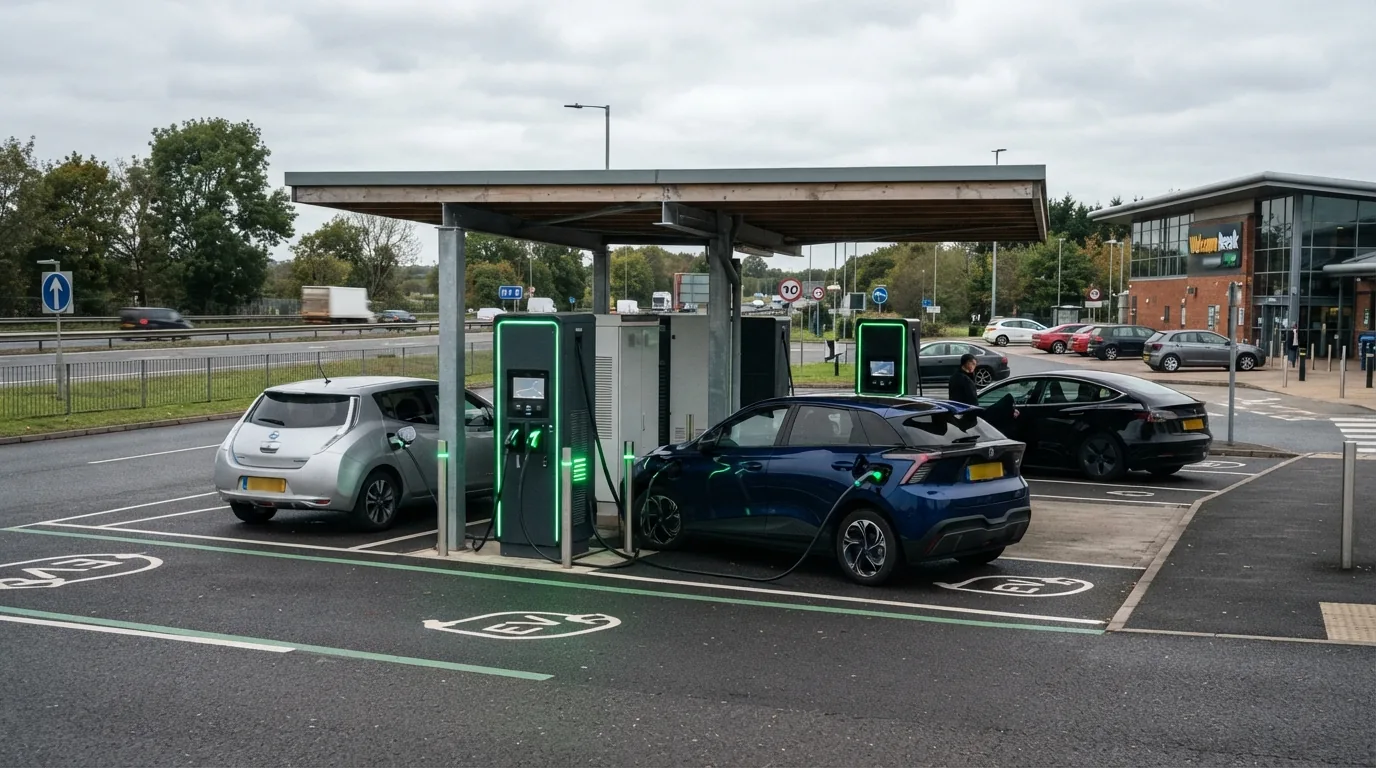
Quick answers
- Reliability is the number-one concern for public EV charging in Britain. The government's Public Charge Point Regulations require rapid charging networks (50 kW and above) to maintain 99% average annual uptime and publish their reliability statistics.
- Why reliability matters more than coverage: A network with 5,000 chargers running at 90% reliability is less useful than one with 2,000 running at 99%.
- The reliability rankings: Tesla's vertically integrated model, controlling hardware, software and backend infrastructure, gives it a structural advantage.
- Reliability comparison table: Ratings derived from Zap-Map published network assessments and industry reports, 2025–2026.
- Further reading: For a full guide to all UK public charging networks and how to choose between them, see Best Public EV Charging Networks in the UK.
Reliability is the number-one concern for public EV charging in Britain. The government’s Public Charge Point Regulations require rapid charging networks (50 kW and above) to maintain 99% average annual uptime and publish their reliability statistics. A 2026 audit of 38 rapid operators found that roughly half appeared to be meeting this standard, while 22 did not. This guide identifies the networks that consistently deliver, and explains what the data actually means for your next long journey.
Why reliability matters more than coverage
A network with 5,000 chargers running at 90% reliability is less useful than one with 2,000 running at 99%. At 90% uptime, in a network of 100 rapid bays, 10 bays are out of service on any given day. For a driver arriving at a four-bay rapid site with one bay down, that is a 25% chance of a failed session. At 99% uptime, the same network averages 1 bay in 100 faulty, meaning the same four-bay site will typically have all four working.
The 99% threshold is not a guarantee, but it is the minimum standard that makes a rapid network trustworthy for unplanned stops on a long journey.
The reliability rankings
1. Tesla Supercharger: the reliability benchmark
Tesla’s vertically integrated model, controlling hardware, software and backend infrastructure, gives it a structural advantage. Faults are identified via real-time monitoring and flagged to drivers in the Tesla app before they arrive. When issues occur, Tesla’s engineering team can often resolve them remotely within minutes.
Zap-Map user ratings consistently place Tesla Supercharger at the top for driver satisfaction. For Tesla drivers, pricing (22p to 30p per kWh) and reliability make it the obvious first choice. For non-Tesla EVs, around half of UK Supercharger sockets now accept CCS, at 45p to 56p per kWh.
Reliability: Excellent. Recommended for all critical motorway stops.
2. InstaVolt: the most reliable third-party network
InstaVolt operates around 2,100 rapid and ultra-rapid chargepoints (50 kW to 300 kW) at supermarkets, retail parks and forecourts. It consistently appears at the top of reliability rankings published by Zap-Map, What Car? and other independent assessors.
The key factors behind InstaVolt’s reliability:
- Relatively modern hardware fleet with a high proportion of new-generation units
- No membership requirement, contactless on every charger eliminates payment-related activation failures
- Active 24/7 monitoring and fast response to reported faults
- No network-wide software migrations or historic legacy kit pulling down averages
Off-peak pricing of 55p per kWh via the free InstaVolt app (8pm to 7am) makes InstaVolt one of the better-value reliable options for drivers who can schedule evening journeys.
Reliability: Very good. Recommended as a primary network for planned stops.
3. Osprey: consistently above 99%
Osprey Charging operates around 2,838 chargepoints (50 kW to 150 kW) at supermarkets, retail parks, leisure centres and roadside hubs. The company has publicly claimed above 99% uptime throughout 2023 and 2024, and Zap-Map user feedback supports this positioning.
Osprey’s pricing is 87p per kWh contactless and 82p per kWh via the free app. This is not the cheapest rapid rate in the UK, but Osprey’s combination of reliability, no membership requirement and wide distribution across England and Wales makes it one of the most practically useful networks for day-to-day rapid charging.
Reliability: Very good. One of the most trusted networks for unplanned stops.
4. Fastned: award-winning reliability in a smaller footprint
Fastned won the Zap-Map ‘Best EV charging network 2025’ award in the medium rapid/ultra-rapid category and an ‘EV driver recommended’ award for 2026. With only around 226 UK chargers, its geographic reach is limited, but at the sites it operates, reliability is consistently strong.
Fastned’s distinctive yellow canopy sites near motorways and A-roads are well-maintained, well-lit and 24/7 accessible. The Gold membership at £9.99 per month gives 30% off PAYG rates. For drivers whose routes regularly pass Fastned locations, the reliability and membership value combine well.
Reliability: Good to very good. Best for drivers on Fastned-served routes.
5. GRIDSERVE: improved, with variation between sites
GRIDSERVE took over the Ecotricity Electric Highway contract in 2022, replacing ageing hardware with modern high-power units at motorway services. New Super Hub sites opening through 2026 have 400 kW-capable hardware and are the most reliable GRIDSERVE locations.
Older GRIDSERVE sites that retain refurbished Ecotricity hardware have lower reliability than the new-build hubs. The overall network reliability is good but not uniform. For a critical motorway stop, a new GRIDSERVE Super Hub or Electric Forecourt is a confident choice; an older service area stop warrants checking Zap-Map user comments first.
Reliability: Good (new sites) to mixed (legacy sites). Know which site you are using.
The networks with reliability challenges
BP Pulse: The UK’s largest rapid network by chargepoint count, with around 2,491 units. Reliability is significantly variable. Newer BP Pulse hardware installed from 2023 performs better, but the legacy estate, particularly older 50 kW units at older motorway services, has a poorer track record. The 2026 audit of operators found BP Pulse’s published reliability data does not yet demonstrate consistent compliance with the 99% standard. Use BP Pulse when other options are not available, check Zap-Map comments first for any unfamiliar site.
Shell Recharge/Ubitricity on-street: The on-street lamppost estate has higher fault rates than purpose-built rapid hardware. Older installations in residential streets are harder to maintain and have historically suffered from connectivity issues. Shell Recharge’s dedicated rapid chargers perform better than the on-street estate.
Pod Point at retail destinations: Reliability varies by site and by how recently hardware was installed. Newer Pod Point units at Tesco and Lidl are more reliable; older installations have more fault reports.
Reliability comparison table
| Network | Published uptime | Zap-Map driver rating | Recommended for critical stops? |
|---|---|---|---|
| Tesla Supercharger | Consistently >99% | 4.5/5+ | Yes |
| InstaVolt | >99% (stated) | 4.4/5 | Yes |
| Osprey | >99% (stated) | 4.3/5 | Yes |
| Fastned | Good (award-winning) | 4.4/5 | Yes (where available) |
| GRIDSERVE (new hubs) | ~99% (new sites) | 4.0/5 | Yes |
| MFG EV Power | ~99% (newer kit) | 3.9/5 | Generally yes |
| GRIDSERVE (legacy sites) | Variable | 3.5–4.0/5 | Check comments first |
| BP Pulse | Variable (some sites below 99%) | 3.2/5 | Backup only |
| Shell Recharge on-street | Variable | 3.0/5 | Fine for slow charging |
| Pod Point | Variable | 3.3/5 | Check site-specific comments |
Ratings derived from Zap-Map published network assessments and industry reports, 2025–2026. Scores vary by methodology; use as directional indicators only.
How to check reliability before you arrive
- Open Zap-Map and find the charger location
- Tap the site and scroll to recent user comments: comments from the past 24 to 48 hours give the best signal on current status
- Check the network’s own app if you have it: most operators show real-time charger status for their own hardware, often more accurately than Zap-Map
- Call the helpline if a charger shows red on Zap-Map: sometimes a remote reset will have it working before you arrive
What to do when a reliable network fails
Even the best networks have occasional faults. Always have the next-nearest alternative identified before plugging in. If a Tesla Supercharger has all bays occupied, InstaVolt or GRIDSERVE is usually within a few miles on major routes. If an InstaVolt site has a payment terminal fault, the helpline (0333 012 0565, 24/7) can often resolve it remotely within minutes.
Further reading
For a full guide to all UK public charging networks and how to choose between them, see Best Public EV Charging Networks in the UK.
For the complete picture on how the UK public charging system works, visit our Public Charging guide.
How we test and where our numbers come from
Range figures are official WLTP combined values taken from manufacturer UK specification pages, with real-world estimates drawn from independent comparative testing. Prices are UK list prices at the time of the latest update. Tax, grant and charging-scheme figures come from GOV.UK and HMRC publications. We re-check every guide when pricing, specification or policy changes. Last checked 11 August 2026.
Sources and further reading
- chargeuk.orgChargeUKPrimary source referenced in this article.

EV Compared
The EV Compared editorial team tracks the UK electric vehicle market full time: new model launches, list prices, WLTP and real-world range, public charging tariffs and the tax rules that decide what an EV actually costs to run. Every guide is checked against manufacturer specifications and official GOV.UK figures, and updated whenever the numbers move.
Related reading
View all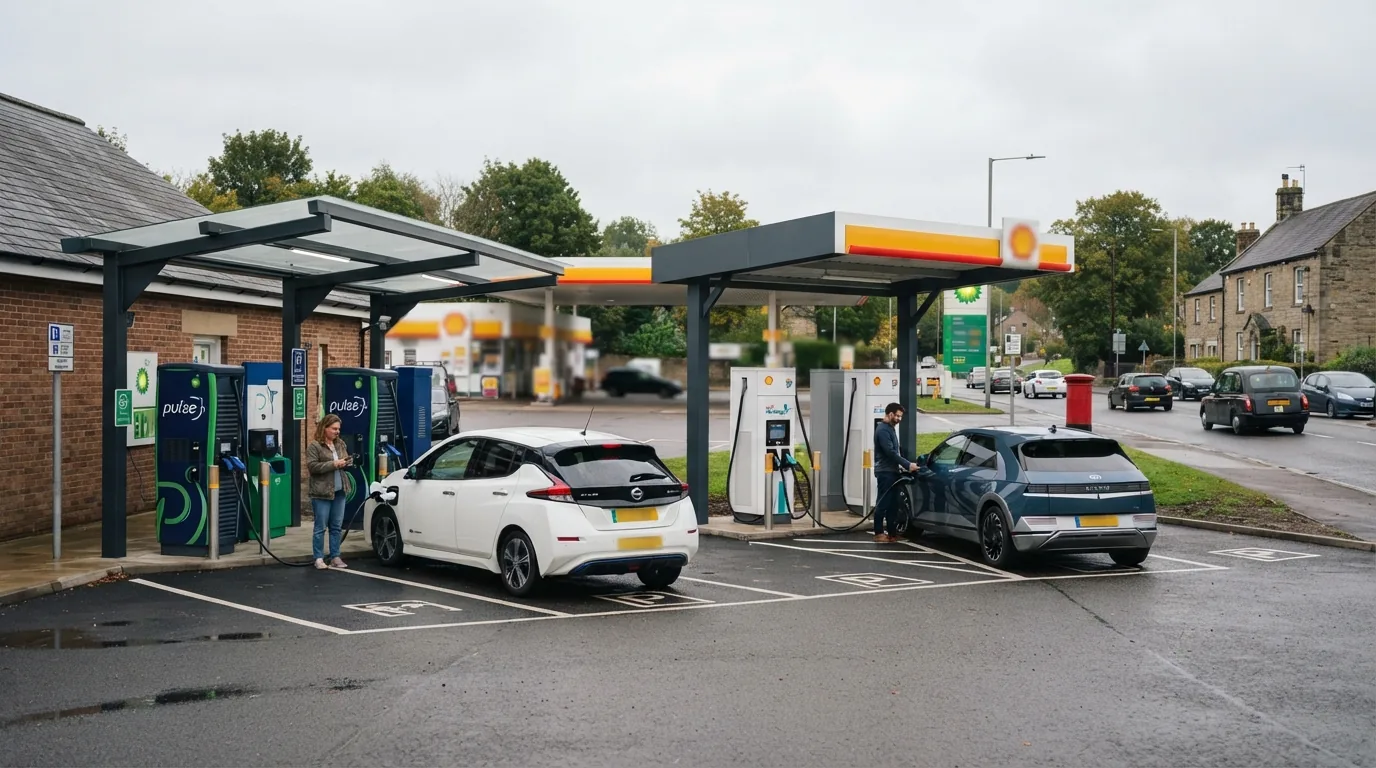
BP Pulse vs Shell Recharge: Which UK Network Wins?
Two of the UK's biggest charging networks compared on price, reliability and which type of driver each suits
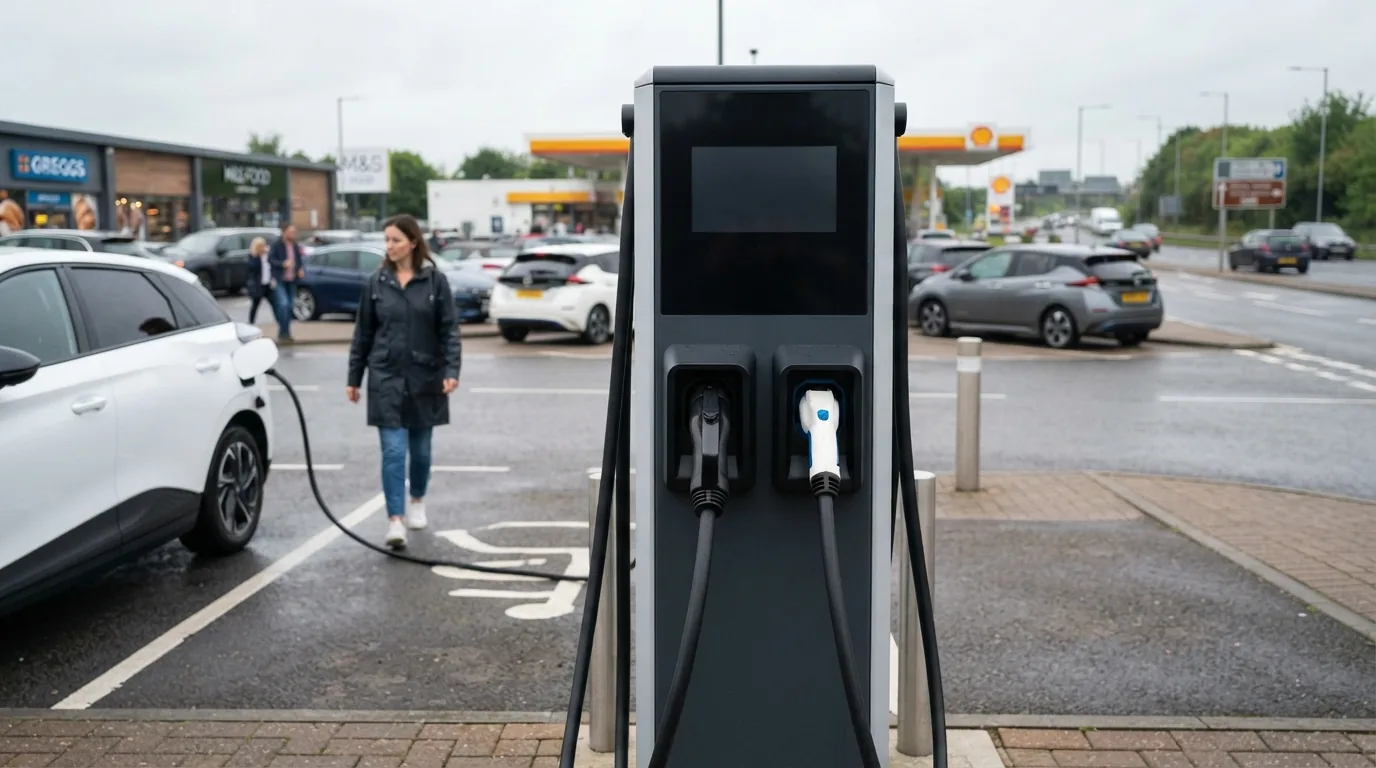
Can You Charge Any EV at Any Public Charger in the UK?
Why almost any new EV works at almost any UK public charger, and the two exceptions you need to know
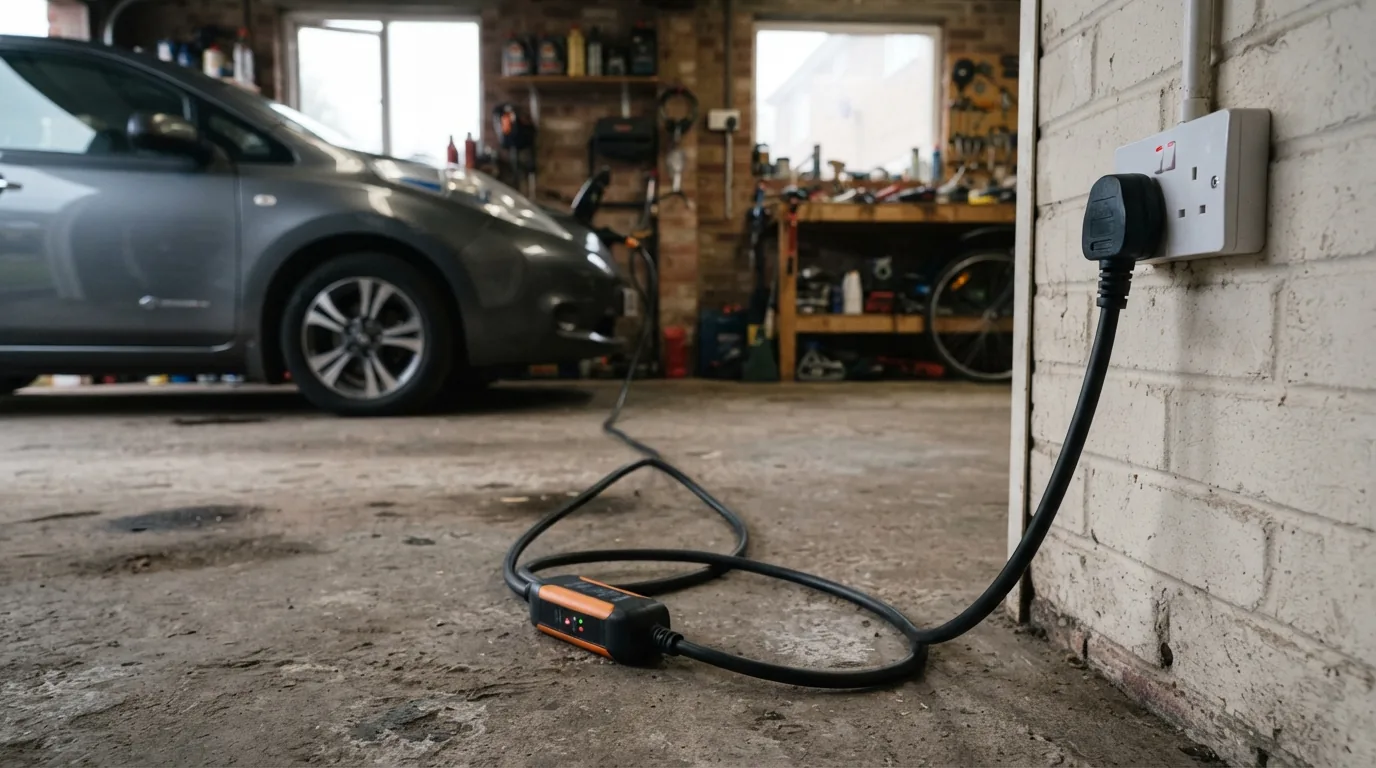
Can You Charge an EV From a Three-Pin Plug in the UK?
Yes, most cars ship with the cable, but speed and safety limits mean it works best for occasional or emergency use