Best Supermarket EV Charging in the UK
Tesco, Lidl, Sainsbury's, Asda and Morrisons ranked for speed, price and reliability in 2026
Quick answers
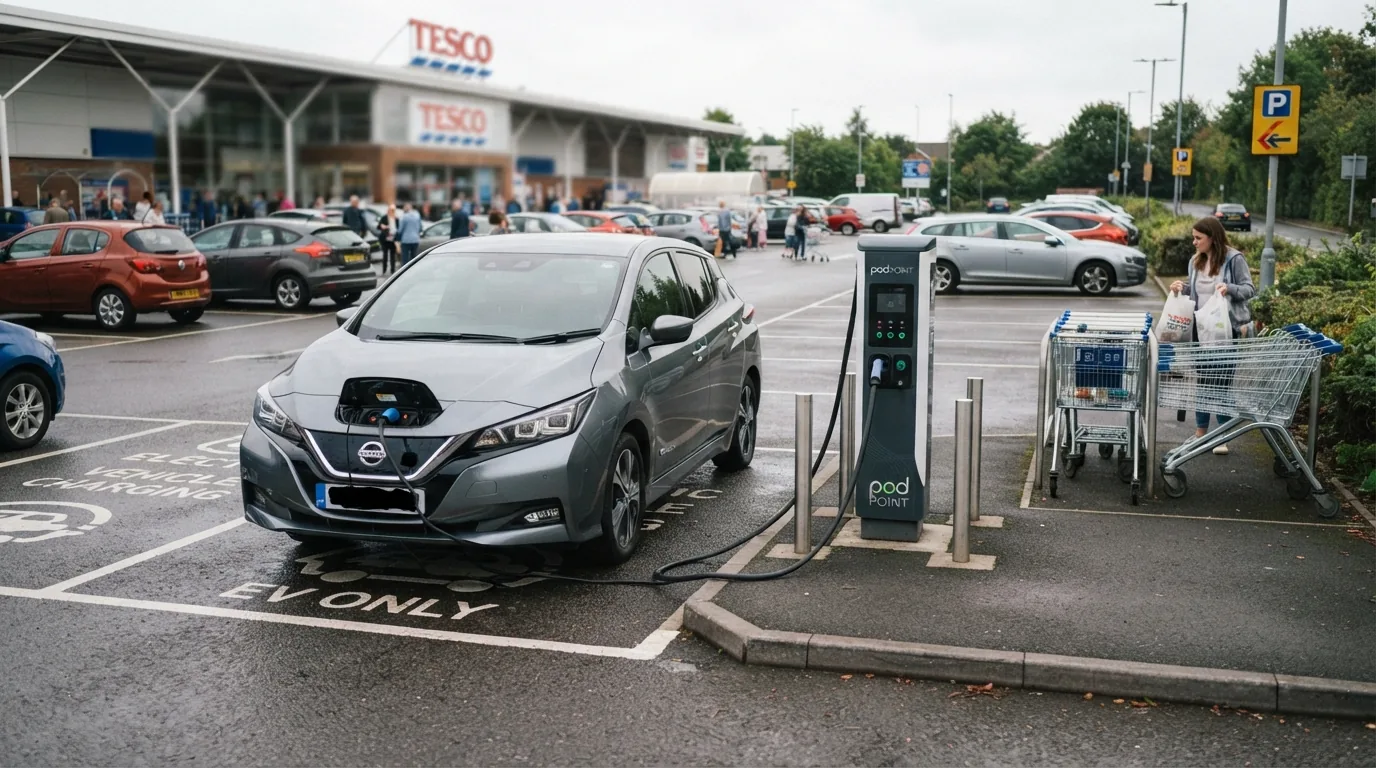
- Supermarket EV charging is one of the most practical forms of public charging for everyday drivers. You are already stopping; the car charges while you shop; and many supermarket chargers are significantly cheaper than motorway rapid chargers.
- 1. Tesco: best for coverage: Tesco has 2,700 EV chargepoints across 619 stores, the largest supermarket charging estate in the UK.
- 2. Lidl: best for price: Lidl has been expanding its EV charging at a pace and in 2026 is arguably offering the best-value supermarket charging in the UK.
- 3. Sainsbury's: expanding ultra-rapid: Sainsbury's is investing in EV charging capacity, with ultra-rapid 150 kW chargers appearing at larger stores, notably through partnerships with BP Pulse and others.
- Morrisons has the most ambitious EV charging expansion story of any UK supermarket.
- 5. Asda: slower rollout: Asda has been slower than its competitors to deploy EV charging.
Supermarket EV charging is one of the most practical forms of public charging for everyday drivers. You are already stopping; the car charges while you shop; and many supermarket chargers are significantly cheaper than motorway rapid chargers. In 2026, almost all supermarket charging is paid (the free era largely ended by 2023), but prices remain competitive and coverage is expanding. This guide ranks the main supermarket chains and tells you what to expect at each.
Quick comparison: supermarket EV charging in 2026
| Supermarket | Total chargepoints | Speed | Price | Network operator | Notes |
|---|---|---|---|---|---|
| Tesco | ~2,700 | 7–22 kW | 44–69p/kWh | Pod Point | 619 stores; widest supermarket coverage |
| Lidl | Growing | 7–50 kW | 40–62p/kWh | Osprey + others | Best AC price; some rapid bays |
| Sainsbury’s | Expanding | 7–150 kW | Various | bp pulse + others | Some ultra-rapid at larger stores |
| Asda | Growing | 7–50 kW | Various | Pod Point + others | Slower rollout than Tesco/Lidl |
| Morrisons | Expanding fast | 7–150 kW | Various | MFG EV Power (forecourts) | MFG forecourt deal = 800 ultra-rapid units planned |
| Aldi | Selective stores | 7–22 kW | Some still free | Various | Free charging at select stores |
| M&S Foodhall | At service stations | 50–350 kW | GRIDSERVE rates | GRIDSERVE (Moto/Extra) | Premium locations, premium price |
1. Tesco: best for coverage
Tesco has 2,700 EV chargepoints across 619 stores, the largest supermarket charging estate in the UK. Every charger is operated by Pod Point and accepts contactless payment. Speeds are typically 7 kW or 22 kW (AC standard plus), meaning a 45-minute shop adds 5 to 15 miles at 7 kW or 15 to 40 miles at 22 kW, depending on your car’s onboard AC charger.
Price in 2026: From 44p per kWh (7 kW) to 69p per kWh (22 kW) via Pod Point. The free Tesco Pod Point charging that existed before 2022 is long gone, but 44p per kWh is among the cheapest maintained public AC charging in the country.
Is Tesco EV charging worth using? For a driver who does a regular weekly shop and does not have a home charger, adding 20 to 30 miles per visit at 44p to 69p per kWh is practical and affordable. For a driver with a home charger, the cost per kWh is higher than overnight smart tariff rates but the convenience of charging while shopping is real.
Reliability: Pod Point hardware at Tesco is generally reliable but varies by store. Newer installations outperform older units. Check Zap-Map comments for your local store.
2. Lidl: best for price
Lidl has been expanding its EV charging at a pace and in 2026 is arguably offering the best-value supermarket charging in the UK. The Lidl Plus app-based pricing for rapid DC chargers is 62p per kWh; the AC slow charging rate is around 40p per kWh.
Lidl uses a mix of operators at its stores, with Osprey being a common partner. The lower AC pricing at Lidl versus Tesco reflects the shorter typical shop duration, Lidl car park visits tend to be shorter, so a slower charger is less likely to be fully utilised.
Some Lidl stores have rapid (50 kW) DC bays in addition to standard AC chargers, which is unusual for supermarket locations and gives Lidl stores a edge for drivers who want more range per stop. Contactless is accepted at Lidl charging points.
Verdict: Best on price for AC charging; increasingly useful for rapid sessions too.
3. Sainsbury’s: expanding ultra-rapid
Sainsbury’s is investing in EV charging capacity, with ultra-rapid 150 kW chargers appearing at larger stores, notably through partnerships with BP Pulse and others. Pricing at these units follows BP Pulse’s standard PAYG rate (89p per kWh for rapid, 65p per kWh for AC) with BP Pulse subscription rates available.
Sainsbury’s also retains some older slower chargers at smaller stores. Coverage is improving but not yet as consistent as Tesco.
One note on free charging: A small number of Sainsbury’s locations still have legacy free chargers, but this is diminishing. Confirm via Zap-Map before planning a trip for free charging specifically.
4. Morrisons: the biggest transformation ahead
Morrisons has the most ambitious EV charging expansion story of any UK supermarket. Motor Fuel Group (MFG) purchased 337 Morrisons petrol station forecourts attached to stores, and MFG is using these to install ultra-rapid charging hubs, 800 ultra-rapid 150 kW+ chargers in the first five years.
This means the Morrisons EV charging experience will vary substantially by location:
- Stores with an MFG forecourt hub: 150 kW to 360 kW ultra-rapid, typically 79p per kWh PAYG
- Stores with older in-car-park charging: 7 kW to 22 kW, variable operator and price
As MFG rolls out its forecourt hubs through 2026 to 2028, Morrisons sites will become among the fastest available at any supermarket. For long-distance drivers passing Morrisons locations, it is worth checking which sites have MFG hubs installed.
5. Asda: slower rollout
Asda has been slower than its competitors to deploy EV charging. Where chargers exist, they are typically 7 kW to 50 kW units, operated by a mix of providers. Some Asda locations still offer free slow charging as a legacy from earlier rollouts, though this is being phased out as the infrastructure is upgraded.
Asda’s site estate is large, and the potential for EV charging expansion is significant, but as of May 2026 it lags Tesco, Lidl and Morrisons in both volume and ambition.
6. Aldi: free charging where it exists
Aldi has installed charging at selected stores and, unusually for 2026, some units remain free to use. Where Aldi has free charging, it is typically 3 kW to 7 kW, very slow, but genuinely free. For drivers who do a regular weekly Aldi shop lasting 30 to 45 minutes, this adds 4 to 10 miles per visit, which is modest but not nothing.
Check Zap-Map for current free status at your local Aldi; free policies can change without notice.
What supermarket charging is best for
Supermarket charging is ideal for:
- Weekly top-ups for drivers without home charging
- Destination charging for those who already shop at the supermarket and want to top up while they are there
- Cost-effective standard charging when you have time but are not in a hurry
Supermarket charging is not ideal for:
- Long-distance driving: 7 kW to 22 kW speeds are too slow for a motorway charging stop
- Emergency range recovery: If you are running low on a journey, the nearest rapid charger is a better bet than a supermarket slow charger
Tips for using supermarket chargers
Use Zap-Map before arriving: Supermarket car parks can be busy, and EV bays are sometimes ICEd (blocked by petrol/diesel cars). Checking live availability saves a wasted journey.
Note the parking rules: Some supermarket charging bays have time limits, typically tied to the store’s parking regulations. Overstaying can result in a parking charge notice.
Connect before you shop, disconnect when you return: Do not leave your car plugged in once full; it takes up a bay that another EV driver may need, and some networks apply idle fees.
Download the operator’s app: Pod Point, Osprey and BP Pulse all have free apps that provide session monitoring, better rates in some cases, and receipts for expense claims.
Where to find more
For a comparison of all UK public charging networks, see Best Public EV Charging Networks in the UK.
For the cheapest public charging options overall, see Best Cheap Public EV Charging Options.
For a complete overview of UK public charging, visit our Public Charging guide.
How we test and where our numbers come from
Range figures are official WLTP combined values taken from manufacturer UK specification pages, with real-world estimates drawn from independent comparative testing. Prices are UK list prices at the time of the latest update. Tax, grant and charging-scheme figures come from GOV.UK and HMRC publications. We re-check every guide when pricing, specification or policy changes. Last checked 11 August 2026.
Sources and further reading
- electrifying.comElectrifying.comPrimary source referenced in this article.

EV Compared
The EV Compared editorial team tracks the UK electric vehicle market full time: new model launches, list prices, WLTP and real-world range, public charging tariffs and the tax rules that decide what an EV actually costs to run. Every guide is checked against manufacturer specifications and official GOV.UK figures, and updated whenever the numbers move.
Related reading
View all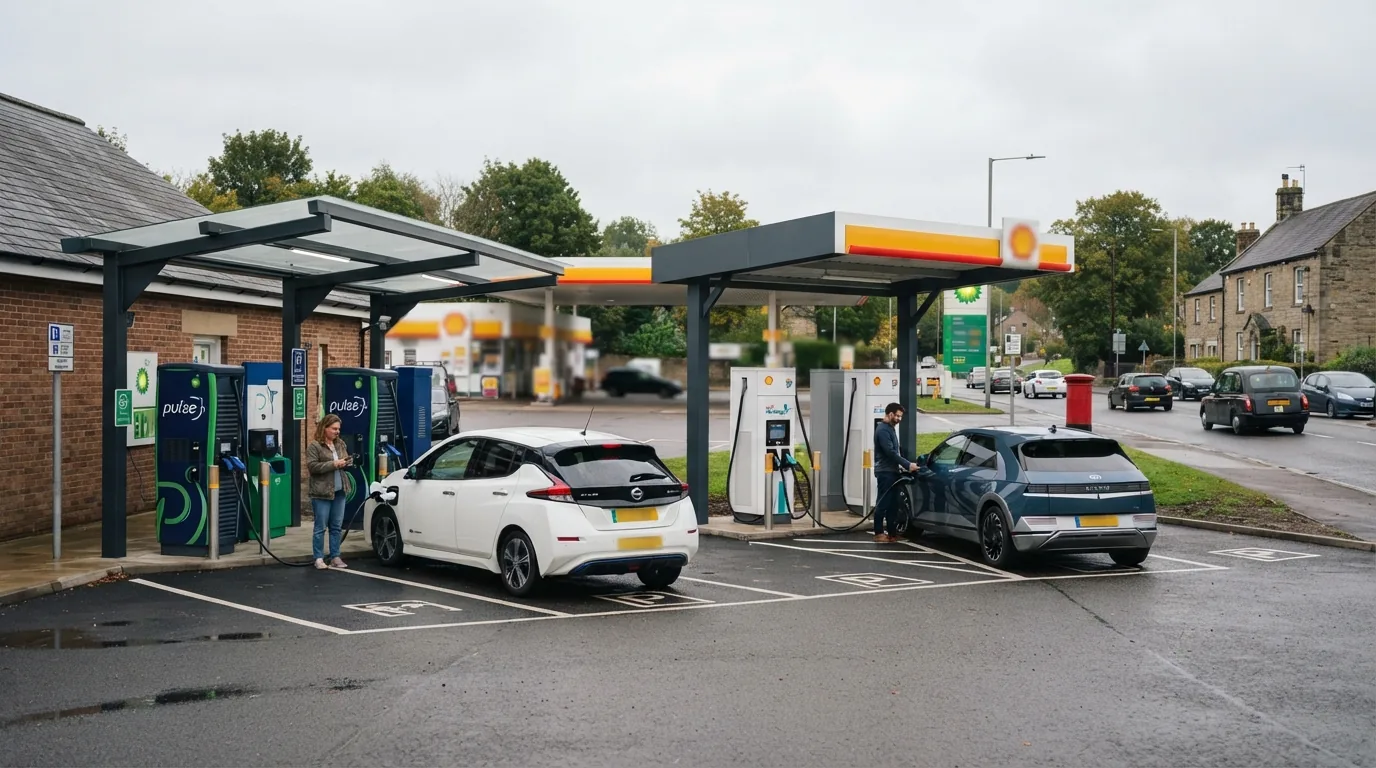
BP Pulse vs Shell Recharge: Which UK Network Wins?
Two of the UK's biggest charging networks compared on price, reliability and which type of driver each suits
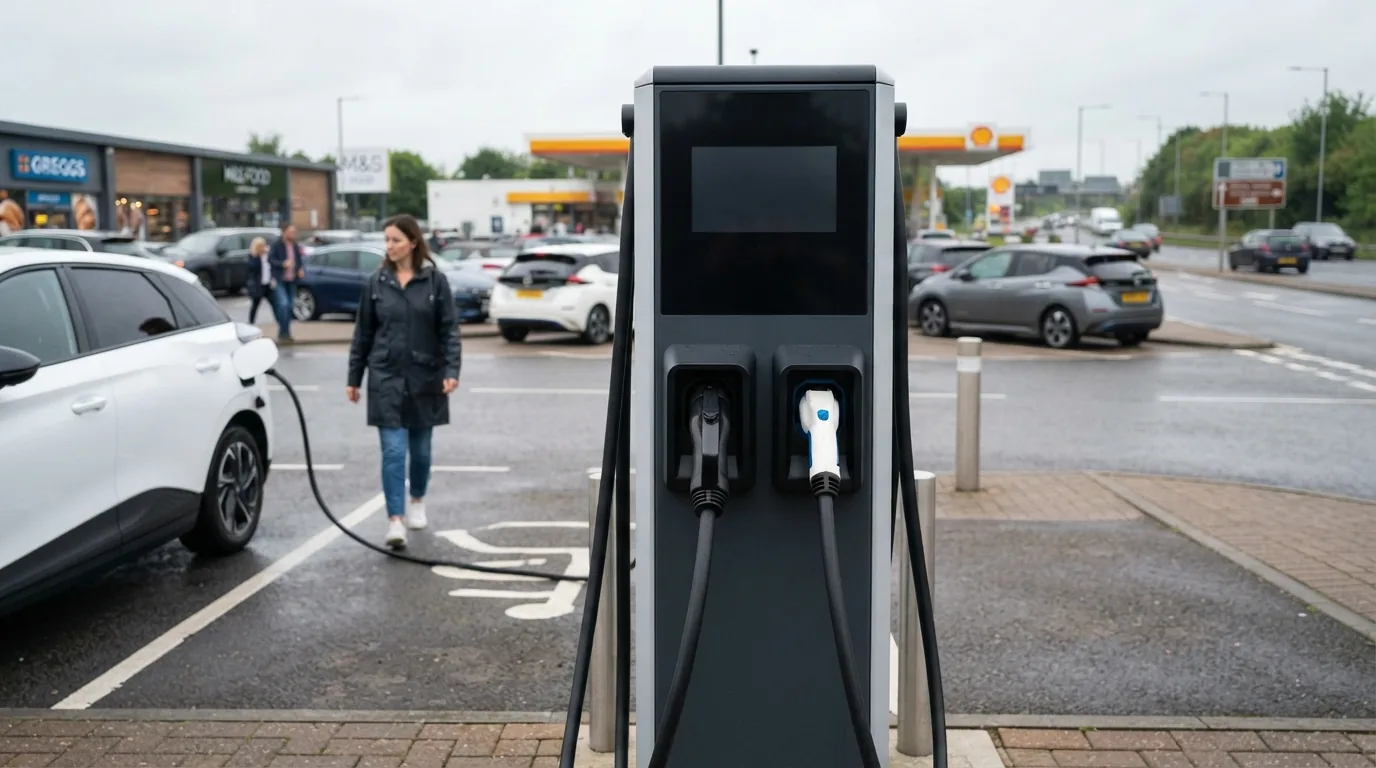
Can You Charge Any EV at Any Public Charger in the UK?
Why almost any new EV works at almost any UK public charger, and the two exceptions you need to know
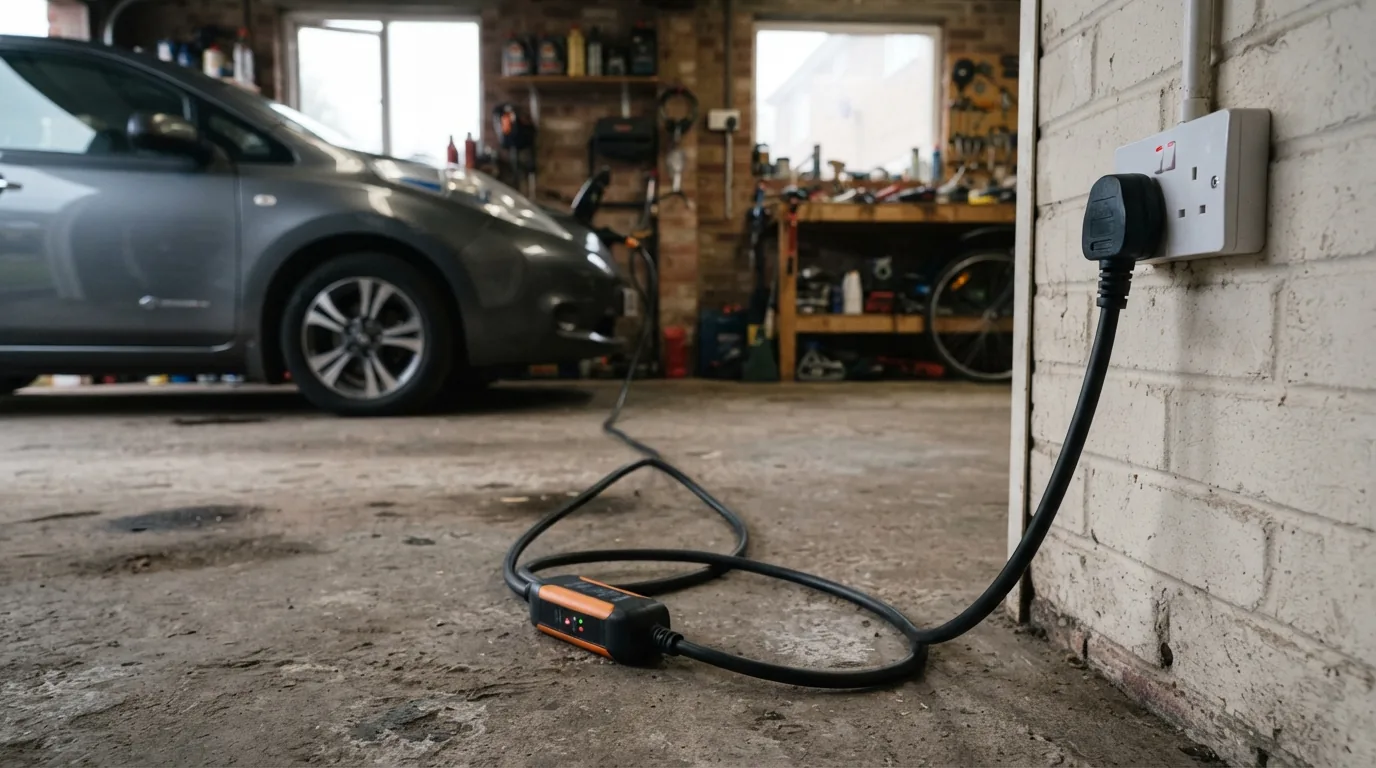
Can You Charge an EV From a Three-Pin Plug in the UK?
Yes, most cars ship with the cable, but speed and safety limits mean it works best for occasional or emergency use