Best Cheap Public EV Charging Options in the UK
How to charge in public for the least money, the networks, tricks and times that cut your bill
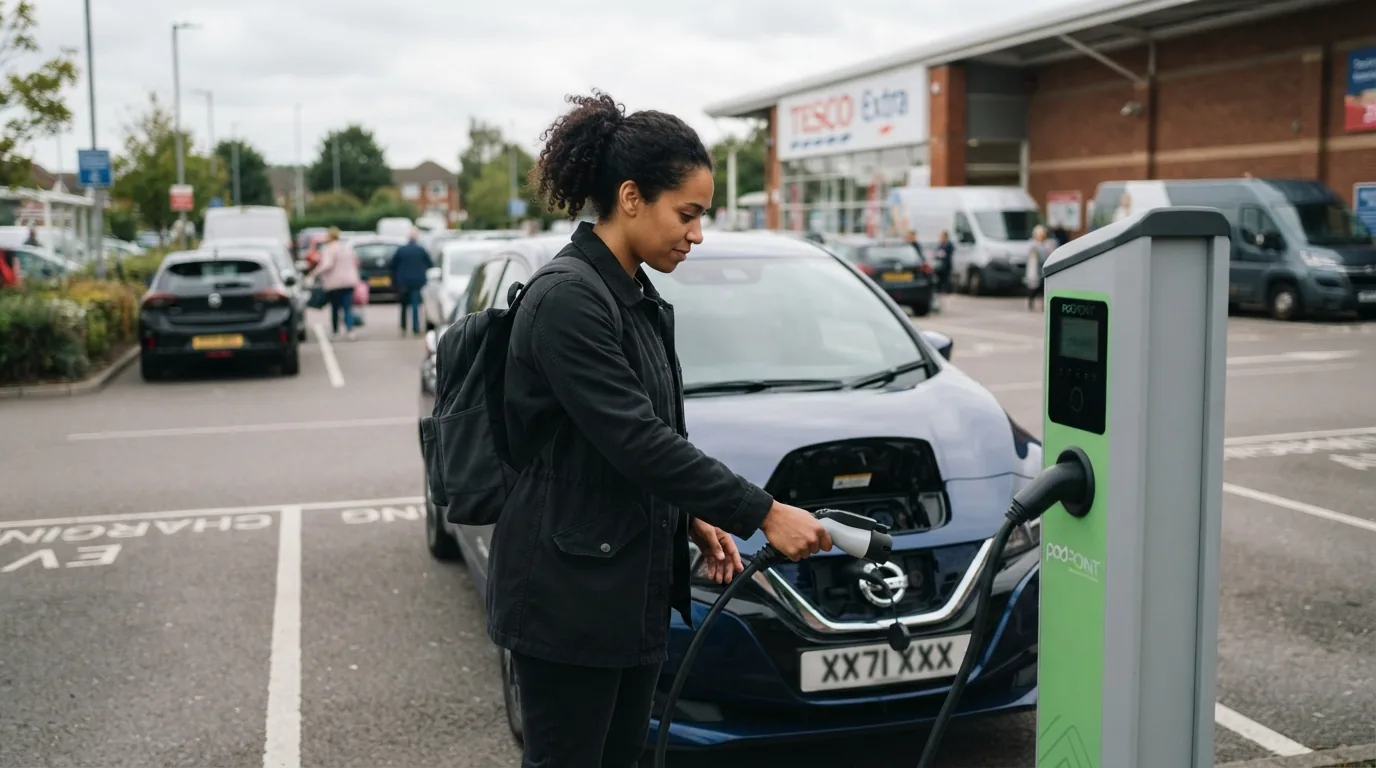
Quick answers
- The average PAYG rapid charging rate in the UK was 79p per kWh in April 2026. That is the average; the cheapest accessible option on the rapid network is around 43p per kWh on IONITY's annual plan, and standard chargers at supermarkets can be as low as 40p to 44p per kWh.
- Slow and medium-speed chargers at supermarkets are often significantly cheaper than any rapid option.
- A subscription is a fixed monthly fee that unlocks a lower per-kWh rate on one network.
- InstaVolt introduced off-peak pricing in 2025 that dropped its app rate from 92p per kWh peak to 55p per kWh between 8pm and 7am.
- Free charging: where it still exists: The remaining free public chargers accessible without conditions include: - A small number of Asda, Aldi and Sainsbury's locations - Some council-run on-street chargers in areas with free-to-charge schemes - Selected leisure centre and library car parks - Holiday Inn and some other hotel chains for registered guests
- Salary sacrifice and employer benefits: For drivers who access public charging through an employer salary sacrifice scheme, effective per-kWh costs can be 20 to 50% below advertised prices due to the tax treatment of the charging credit.
The average PAYG rapid charging rate in the UK was 79p per kWh in April 2026. That is the average; the cheapest accessible option on the rapid network is around 43p per kWh on IONITY’s annual plan, and standard chargers at supermarkets can be as low as 40p to 44p per kWh. The gap between the cheapest and most expensive public charging is almost 50p per kWh, nearly double the price. Understanding where the cheap options are and when to use them saves real money.
The cheapest rapid charging options by network
| Network | Cheapest rate available | Conditions |
|---|---|---|
| IONITY Power plan | 43p/kWh | Annual subscription (~£10.50/month) |
| Be.EV off-peak (members) | ~39p/kWh | Off-peak hours, monthly membership |
| InstaVolt off-peak | 55p/kWh | 8pm–7am, free InstaVolt app required |
| Fastned Gold | ~55p/kWh (est.) | 30% off PAYG, £9.99/month |
| Tesla Supercharger (non-Tesla) | 45–56p/kWh | No membership needed, CCS required |
| Osprey (app) | 82p/kWh | Free app, no subscription |
| GRIDSERVE | ~75p/kWh | PAYG contactless |
| IONITY (PAYG) | 74p/kWh | No subscription needed |
| MFG EV Power | ~79p/kWh | PAYG, no membership |
| BP Pulse (subscriber) | 69p/kWh | £7.85/month subscription |
| BP Pulse (PAYG) | 89p/kWh | Most expensive mainstream rapid |
| InstaVolt (peak PAYG) | 92p/kWh | Most expensive mainstream rapid |
The cheapest standard and standard-plus chargers
Slow and medium-speed chargers at supermarkets are often significantly cheaper than any rapid option. They are not suitable for a motorway stop, but they are ideal for topping up during errands, a gym session or a long supermarket shop.
| Network / location | Typical rate | Speed | Notes |
|---|---|---|---|
| Tesco / Pod Point | 44p–69p/kWh | 7–22 kW | 619 stores, most accept contactless |
| Lidl / Osprey | 62p/kWh rapid, 40p/kWh AC | 7–50 kW | Osprey and some third-party units |
| Connected Kerb (on-street) | From 35p/kWh | 3–7 kW | On-street, mainly slow |
| Shell Recharge Ubitricity | 52–85p/kWh | 3–22 kW | Wide London and urban coverage |
| Pod Point (various retail) | 44p+/kWh | 7–22 kW | Broad retail park coverage |
For context: home charging on a smart EV tariff like Octopus Intelligent costs around 7p to 9p per kWh overnight. Even the cheapest public standard charging at 35p per kWh is 4 to 5 times more expensive than home charging. But for drivers without off-street parking, or those topping up on a journey, 35p to 44p per kWh is genuinely reasonable.
How subscriptions reduce the cost of rapid charging
A subscription is a fixed monthly fee that unlocks a lower per-kWh rate on one network. The table below shows which subscription offers the best value at different usage levels.
| Network | Monthly fee | Subscriber rapid rate | Break-even usage |
|---|---|---|---|
| IONITY Power (annual) | ~£10.50 | 43p/kWh (vs 74p PAYG) | ~33 kWh/month |
| Be.EV Mega | £9.99 | ~39p/kWh off-peak | ~25 kWh/month |
| Fastned Gold | £9.99 | ~55p/kWh | ~45 kWh/month |
| Shell Recharge | £9.99 | ~56p/kWh | ~50 kWh/month |
| BP Pulse | £7.85 | 69p/kWh | ~39 kWh/month |
Break-even usage is calculated versus PAYG on the same network.
IONITY’s annual Power plan is the most compelling of these if you regularly use IONITY stations (at Extra motorway services and village hotels). At 43p per kWh versus 74p PAYG, a 40 kWh charge session saves £12.40. That means the plan pays for itself after fewer than one session per month for a typical EV.
Off-peak pricing: the most underused money-saver
InstaVolt introduced off-peak pricing in 2025 that dropped its app rate from 92p per kWh peak to 55p per kWh between 8pm and 7am. This is not a subscription, it requires only the free InstaVolt app and applies automatically during the off-peak window. On a 40 kWh charge, the difference is £14.80 versus £36.80: a saving of £22 for scheduling a session in the evening rather than the afternoon.
Be.EV similarly offers its cheapest rate (around 39p per kWh) during off-peak hours for members, which is competitive with home EV tariffs at the cheaper end. If your journey allows flexibility, charging in the evening hours rather than midday can halve your rapid charging cost on some networks.
Free charging: where it still exists
Free public EV charging is now rare. Zap-Map lists around 1,837 free chargepoints as of spring 2026, roughly 1.5% of the network. Most are slow (3 kW to 7 kW) and restricted to specific venues such as hotels for guests, car dealerships for customers or workplaces for employees.
The remaining free public chargers accessible without conditions include:
- A small number of Asda, Aldi and Sainsbury’s locations
- Some council-run on-street chargers in areas with free-to-charge schemes
- Selected leisure centre and library car parks
- Holiday Inn and some other hotel chains for registered guests
To find free chargers near you, filter Zap-Map by “Free to use” after installing the app. Always verify before arriving: free charger policies change frequently, and the Zap-Map listing may not reflect recent changes.
Salary sacrifice and employer benefits
For drivers who access public charging through an employer salary sacrifice scheme, effective per-kWh costs can be 20 to 50% below advertised prices due to the tax treatment of the charging credit. A higher-rate taxpayer using a 76p/kWh rapid charger via The Charge Scheme might pay an effective rate of around 44p per kWh after tax relief. This is one of the most significant but least-discussed ways to reduce public charging costs.
Roaming aggregators: one bill, competitive rates
Platforms such as Electroverse and Bonnet let you access multiple networks from one app and one invoice, sometimes at network-rate pricing rather than the higher PAYG contactless rate. For drivers who regularly use different networks, this can save both money and the complexity of managing multiple accounts.
Electroverse, for example, provides access to GRIDSERVE, BP Pulse, Osprey, Pod Point and many other networks, with prices displayed in one app. Some networks add a small per-session or per-kWh roaming fee through these platforms; others pass through the network’s own rate.
The cheapest way to charge publicly, ranked
- Free chargers (where available and accessible without conditions)
- Be.EV off-peak with membership (around 39p/kWh)
- IONITY Power annual plan (43p/kWh)
- Connected Kerb on-street slow charging (from 35p/kWh, very slow)
- InstaVolt off-peak (55p/kWh, free app, no subscription)
- Tesla Supercharger non-Tesla (45–56p/kWh, no membership needed where open)
- Fastned Gold membership (roughly 55p/kWh effective)
- Tesco Pod Point (44p+ per kWh, slow but free of rapid premium)
Where to find more
For a full overview of all major UK charging networks including reliability, see Best Public EV Charging Networks in the UK.
For the complete guide to how public charging works and what it costs, visit our Public Charging guide.
How we test and where our numbers come from
Range figures are official WLTP combined values taken from manufacturer UK specification pages, with real-world estimates drawn from independent comparative testing. Prices are UK list prices at the time of the latest update. Tax, grant and charging-scheme figures come from GOV.UK and HMRC publications. We re-check every guide when pricing, specification or policy changes. Last checked 11 August 2026.
Sources and further reading
- zapmap.comZap-MapPrimary source referenced in this article.

EV Compared
The EV Compared editorial team tracks the UK electric vehicle market full time: new model launches, list prices, WLTP and real-world range, public charging tariffs and the tax rules that decide what an EV actually costs to run. Every guide is checked against manufacturer specifications and official GOV.UK figures, and updated whenever the numbers move.
Related reading
View all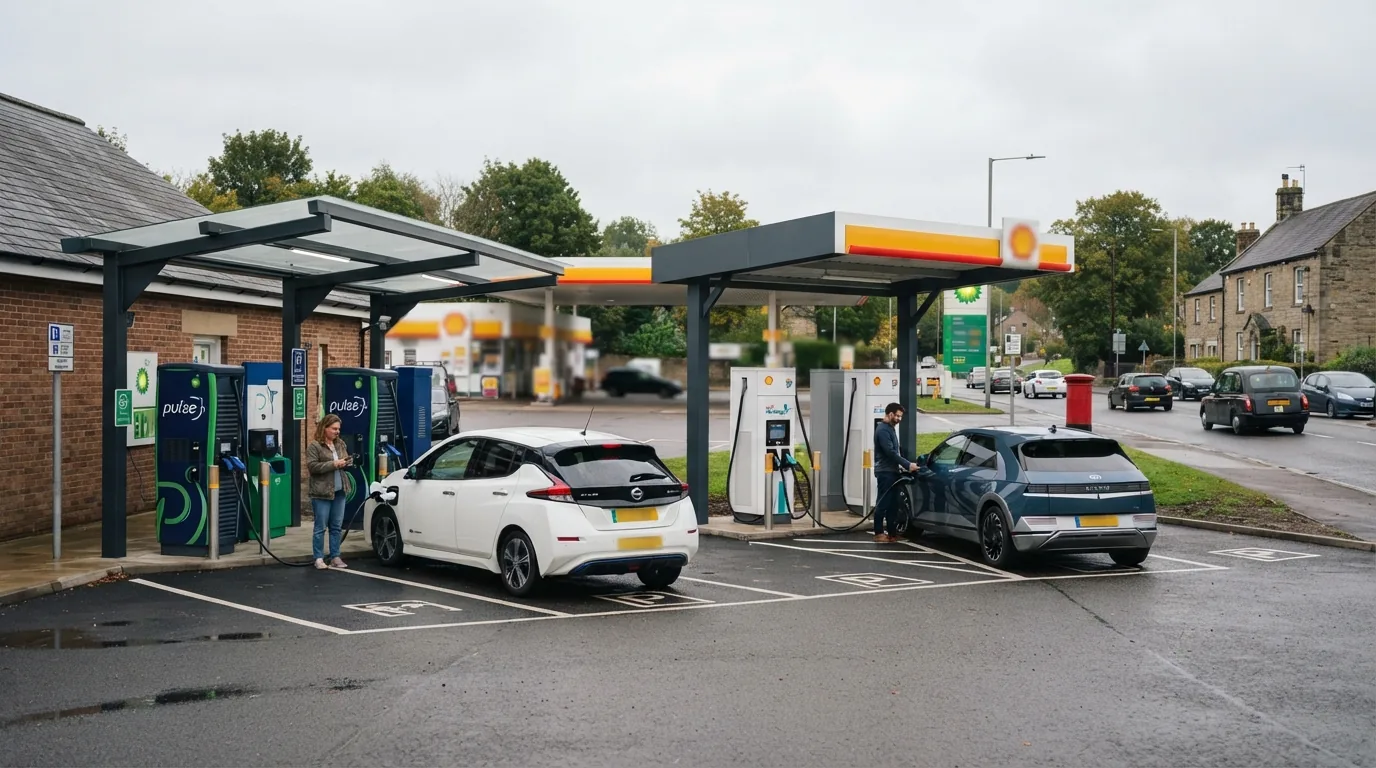
BP Pulse vs Shell Recharge: Which UK Network Wins?
Two of the UK's biggest charging networks compared on price, reliability and which type of driver each suits
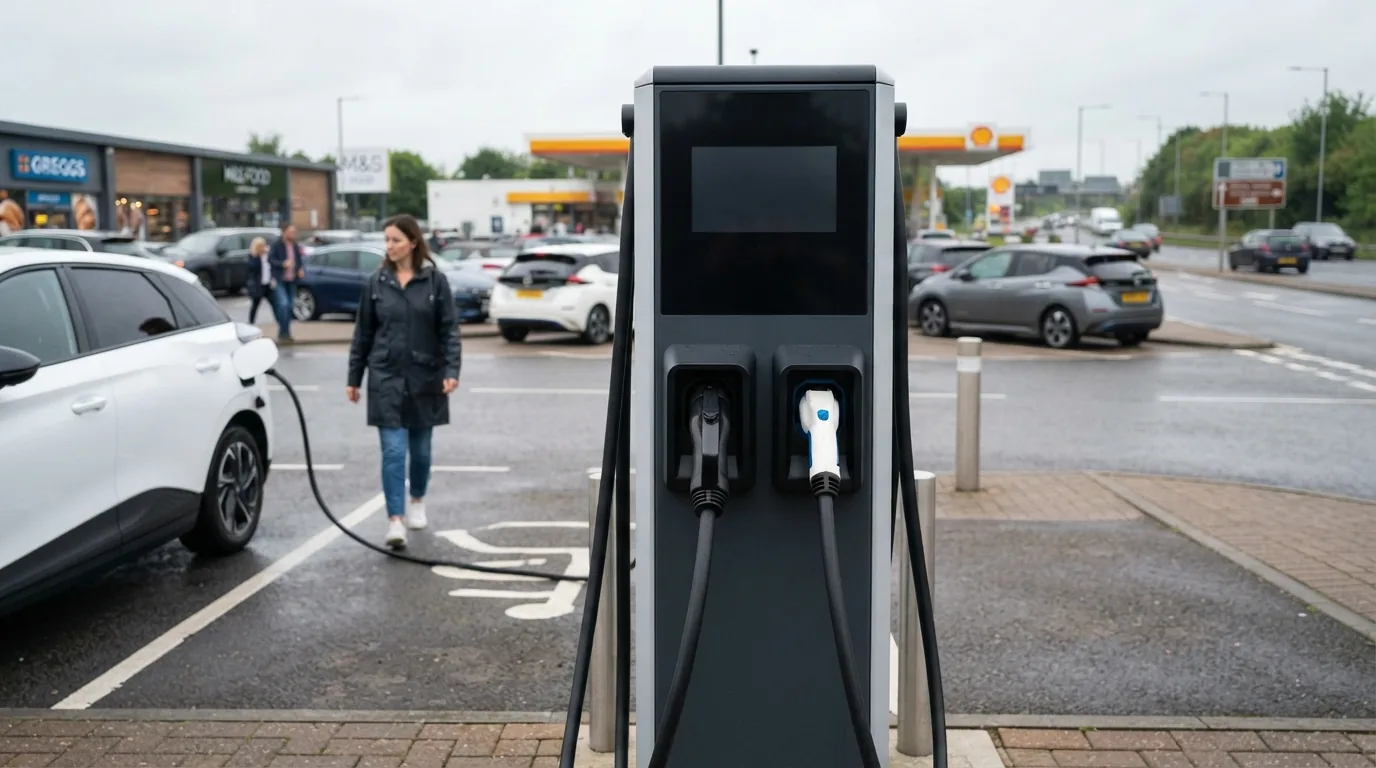
Can You Charge Any EV at Any Public Charger in the UK?
Why almost any new EV works at almost any UK public charger, and the two exceptions you need to know
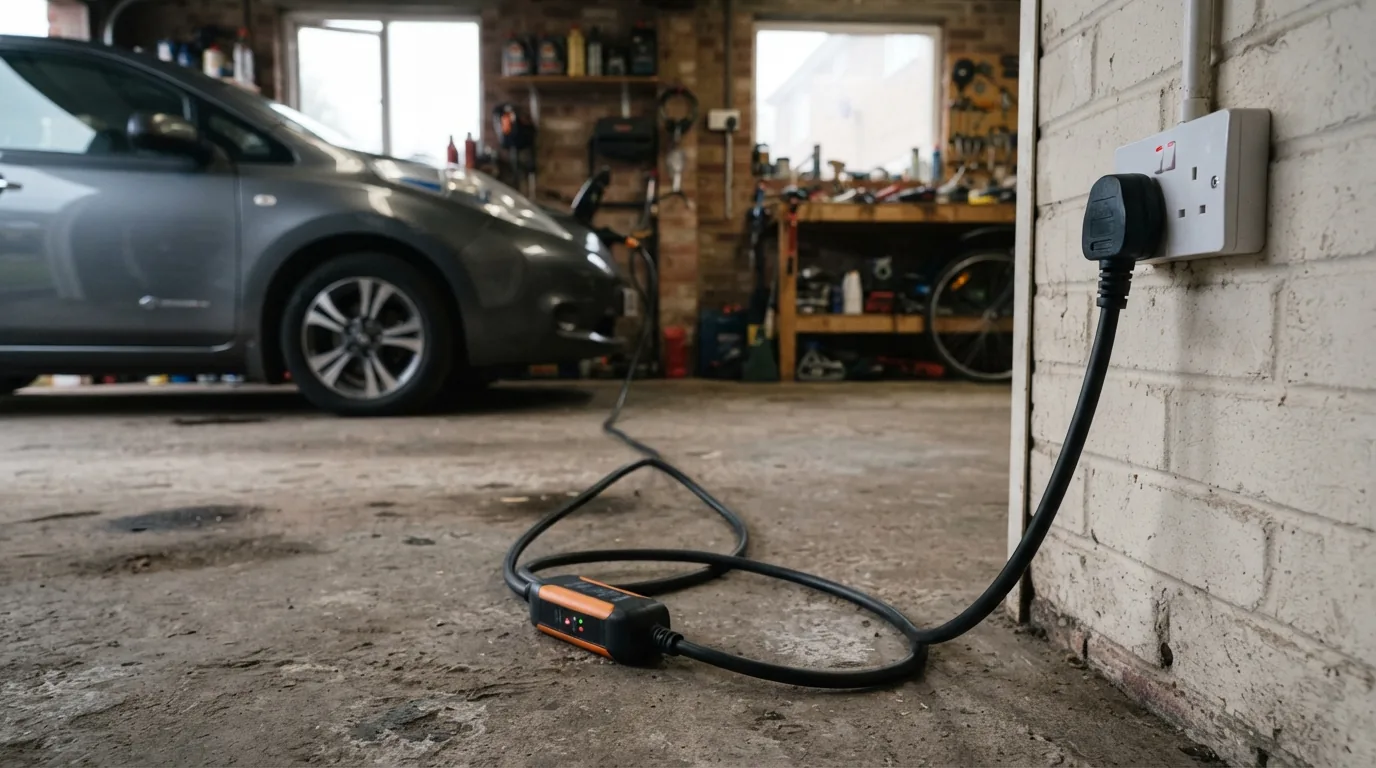
Can You Charge an EV From a Three-Pin Plug in the UK?
Yes, most cars ship with the cable, but speed and safety limits mean it works best for occasional or emergency use