Used EV Prices in 2026: Why Now Could Be the Time to Buy
Average used EV prices have fallen from £39,000 to around £24,000 since 2022 -- and analysts say supply will keep prices competitive through 2026
Quick answers
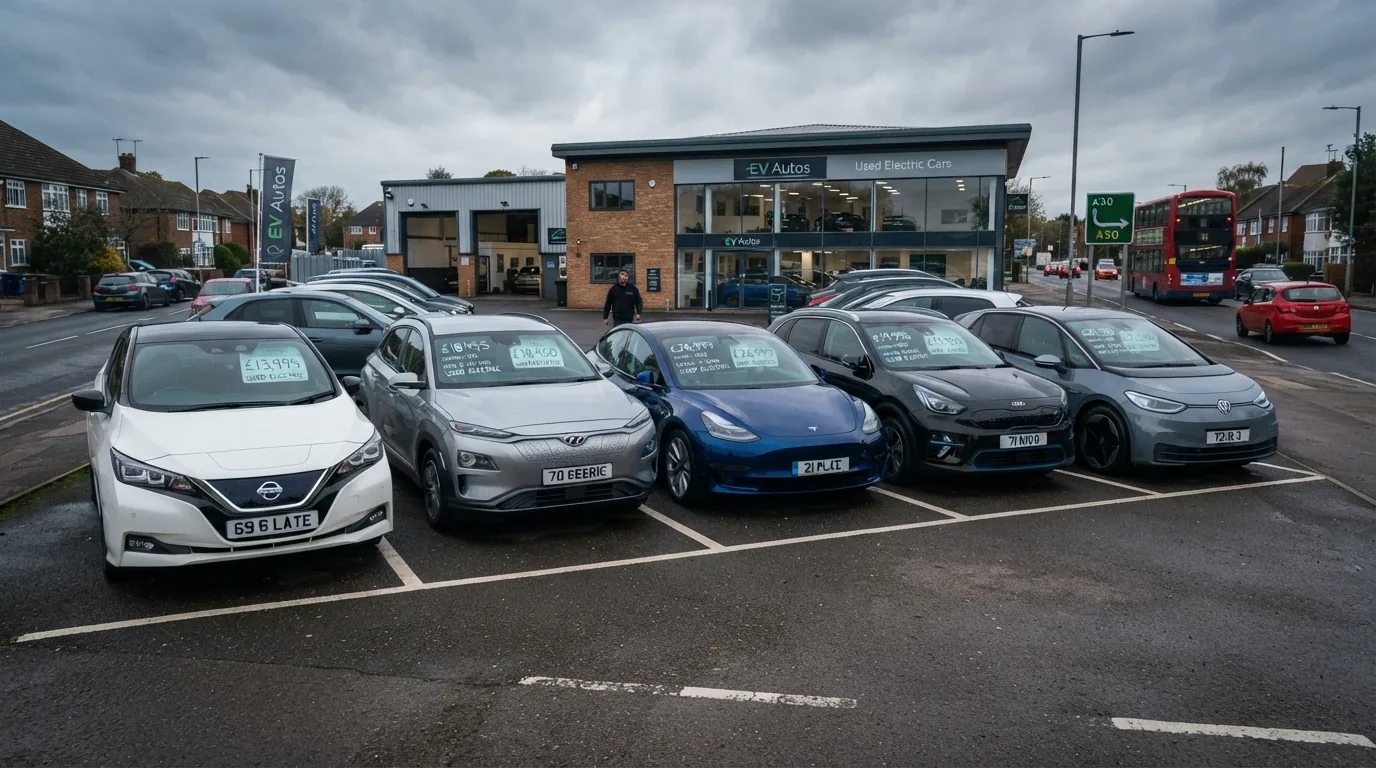
- Used electric car prices in the UK fell around 10% in 2025 year on year, and the trend has continued into 2026. The average used EV now sits at approximately £24,000, down from around £39,000 at the peak of the market in 2022.
- What has happened to used EV prices: The short version: a supply wave driven by ex-fleet and ex-lease returns is creating more second-hand stock than the market is used to absorbing, pushing prices down.
- Used EV price benchmarks (UK, mid-2026): These are approximate market prices based on typical dealer listings in mid-2026.
- Will prices fall further: Analysts including Cap HPI and Auto Trader have suggested prices could fall toward a £14,000 average for some models over the next two to three years, as supply continues to grow.
- The best buy depends on your circumstances, but several models stand out.
- Battery state of health (SoH) is the single most important factor in a used EV purchase that has no direct equivalent in the petrol car buying process.
Used electric car prices in the UK fell around 10% in 2025 year on year, and the trend has continued into 2026. The average used EV now sits at approximately £24,000, down from around £39,000 at the peak of the market in 2022. That is a significant shift. It means buyers with a budget of £20,000-£30,000 can now access used electric cars that were priced at £40,000-plus when new — cars with long range, strong safety records and established reliability data.
The reasons this is happening, whether the trend will continue, and which models represent the best value at current prices are all worth understanding before you buy.
What has happened to used EV prices?
The short version: a supply wave driven by ex-fleet and ex-lease returns is creating more second-hand stock than the market is used to absorbing, pushing prices down.
In 2020-2022, when new EV sales first accelerated substantially, many of those cars were bought by businesses and fleet operators rather than private buyers. Company car fleets typically operate on 3-year cycles. A car registered in 2021 or 2022 is now returning to the used market. More than 274,000 used battery electric cars changed hands in the UK during 2025, up 45.7% year on year — a record volume.
At the same time, average EV depreciation has been higher than for equivalent petrol cars, in part because of rapid new-model improvement (a 2022 EV with 200 miles of range looks less competitive next to a 2025 EV with 300 miles at a similar price), and in part because residual value predictors underestimated the pace of supply growth.
The result: what was £39,000 in 2022 is now £24,000, and there are more choices than ever in the used market.
Used EV price benchmarks (UK, mid-2026)
| Model | Typical age | Typical price | Original new price | Depreciation |
|---|---|---|---|---|
| Nissan Leaf (40 kWh) | 3-4 years | £12,000-£16,000 | £28,000-£33,000 | ~50-55% |
| Renault Zoe (R135) | 3-4 years | £11,000-£15,000 | £27,000-£32,000 | ~50-55% |
| Hyundai KONA Electric | 3-4 years | £18,000-£23,000 | £33,000-£38,000 | ~40-45% |
| Volkswagen ID.3 | 2-3 years | £20,000-£25,000 | £35,000-£40,000 | ~38-45% |
| Tesla Model 3 (SR) | 3-4 years | £22,000-£28,000 | £40,000-£47,000 | ~40-45% |
| Kia EV6 | 2-3 years | £26,000-£32,000 | £40,000-£50,000 | ~35-40% |
| BMW i4 | 2-3 years | £32,000-£42,000 | £52,000-£65,000 | ~35-40% |
These are approximate market prices based on typical dealer listings in mid-2026. Private sale prices are typically 10-15% lower than dealer prices. Exact figures vary by specification, mileage, battery health and location.
Will prices fall further?
Analysts including Cap HPI and Auto Trader have suggested prices could fall toward a £14,000 average for some models over the next two to three years, as supply continues to grow. This has led some buyers to ask whether they should wait.
The honest view: trying to time the bottom of a used-car market is unreliable. The used EV market has been “about to stabilise” for two years. If you need a car now and the current prices represent value for your budget, waiting for a hypothetical future low point typically costs more in foregone use than it saves in purchase price.
What is reasonable to expect: the broad trend of competitive pricing in the used EV market is likely to continue through at least 2026 and into 2027, as the supply wave from 2021-23 registrations continues to work through the system. This is a good time to buy, not a marginal one.
Which used EV models are the best buys right now?
The best buy depends on your circumstances, but several models stand out.
For the budget buyer (under £15,000): The Renault Zoe (2020-2022 models) and Nissan Leaf (40 kWh, 2019-2022 models) offer 160-230 miles of WLTP range from established, well-understood platforms. Battery health on high-mileage Zoes and Leaves needs checking but the data from long-term ownership is largely reassuring. The Leaf in particular has now been on UK roads long enough for reliability patterns to be well-documented.
For the mid-budget buyer (£18,000-£25,000): The Volkswagen ID.3 represents arguably the best package at this price point in 2026. A 2022-23 ID.3 with 58 kWh battery (261 miles WLTP), high-quality interior and VW’s established dealer network is available for around £20,000-£24,000. It is a comfortable, practical hatchback with good real-world efficiency and a solid safety rating.
For the quality-conscious buyer (£25,000-£35,000): The Tesla Model 3 and Kia EV6 both hold value slightly better than most competitors but are still available at significant discounts to new prices. A 2022-23 Model 3 Long Range at around £26,000-£30,000 gives you 400-plus miles of real-world range and the Supercharger network. A comparable Kia EV6 at similar pricing gives you better interior quality and 800V fast charging.
What is the most important thing to check on a used EV?
Battery state of health (SoH) is the single most important factor in a used EV purchase that has no direct equivalent in the petrol car buying process.
Every lithium-ion battery degrades over time. A battery at 80% SoH delivers 80% of its original capacity — so a car originally rated for 250 miles WLTP would now deliver around 200 miles as a practical ceiling. Whether 200 miles is sufficient depends entirely on your driving. For most UK daily use it is adequate; for a regular long-distance driver it may not be.
Battery SoH is not routinely disclosed in online used-car listings. You need to ask specifically or have an independent check done. For many models (including most Teslas, Hyundais and Kias), a battery health diagnostic check costs £50-100 from a specialist EV workshop. For high-value purchases, this is money well spent.
Red flags in used EV buying:
- Battery SoH below 75% (especially if not priced accordingly)
- No service history or documentation of software updates
- Missing or tampered charge-port area (sign of previous charger damage)
- Unusually high mileage for the battery’s state of health
Green flags:
- Manufacturer battery warranty still in force (typically 8 years/100,000 miles for major brands)
- Full main dealer service history
- Battery health report included in the sale documentation
Does the UK Electric Car Grant apply to used EVs?
No. The UK Electric Car Grant applies only to new electric cars priced at £37,000 or below. There is no equivalent grant scheme for used electric car purchases.
However, some salary sacrifice schemes and workplace benefit programmes allow employees to access used EVs through similar advantageous arrangements. Check with your employer’s benefit provider if you are considering this route.
What should you do next?
For editorial recommendations on the best used EV models to buy right now across every budget, see our best used electric cars to buy page. For comprehensive guidance on the full used EV buying process — including what to check, how to negotiate and what warranty rights you have as a buyer — see our used EVs guide.
The used EV market in 2026 is the most buyer-friendly it has ever been. More choice, lower prices and better reliability data than at any previous point in the market’s history. If your budget was the barrier to going electric, 2026 is the year to look seriously at the used market.
How we test and where our numbers come from
Range figures are official WLTP combined values taken from manufacturer UK specification pages, with real-world estimates drawn from independent comparative testing. Prices are UK list prices at the time of the latest update. Tax, grant and charging-scheme figures come from GOV.UK and HMRC publications. We re-check every guide when pricing, specification or policy changes. Last checked 11 August 2026.
Frequently asked questions
What has happened to used EV prices?
The short version: a supply wave driven by ex-fleet and ex-lease returns is creating more second-hand stock than the market is used to absorbing, pushing prices down.
Will prices fall further?
Analysts including Cap HPI and Auto Trader have suggested prices could fall toward a £14,000 average for some models over the next two to three years, as supply continues to grow. This has led some buyers to ask whether they should wait.
Which used EV models are the best buys right now?
The best buy depends on your circumstances, but several models stand out.
What is the most important thing to check on a used EV?
Battery state of health (SoH) is the single most important factor in a used EV purchase that has no direct equivalent in the petrol car buying process.
Does the UK Electric Car Grant apply to used EVs?
No. The UK Electric Car Grant applies only to new electric cars priced at £37,000 or below.
Sources and further reading
- electriccarscheme.comAuto Trader / Cap HPI / The Electric Car SchemePrimary source referenced in this article.

EV Compared
The EV Compared editorial team tracks the UK electric vehicle market full time: new model launches, list prices, WLTP and real-world range, public charging tariffs and the tax rules that decide what an EV actually costs to run. Every guide is checked against manufacturer specifications and official GOV.UK figures, and updated whenever the numbers move.
Related reading
View all
BYD in the UK: Full Model Range and Prices for 2026
From the £18,650 Dolphin Surf to the £47,025 Sealion 7 -- a complete guide to every BYD you can buy in Britain right now
Cheapest New EVs You Can Buy in the UK Right Now
From £14,495 to £30,000: the new electric cars that offer the most genuine value in the current market
Chinese EV Brands in the UK: Who Is Here and Are They Any Good?
BYD, MG, Xpeng, NIO, Leapmotor and Jaecoo are all selling in Britain -- here is an honest assessment of what each offers