Cheapest New EVs You Can Buy in the UK Right Now
From £14,495 to £30,000: the new electric cars that offer the most genuine value in the current market
Quick answers
- The cheapest new electric car you can buy in the UK in 2026 for normal road use at all speeds starts at £14,495. That is a real number, not a finance-deal trick or a stripped-out fleet-only special.
- The cheapest new electric car you can buy in the UK for use on all roads at all speeds is the Leapmotor T03 at £14,495.
- Prices are on-the-road (OTR) list prices and correct at the time of writing.
- The UK Electric Car Grant gives up to £3,750 off the purchase price of eligible new electric cars costing £37,000 or less.
- Is there a sweet spot in the market: In this range you can now buy cars with genuine 200-mile-plus real-world range, 100 kW DC fast charging (which gets you from 20% to 80% in roughly 25-30 minutes), a full suite of modern safety and convenience technology, and a warranty from an established or growing brand.
- The biggest trap is buying on headline WLTP range without understanding what drives real-world range.
The cheapest new electric car you can buy in the UK in 2026 for normal road use at all speeds starts at £14,495. That is a real number, not a finance-deal trick or a stripped-out fleet-only special. The market below £30,000 has transformed in the last two years, and buyers who last looked in 2023 will find a very different — and much more appealing — selection waiting for them.
This page covers every significant new EV you can buy in the UK for under £30,000 right now, what you actually get for the money, and what the common traps are.
What is the cheapest proper electric car in the UK?
The cheapest new electric car you can buy in the UK for use on all roads at all speeds is the Leapmotor T03 at £14,495.
It is a small Chinese-built city car with a 37.3 kWh battery, 143 miles of WLTP range and a 95 kW motor. It comes with a full suite of safety kit including autonomous emergency braking, lane assist and a reversing camera. For a car at this price, the specification is reasonable; for a primarily urban driver who charges at home, the range is adequate.
The Dacia Spring comes in close behind at around £15,000. The Spring has an even smaller 26.8 kWh battery, giving around 140 miles WLTP. It is not quick — 0-62 mph takes 19.1 seconds — and DC fast charging tops out at 30 kW, meaning a full charge takes a while. But for a second car, a short-commute vehicle or anyone who only needs to get around town, the Spring represents the most honest budget option from a mainstream European brand.
Below both of these sits the Citroën Ami at roughly £7,695. The Ami is a quadricycle, legally distinct from a car. It is limited to 28 mph, requires no conventional driving licence and is essentially a covered electric scooter. It does not belong in the same conversation as road-legal electric cars and is only included here so you know what to discount.
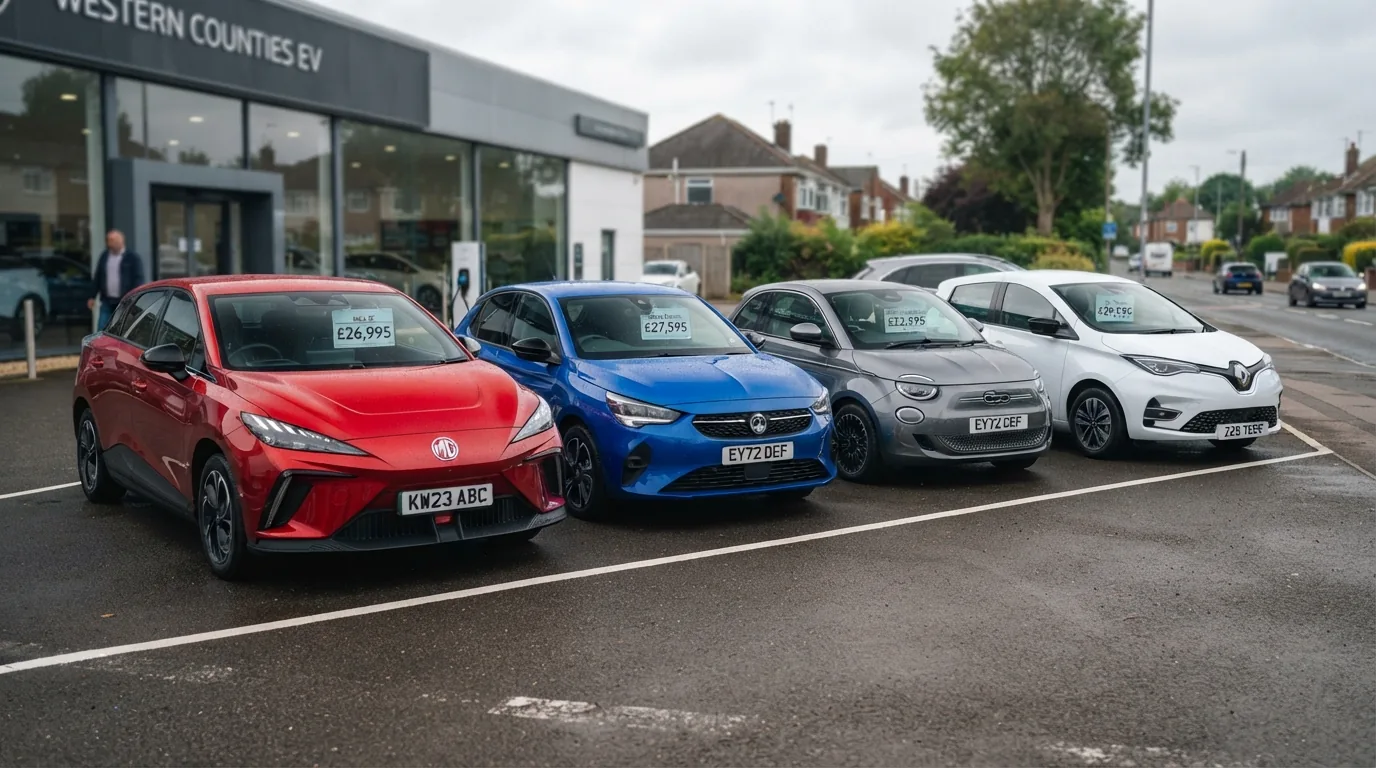
Cheapest new EVs under £30,000 in the UK (May 2026)
| Model | Battery | WLTP range | DC charge | OTR price from |
|---|---|---|---|---|
| Leapmotor T03 | 37.3 kWh | 143 miles | 48 kW | £14,495 |
| Dacia Spring | 26.8 kWh | 140 miles | 30 kW | ~£15,000 |
| BYD Dolphin Surf | 38.7 kWh | ~200 miles | 60 kW | £18,650 |
| Fiat Grande Panda Electric | 44 kWh | ~200 miles | 100 kW | £20,995 |
| Renault 5 E-Tech (40 kWh) | 40 kWh | 190 miles | 80 kW | ~£22,995 |
| Citroën ë-C3 | 44 kWh | 221 miles | 100 kW | £23,495 |
| Vauxhall Corsa Electric | 51 kWh | 222 miles | 100 kW | ~£27,000 |
| MG4 Long Range | 64 kWh | 281 miles | 150 kW | £29,495 |
Prices are on-the-road (OTR) list prices and correct at the time of writing. Manufacturer deals, finance offers and dealer discounts can reduce the effective cost significantly. Always check whether the Electric Car Grant (£3,750 for eligible models) applies — see below.
Which cheap EVs qualify for the Electric Car Grant?
The UK Electric Car Grant gives up to £3,750 off the purchase price of eligible new electric cars costing £37,000 or less. The discount is applied by the dealer at point of sale; you do not need to claim it separately.
Not every car in the table above qualifies. MG, BYD, Tesla, Fiat and Smart are among the brands currently outside the scheme because they have not yet met the Science Based Targets verification requirement. Renault, Citroën, Vauxhall and Dacia do qualify for some or all of their models.
The Renault 5 E-Tech 52 kWh variant recently entered Band 1, meaning the full £3,750 grant applies. The Citroën ë-C3 also qualifies. This makes the effective price significantly lower than the headline figure suggests — the Renault 5 in its longer-range 52 kWh version, for example, drops to around £23,000 after the grant.
Always verify eligibility on the OZEV portal before buying, as the list is updated frequently as manufacturers complete certification.
Is there a sweet spot in the market?
Yes, and it is roughly £20,000 to £25,000.
In this range you can now buy cars with genuine 200-mile-plus real-world range, 100 kW DC fast charging (which gets you from 20% to 80% in roughly 25-30 minutes), a full suite of modern safety and convenience technology, and a warranty from an established or growing brand.
The Citroën ë-C3 at £23,495 is a strong example. Its 249-mile WLTP range at under £25,000, combined with 100 kW DC charging, is a specification that was simply not available at this price two years ago. The BYD Dolphin Surf at £18,650 pushes the boundaries of what genuine value looks like at the budget end.
At the top of the sub-£30,000 bracket, the MG4 Long Range at £29,495 offers 281 miles WLTP and 150 kW DC charging — a specification that matches cars costing £10,000 to £15,000 more from European brands. The trade-off is that MG is not currently eligible for the Electric Car Grant.
What is the most common mistake buyers make when choosing a cheap EV?
The biggest trap is buying on headline WLTP range without understanding what drives real-world range. WLTP figures are measured under controlled conditions and typically overstate what you will see in everyday UK driving by 10% to 20%, particularly in winter.
A car advertised at 200 miles WLTP might deliver 160-170 miles in winter at motorway speeds. That is often still enough for typical daily use — the average UK commute is under 20 miles per day — but it matters when planning longer journeys.
The second trap is ignoring charging speed. A 30 kW maximum DC rate (like the Dacia Spring) means a long wait at a rapid charger. If you use public rapid chargers regularly, the difference between 30 kW and 100 kW is the difference between a 15-minute top-up and an hour-long wait.
For home charging, most cheap EVs support 7 kW AC, which adds around 30-40 miles per hour on a home wallbox. For pure city use on a home-charging routine, this is entirely sufficient.
Should you look at used cars instead?
If your budget is under £20,000, the used market may actually offer better value than the cheapest new cars. A used 2022-23 Nissan Leaf, Renault Zoe, or early BMW i3 can be found for £12,000 to £18,000 and offer real-world range comparable to the cheapest new models, plus the reassurance of established reliability records.
Used EV prices fell around 10% in 2025 and have continued to ease in early 2026, driven by a large wave of ex-fleet and ex-lease cars returning to market. The supply is better than it has ever been.
The one thing to check carefully on any used EV is battery state of health (SoH). A battery at 80% SoH on a car rated for 150 miles gives you 120 miles — which may still be fine, but you should know before you buy. Ask for a battery health report or have one done independently.
What should you do next?
For a full comparison of the best value options across every budget — including used EVs — see our best electric cars to buy guide. For help understanding everything from charging costs to insurance and tax, our Buying and Owning guide covers the whole picture.
The market below £30,000 is now genuinely competitive. You do not have to compromise on range, safety or technology to buy an affordable electric car in 2026.
How we test and where our numbers come from
Range figures are official WLTP combined values taken from manufacturer UK specification pages, with real-world estimates drawn from independent comparative testing. Prices are UK list prices at the time of the latest update. Tax, grant and charging-scheme figures come from GOV.UK and HMRC publications. We re-check every guide when pricing, specification or policy changes. Last checked 11 August 2026.
Frequently asked questions
What is the cheapest proper electric car in the UK?
The cheapest new electric car you can buy in the UK for use on all roads at all speeds is the Leapmotor T03 at £14,495.
Which cheap EVs qualify for the Electric Car Grant?
The UK Electric Car Grant gives up to £3,750 off the purchase price of eligible new electric cars costing £37,000 or less. The discount is applied by the dealer at point of sale; you do not need to claim it separately.
Is there a sweet spot in the market?
In this range you can now buy cars with genuine 200-mile-plus real-world range, 100 kW DC fast charging (which gets you from 20% to 80% in roughly 25-30 minutes), a full suite of modern safety and convenience technology, and a warranty from an established or growing brand.
What is the most common mistake buyers make when choosing a cheap EV?
The biggest trap is buying on headline WLTP range without understanding what drives real-world range. WLTP figures are measured under controlled conditions and typically overstate what you will see in everyday UK driving by 10% to 20%, particularly in winter.
Should you look at used cars instead?
If your budget is under £20,000, the used market may actually offer better value than the cheapest new cars. A used 2022-23 Nissan Leaf, Renault Zoe, or early BMW i3 can be found for £12,000 to £18,000 and offer real-world range comparable to the cheapest new models, plus the reassurance of established reliability records.
Sources and further reading
- rac.co.ukRAC / Zap-Map / manufacturer pricingPrimary source referenced in this article.

EV Compared
The EV Compared editorial team tracks the UK electric vehicle market full time: new model launches, list prices, WLTP and real-world range, public charging tariffs and the tax rules that decide what an EV actually costs to run. Every guide is checked against manufacturer specifications and official GOV.UK figures, and updated whenever the numbers move.
Related reading
View all
BYD in the UK: Full Model Range and Prices for 2026
From the £18,650 Dolphin Surf to the £47,025 Sealion 7 -- a complete guide to every BYD you can buy in Britain right now
Chinese EV Brands in the UK: Who Is Here and Are They Any Good?
BYD, MG, Xpeng, NIO, Leapmotor and Jaecoo are all selling in Britain -- here is an honest assessment of what each offers

Electric Car Grant 2026: Latest Eligible Models and Discounts
Up to £3,750 off qualifying new EVs -- 45 models are now confirmed eligible, but Tesla, MG, BYD and Fiat are all excluded