Chinese EV Brands in the UK: Who Is Here and Are They Any Good?
BYD, MG, Xpeng, NIO, Leapmotor and Jaecoo are all selling in Britain -- here is an honest assessment of what each offers
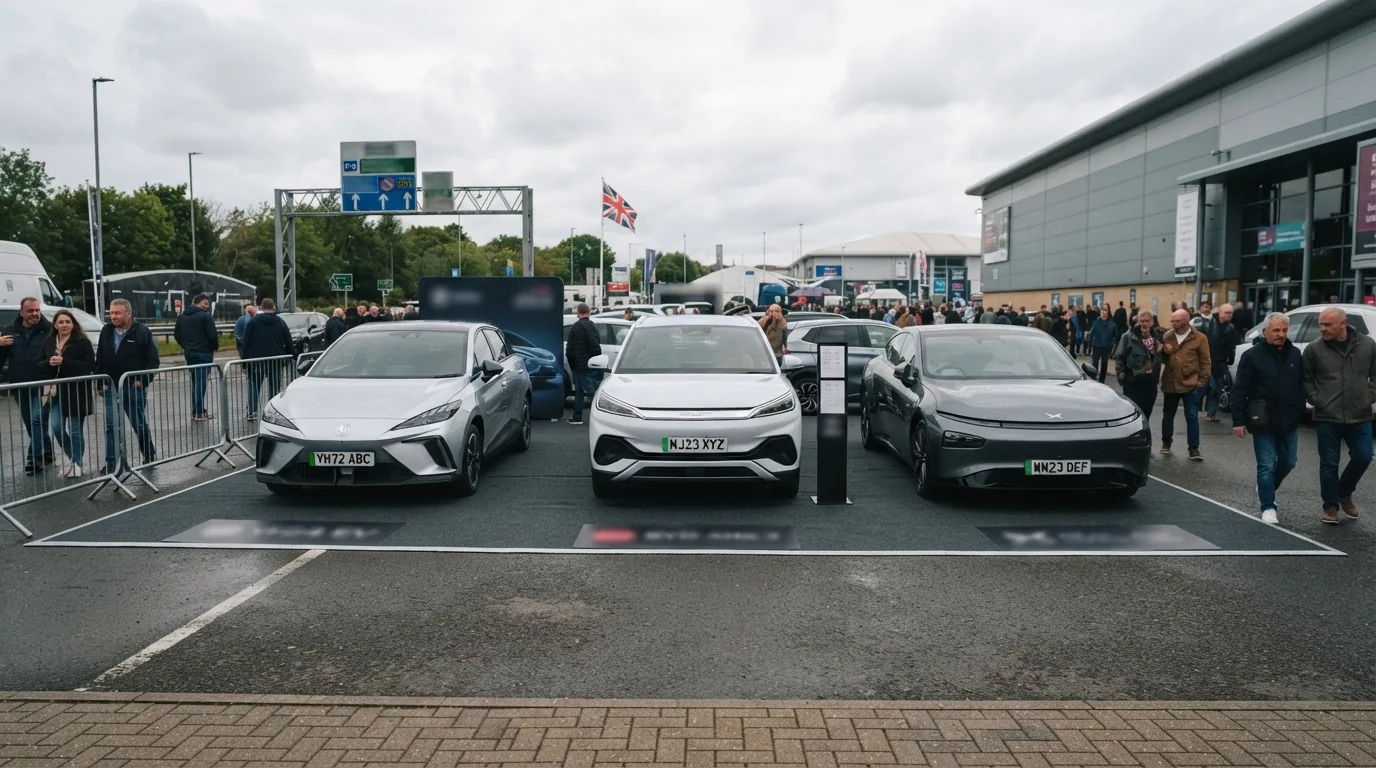
Quick answers
- Chinese EV brands now account for more than 12% of all electric car sales in the UK, and that share is growing. In 2025, BYD outsold Tesla in cumulative UK registrations for the first time -- 51,422 vehicles to Tesla's 45,513.
- MG: the established option: MG has been selling cars in the UK under Chinese ownership since 2011 and EVs since 2019.
- BYD: the technical leader: BYD (Build Your Dreams) is the world's largest EV manufacturer by volume and in 2025 became the first Chinese company to outsell Tesla in a major Western market -- including the UK.
- Leapmotor: the budget challenger: Leapmotor entered the UK through a joint venture with Stellantis, which gives it access to the Stellantis dealer and service network -- a significant advantage for a new brand.
- NIO: the premium newcomer: NIO is positioned as a premium brand, pricing its cars in the £50,000-90,000 range.
- Xpeng: the tech-forward mid-market option: Xpeng's G6 SUV arrived in the UK in 2026 priced from around £38,000 -- roughly £5,000 less than a comparable Tesla Model Y.
Chinese EV brands now account for more than 12% of all electric car sales in the UK, and that share is growing. In 2025, BYD outsold Tesla in cumulative UK registrations for the first time — 51,422 vehicles to Tesla’s 45,513. MG has over 153 UK dealer locations. Leapmotor grew registrations by 677% year on year in early 2026. Jaecoo, a brand most UK buyers had not heard of 18 months ago, outsold Mini and Renault in January.
These are not fringe numbers. Chinese brands are a mainstream part of the UK car market. The question for buyers is not whether to consider them, but which ones are worth considering — and on what basis.
Who is actually selling Chinese EVs in the UK right now?
| Brand | Parent company | Main UK models | Starting price | UK dealers |
|---|---|---|---|---|
| MG | SAIC (China) | MG4, ZS EV, MG5, Cyberster | ~£25,000 | 153+ |
| BYD | BYD (China) | Dolphin Surf, Atto 2, Atto 3, Seal, Sealion 7 | £18,650 | ~80 |
| Leapmotor | Leapmotor / Stellantis JV | T03, C10 | £14,495 | Stellantis network |
| Jaecoo | Chery (China) | Jaecoo 7 | ~£28,000 | Growing |
| NIO | NIO (China) | ET5, EL6, ET7 | From ~£50,000 | Showrooms + swap stations |
| Xpeng | Xpeng (China) | G6 | From ~£38,000 | UK launch 2026 |
| OMODA | Chery (China) | OMODA 5 | ~£27,000 | Growing |
MG: the established option
MG has been selling cars in the UK under Chinese ownership since 2011 and EVs since 2019. By 2026 it is comfortably the most established Chinese automotive brand in Britain, with over 153 dealer locations — more than many mainstream European brands.
The MG4 EV is the brand’s best product and one of the most competitive cars in the UK sub-£30,000 EV market. Starting at around £25,000 with real-world range of 200-plus miles and 150 kW DC charging on the Long Range variant (priced at £29,495), it offers a specification that comfortably beats most European rivals at this price. The MG4 Long Range delivers 281 miles WLTP and charges from 10% to 80% in around 35 minutes.
The trade-offs are modest brand prestige (which some buyers care about and others do not) and residual values that have improved but remain slightly behind Volkswagen or Kia equivalents. MG is currently outside the Electric Car Grant scheme, as it has not met the Science Based Targets verification requirement.
Verdict: MG is a legitimate, thoroughly practical choice with the UK dealer infrastructure to back it up.
BYD: the technical leader
BYD (Build Your Dreams) is the world’s largest EV manufacturer by volume and in 2025 became the first Chinese company to outsell Tesla in a major Western market — including the UK. The brand’s UK range spans the affordable Dolphin Surf (£18,650) to the executive Seal saloon (from £45,730) and the large Sealion 7 SUV (£47,025).
BYD’s key technical advantage is its Blade battery, which uses a lithium iron phosphate (LFP) chemistry arranged in a novel structural configuration. LFP is inherently safer than NMC chemistry (the cathode materials cannot sustain the thermal runaway reactions that cause serious battery fires), and the Blade arrangement gives BYD class-leading energy density for LFP. The 2026 Seal comes with an updated Blade battery, enhanced driver monitoring and a 15.6-inch HD touchscreen. BYD makes its own motors, battery cells, power electronics and software, giving it a cost and quality-control advantage over brands that source components from multiple suppliers.
Safety credentials are strong. The BYD Seal has five Euro NCAP stars. The Atto 3 also carries five stars. BYD has 100-plus UK dealer locations and is growing its service network.
The one limitation is the Electric Car Grant: BYD models are not currently eligible.
Verdict: BYD offers serious engineering, genuine value and improving after-sales support. The Seal is the most credible rival to the Tesla Model 3 at this price point.
Leapmotor: the budget challenger
Leapmotor entered the UK through a joint venture with Stellantis, which gives it access to the Stellantis dealer and service network — a significant advantage for a new brand. The T03 city car at £14,495 is the cheapest new electric car for normal road use currently on sale in Britain.
The T03 is a small, honest city car. It has 143 miles of WLTP range, a 48 kW DC charge rate (adequate but not rapid by current standards) and a reasonable basic specification for the money. It is not going to win premium-brand converts, but it genuinely opens the EV market to buyers who previously could not afford entry.
The C10 SUV, arriving in 2026, will test whether Leapmotor can move up-market credibly. If it can match the T03’s value equation in a family-SUV package, Leapmotor becomes a major player.
Verdict: For buyers who need the lowest possible entry price and primarily charge at home, the T03 is a genuine option. The C10 will be the real test.
NIO: the premium newcomer
NIO is positioned as a premium brand, pricing its cars in the £50,000-90,000 range. The unique feature is its battery-swap service: instead of waiting to charge, you drive into a Power Swap Station and the depleted battery is robotically exchanged for a full one in under five minutes. NIO operates swap stations in the UK, though coverage is limited compared to charge-point networks.
NIO also offers a battery-as-a-service model (BaaS), where you buy the car but lease the battery separately, reducing the purchase price. This can cut the entry cost significantly but adds a monthly fee.
The cars themselves — the ET5 saloon, EL6 SUV and ET7 large saloon — are well built and well equipped. But at current pricing they face competition from Porsche, BMW and Mercedes in the electric premium segment, brands with much longer track records of residual value retention.
Verdict: Compelling technology, but the swap network needs to grow substantially before battery swapping becomes a practical real-world advantage for most UK drivers.
Xpeng: the tech-forward mid-market option
Xpeng’s G6 SUV arrived in the UK in 2026 priced from around £38,000 — roughly £5,000 less than a comparable Tesla Model Y. The G6 uses 800V architecture, enabling very fast charging, and the top specification offers over 300 miles of WLTP range. Five-star Euro NCAP rating. Xpeng’s XPILOT driver-assistance system is one of the more capable ADAS setups available at this price.
The concern is dealer network maturity. Xpeng is new to the UK and its support infrastructure is still developing.
Verdict: Strong specification at competitive pricing. Worth considering if the after-sales question can be resolved with a local dealer check.
Are Chinese EVs safe?
This is the most common concern, and the evidence consistently points the same direction. The BYD Seal, Xpeng G6, MG4, and MG ZS EV all carry five-star Euro NCAP ratings. Euro NCAP tests are conducted independently of manufacturer involvement and are widely regarded as the most rigorous new-car safety assessment in the world. A five-star Euro NCAP rating from a Chinese brand is exactly the same test result as a five-star rating from any European brand.
Battery safety deserves specific mention. LFP chemistry (used by BYD and MG, among others) is inherently less prone to thermal runaway than the NMC chemistry used by many European and Korean EVs. BYD’s Blade battery has a strong real-world safety record across millions of vehicles globally.
What is the honest trade-off with Chinese EVs?
The trade-off is not safety or technology — on those metrics, the leading Chinese brands are competitive. The trade-offs are:
Residual values. Chinese EVs still tend to depreciate slightly faster than established European or Korean equivalents, because residual values are partly driven by consumer familiarity and brand trust, which take time to build. This matters most if you are buying on PCP finance, where residuals set your monthly payment.
After-sales network. MG is the exception here; others have fewer UK service points. If you live in a rural area, check the nearest authorised service centre before buying.
Resale market depth. When you come to sell, the pool of buyers for a Chinese brand is somewhat smaller than for a VW or Kia. This is changing, but it is a factor worth understanding.
What should you do next?
For model-by-model comparisons including real-world range, specifications and pricing, see our best electric cars to buy guide. Our Buying and Owning guide covers residual values, warranties and what to ask any dealer regardless of brand.
The honest assessment: the best Chinese EVs are genuinely good cars. Dismissing them on the basis of national origin would mean missing some of the best value in the current UK market.
How we test and where our numbers come from
Range figures are official WLTP combined values taken from manufacturer UK specification pages, with real-world estimates drawn from independent comparative testing. Prices are UK list prices at the time of the latest update. Tax, grant and charging-scheme figures come from GOV.UK and HMRC publications. We re-check every guide when pricing, specification or policy changes. Last checked 11 August 2026.
Frequently asked questions
Are Chinese EVs safe?
This is the most common concern, and the evidence consistently points the same direction. The BYD Seal, Xpeng G6, MG4, and MG ZS EV all carry five-star Euro NCAP ratings.
Sources and further reading
- zapmap.comSMMT / Euro NCAP / manufacturer pricingPrimary source referenced in this article.

EV Compared
The EV Compared editorial team tracks the UK electric vehicle market full time: new model launches, list prices, WLTP and real-world range, public charging tariffs and the tax rules that decide what an EV actually costs to run. Every guide is checked against manufacturer specifications and official GOV.UK figures, and updated whenever the numbers move.
Related reading
View all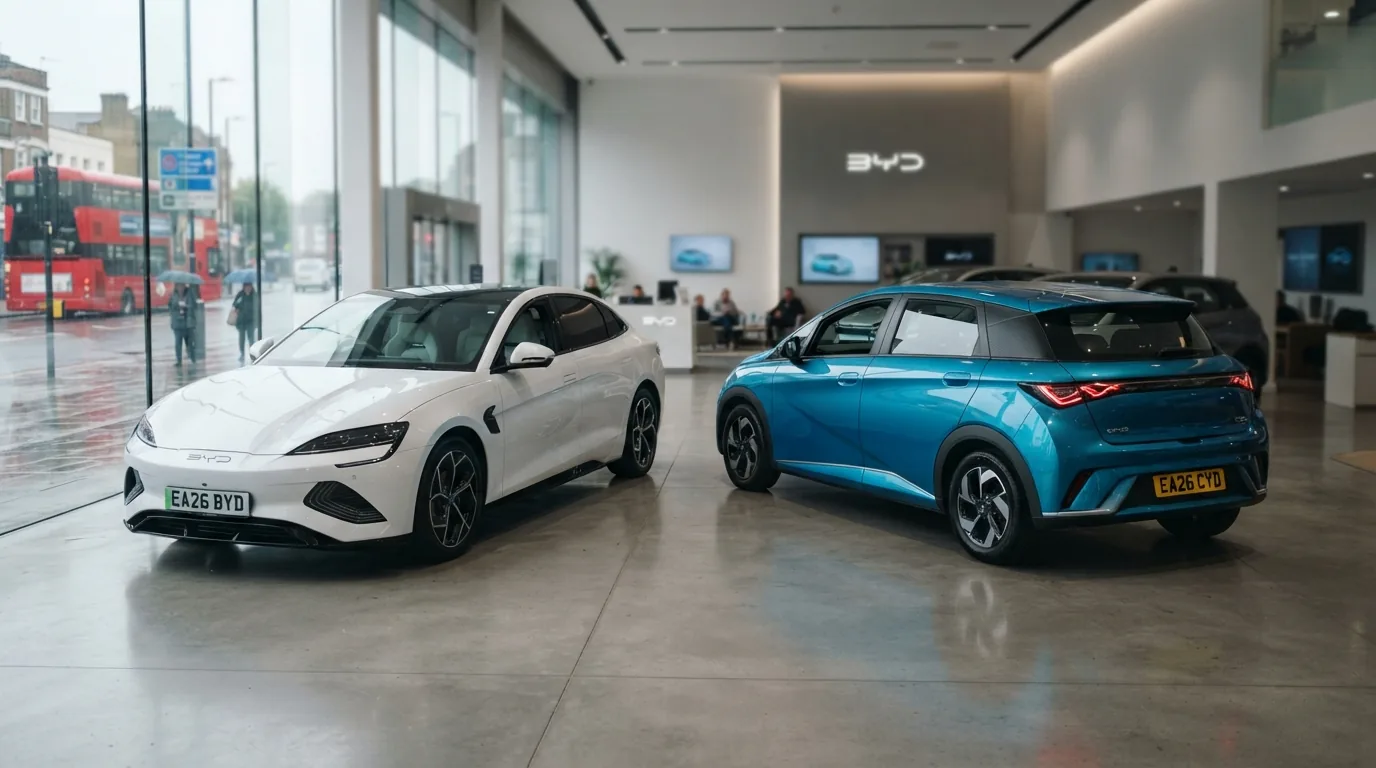
BYD in the UK: Full Model Range and Prices for 2026
From the £18,650 Dolphin Surf to the £47,025 Sealion 7 -- a complete guide to every BYD you can buy in Britain right now
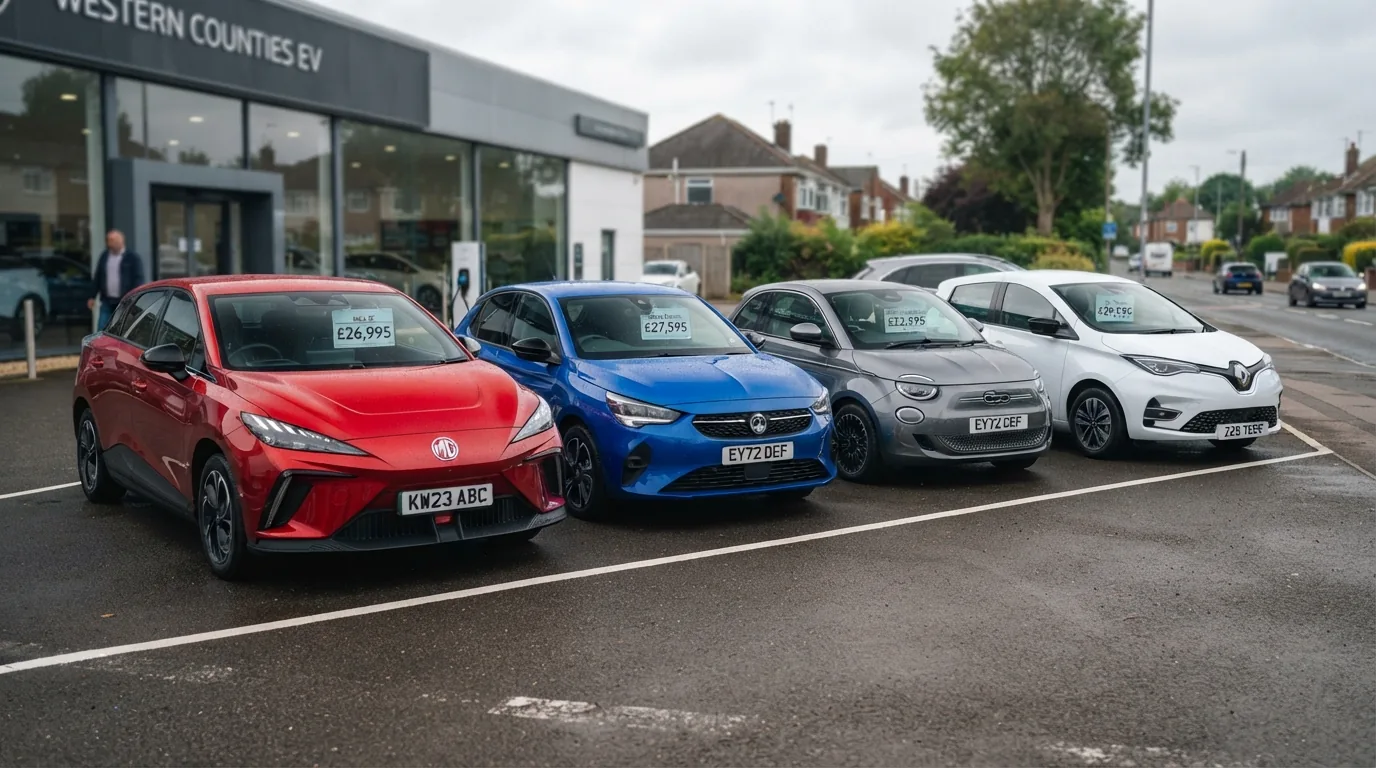
Cheapest New EVs You Can Buy in the UK Right Now
From £14,495 to £30,000: the new electric cars that offer the most genuine value in the current market
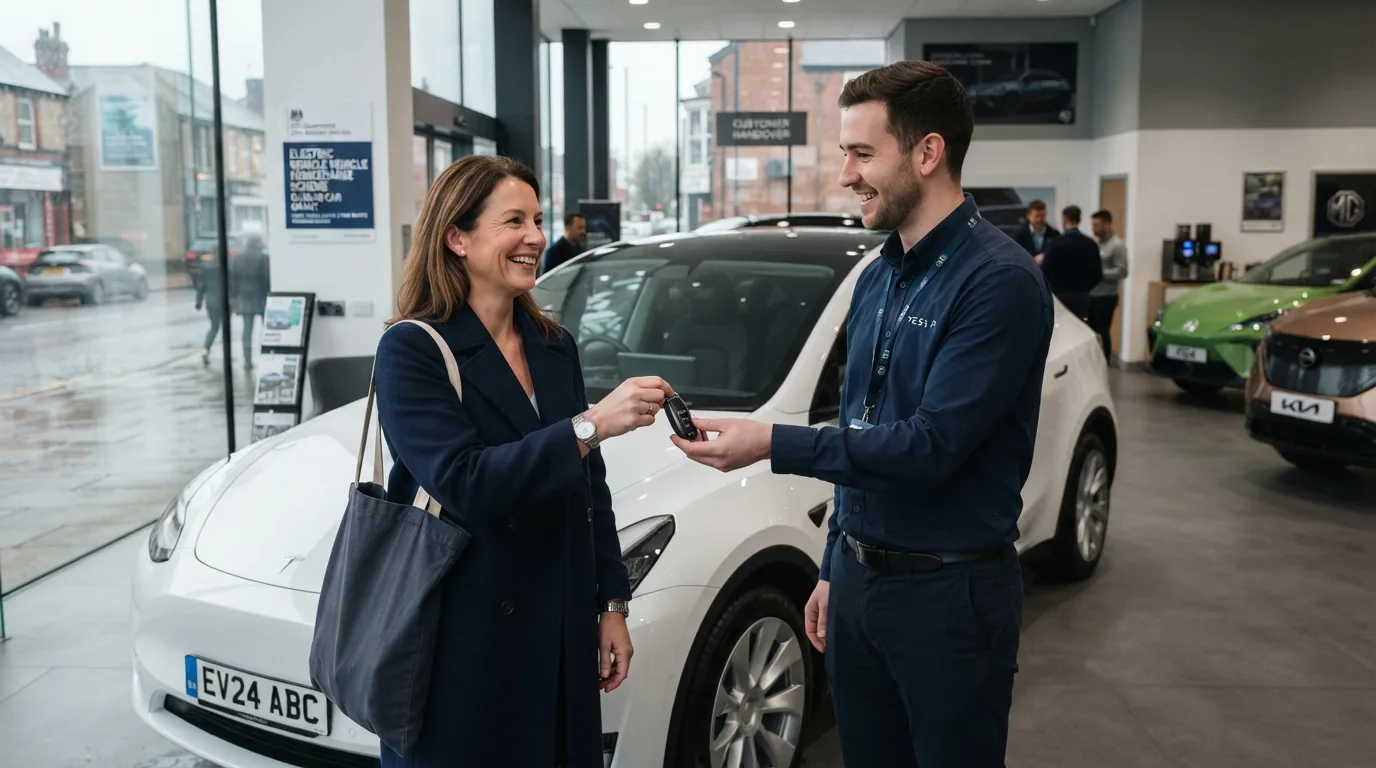
Electric Car Grant 2026: Latest Eligible Models and Discounts
Up to £3,750 off qualifying new EVs -- 45 models are now confirmed eligible, but Tesla, MG, BYD and Fiat are all excluded