Pod Point vs Connected Kerb: Which Is Best for On-Street EV Charging?
Connected Kerb is built for residential streets; Pod Point covers supermarkets and retail car parks. Here is how to pick the right network for your situation.
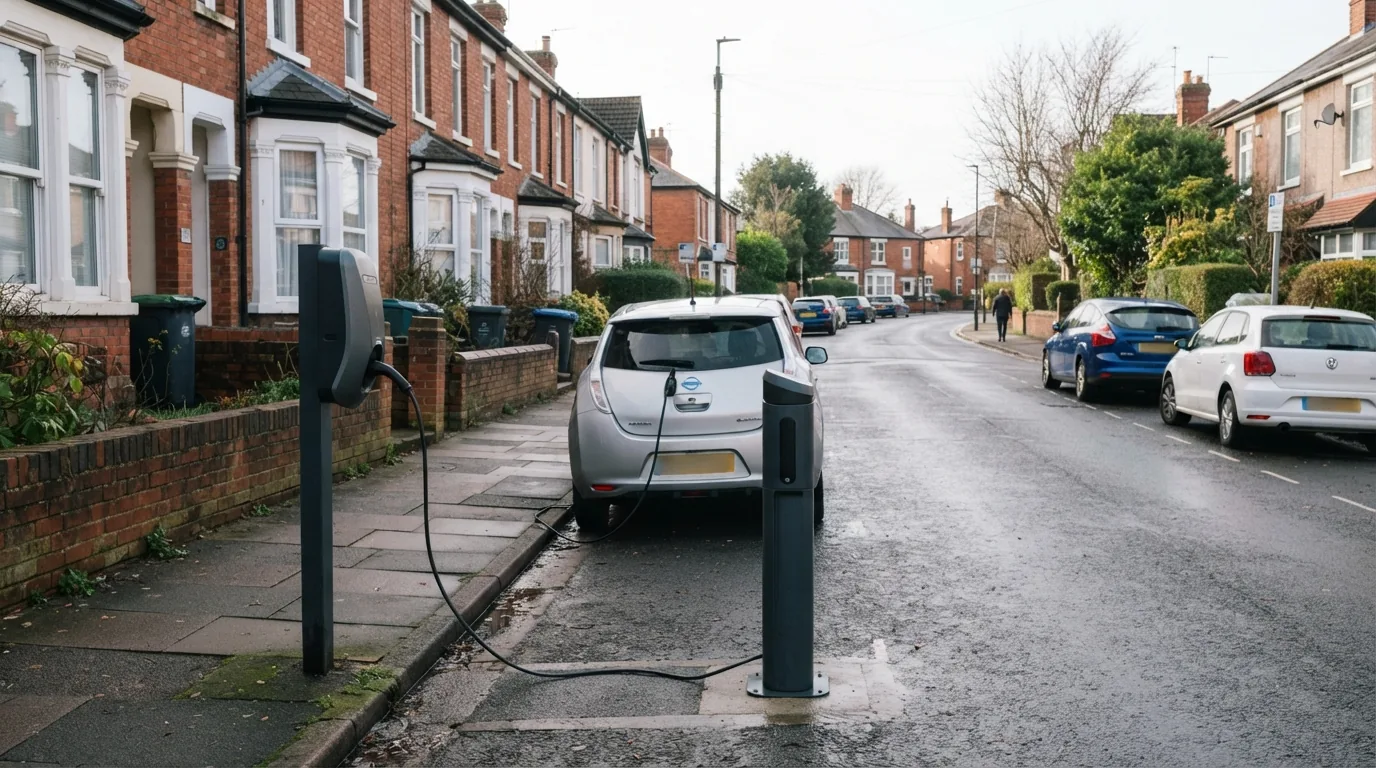
Quick answers
- Connected Kerb is built for on-street residential charging if you have no driveway; Pod Point (Pod) is mostly destination charging at supermarkets and retail car parks.
- As of March 2026, Pod Point has more chargers (8,265 across 1,882 sites) than Connected Kerb (7,040 across 1,576 sites), but coverage in your specific area matters more than the national totals.
- Connected Kerb typically costs 50p/kWh with a 35p-62p/kWh range and no membership fee; Pod Point prices are set by the host site, so at Tesco a 7kW charge is 44p/kWh from April 2026.
- Both work through the Zapmap app and card; Connected Kerb also takes its own app, Zap-Pay and an RFID card, and new 8kW+ units on both networks must offer contactless under the Public Charge Point Regulations 2023.
- Most no-driveway drivers will use Connected Kerb near home and Pod Point while out, rather than picking just one.
Connected Kerb is the better pick for on-street residential charging if you have no driveway: it works with 27-plus local authorities to put chargers on residential streets and council car parks. Pod Point (now also branded as Pod), owned by EDF, is mainly a destination network at supermarkets and retail sites such as Tesco and Center Parcs. For a kerbside overnight charge, Connected Kerb usually wins; for a top-up while you shop, Pod Point is the more convenient option.
Both networks are listed on the Zapmap app, which is the quickest way to check what is actually available near you. The distinction between them matters most if you have no off-street parking, because the network that serves your street is the one that determines whether owning an EV is practical.
What is the difference between Pod Point and Connected Kerb?
The two networks are solving different problems, which is why a simple “which is better” answer misses the point.
Connected Kerb was founded in 2017 and specialises in on-street EV charging for drivers without off-street parking. It works with more than 27 local authorities to install chargers in residential streets and council car parks, specifically targeting the drivers who cannot charge at home. On-street EV charging is its core business, not a secondary product.
Pod Point (now branded as “Pod”) was founded in 2009 and is based in London. It is owned by EDF and has built its public network primarily around destination charging: supermarket car parks, retail parks, leisure venues and workplaces. Pod Point Tesco charging is one of the most visible parts of the network, with units across hundreds of Tesco stores nationwide.
In short:
- Connected Kerb: residential streets and council car parks, for drivers without driveways
- Pod Point (Pod): destination and retail sites, for drivers charging while parked at shops or leisure venues
How big is each network and where are the chargers?
As of March 2026, Pod Point has 8,265 chargers across 1,882 locations nationwide, with the bulk of its footprint in supermarkets and retail or destination sites. Connected Kerb has 7,040 chargers across 1,576 locations, focused on residential streets and council car parks. Connected Kerb has stated a target of 190,000 on-street chargers by 2030 (figures vary, verify current data).
Pod Point’s larger total reflects its longer operating history and its model of working with high-footfall retail partners rather than individual councils. Connected Kerb’s numbers are growing as more local authorities join the scheme.
National totals are less useful than local availability. A driver in a borough where Connected Kerb has a council contract will find chargers within a short walk; a driver in an area where no contract exists may find none at all. Checking the Zapmap app for your specific postcode is a far more reliable guide than comparing headline charger counts.
Pod Point vs Connected Kerb: head to head spec and cost comparison
The comparison most drivers want does not exist elsewhere on the web, because every other page covers only one network at a time. The table below puts both side by side.
| Feature | Pod Point (Pod) | Connected Kerb |
|---|---|---|
| Network focus | Destination, retail, supermarkets | On-street residential, council car parks |
| Chargers (Mar 2026) | 8,265 | 7,040 |
| Locations (Mar 2026) | 1,882 | 1,576 |
| Speeds (kW) | Varies by site; Tesco has 7kW, 22kW, 50kW and new 75kW units | 7kW-22kW (AC fast) |
| Typical price/kWh | Set by host retailer; varies by site | 50p/kWh typically (35p-62p/kWh range) |
| Pricing model | Host-set: retailer determines the rate | Network-set: Connected Kerb sets the price |
| How to pay | Zapmap app, Zapmap card, contactless (8kW+) | Connected Kerb app, Zap-Pay, RFID card, Zapmap app and card, contactless (8kW+) |
| Membership or connection fee | None | None |
| Best for | Charging while you shop or at leisure venues | Overnight charging near home without a driveway |
A note on Pod Point pricing: because the host retailer sets the rate, quoting a single figure is not reliable. At Tesco from April 2026, the rates are 44p/kWh on 7kW units, 49p/kWh on 22kW, 62p/kWh on 50kW and 69p/kWh on the new 75kW units. Prices at other Pod Point sites will differ; always check the Zapmap app or the charger itself before plugging in.
Connected Kerb typically costs 50p/kWh across most of its network, with a published range of 35p to 62p/kWh depending on location and charger speed (figures vary, verify current data using the Zapmap app for live prices at a specific charger). There is no connection fee or membership required.
For context, the Zapmap February 2026 Price Index puts the weighted average PAYG cost at 54p/kWh for standard and standard-plus chargers (3-49kW) across all networks. Both Pod Point and Connected Kerb sit broadly within that range (figures vary, verify current data).
How do you pay at each network?
Payment friction is a real issue on residential streets, where there may be no attendant and no app signal. Both networks have worked to reduce it.
At a Connected Kerb charger, you can pay via the Connected Kerb app by scanning the QR code on the charger or entering the charger ID, through Zap-Pay, or using an RFID card. No subscription or minimum spend is required; you can use it as a one-off without setting up an account.
Both Pod Point and Connected Kerb appear in the Zapmap app and accept the Zapmap charging card, which means drivers who already use Zapmap for navigation can start a session on either network without downloading a second app.
Under the Public Charge Point Regulations 2023, which came into force on 24 November 2023, any public charger rated at 8kW and above must offer contactless payment. New units on both networks are therefore required to accept tap-to-pay, removing the need for an app altogether for a straightforward session.
How reliable are Pod Point and Connected Kerb?
Reliability data for individual networks is not always published, but Connected Kerb was voted Zapmap’s “Best EV charging network 2026” in the On-street/Destination category, which reflects user ratings across the Zapmap community.
The Public Charge Point Regulations 2023 also set minimum reliability standards. Rapid networks (50kW and above) must average 99% reliability over the calendar year, and all operators must provide a free, staffed 24/7 helpline. Connected Kerb and Pod Point are predominantly AC fast networks (3-49kW), so the 99% rapid reliability rule applies mainly to Pod Point’s faster Tesco units. The 24/7 helpline obligation applies to both networks regardless of charger speed.
Which should you choose?
The right answer depends almost entirely on what you need the charger for.
- No driveway, charging overnight near home: Connected Kerb. It is the network designed specifically for this situation, with residential street chargers installed through local authority partnerships. If your council has a Connected Kerb contract, this is the network to rely on for EV charging for no driveway.
- Regular supermarket or retail park visits: Pod Point. Its Tesco and retail site coverage is extensive, and plugging in while you do the shopping is a practical way to top up without a dedicated charging stop. Pod Point Tesco charging is particularly well-spread nationwide.
- Both: Most drivers without a driveway will use Connected Kerb for overnight charging near home and Pod Point (or other networks) when out and about. Picking one to the exclusion of the other is rarely necessary.
These two are far from your only options. For a fuller ranking by use case, see our guide to the best public EV charging networks in the UK, which scores each provider on coverage, price and reliability.
For a broader introduction to public charging, including how apps and RFID cards work across the whole market, see our public charging guide.
Useful Resources
Zapmap Connected Kerb network guide https://www.zapmap.com/ev-guides/public-charging-point-networks/connected-kerb-network
Zapmap Pod Point network guide https://www.zapmap.com/charge-points/public-charging-point-networks/pod-point-network/
GOV.UK Public Charge Point Regulations 2023 guidance https://www.gov.uk/government/publications/the-public-charge-point-regulations-2023-guidance/public-charge-point-regulations-2023-guidance
Move Electric: Tesco and Pod Point pricing update https://www.moveelectric.com/e-cars/tesco-and-pod-point-increase-charging-prices-and-add-75kw-chargers
Zapmap on-street residential charging guide https://www.zapmap.com/ev-guides/on-street-charging
How we test and where our numbers come from
Range figures are official WLTP combined values taken from manufacturer UK specification pages, with real-world estimates drawn from independent comparative testing. Prices are UK list prices at the time of the latest update. Tax, grant and charging-scheme figures come from GOV.UK and HMRC publications. We re-check every guide when pricing, specification or policy changes. Last checked 11 August 2026.
Frequently asked questions
How much does Connected Kerb cost to charge?
Connected Kerb typically costs 50p/kWh across most of its network, with prices ranging from 35p to 62p/kWh depending on the location and charger speed. There is no connection fee or membership required, so you pay only for the energy you use. Check the Zapmap app for the live price at a specific charger, as rates can vary between sites.
How fast is Connected Kerb charging?
Connected Kerb chargers run at either 7kW or 22kW (AC fast). A 7kW unit takes roughly 9-10 hours to charge a typical EV and a 22kW unit roughly 4-5 hours, so they suit overnight or all-day charging rather than a quick top-up. This speed profile is well matched to the overnight residential use case that Connected Kerb is designed for.
How much does it cost to charge on Pod Point?
Pod Point prices are largely set by the host retailer rather than by Pod Point itself, so they vary by location and can change over time. At Tesco from April 2026, the rates are 44p/kWh on 7kW units, 49p/kWh on 22kW, 62p/kWh on 50kW and 69p/kWh on new 75kW units. Always check the Zapmap app for the live price at the specific site you plan to use.
Where can you find Connected Kerb and Pod Point chargers?
Connected Kerb chargers are mainly on residential streets and in council car parks, working with more than 27 local authorities nationwide. Pod Point is mainly at supermarkets, retail parks and leisure destinations such as Tesco and Center Parcs. Both networks are nationwide; the Zapmap app is the most reliable way to find the nearest charger to your location.
How do you pay at a Connected Kerb or Pod Point charger?
Both networks appear in the Zapmap app and accept the Zapmap charging card. Connected Kerb also supports its own app (scan the QR code on the charger or enter the charger ID), Zap-Pay and an RFID card, with no account or subscription needed for a one-off charge.
Sources and further reading
- gov.ukGOV.UKPrimary source referenced in this article.

EV Compared
The EV Compared editorial team tracks the UK electric vehicle market full time: new model launches, list prices, WLTP and real-world range, public charging tariffs and the tax rules that decide what an EV actually costs to run. Every guide is checked against manufacturer specifications and official GOV.UK figures, and updated whenever the numbers move.
Related reading
View all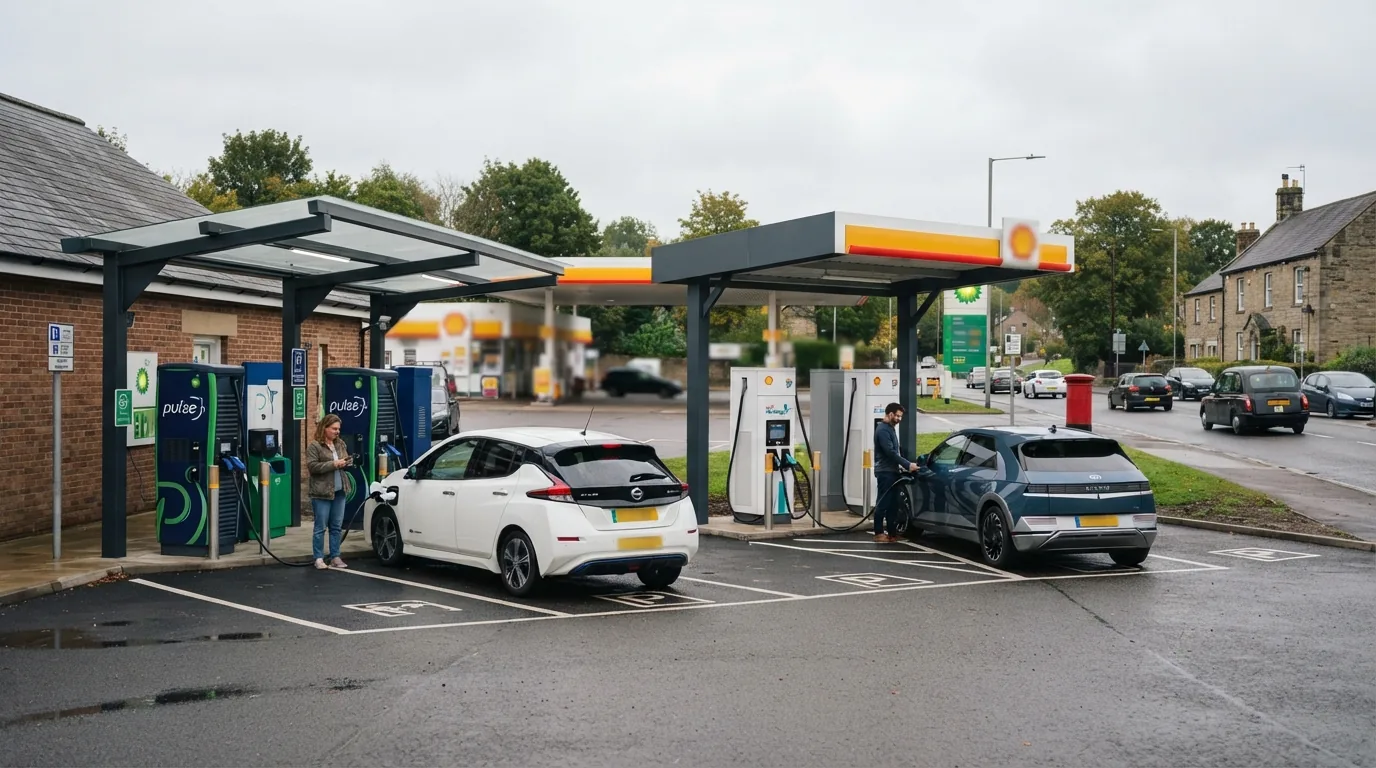
BP Pulse vs Shell Recharge: Which UK Network Wins?
Two of the UK's biggest charging networks compared on price, reliability and which type of driver each suits
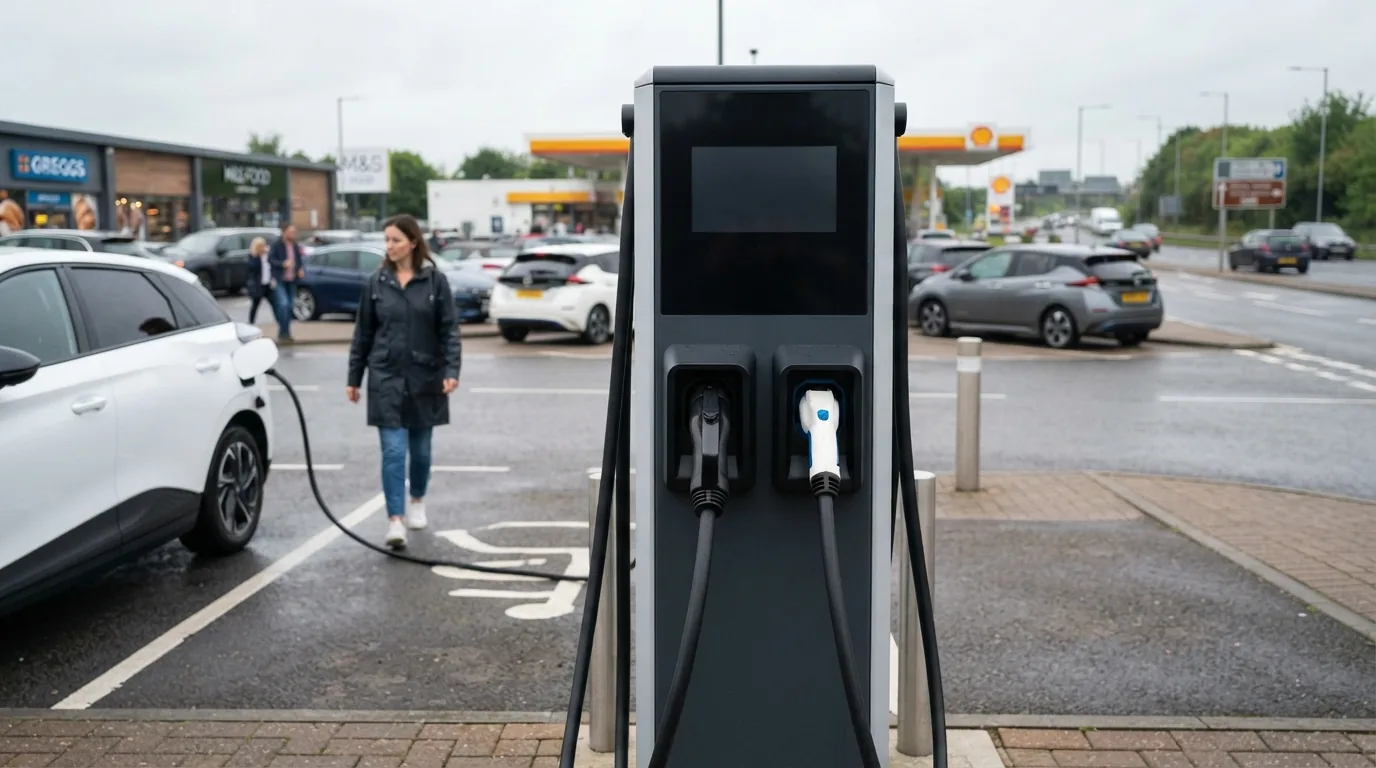
Can You Charge Any EV at Any Public Charger in the UK?
Why almost any new EV works at almost any UK public charger, and the two exceptions you need to know
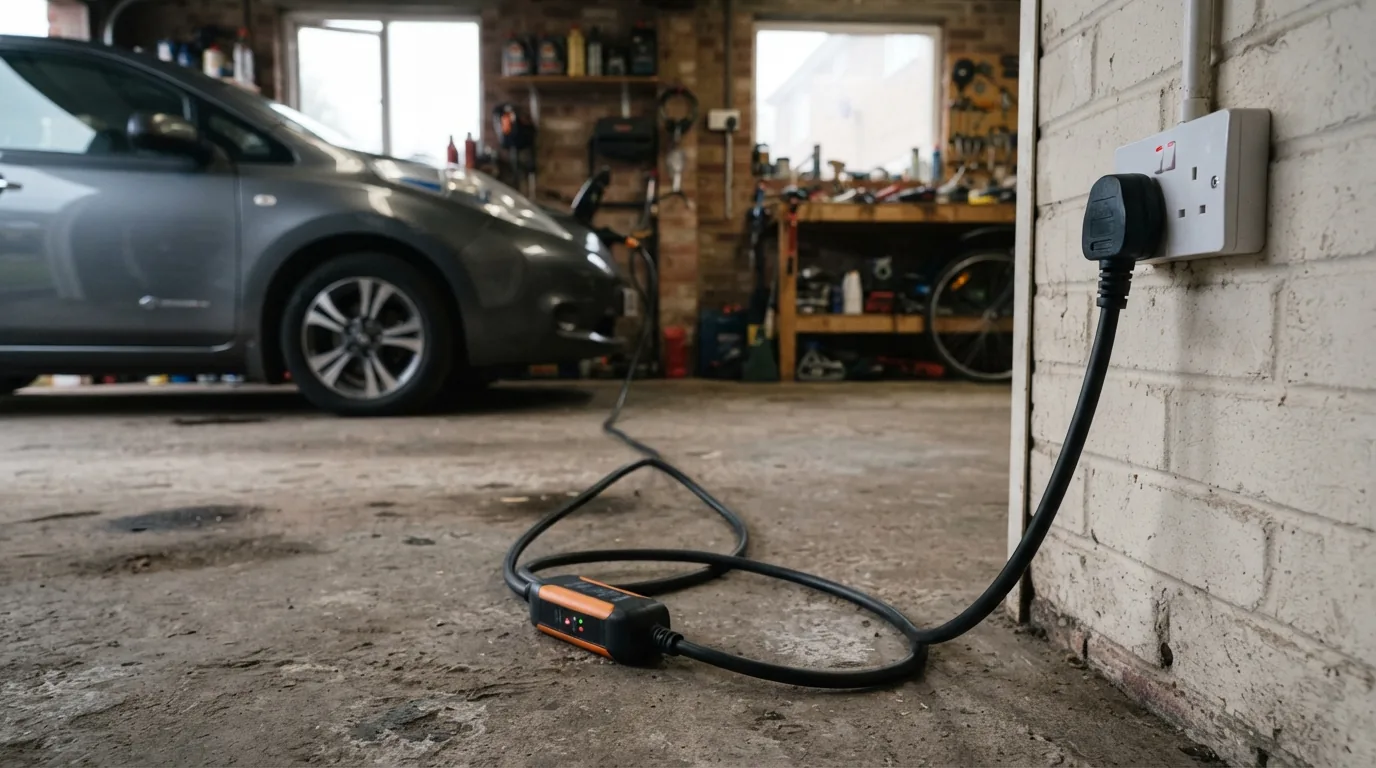
Can You Charge an EV From a Three-Pin Plug in the UK?
Yes, most cars ship with the cable, but speed and safety limits mean it works best for occasional or emergency use