The Most Anticipated Electric Cars Coming to the UK in 2026
VW ID.Polo, BMW i3, Jaguar Type 00, Renault Twingo and more -- the launches that will reshape the market before the year is out
Quick answers
- Every year brings a fresh batch of electric car launches, but 2026 is genuinely unusual.
- If one car can claim the title of most important EV launch of 2026 for ordinary UK buyers, it is the VW ID.Polo.
- The headline specification: 559 miles of WLTP range, 800V electrical architecture and charging at up to 400 kW.
- 3. Jaguar Type 00 / GT: the brand relaunch: The Jaguar Type 00, arriving as the "GT" model for UK sales in Summer 2026 at around £120,000, is the car that determines whether Jaguar's bold decision to become a pure-electric brand works or fails.
- The Renault Twingo E-Tech Electric aims to do something the market has needed for several years: bring a genuinely affordable, purpose-built electric city car from a mainstream European brand to under £20,000.
- 5. Volvo EX60: the family-premium SUV: The EX60 is the electric equivalent of the XC60, which is consistently one of the best-selling premium SUVs in Europe.
Every year brings a fresh batch of electric car launches, but 2026 is genuinely unusual. The cars arriving in the UK this year include the longest-range production EV ever confirmed for the British market, the lowest-priced EV from a major European brand in years, the relaunch of one of Britain’s most iconic car brands, and a credible new challenger in the volume family-car segment from Volkswagen. Not all of these will be bestsellers, but taken together they shift what is available and what is possible for UK buyers.
Here are the most significant upcoming electric cars for the UK in 2026, ranked by their likely impact on the market.
1. Volkswagen ID.Polo: the mainstream game-changer
If one car can claim the title of most important EV launch of 2026 for ordinary UK buyers, it is the VW ID.Polo.
Volkswagen revealed the car in May 2026. UK sales are expected to open in autumn, with first deliveries before the end of the year. The starting price is expected to be around £22,000 — competitive with the Renault 5, which has already proved that the market for small, affordable, long-range EVs is real and large.
The specification that makes this significant: up to 280 miles of WLTP range, 80 kW DC fast charging (0-80% in under 30 minutes), a 12.9-inch infotainment screen, and the full VW safety suite. It is built on the updated MEB+ platform, which addresses some of the efficiency and charging-speed criticisms of the older MEB platform used in the ID.3 and ID.4.
At £22,000 with 280 miles of range from a brand with 600-plus UK dealers, the ID.Polo has the potential to outsell every other EV in its class. The Renault 5 will feel the competition directly; so will the Citroën ë-C3 and the Vauxhall Corsa Electric.
Expected in UK: Autumn 2026. Orders likely to open in August-September.
2. BMW i3 (new): Britain’s longest-range production EV
This is not the i3 city car produced until 2022. The new BMW i3 is an all-new executive saloon, built at BMW’s Munich plant and confirmed for UK deliveries in autumn 2026 from around £55,000.
The headline specification: 559 miles of WLTP range, 800V electrical architecture and charging at up to 400 kW. Those are numbers that would have been considered implausible in a production car three years ago. The 400 kW charge rate means that at an appropriately equipped charger — the kind being installed at major motorway service areas by GRIDSERVE and others — this car could add over 100 miles of range in under 10 minutes.
Real-world range will be lower than 559 miles, as WLTP testing consistently overstates what drivers see on the road. But if real-world range is even 420-450 miles, the i3 will be the most usable long-distance electric car in the UK market.
BMW is targeting the car at buyers currently considering the Mercedes EQS, Porsche Taycan and Lucid Air. From a range-and-charging standpoint it should outperform all of them.
Expected in UK: Autumn 2026, from ~£55,000.
3. Jaguar Type 00 / GT: the brand relaunch
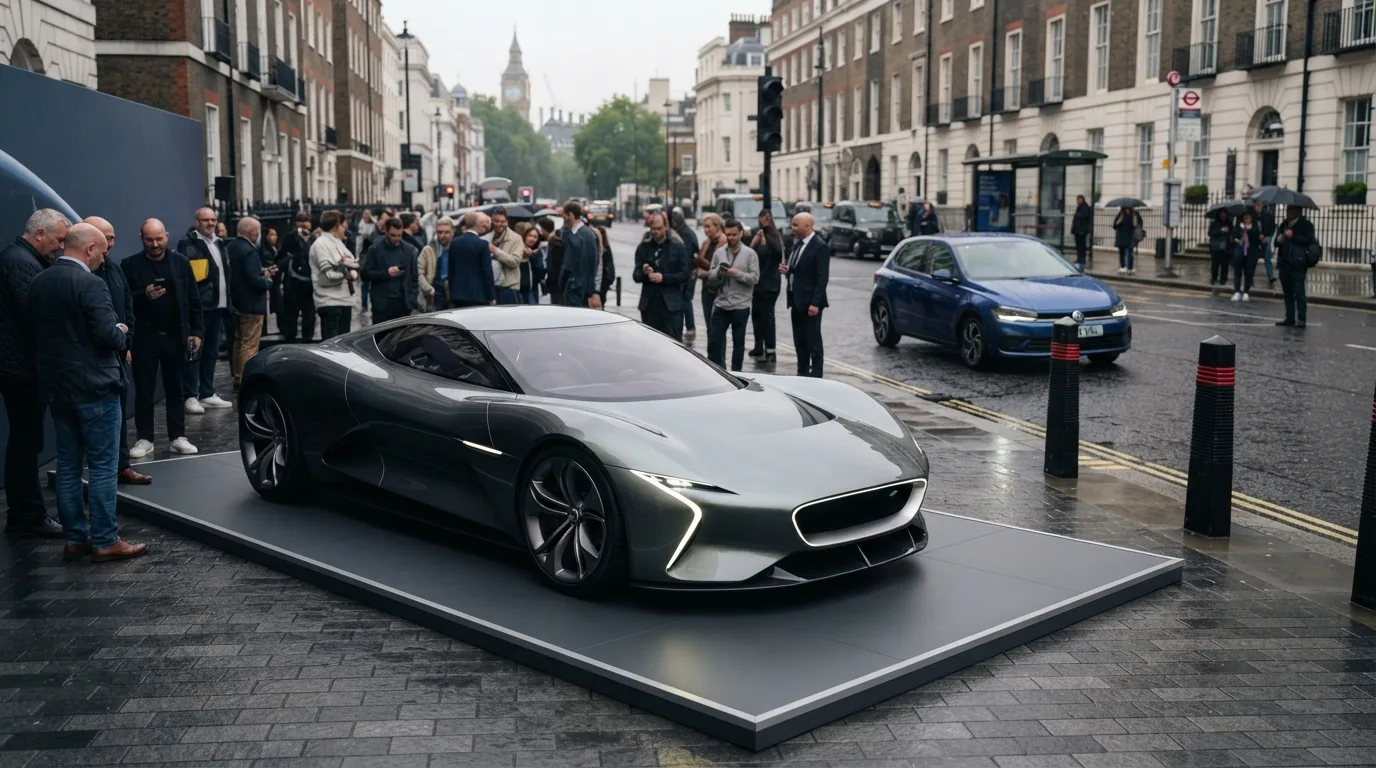
The Jaguar Type 00, arriving as the “GT” model for UK sales in Summer 2026 at around £120,000, is the car that determines whether Jaguar’s bold decision to become a pure-electric brand works or fails.
Jaguar ceased selling cars in the UK in late 2024 to prepare for the relaunch. The GT is the first product. It is a four-door grand tourer — not a traditional saloon, not a traditional coupé — and it is intended to sit above Porsche, BMW and Mercedes in the market rather than compete directly with any of them. Early pre-production drives have been positive. The car uses 800V architecture and a target range above 400 miles from a large battery pack. A second model, a large SUV, is expected to follow.
Jaguar Land Rover’s entire future strategy rests on this car succeeding commercially. If it does, it demonstrates that a British brand can compete at the ultra-premium end of the electric car market. If it does not, the consequences for Jaguar’s remaining workforce and the brand’s identity are severe.
Expected in UK: Summer 2026, from ~£120,000.
4. Renault Twingo E-Tech Electric: the affordable city car
The Renault Twingo E-Tech Electric aims to do something the market has needed for several years: bring a genuinely affordable, purpose-built electric city car from a mainstream European brand to under £20,000.
Renault has targeted a price below £20,000 for the UK. The car has a compact footprint and around 200 miles of WLTP range — enough for urban use and suburban commuting. It is designed as a second car or primary urban vehicle, not a motorway cruiser.
If the UK price holds at or below £20,000, the Twingo becomes the cheapest mainstream European-brand EV available and will likely receive the Electric Car Grant (pending OZEV certification). That would put the effective price at around £16,250 — genuinely transformative for the accessible end of the market.
Expected in UK: Late 2026. Final UK pricing to be confirmed.
5. Volvo EX60: the family-premium SUV
The EX60 is the electric equivalent of the XC60, which is consistently one of the best-selling premium SUVs in Europe. That pedigree makes it one of the most commercially important launches of the year.
Volvo has claimed up to 503 miles of WLTP range for some EX60 configurations, which would make it one of the longest-range SUVs in the market. The EX60 should arrive in the UK in 2026 at a price expected to be around £50,000-60,000 for mid-range variants, placing it against the Tesla Model Y Long Range, Kia EV6 and Mercedes EQC.
Expected in UK: 2026. Full UK pricing to be confirmed.
6. Skoda Kodiaq EV: seven seats finally available at a sensible price
Seven-seat electric SUVs remain one of the biggest gaps in the UK market. The only genuinely usable seven-seat pure EV under £120,000 is currently the Tesla Model X at around £99,990. The Skoda Kodiaq EV is expected to change that.
Based on the MEB+ platform and arriving in 2026, the Kodiaq EV should offer seven seats in a large SUV format at a price likely to be in the £40,000-50,000 range. If that pricing is achieved, it becomes the clear recommendation for families who need a seven-seat electric car but do not want to spend six figures.
Expected in UK: H2 2026.
7. Fiat Grande Panda Electric: already here, worth your attention
The Fiat Grande Panda Electric is already available in the UK at £20,995. It is included here because it launched so recently that many buyers have not yet encountered it in their research.
It uses a 44 kWh battery with 100 kW DC charging, delivers around 200 miles of WLTP range and offers full five-seat practicality in a compact, upright SUV-adjacent body style. At £20,995 it is one of the most genuinely affordable cars from a mainstream European brand with a full range of modern features.
The Grande Panda qualifies for the Electric Car Grant, potentially dropping the effective price to around £17,245.
What should you be cautious about?
One pattern repeats consistently in EV launch coverage: cars that are “confirmed for 2026” sometimes arrive in late 2026 at dealers, with real customer deliveries sliding into early 2027. Right-hand-drive production, homologation for UK regulations, dealer training and network preparation all take time.
If you are planning to buy one of the cars on this list, ask the dealer for a confirmed order book opening date and a realistic delivery estimate, not a press release date.
Also be aware that prices announced at launch are frequently for base specifications that sell in limited numbers. The variants that most buyers actually want — mid-spec with the most popular options — are typically £3,000-8,000 above the entry price.
What should you do next?
For our editorial recommendations on the best models to buy right now across every segment and budget, see our best electric cars to buy guide. For guidance on the buying process, finance options and what to check before signing, our Buying and Owning guide has the full picture.
2026 is a remarkable year for electric car launches in the UK. The gap between what is arriving and what was available two years ago is substantial. If the right car was not on the market when you last looked, it may well be now.
How we test and where our numbers come from
Range figures are official WLTP combined values taken from manufacturer UK specification pages, with real-world estimates drawn from independent comparative testing. Prices are UK list prices at the time of the latest update. Tax, grant and charging-scheme figures come from GOV.UK and HMRC publications. We re-check every guide when pricing, specification or policy changes. Last checked 11 August 2026.
Frequently asked questions
What should you be cautious about?
One pattern repeats consistently in EV launch coverage: cars that are "confirmed for 2026" sometimes arrive in late 2026 at dealers, with real customer deliveries sliding into early 2027. Right-hand-drive production, homologation for UK regulations, dealer training and network preparation all take time.
Sources and further reading
- autocar.co.ukAutocar / Top Gear / EV Database / manufacturer announcementsPrimary source referenced in this article.

EV Compared
The EV Compared editorial team tracks the UK electric vehicle market full time: new model launches, list prices, WLTP and real-world range, public charging tariffs and the tax rules that decide what an EV actually costs to run. Every guide is checked against manufacturer specifications and official GOV.UK figures, and updated whenever the numbers move.
Related reading
View all
BYD in the UK: Full Model Range and Prices for 2026
From the £18,650 Dolphin Surf to the £47,025 Sealion 7 -- a complete guide to every BYD you can buy in Britain right now
Cheapest New EVs You Can Buy in the UK Right Now
From £14,495 to £30,000: the new electric cars that offer the most genuine value in the current market
Chinese EV Brands in the UK: Who Is Here and Are They Any Good?
BYD, MG, Xpeng, NIO, Leapmotor and Jaecoo are all selling in Britain -- here is an honest assessment of what each offers