Hyundai Kona Electric vs Kia Niro EV: Which Wins for UK Buyers?
Two platform-sharing siblings that diverge in ways that matter, compared and decided
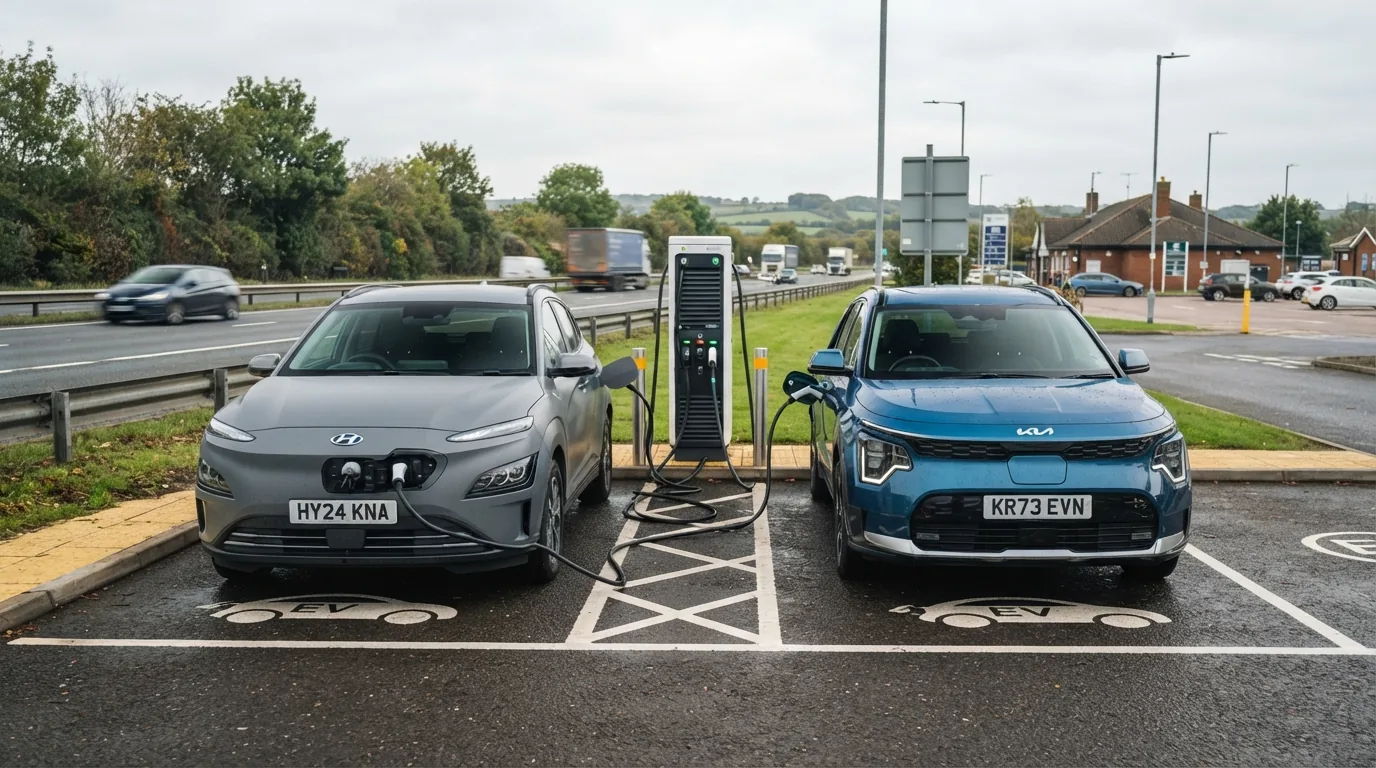
Quick answers
- The Hyundai Kona Electric and Kia Niro EV share fundamental mechanical DNA from the Hyundai Motor Group's shared EV platform. They target the same buyers, sit at similar prices, and are compared endlessly.
- Price: advantage Hyundai Kona Electric: The Kona Electric starts at £32,995; the Niro EV at £34,595.
- Range: advantage Hyundai Kona Electric: The Kona Electric's 319-mile WLTP range against the Niro's 285 miles is a clear advantage.
- Charging: advantage Hyundai Kona Electric: The Kona Electric's 102 kW peak DC charging rate is clearly faster than the Niro's 80 kW.
- Boot space: marginal advantage Kia Niro EV: The Niro's interior rear legroom is slightly more generous than the Kona's, making it more comfortable for taller rear passengers.
- Warranty: advantage Kia Niro EV: For buyers who plan to keep the car for six or seven years, the Kia's warranty provides meaningfully better reassurance.
The Hyundai Kona Electric and Kia Niro EV share fundamental mechanical DNA from the Hyundai Motor Group’s shared EV platform. They target the same buyers, sit at similar prices, and are compared endlessly. Here is the direct verdict for UK buyers in 2026.
The short answer: the Hyundai Kona Electric edges ahead for most buyers. It offers faster DC charging (102 kW vs the Niro’s 80 kW), is priced slightly below the equivalent Niro EV specification, and has a slight advantage on real-world range per pound spent. The Kia Niro EV wins on warranty (seven years vs five), towing approval (750 kg braked vs none for the Kona), and a slightly larger boot (475 vs 466 litres). Neither is a clear winner; the right choice depends on your priorities.
Specifications head to head
| Feature | Hyundai Kona Electric | Kia Niro EV |
|---|---|---|
| Price from | £32,995 | £34,595 |
| Battery (usable) | 65.4 kWh | 64.8 kWh |
| WLTP range | 319 miles | 285 miles |
| Real-world range (mixed) | 250–280 miles | 220–250 miles |
| Peak DC charge rate | 102 kW | 80 kW |
| 10–80% charge time (est) | ~40 minutes | ~50 minutes |
| AC charge rate | 11 kW | 11 kW |
| 0–62 mph | 7.9 sec | 7.8 sec |
| Boot space | 466 litres | 475 litres |
| Vehicle warranty | 5 years / unlimited | 7 years / 100,000 miles |
| Battery warranty | 8 years / 125,000 miles | 7 years / 100,000 miles |
| Towing capacity | None (unrated) | 750 kg (braked) |
Price: advantage Hyundai Kona Electric
The Kona Electric starts at £32,995; the Niro EV at £34,595. That £1,600 difference at the base level widens slightly at equivalent specification tiers. Both qualify for the Electric Car Grant (subject to eligibility), bringing net prices to approximately £29,245 and £30,845 respectively.
Given the Kona Electric’s longer WLTP range, the price-per-mile-of-range calculation clearly favours the Kona: approximately £103 per WLTP mile versus the Niro’s £121 per WLTP mile at base specification.
Range: advantage Hyundai Kona Electric
The Kona Electric’s 319-mile WLTP range against the Niro’s 285 miles is a clear advantage. Both cars use similar-sized batteries (65.4 kWh vs 64.8 kWh), so the Kona’s range advantage comes from its lower kerb weight and superior energy efficiency. Real-world mixed driving typically delivers 250 to 280 miles for the Kona and 220 to 250 miles for the Niro.
For drivers who regularly approach or exceed 200 miles in a day, this difference is meaningful. For drivers whose daily commute is under 50 miles and who charge primarily at home, the gap is less relevant.
Charging: advantage Hyundai Kona Electric
The Kona Electric’s 102 kW peak DC charging rate is clearly faster than the Niro’s 80 kW. At a 100 kW charger, the Niro tops out at 80 kW while the Kona uses the full available power. In practice:
- Kona Electric 10 to 80%: approximately 40 minutes
- Niro EV 10 to 80%: approximately 50 minutes
Over a long road trip with multiple charge stops, that 10-minute-per-stop advantage adds up. Both support CCS as standard.
AC charging (at home or at destination chargers) is identical at 11 kW for both.
Boot space: marginal advantage Kia Niro EV
475 litres for the Niro versus 466 litres for the Kona: the difference is 9 litres, which is irrelevant in practice. Both have similarly shaped, practical boot openings. The Niro has a slightly lower load lip, which makes loading heavy items marginally easier.
The Niro’s interior rear legroom is slightly more generous than the Kona’s, making it more comfortable for taller rear passengers. If you regularly carry adults in the back, this is worth knowing.
Warranty: advantage Kia Niro EV
This is the Niro’s strongest argument. Kia’s seven-year, 100,000-mile warranty is the best in the class, covering the complete vehicle for longer than any mainstream competitor. The Kona’s five-year unlimited-mileage warranty is competitive (the unlimited mileage aspect is genuinely useful for high-mileage drivers), but the Niro provides three additional years of manufacturer-backed protection.
For buyers who plan to keep the car for six or seven years, the Kia’s warranty provides meaningfully better reassurance.
Battery warranty note: The Kona Electric’s 8-year, 125,000-mile battery warranty actually covers more miles than the Niro’s 7-year, 100,000-mile battery warranty. For high-mileage buyers, the Kona’s battery protection is superior.
Towing: advantage Kia Niro EV
The Kia Niro EV is approved for 750 kg braked towing. The Hyundai Kona Electric has no towing approval whatsoever. This is a meaningful real-world difference for buyers who occasionally tow a small trailer, boat or horse trailer. 750 kg is not a high towing capacity, but it covers small trailers and lightweight caravans.
If towing is even an occasional requirement, the Niro EV wins this category by default.
Real-world driving character
Both cars feel similar to drive: competent, smooth and quiet, with the front-wheel-drive efficiency of the shared platform. Neither is exciting; both are genuinely relaxing. The Kona feels marginally more agile in urban traffic; the Niro feels marginally more settled at motorway speeds. Neither difference is significant.
Both have well-considered infotainment systems with Hyundai/Kia’s shared interface, which is among the better-executed systems in the class.
Insurance: similar
Both models sit in comparable insurance groups. Expect similar annual premiums, with variation driven more by driver profile and postcode than by any difference between the two cars.
What UK owners say
Owners of both cars consistently rate them highly for reliability and running cost satisfaction. The Kona Electric tends to attract more compliments from buyers who value efficiency and range; the Niro EV tends to attract more compliments from buyers who valued the longer warranty in their purchase decision.
The verdict by use case
Choose the Hyundai Kona Electric if:
- Range per pound is your priority
- You make regular longer trips where the 102 kW charging speed versus 80 kW saves time
- The unlimited-mileage five-year warranty suits your situation (high mileage)
- You have no towing requirement
Choose the Kia Niro EV if:
- A seven-year vehicle warranty provides important long-term reassurance
- You occasionally tow a small trailer
- Rear legroom for adult passengers is a regular requirement
- The slightly higher price is acceptable given the longer warranty term
What to read next
Both cars sit in the compact electric SUV segment covered fully in best electric SUVs for UK families. For more on warranties, see EV warranties explained. The full ownership picture is in the buying and owning guide and our best electric cars to buy in 2026.
How we test and where our numbers come from
Range figures are official WLTP combined values taken from manufacturer UK specification pages, with real-world estimates drawn from independent comparative testing. Prices are UK list prices at the time of the latest update. Tax, grant and charging-scheme figures come from GOV.UK and HMRC publications. We re-check every guide when pricing, specification or policy changes. Last checked 11 August 2026.

EV Compared
The EV Compared editorial team tracks the UK electric vehicle market full time: new model launches, list prices, WLTP and real-world range, public charging tariffs and the tax rules that decide what an EV actually costs to run. Every guide is checked against manufacturer specifications and official GOV.UK figures, and updated whenever the numbers move.
Related reading
View all
Do Bigger Wheels Reduce Electric Car Range?
Yes, significantly. Here is the data on how much wheel size costs in miles and why it happens
BMW i4 vs Tesla Model 3: UK Range and Efficiency Test
The BMW costs more and goes less far, but is it worth it? A data-led head to head for UK buyers
How Far Can an Electric Car Really Go on One Charge?
Real-world range figures for UK drivers: what the numbers mean and which cars go furthest