EV Warranties Explained: What UK Buyers Are Actually Covered For
Vehicle warranties, battery warranties, transferability and the gaps you need to know about
Quick answers
- Electric car warranties in the UK are made up of two overlapping layers: a standard vehicle warranty and a separate battery-specific warranty. UK law sets a mandatory minimum for the battery warranty, but manufacturers vary considerably in what they offer beyond that floor.
- What does the vehicle warranty cover: The standard vehicle warranty, sometimes called the bumper-to-bumper or manufacturer's warranty, covers defects in materials or workmanship for most mechanical and electrical components: the motor, power electronics, suspension, steering, brakes, heating and cooling systems, body panels and interior components.
- What does the battery warranty cover: This is the warranty that matters most to EV-specific buyers.
- What is not covered by EV warranties: Understanding exclusions is as important as understanding inclusions.
- For most manufacturers, both the vehicle warranty and the battery warranty are attached to the vehicle, not the original buyer.
- The most frequent misunderstanding is that the 8-year battery warranty guarantees the car will feel like new for 8 years.
Electric car warranties in the UK are made up of two overlapping layers: a standard vehicle warranty and a separate battery-specific warranty. UK law sets a mandatory minimum for the battery warranty, but manufacturers vary considerably in what they offer beyond that floor. Here is what the paperwork actually means.
The direct answer: all new EVs sold in the UK must carry at least an 8-year, 100,000-mile battery warranty guaranteeing at least 70% of original capacity. The vehicle warranty (covering everything else) typically runs 3 to 5 years for mainstream brands. Most EV warranties are transferable to subsequent owners, which is a meaningful benefit for used car buyers.
What does the vehicle warranty cover?
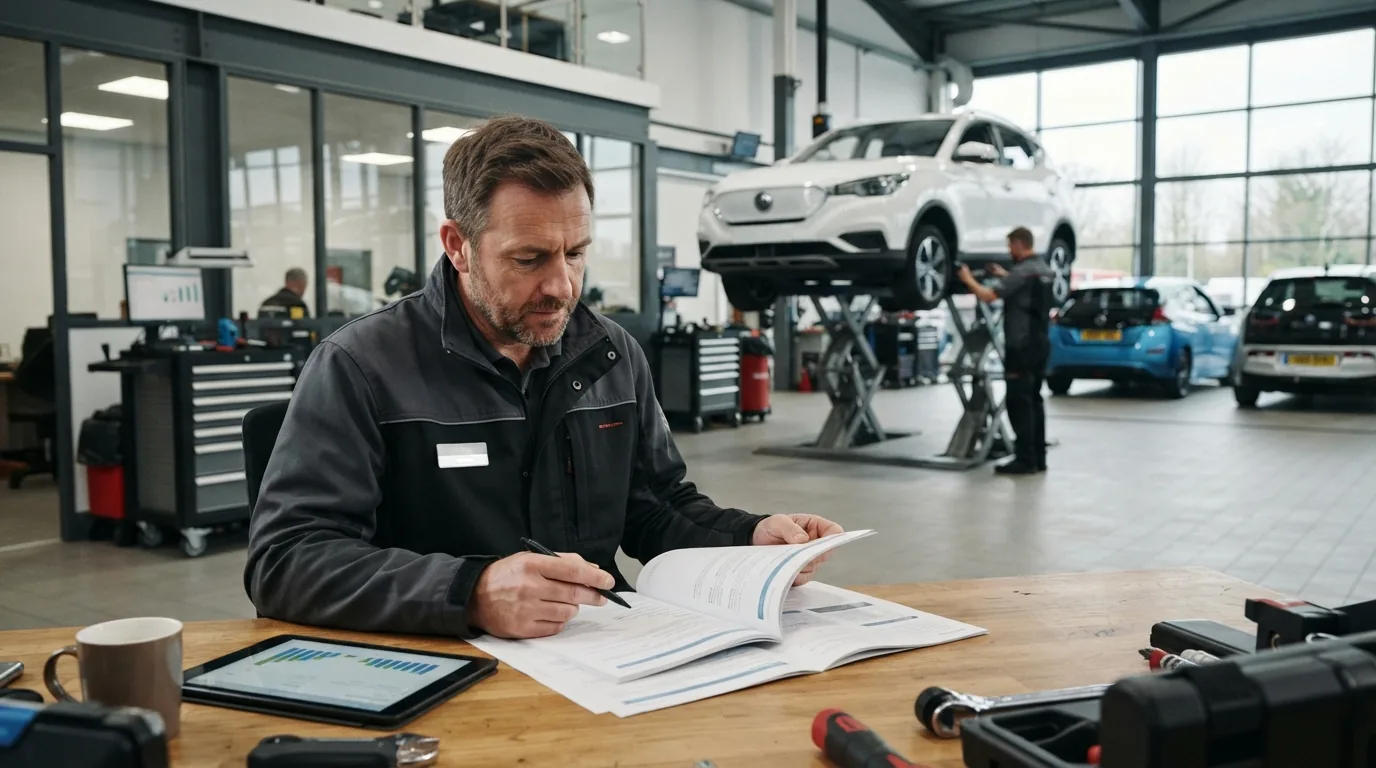
The standard vehicle warranty, sometimes called the bumper-to-bumper or manufacturer’s warranty, covers defects in materials or workmanship for most mechanical and electrical components: the motor, power electronics, suspension, steering, brakes, heating and cooling systems, body panels and interior components.
Typical vehicle warranty durations in the UK in 2026:
| Manufacturer | Vehicle warranty | Mileage cap |
|---|---|---|
| Kia | 7 years | 100,000 miles |
| Hyundai | 5 years | Unlimited |
| MG | 7 years | 80,000 miles |
| BYD | 6 years | 93,000 miles |
| Tesla | 4 years | 50,000 miles |
| Volkswagen Group (VW, Audi, Skoda, Seat/Cupra) | 3 years | Unlimited |
| BMW | 3 years | Unlimited |
| Mercedes | 3 years | Unlimited |
| Renault | 5 years | 100,000 miles |
| Polestar | 5 years | Unlimited |
| Volvo | 5 years | Unlimited |
Kia and MG offer the longest vehicle warranties in the market. The seven-year Kia warranty is one of the most-cited reasons buyers choose the EV6 or EV3 over German alternatives with three-year warranties.
What does the battery warranty cover?
This is the warranty that matters most to EV-specific buyers. UK law sets the minimum: 8 years or 100,000 miles, whichever comes first, with a guaranteed minimum capacity retention of 70%.
In practice, this means: if your battery drops below 70% of its original capacity within 8 years and 100,000 miles, the manufacturer must repair or replace the pack at no cost to you.
| Manufacturer | Battery warranty | Capacity threshold |
|---|---|---|
| Tesla | 8 years / 100,000–150,000 miles (by model) | 70% |
| Kia | 7 years / 100,000 miles; lifetime on some models for first owner | 70% |
| Hyundai | 8 years / 125,000 miles | 70% |
| Nissan | 8 years / 100,000 miles | 75% (best in class threshold) |
| MG | 7 years / 80,000 miles | 70% |
| BYD | Lifetime (original owner) | 70% |
| Volkswagen Group | 8 years / 100,000 miles | 70% |
| BMW | 8 years / 100,000 miles | 70% |
| Renault | 8 years / 100,000 miles | 70% |
| Lexus | 10 years / 100,000 miles | 70% |
| Polestar | 8 years / 100,000 miles | 70% |
Note on BYD: The lifetime battery warranty applies to the original owner and is one of the most aggressive offers in the market. It does not automatically transfer on sale.
Note on Nissan: The 75% threshold is stricter than the standard 70% floor and provides more meaningful early protection.
What is not covered by EV warranties?
Understanding exclusions is as important as understanding inclusions. Standard EV warranties do not cover:
Normal wear and tear. Tyres, brake pads (though EVs use them less due to regenerative braking), wiper blades and consumables are excluded.
Battery degradation through normal use. Gradual capacity loss within the warranted threshold is considered normal. A battery at 72% of original capacity after six years has not triggered a warranty claim.
Damage from improper use. Using a non-approved charger, physical damage to the battery from a collision (that is a matter for insurance), or damage from modifications invalidates the battery warranty.
Software issues outside the update window. Some software fixes are free and permanent; others may only be covered during the vehicle warranty period. Check the manufacturer’s software support commitment, particularly for older models.
Corrosion and paint. Surface corrosion is usually covered separately under a corrosion warranty, typically 12 years, which is common to most manufacturers.
Is the warranty transferable if you sell the car?
For most manufacturers, both the vehicle warranty and the battery warranty are attached to the vehicle, not the original buyer. This means the remaining warranty automatically transfers to any subsequent owner. This is a significant benefit for used EV buyers and sellers.
Exceptions include BYD’s lifetime battery warranty (which does not transfer) and some manufacturer-specific programmes. Always confirm transferability in writing before buying a used EV.
What about consumer rights beyond the manufacturer’s warranty?
UK consumer law provides additional protection beyond manufacturer warranties:
Consumer Rights Act 2015. For the first 30 days after purchase from a dealer, you have the right to reject a faulty vehicle for a full refund. Between 30 days and 6 months, the seller must attempt a repair or replacement before you can reject. After 6 months, you may need to demonstrate that the fault was present at purchase.
The implied terms of satisfactory quality. Any car sold by a dealer must be of satisfactory quality. For newer vehicles, this can provide protection beyond the manufacturer’s stated warranty period. If a battery fails at 8 years and one month due to a manufacturing defect, you may still have a claim under consumer law.
What should you check when buying a used EV?
- Confirm whether the battery and vehicle warranties are still active and for how long.
- Verify that the warranty is transferable and request written confirmation from the seller.
- Ask for a service history showing the car has been maintained according to the manufacturer’s schedule (missed services can sometimes void warranty claims).
- For cars near or beyond the warranty window, consider a third-party extended warranty from providers such as MotorEasy, which offer EV-specific coverage.
What is the common misconception about EV warranties?
The most frequent misunderstanding is that the 8-year battery warranty guarantees the car will feel like new for 8 years. It does not. It guarantees that the battery will not fall below 70% of its original capacity. A battery at 71% of original capacity after 7 years has not breached the warranty, but the driver will notice reduced range compared to when the car was new.
In practice, most batteries lose only 2 to 3% per year under normal UK conditions, so the 70% threshold is rarely approached within the warranty period. But the warranty is a safety net, not a performance guarantee.
Next steps
For everything about the financial side of EV ownership, including battery replacement costs and servicing, see our electric car cost to own guide. For model recommendations with full warranty details factored in, see our best electric cars to buy in 2026. The complete overview is in the buying and owning hub.
How we test and where our numbers come from
Range figures are official WLTP combined values taken from manufacturer UK specification pages, with real-world estimates drawn from independent comparative testing. Prices are UK list prices at the time of the latest update. Tax, grant and charging-scheme figures come from GOV.UK and HMRC publications. We re-check every guide when pricing, specification or policy changes. Last checked 11 August 2026.
Frequently asked questions
What does the vehicle warranty cover?
The standard vehicle warranty, sometimes called the bumper-to-bumper or manufacturer's warranty, covers defects in materials or workmanship for most mechanical and electrical components: the motor, power electronics, suspension, steering, brakes, heating and cooling systems, body panels and interior components.
What does the battery warranty cover?
This is the warranty that matters most to EV-specific buyers. UK law sets the minimum: 8 years or 100,000 miles, whichever comes first, with a guaranteed minimum capacity retention of 70%.
Is the warranty transferable if you sell the car?
For most manufacturers, both the vehicle warranty and the battery warranty are attached to the vehicle, not the original buyer. This means the remaining warranty automatically transfers to any subsequent owner.
What is the common misconception about EV warranties?
The most frequent misunderstanding is that the 8-year battery warranty guarantees the car will feel like new for 8 years. It does not.

EV Compared
The EV Compared editorial team tracks the UK electric vehicle market full time: new model launches, list prices, WLTP and real-world range, public charging tariffs and the tax rules that decide what an EV actually costs to run. Every guide is checked against manufacturer specifications and official GOV.UK figures, and updated whenever the numbers move.
Related reading
View all
What Are the Biggest Myths About Switching to an EV?
The claims that put UK drivers off going electric, and what the evidence actually says
Should You Buy an EV in 2026 or Wait for Cheaper Models?
An honest look at where EV prices are heading and whether the wait is worth it for UK buyers
Buying and Owning an Electric Car in the UK: The Complete 2026 Guide
Everything you need to know about costs, charging, depreciation and day-to-day life with an EV