How Far Can an Electric Car Really Go on One Charge?
Real-world range figures for UK drivers: what the numbers mean and which cars go furthest
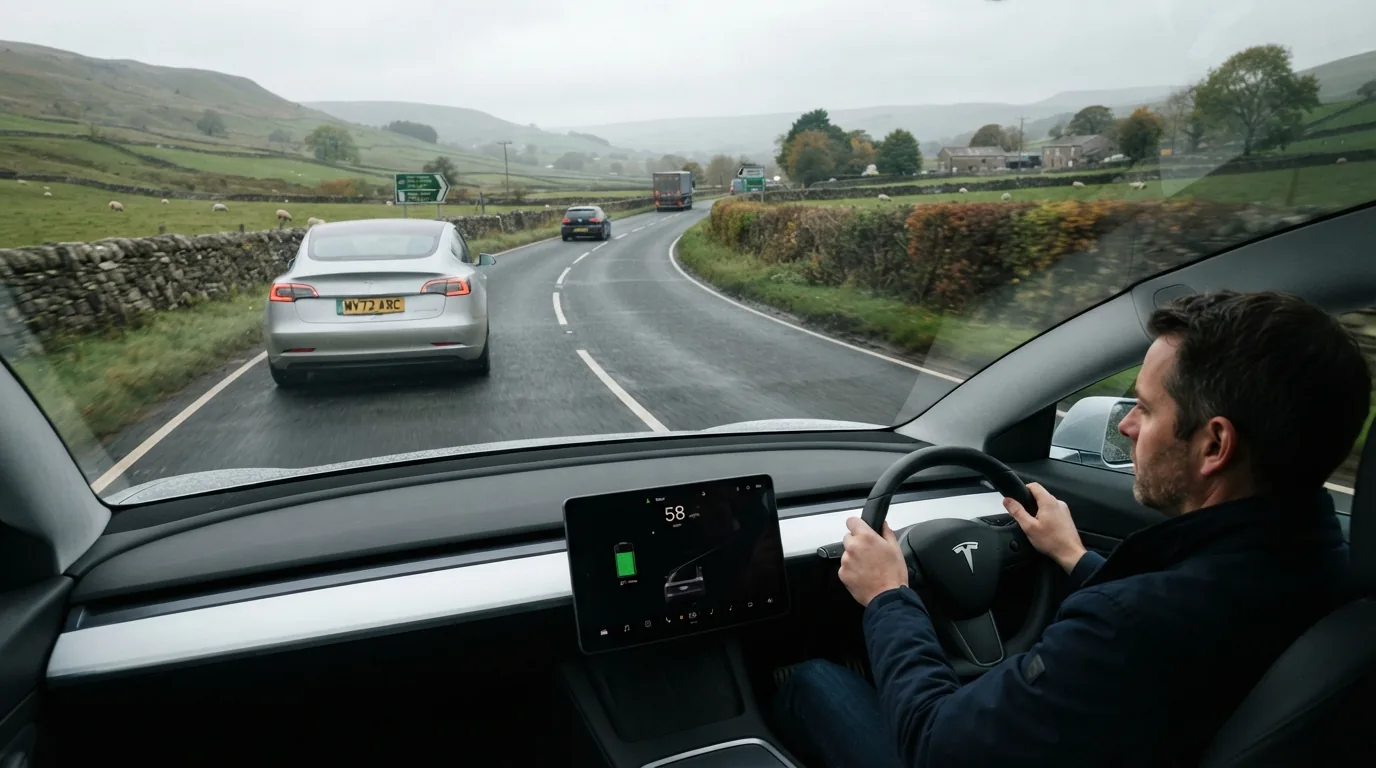
Quick answers
- On a single charge, most electric cars sold in the UK in 2026 can travel between 150 and 400 real-world miles, depending on the model, speed and conditions.
- The current UK range leader is the Mercedes EQS 450+, rated at 542 miles WLTP.
- For motorway driving specifically, where range drops to 65 to 75 per cent of WLTP, a car with a 300-mile WLTP figure can typically cover around 200 miles at 70 mph before needing a charge stop.
- Does battery size equal more range: The most efficient car in the UK market by real-world miles per kWh is consistently the Hyundai Ioniq 6, which achieves around 4.0 to 4.4 miles per kWh in mixed conditions.
- What about charging stops on long journeys: The UK rapid charging network now has over 11,000 public rapid connectors (50 kW and above).
- What is the common mistake buyers make: The biggest error is treating WLTP range as the planning number.
On a single charge, most electric cars sold in the UK in 2026 can travel between 150 and 400 real-world miles, depending on the model, speed and conditions. The official WLTP range figure is higher than what you will actually achieve: in mixed UK driving, plan for around 70 to 80 per cent of the quoted number. At sustained motorway speeds, expect closer to 65 to 75 per cent.
A mid-range car with a 300-mile WLTP rating will typically go 210 to 240 miles in mixed conditions. A premium long-range car rated at 450 miles WLTP might cover 320 to 360 miles under similar circumstances.
What is the maximum range on a single charge in 2026?
The current UK range leader is the Mercedes EQS 450+, rated at 542 miles WLTP. Its 118 kWh battery and exceptionally low Cd of 0.20 deliver the best official range of any car on sale here. In real-world mixed driving, owners report figures of around 400 to 430 miles on a full charge.
The Volvo EX60 P12 claims 503 miles WLTP, and the BMW iX3 xDrive50 offers around 500 miles from a 108 kWh pack. These are outliers. Most UK buyers choosing a mainstream family car will encounter WLTP figures between 200 and 380 miles.
| Car | WLTP Range | Real World Estimate (mixed) | Battery Size |
|---|---|---|---|
| Mercedes EQS 450+ | 542 miles | ~400-430 miles | 118 kWh |
| BMW iX3 xDrive50 | ~500 miles | ~375-400 miles | 108 kWh |
| Tesla Model 3 Long Range | 466 miles | ~350-380 miles | 82 kWh |
| Audi A6 e-tron Performance | 463 miles | ~345-375 miles | 100 kWh |
| Volkswagen ID.7 Pro S | 434 miles | ~320-355 miles | 91 kWh |
| Kia EV6 Long Range RWD | 361 miles | ~275-305 miles | 84 kWh |
| Hyundai Ioniq 6 RWD | 338 miles | ~260-285 miles | 77.4 kWh |
| BMW i4 eDrive40 | 367 miles | ~280-310 miles | 83.9 kWh |
| Renault Scenic E-Tech | 379 miles | ~280-315 miles | 87 kWh |
| MG4 Extended Range | 323 miles | ~240-265 miles | 77 kWh |
How far does a typical UK driver need to go on one charge?
The average UK motorist drives around 20 miles per day. Based on Department for Transport figures, around 95 per cent of all car journeys in England are under 25 miles. An EV with 150 miles of real-world range can comfortably manage a week of typical UK daily driving on a single charge.
The one-charge concern is most relevant for longer trips. Many drivers want to cover journeys without stopping to charge, particularly for trips to see family or reach holiday destinations. The most common target is 200 miles on a single charge, which requires a WLTP rating of at least 250 to 270 miles to achieve with confidence.
For motorway driving specifically, where range drops to 65 to 75 per cent of WLTP, a car with a 300-mile WLTP figure can typically cover around 200 miles at 70 mph before needing a charge stop.
Does battery size equal more range?
Broadly yes, but efficiency matters as much as capacity. Two cars can have the same battery size and deliver very different ranges if their aerodynamics, drivetrain efficiency and thermal management are different.
The most efficient car in the UK market by real-world miles per kWh is consistently the Hyundai Ioniq 6, which achieves around 4.0 to 4.4 miles per kWh in mixed conditions. The Tesla Model 3 Long Range typically returns 3.8 to 4.2 miles per kWh. A less aerodynamic SUV might achieve 2.8 to 3.4 miles per kWh from a similar battery.
So a 77 kWh battery in an Ioniq 6 delivers more real-world range than a 77 kWh battery in a heavier, less aerodynamic SUV.
What about charging stops on long journeys?
The UK rapid charging network now has over 11,000 public rapid connectors (50 kW and above). Most major motorway services have high-power DC chargers, and the fastest now offer 150 to 350 kW. Adding 100 miles of real-world range takes around 20 to 30 minutes at a 100 kW charger.
For a 300-mile journey in a car with 350 miles of real-world range, most drivers would drive the full distance on one charge. In a car with 220 miles of real-world range, a single 20 to 30 minute charge stop is all that is needed.
What is the common mistake buyers make?
The biggest error is treating WLTP range as the planning number. A buyer who sees “400 miles WLTP” and books a 380-mile journey without a charging plan will have a stressful time. Apply the 75 per cent rule: assume you will achieve 75 per cent of WLTP in mixed conditions, and plan charge stops accordingly.
The second mistake is forgetting that most manufacturers recommend not charging above 80 per cent for daily use. An 80 per cent charge of a 400-mile WLTP car gives you 320 miles of WLTP equivalent, or around 240 miles of real-world range in mixed conditions. For a long trip, charging to 100 per cent is fine; for daily use, the 20 to 80 per cent window protects battery longevity.
Does range change over time as the battery ages?
Yes, but less than most people expect. Modern EV batteries degrade gradually rather than suddenly. A typical EV loses around 2 to 3 per cent of its maximum battery capacity per year, or approximately 10 to 15 per cent over five years under normal use. That means a car with 300 miles of real-world range at launch might deliver around 255 to 270 miles after five years, all else being equal.
Aggressive fast charging (particularly DC rapid charging every day), consistently storing the battery at very low or very high charge levels, and exposure to extreme temperatures accelerate degradation. Most manufacturers warrant the battery to retain at least 70 per cent of its original capacity for eight years or 100,000 miles, whichever comes first.
For buyers concerned about used EV battery condition, checking the State of Health (SoH) figure via a diagnostic tool or dealer scan before purchase is straightforward. Many used EV specialists now include battery health reports as standard. A battery at 90 per cent SoH after four years is healthy; at 80 per cent SoH it is still within manufacturer warranty but will notice a meaningful range reduction.
What about real range in summer versus winter?
The single-charge range varies significantly by season in the UK. A car that delivers 250 miles in mild weather might return only 175 to 200 miles on a cold January day. In summer, with air conditioning running, the same car might achieve 230 to 245 miles. For most UK buyers, the winter figure is the planning number: design your EV use around what the car can deliver in the coldest months, and summer will always be a pleasant bonus.
Summary: how far can an EV really go?
Most UK buyers will find a real-world range of 200 to 300 miles more than adequate for their daily needs. The cars that deliver true 300-plus miles of real-world range in mixed conditions are limited to models with WLTP figures above 400 miles.
If maximum single-charge distance matters to you, the longest range electric cars page ranks every current UK model. For more on the factors that determine real-world range and how to get the best out of your EV, visit the range and performance hub.
Sources: WLTP certification data, Department for Transport National Travel Survey, EV Database UK, manufacturer specifications, Zap-Map network data.
How we test and where our numbers come from
Range figures are official WLTP combined values taken from manufacturer UK specification pages, with real-world estimates drawn from independent comparative testing. Prices are UK list prices at the time of the latest update. Tax, grant and charging-scheme figures come from GOV.UK and HMRC publications. We re-check every guide when pricing, specification or policy changes. Last checked 11 August 2026.
Frequently asked questions
What is the maximum range on a single charge in 2026?
The current UK range leader is the Mercedes EQS 450+, rated at 542 miles WLTP. Its 118 kWh battery and exceptionally low Cd of 0.20 deliver the best official range of any car on sale here.
How far does a typical UK driver need to go on one charge?
The average UK motorist drives around 20 miles per day. Based on Department for Transport figures, around 95 per cent of all car journeys in England are under 25 miles.
Does battery size equal more range?
Broadly yes, but efficiency matters as much as capacity. Two cars can have the same battery size and deliver very different ranges if their aerodynamics, drivetrain efficiency and thermal management are different.
What about charging stops on long journeys?
The UK rapid charging network now has over 11,000 public rapid connectors (50 kW and above). Most major motorway services have high-power DC chargers, and the fastest now offer 150 to 350 kW.
What is the common mistake buyers make?
The biggest error is treating WLTP range as the planning number. A buyer who sees "400 miles WLTP" and books a 380-mile journey without a charging plan will have a stressful time.

EV Compared
The EV Compared editorial team tracks the UK electric vehicle market full time: new model launches, list prices, WLTP and real-world range, public charging tariffs and the tax rules that decide what an EV actually costs to run. Every guide is checked against manufacturer specifications and official GOV.UK figures, and updated whenever the numbers move.
Related reading
View all
Do Bigger Wheels Reduce Electric Car Range?
Yes, significantly. Here is the data on how much wheel size costs in miles and why it happens
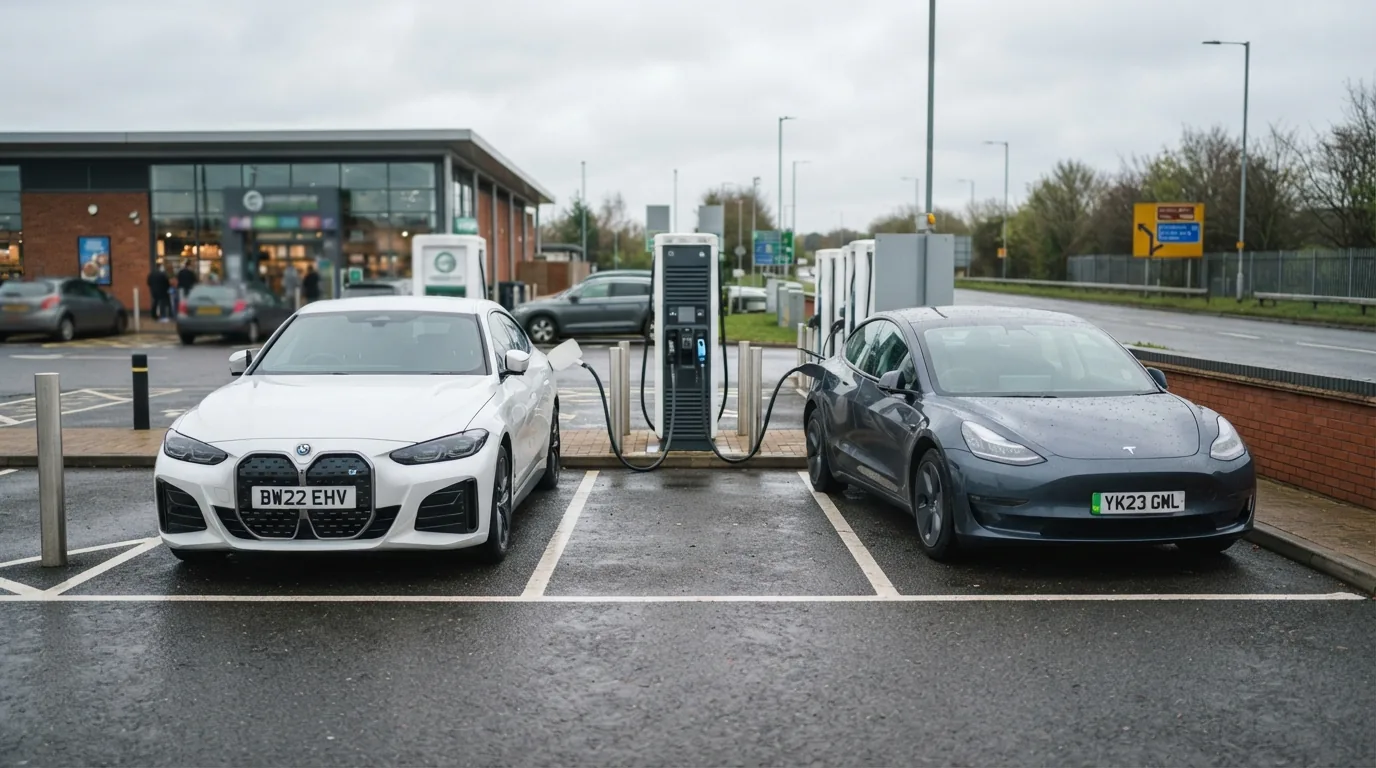
BMW i4 vs Tesla Model 3: UK Range and Efficiency Test
The BMW costs more and goes less far, but is it worth it? A data-led head to head for UK buyers

Best Electric Cars for Range in Cold Weather
Which UK EVs retain the most range when temperatures drop, ranked with heat pump data and winter test results