Best Electric Cars for Range in Cold Weather
Which UK EVs retain the most range when temperatures drop, ranked with heat pump data and winter test results
Quick answers
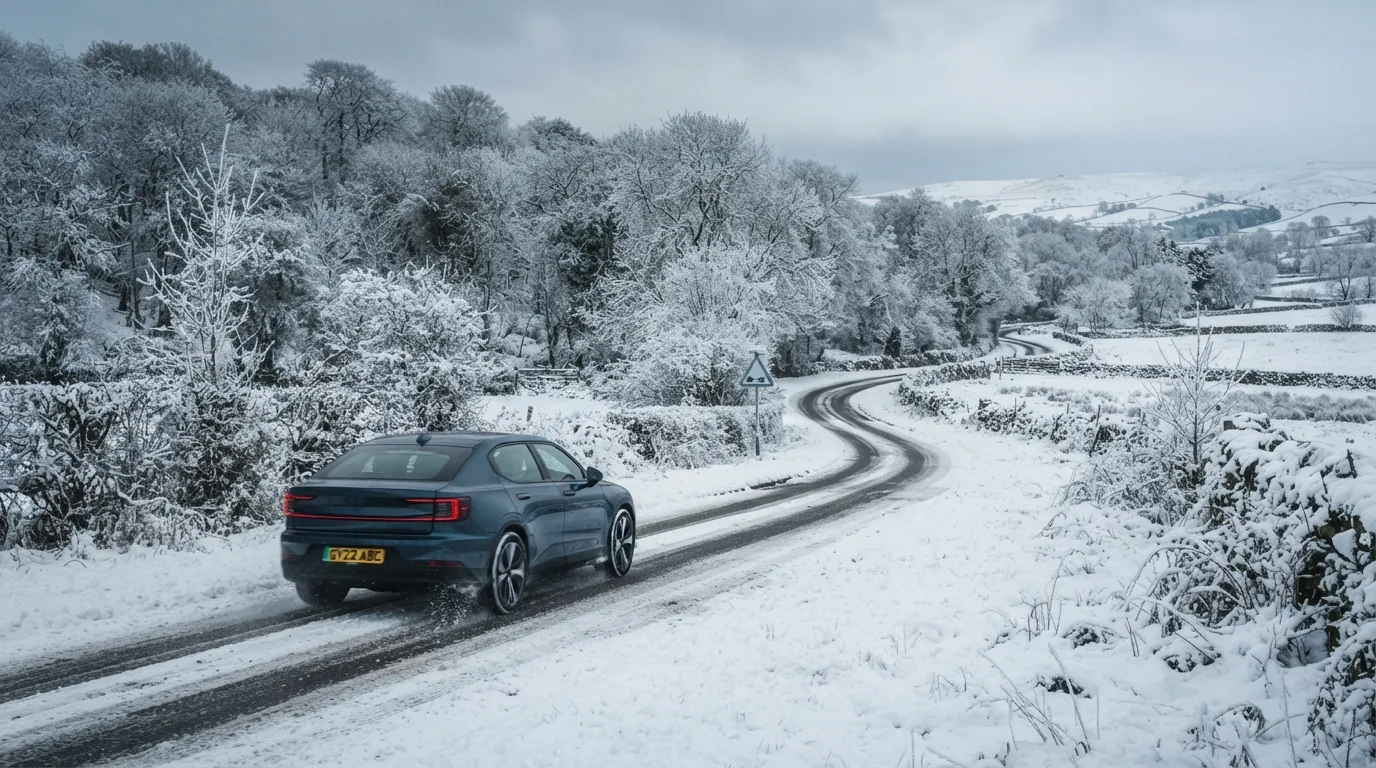
- In a British winter, an electric car loses between 10 and 40 per cent of its usable range, depending on the model.
- How cold weather affects EV range: Two things happen simultaneously in cold weather: the battery chemistry becomes less efficient, and the cabin heater draws significant energy from the pack.
- Tesla's Model Y Long Range has become the reference point for EV winter performance.
- The BMW iX loses approximately 13 per cent of range in cold conditions.
- What about models without a heat pump: The MG4 Extended Range (£28,495) is an excellent budget EV but does not include a heat pump.
- The myth: EVs are not practical in winter: This was a legitimate concern with early EVs and large range losses.
In a British winter, an electric car loses between 10 and 40 per cent of its usable range, depending on the model. The difference between a car that loses 12 per cent and one that loses 35 per cent in cold conditions comes down mainly to one thing: heat pump technology and the quality of the battery’s thermal management system.
Independent testing consistently finds the Tesla Model Y Long Range at the top of winter efficiency tests, losing around 11 to 12 per cent of its range in 0 to 5 degree conditions. The BMW iX, Hyundai Ioniq 5 and Kia EV6 are all strong performers. At the other end, older EVs without heat pumps, and some budget entrants with simpler thermal systems, can lose 30 to 40 per cent of their summer range.
How cold weather affects EV range
Two things happen simultaneously in cold weather: the battery chemistry becomes less efficient, and the cabin heater draws significant energy from the pack.
Battery efficiency drop. Lithium-ion cells operate less well below around 10 degrees Celsius. Internal resistance rises, which means the pack delivers less usable energy. At 0 degrees, a typical pack operates at around 80 per cent of its room-temperature capacity. At minus 10 degrees, that falls to 65 to 75 per cent.
Heating the cabin. An EV has no waste engine heat. Without a heat pump, the resistive heater draws 3 to 5 kW continuously. On a 77 kWh battery, 5 kW of continuous heating eats around 15 miles of range per hour of driving. A heat pump uses around a third of the electricity for equivalent warmth, which is why models with heat pumps perform so much better in winter.
Top electric cars for cold weather range in the UK (2026)
| Car | WLTP Range | Winter Range (0-5°C est.) | Approx Loss | Heat Pump | Price From |
|---|---|---|---|---|---|
| Tesla Model Y Long Range | 331 miles | ~293 miles | ~11% | Yes | ~£46,990 |
| BMW iX xDrive40 | 381 miles | ~330 miles | ~13% | Yes | ~£77,000 |
| Hyundai Ioniq 5 Long Range | 354 miles | ~302 miles | ~15% | Yes | ~£44,495 |
| Kia EV6 Long Range RWD | 361 miles | ~302 miles | ~16% | Yes | £45,585 |
| Tesla Model 3 Long Range | 466 miles | ~372-388 miles | ~17-20% | Yes | £45,990 |
| BMW i4 eDrive40 | 367 miles | ~300-315 miles | ~14-18% | Yes | £52,005 |
| Volkswagen ID.7 Pro | 381 miles | ~303-319 miles | ~16-20% | Yes | ~£51,500 |
| Audi Q4 e-tron | 316 miles | ~246-265 miles | ~16-22% | Optional | ~£45,000 |
| Nissan Ariya e-4ORCE | 329 miles | ~247-263 miles | ~20-25% | Yes | ~£49,000 |
| MG4 Extended Range | 323 miles | ~226-255 miles | ~21-30% | No | £28,495 |
Tesla Model Y Long Range: the winter benchmark
Tesla’s Model Y Long Range has become the reference point for EV winter performance. An independent study of 11.8 per cent winter range loss (retaining approximately 293 miles from its 331-mile WLTP at 0 to 5 degrees Celsius) is the best figure from any high-volume model tested. This comes from a combination of Tesla’s sophisticated battery thermal management system, which actively heats the pack before and during driving, and the heat pump that came standard from 2021 production onward. The car also uses navigation-based battery preconditioning, warming the battery to optimal temperature before arriving at a Supercharger.
At around £46,990, it is not cheap, but for buyers who genuinely need good winter range and motorway capability, it is the best-validated option in the mainstream segment.
BMW iX xDrive40: best premium winter performer
The BMW iX loses approximately 13 per cent of range in cold conditions. Its larger 105.2 kWh battery means the absolute winter range (around 330 miles in 0 to 5 degree conditions) is the highest of any model in this list. The iX also has BMW’s latest heat pump and thermal management, among the most capable in the industry. Price from around £77,000.
Hyundai Ioniq 5 Long Range: best value heat pump performer
The Ioniq 5 fits a heat pump as standard across all trims. Winter range loss of around 15 per cent is one of the best figures in the mainstream market. Starting from around £44,495 in Long Range form, it is more affordable than the BMW iX and Tesla Model Y while delivering strong cold-weather performance. The 800-volt charging architecture means rapid charging remains fast even in cold conditions, once the battery has been prewarmed by the navigation system.
What about models without a heat pump?
The MG4 Extended Range (£28,495) is an excellent budget EV but does not include a heat pump. In cold conditions, owners report range losses of 25 to 35 per cent. A full winter day’s driving with the heater running can reduce the effective range to 210 to 245 miles from the 323-mile WLTP figure. For a UK driver in Scotland, Wales or northern England who faces regular hard frosts, the lack of a heat pump is a meaningful limitation.
Before buying any EV, check whether the heat pump is standard or optional, and whether it can be ordered on the trim you want.
Practical tips for winter EV range
Precondition the cabin while plugged in. If you warm the car before disconnecting, the energy comes from the charger, not your driving range. Most EVs allow scheduled preconditioning via the companion app.
Use heated seats rather than the fan heater. A heated seat draws around 100 to 200 watts versus 3,000 to 5,000 watts for the main heater. Setting the cabin temperature to 18 degrees and relying on seat heat is a significant efficiency gain.
Check tyre pressures in cold weather. Tyre pressure drops by approximately 1 psi per 10 degrees of temperature reduction. Under-inflated tyres increase rolling resistance and compound winter range losses.
Charge overnight and keep the car plugged in. A battery stored at a moderate temperature (inside a garage if possible, or at least connected to a charger for overnight thermal maintenance) begins each day in better condition than one left cold and unplugged.
Plan charge stops based on winter range, not WLTP. The 75 per cent WLTP multiplier used in mild conditions should be reduced to around 65 per cent in cold weather for planning purposes.
The myth: EVs are not practical in winter
This was a legitimate concern with early EVs and large range losses. It is much less so with current models. Even the worst winter performers in this list retain over 60 per cent of their WLTP range in cold conditions, meaning a 300-mile WLTP car delivers at least 180 miles. For daily UK use averaging 20 miles per day, that is comfortably adequate. For long motorway trips in January, the Tesla Model Y or BMW iX with 280-plus miles of cold-weather range makes a strong case.
For our full list of the longest range EVs in all conditions, see the longest range electric cars guide. For a detailed breakdown of what winter does to EV range, the winter range explainer has the full picture. More context on all range variables is in the range and performance hub.
Sources: Recurrent Auto winter range study (30,000+ vehicles), independent cold-weather testing data, EV Database UK specifications, manufacturer heat pump documentation, What Car? winter range testing.
How we test and where our numbers come from
Range figures are official WLTP combined values taken from manufacturer UK specification pages, with real-world estimates drawn from independent comparative testing. Prices are UK list prices at the time of the latest update. Tax, grant and charging-scheme figures come from GOV.UK and HMRC publications. We re-check every guide when pricing, specification or policy changes. Last checked 11 August 2026.
Frequently asked questions
What about models without a heat pump?
The MG4 Extended Range (£28,495) is an excellent budget EV but does not include a heat pump. In cold conditions, owners report range losses of 25 to 35 per cent.

EV Compared
The EV Compared editorial team tracks the UK electric vehicle market full time: new model launches, list prices, WLTP and real-world range, public charging tariffs and the tax rules that decide what an EV actually costs to run. Every guide is checked against manufacturer specifications and official GOV.UK figures, and updated whenever the numbers move.
Related reading
View all
Do Bigger Wheels Reduce Electric Car Range?
Yes, significantly. Here is the data on how much wheel size costs in miles and why it happens
BMW i4 vs Tesla Model 3: UK Range and Efficiency Test
The BMW costs more and goes less far, but is it worth it? A data-led head to head for UK buyers
How Far Can an Electric Car Really Go on One Charge?
Real-world range figures for UK drivers: what the numbers mean and which cars go furthest