Do Bigger Wheels Reduce Electric Car Range?
Yes, significantly. Here is the data on how much wheel size costs in miles and why it happens
Quick answers
- Yes, bigger wheels reduce electric car range, often by more than buyers expect. Moving from the smallest to the largest factory wheel option on a typical EV costs 5 to 15 per cent of WLTP range.
- Why do bigger wheels reduce range: Rolling resistance is the energy lost as a tyre deforms and recovers its shape with each rotation.
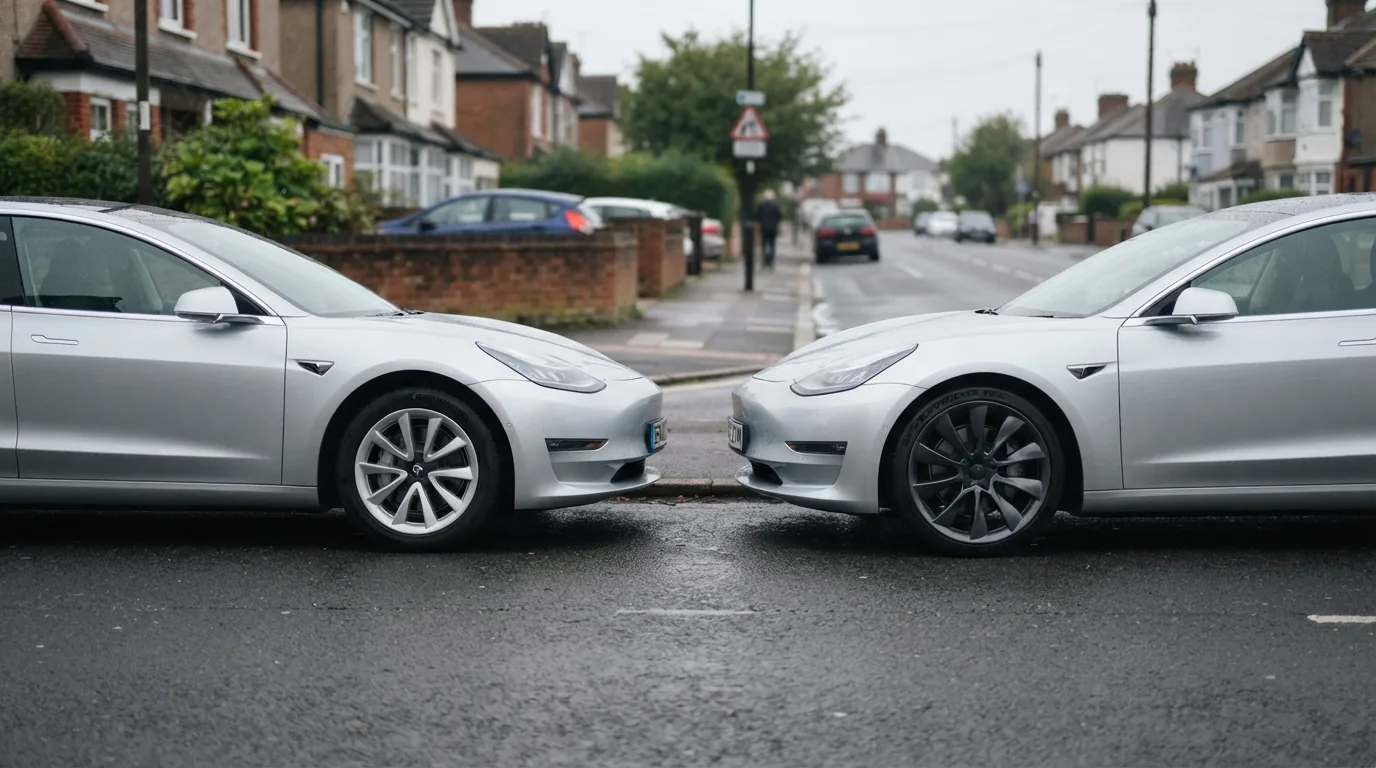
- In a WLTP comparison across markets, one Tesla Model 3 variant fitted with 18-inch wheels returned 466 miles WLTP; the 20-inch Performance variant returned around 398 miles, a gap of nearly 70 miles from wheel size (alongside other differences).
- Cars with the best aerodynamics and lowest rolling resistance see a proportionally larger penalty from wheel changes because they have less slack to absorb.
- Winter tyres: a different range penalty: Fitting winter tyres, which most UK EV owners do not do but some should, typically reduces range by 15 to 25 per cent due to their softer compound, deeper tread and higher rolling resistance.
- If you have already bought a car with larger wheels and want to improve range, switching to a set of the manufacturer's smaller alloy wheels with appropriate-size tyres during a tyre change is one option.
Yes, bigger wheels reduce electric car range, often by more than buyers expect. Moving from the smallest to the largest factory wheel option on a typical EV costs 5 to 15 per cent of WLTP range. In a documented WLTP comparison on the same model, 18-inch wheels produced 381 miles and 20-inch wheels produced 339 miles: a 42-mile difference, or 11 per cent, purely from wheel choice.
The penalty comes from three sources: greater rolling resistance, increased rotational mass that takes more energy to accelerate, and slightly worse aerodynamics from larger, more protruding wheel designs.
Why do bigger wheels reduce range?
Rolling resistance
Rolling resistance is the energy lost as a tyre deforms and recovers its shape with each rotation. Wider tyres, which are almost always fitted to larger wheels, have a larger contact patch and deform more. Low-rolling-resistance tyres (a narrower, harder compound with an optimised tread pattern) are usually specified for the smallest factory wheel option. The high-performance or aesthetics-focused tyres fitted to larger wheels prioritise grip and appearance over rolling efficiency.
Rotational inertia
Larger wheels are heavier. To spin a heavier wheel up to a given speed requires more energy. The effect is amplified because wheels are rotating mass, which requires more energy to accelerate than static mass of the same weight. Manufacturers who offer an “aero” small wheel option are prioritising this factor directly: the weight savings reduce rotational inertia and improve efficiency.
Aerodynamic drag
The wheel arch is a significant aerodynamic feature. Air flowing into and around the wheel arch creates turbulence. Larger wheels protrude further into the airflow, and the open spoke designs often chosen for visual appeal on large rims are less aerodynamically efficient than covered or flush designs. Several manufacturers now offer aero wheel covers as optional covers for larger rims, partially recovering the aerodynamic loss.
Real numbers: how much range do you actually lose?
| Model | Small Wheel Option | Large Wheel Option | Range Difference |
|---|---|---|---|
| Same car (documented) | 18-inch: 381 miles WLTP | 20-inch: 339 miles WLTP | -42 miles (-11%) |
| Tesla Model S | 19-inch standard | 21-inch option | ~8% reduction |
| Tesla Model X | 20-inch standard | 22-inch option | ~9% reduction |
| Typical family EV | 18-inch base | 20-inch option | 5-10% reduction |
| Performance-spec EV | 20-inch standard | 22-inch option | 5-12% reduction |
In a WLTP comparison across markets, one Tesla Model 3 variant fitted with 18-inch wheels returned 466 miles WLTP; the 20-inch Performance variant returned around 398 miles, a gap of nearly 70 miles from wheel size (alongside other differences). While not all of that gap is attributable to wheels alone, wheel size is a major variable.
Which cars show the biggest wheel-size effect?
Cars with the best aerodynamics and lowest rolling resistance see a proportionally larger penalty from wheel changes because they have less slack to absorb. Aerodynamically optimised models like the Hyundai Ioniq 6 (Cd 0.21) and Tesla Model 3 (Cd 0.23) achieve their strong WLTP figures partly through the tyres and wheels on their base specifications. Upgrading to larger wheels disrupts the carefully engineered drag figure and is more costly in range terms than on a less aerodynamically focused car.
Does wheel size affect performance as well as range?
Larger wheels are often associated with better handling. Wider tyres offer more lateral grip, and larger diameter wheels allow larger brake discs. For performance-oriented driving on UK roads, the trade-off may be worthwhile. But for most UK drivers who prioritise everyday efficiency and range, the base wheel option is the rational choice.
Winter tyres: a different range penalty
Fitting winter tyres, which most UK EV owners do not do but some should, typically reduces range by 15 to 25 per cent due to their softer compound, deeper tread and higher rolling resistance. They are not fitted on larger rims in most cases; the effect comes from the tyre compound itself. Winter tyres are worth the range penalty in persistent sub-zero conditions for the safety improvement in braking and cornering, but the range cost is real and should be factored into planning.
Should you choose smaller wheels when buying?
For most UK buyers, yes. The smallest factory wheel option delivers the best range, the best efficiency and often a more comfortable ride (because narrower-profile, smaller-diameter tyres have more sidewall flex to absorb road imperfections). The only reasons to choose larger wheels are aesthetic preference, improved high-speed handling if you drive at performance limits regularly, or specific tyre availability in your region.
If you have already bought a car with larger wheels and want to improve range, switching to a set of the manufacturer’s smaller alloy wheels with appropriate-size tyres during a tyre change is one option. Fitting aero wheel covers (available for many popular models) is a less expensive approach that recovers some aerodynamic loss without changing the rim.
The myth: bigger wheels help with range in bad weather
Some buyers assume that wider tyres help in wet weather, which would partially justify the range cost. While wider tyres do offer more lateral grip on dry roads, on wet UK roads a narrower tyre with a well-designed tread actually tends to disperse water more effectively and resist aquaplaning better than a wide tyre at the same speed. The wet-weather argument for larger wheels does not hold up for most UK road conditions.
What about tyre compound, not just size?
The rubber compound matters nearly as much as the diameter. Low-rolling-resistance (LRR) tyres use a harder, more fuel-efficient compound that reduces the energy lost to tyre deformation. The EU tyre label (which UK tyres continue to use) rates rolling resistance from A to G, with A being the most efficient.
Choosing a LRR tyre rated A or B on rolling resistance, even in the same size as a less efficient tyre, can recover 3 to 6 per cent of range. Some performance-oriented EV tyres (specifically developed for electric cars, like the Continental EcoContact 7, Michelin e.Primacy or Bridgestone Turanza Eco) combine LRR compound with load ratings appropriate for heavy EV batteries, making them the recommended replacement for most UK buyers when the original tyres wear out.
How to check the range penalty when buying
Most manufacturers publish WLTP figures for each wheel size option on the specific model you are considering. These are in the technical data section of the official brochure or on the manufacturer website’s configurator. Compare the WLTP range on the base wheel versus the optional larger wheel before ordering; the difference tells you the precise efficiency cost in your specific case.
What matters more: wheels or speed?
Speed is a far greater range variable than wheel size. The energy cost of travelling at 80 mph instead of 60 mph is 35 to 40 per cent higher per mile. The wheel upgrade penalty of 8 to 11 per cent is real but dwarfed by the speed effect. If you want to maximise range on a specific journey, slowing down pays far more than changing your wheels.
For more detail on the full set of factors that affect range, see the range and performance hub. Our longest range electric cars guide shows how different spec choices affect the official rankings.
Sources: WLTP wheel-size comparison data, Tesla efficiency data by wheel size (Tesla Motors Club independent testing), Unplugged Performance rolling resistance analysis, manufacturer WLTP certification across trim levels, Kia EV Forum real-world wheel size testing.
How we test and where our numbers come from
Range figures are official WLTP combined values taken from manufacturer UK specification pages, with real-world estimates drawn from independent comparative testing. Prices are UK list prices at the time of the latest update. Tax, grant and charging-scheme figures come from GOV.UK and HMRC publications. We re-check every guide when pricing, specification or policy changes. Last checked 11 August 2026.
Frequently asked questions
Why do bigger wheels reduce range?
Rolling resistance is the energy lost as a tyre deforms and recovers its shape with each rotation. Wider tyres, which are almost always fitted to larger wheels, have a larger contact patch and deform more.
Real numbers: how much range do you actually lose?
In a WLTP comparison across markets, one Tesla Model 3 variant fitted with 18-inch wheels returned 466 miles WLTP; the 20-inch Performance variant returned around 398 miles, a gap of nearly 70 miles from wheel size (alongside other differences). While not all of that gap is attributable to wheels alone, wheel size is a major variable.
Which cars show the biggest wheel-size effect?
Cars with the best aerodynamics and lowest rolling resistance see a proportionally larger penalty from wheel changes because they have less slack to absorb.
Does wheel size affect performance as well as range?
Larger wheels are often associated with better handling. Wider tyres offer more lateral grip, and larger diameter wheels allow larger brake discs.
Should you choose smaller wheels when buying?
For most UK buyers, yes. The smallest factory wheel option delivers the best range, the best efficiency and often a more comfortable ride (because narrower-profile, smaller-diameter tyres have more sidewall flex to absorb road imperfections).

EV Compared
The EV Compared editorial team tracks the UK electric vehicle market full time: new model launches, list prices, WLTP and real-world range, public charging tariffs and the tax rules that decide what an EV actually costs to run. Every guide is checked against manufacturer specifications and official GOV.UK figures, and updated whenever the numbers move.
Related reading
View all
BMW i4 vs Tesla Model 3: UK Range and Efficiency Test
The BMW costs more and goes less far, but is it worth it? A data-led head to head for UK buyers
How Far Can an Electric Car Really Go on One Charge?
Real-world range figures for UK drivers: what the numbers mean and which cars go furthest
Best Electric Cars for Range in Cold Weather
Which UK EVs retain the most range when temperatures drop, ranked with heat pump data and winter test results