Do You Need a Home Charger for an Electric Car in the UK?
The honest answer: technically no, practically yes, and here is why the wallbox pays for itself quickly
Quick answers
- You do not legally need a home charger for an electric car. Every EV comes with a granny cable that plugs into a standard 13A socket, and there are tens of thousands of public charge points across the UK.
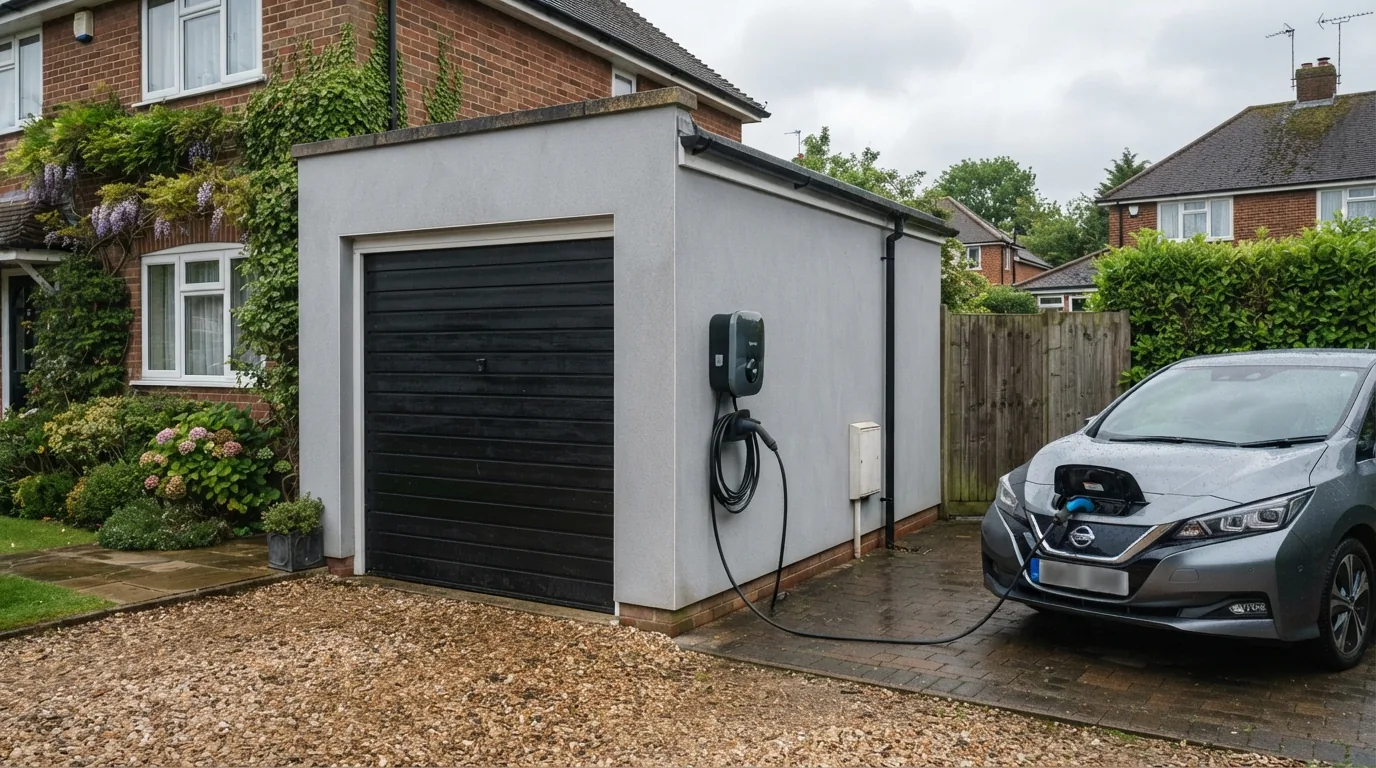
- What does a home EV charger do: A dedicated home EV charger, commonly called a wallbox, is a purpose-built unit wired directly into your home's electrical system.
- When can you manage without a home charger: Even in these cases, the cross-pavement charging channel and LEVI infrastructure programmes are expanding options for drivers without driveways.
- What does a home charger cost: A 7kW smart wallbox installed in 2026 typically costs £800-£1,200, covering the unit and a certified electrician's labour.
- How quickly does a wallbox pay for itself: A smart charger is required to access the best EV tariffs reliably, because it can automatically schedule charging during the off-peak window without you setting a manual timer each night.
- Is it safe to charge from a 3-pin plug: If you are using a 3-pin cable, always use the one supplied by your car manufacturer (not a third-party adapter), and check the socket for signs of heat or discolouration regularly.
You do not legally need a home charger for an electric car. Every EV comes with a granny cable that plugs into a standard 13A socket, and there are tens of thousands of public charge points across the UK. In practice, however, almost every regular EV driver in the UK installs a dedicated wallbox, and with good reason. This page explains what a home charger actually does, when you need one, and when you genuinely can get away without it.
What does a home EV charger do?
A dedicated home EV charger, commonly called a wallbox, is a purpose-built unit wired directly into your home’s electrical system. It delivers 7kW or 7.4kW of power, compared with around 2.3kW from a standard three-pin plug. That is roughly three to four times faster.
More importantly, a wallbox is designed for sustained, repeated charging loads. A domestic 13A socket is not. Running a 13A socket near its maximum capacity for eight to twenty hours a night places stress on wiring, sockets, and cables in a way that creates a real fire risk over time.
When do you genuinely need a home charger?
You need a dedicated wallbox if:
- You drive more than 20-30 miles per day regularly and need a full or near-full battery most mornings.
- You want to charge on an off-peak EV tariff. Tariffs like Intelligent Octopus Go require a smart charger or a compatible EV to access the cheap overnight rate.
- You have a larger-battery car (60kWh or more). A 3-pin plug takes 26 hours or more to fill a 60kWh battery, which simply does not work for daily use.
- You want to use solar diversion. Redirecting surplus solar electricity to your car requires a solar-aware charger such as the Zappi, not a granny cable.
When can you manage without a home charger?
There are genuine scenarios where skipping a wallbox makes sense:
- You live in a flat without dedicated parking. If you cannot physically mount a charger near your parking space, a wallbox is not an option. You will depend on public charging (on-street, workplace, or public rapid chargers).
- You drive very low mileage. If you cover fewer than 50 miles per week, a 3-pin charge of a few hours every few days may suffice. It is slow, but workable.
- You are renting and plan to move soon. Installation costs £800-£1,200. If you are moving within six months, the economics are marginal.
Even in these cases, the cross-pavement charging channel and LEVI infrastructure programmes are expanding options for drivers without driveways.
What does a home charger cost?
A 7kW smart wallbox installed in 2026 typically costs £800-£1,200, covering the unit and a certified electrician’s labour. Popular models include:
| Charger | Unit price (approx.) | Notable feature |
|---|---|---|
| Pod Point Solo 3 | ~£350 | Simple, reliable, good for most |
| Wallbox Pulsar Max | ~£500-£600 | Compact, smart scheduling, Octopus-compatible |
| Ohme Home Pro | ~£535 | Best-in-class EV tariff integration |
| Hypervolt Home 3 Pro | ~£690 | IP66 weatherproofing, premium build |
| myenergi Zappi | ~£700-£800 | Best for solar panel owners |
| Easee One | ~£405 | Tethered or untethered from one unit |
The OZEV EV Chargepoint Grant provides up to £500 (or 75% of cost) for eligible renters, landlords, and flat owners. The grant for homeowners with a private driveway closed in April 2022.
How quickly does a wallbox pay for itself?
A wallbox investment pays back through cheaper charging. Consider:
- Standard variable tariff: 24.67p per kWh (Q2 2026 Ofgem cap)
- Intelligent Octopus Go off-peak rate: 8p per kWh
For a driver covering 9,000 miles per year at typical EV efficiency:
- Standard tariff annual charging cost: ~£634
- EV off-peak tariff annual charging cost: ~£206
Annual saving: ~£428. A £1,000 wallbox installation payback period: roughly 2.3 years. Over five years, the tariff saving alone exceeds £2,100.
A smart charger is required to access the best EV tariffs reliably, because it can automatically schedule charging during the off-peak window without you setting a manual timer each night.
Is it safe to charge from a 3-pin plug?
In an emergency or occasional use, yes. For regular daily charging, no, and car manufacturers agree. Most major EV brands, including Volkswagen, Tesla, BMW, Hyundai, Kia, and Nissan, state in their owner documentation that three-pin charging is for emergency or temporary use only.
The risks of sustained 3-pin charging include:
- Heat buildup in the socket, plug, and cable over long periods.
- Degradation of older wiring not rated for continuous high-draw loads.
- Incompatibility with smart scheduling and off-peak tariffs.
- No ground fault protection equivalent to the RCBO in a properly installed wallbox circuit.
If you are using a 3-pin cable, always use the one supplied by your car manufacturer (not a third-party adapter), and check the socket for signs of heat or discolouration regularly.
Do you need a driveway to install a home charger?
A private driveway or dedicated off-street parking space is the standard requirement for a wall-mounted home charger. Cross-pavement gully channels are an emerging solution for homes with on-street parking: by the end of 2026, around 42% of UK councils plan to offer approved cross-pavement charging. The OZEV grant covers this too.
Flat owners with a dedicated parking bay can apply for the OZEV grant with written consent from the freeholder or management company.
Full guide: Can you install an EV charger without a driveway?
What to look for in a home EV charger
When selecting a wallbox, the key decisions are:
- Tethered or untethered? Tethered is more convenient for daily use with one car. Untethered is more flexible if you might change car or connector type.
- Smart or basic? UK law requires all new home chargers sold from June 2022 to be smart units. All current models are smart. Choose one that integrates directly with your energy tariff.
- Solar integration? If you have solar panels, choose a charger with CT clamp support (Zappi, Hypervolt, Ohme, Indra).
- App quality? A good app matters for monitoring, scheduling, and cost tracking.
Our best home EV chargers guide covers every leading UK model with prices and honest verdicts.
The complete home charging guide sets out everything else you need to know about costs, installation, and getting the most from your setup.
How we test and where our numbers come from
Range figures are official WLTP combined values taken from manufacturer UK specification pages, with real-world estimates drawn from independent comparative testing. Prices are UK list prices at the time of the latest update. Tax, grant and charging-scheme figures come from GOV.UK and HMRC publications. We re-check every guide when pricing, specification or policy changes. Last checked 11 August 2026.
Frequently asked questions
What does a home EV charger do?
A dedicated home EV charger, commonly called a wallbox, is a purpose-built unit wired directly into your home's electrical system. It delivers 7kW or 7.4kW of power, compared with around 2.3kW from a standard three-pin plug.
When can you manage without a home charger?
Even in these cases, the cross-pavement charging channel and LEVI infrastructure programmes are expanding options for drivers without driveways.
What does a home charger cost?
The OZEV EV Chargepoint Grant provides up to £500 (or 75% of cost) for eligible renters, landlords, and flat owners. The grant for homeowners with a private driveway closed in April 2022.
How quickly does a wallbox pay for itself?
Annual saving: ~£428. A £1,000 wallbox installation payback period: roughly 2.3 years.
Is it safe to charge from a 3-pin plug?
In an emergency or occasional use, yes. For regular daily charging, no, and car manufacturers agree.
Sources and further reading
- gov.ukGOV.UK OZEVPrimary source referenced in this article.

EV Compared
The EV Compared editorial team tracks the UK electric vehicle market full time: new model launches, list prices, WLTP and real-world range, public charging tariffs and the tax rules that decide what an EV actually costs to run. Every guide is checked against manufacturer specifications and official GOV.UK figures, and updated whenever the numbers move.
Related reading
View all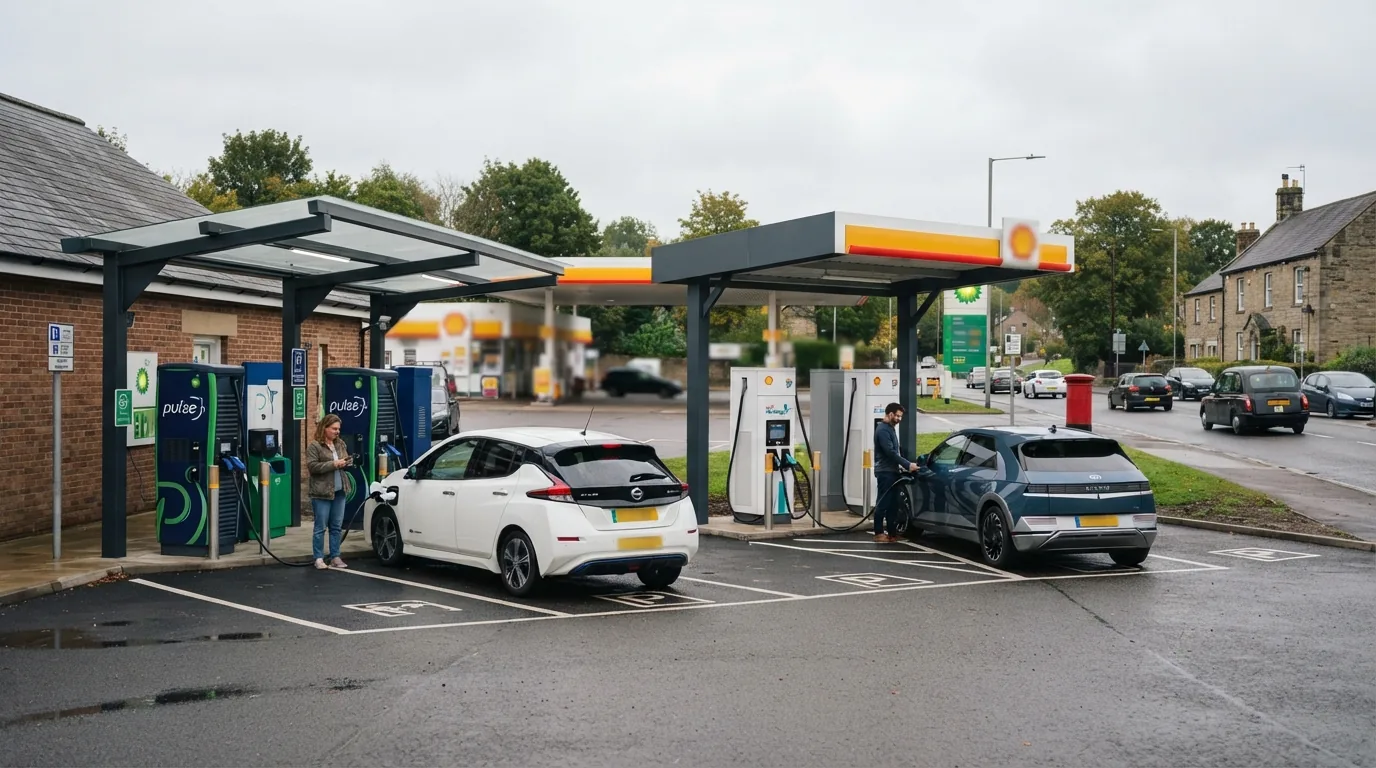
BP Pulse vs Shell Recharge: Which UK Network Wins?
Two of the UK's biggest charging networks compared on price, reliability and which type of driver each suits
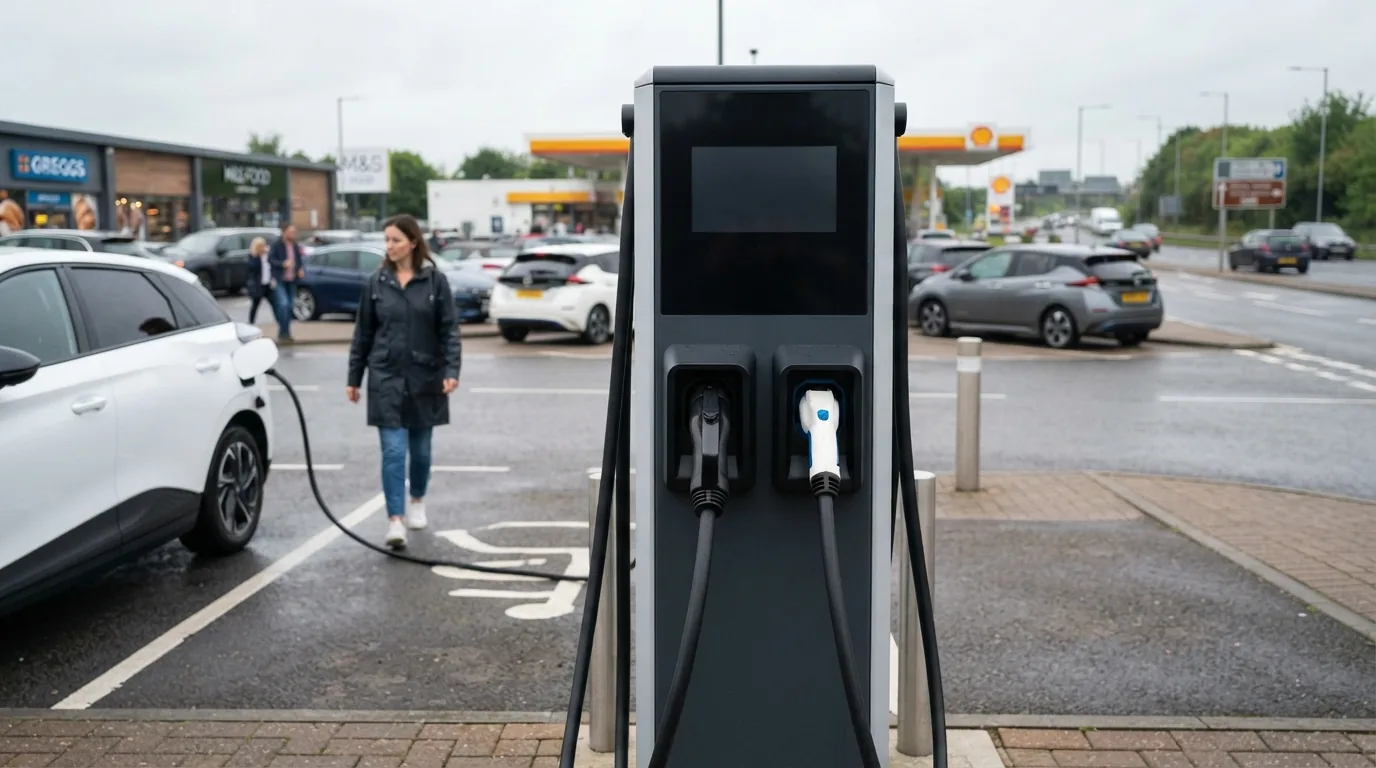
Can You Charge Any EV at Any Public Charger in the UK?
Why almost any new EV works at almost any UK public charger, and the two exceptions you need to know
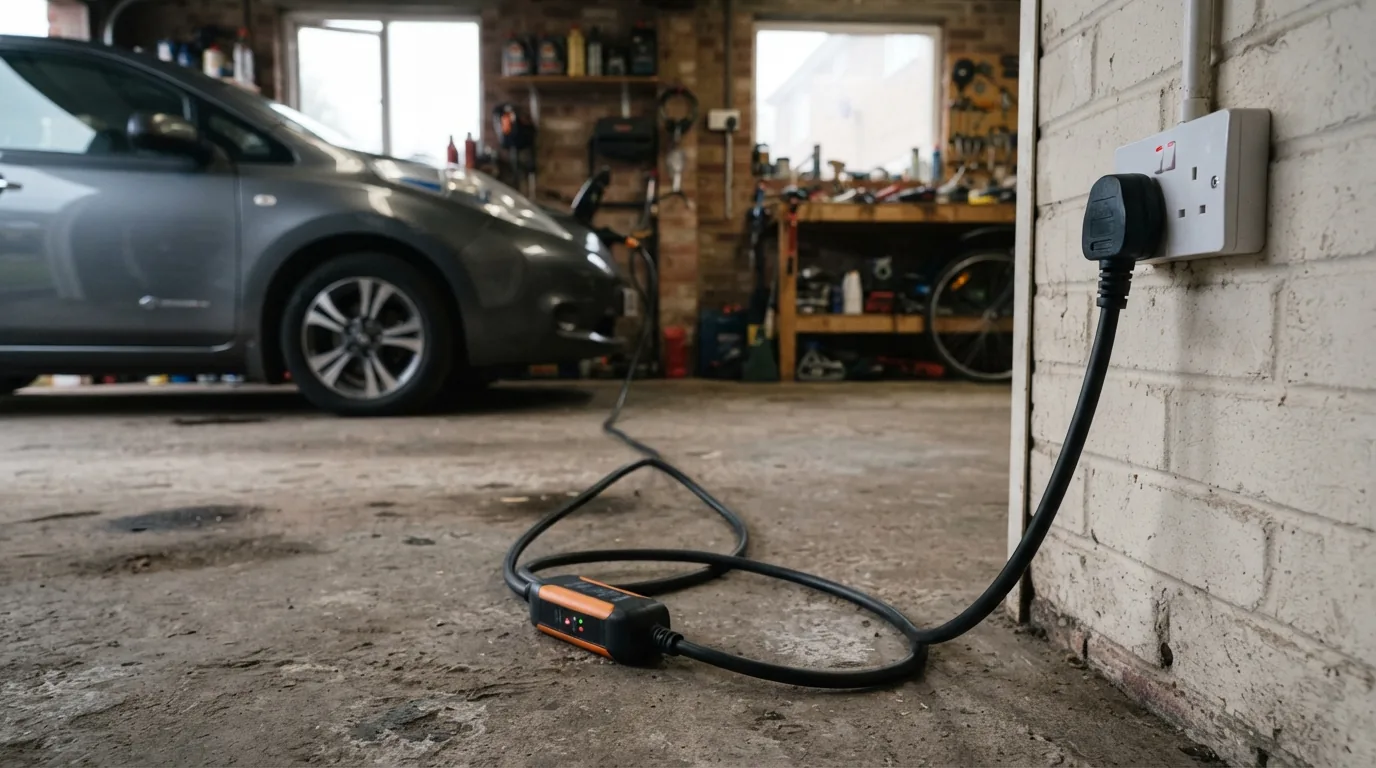
Can You Charge an EV From a Three-Pin Plug in the UK?
Yes, most cars ship with the cable, but speed and safety limits mean it works best for occasional or emergency use