UK EV Market in 2026: Sales, Trends and What Is Changing
Two million EVs on UK roads, record March registrations and a 33% ZEV mandate target -- here is what the data says
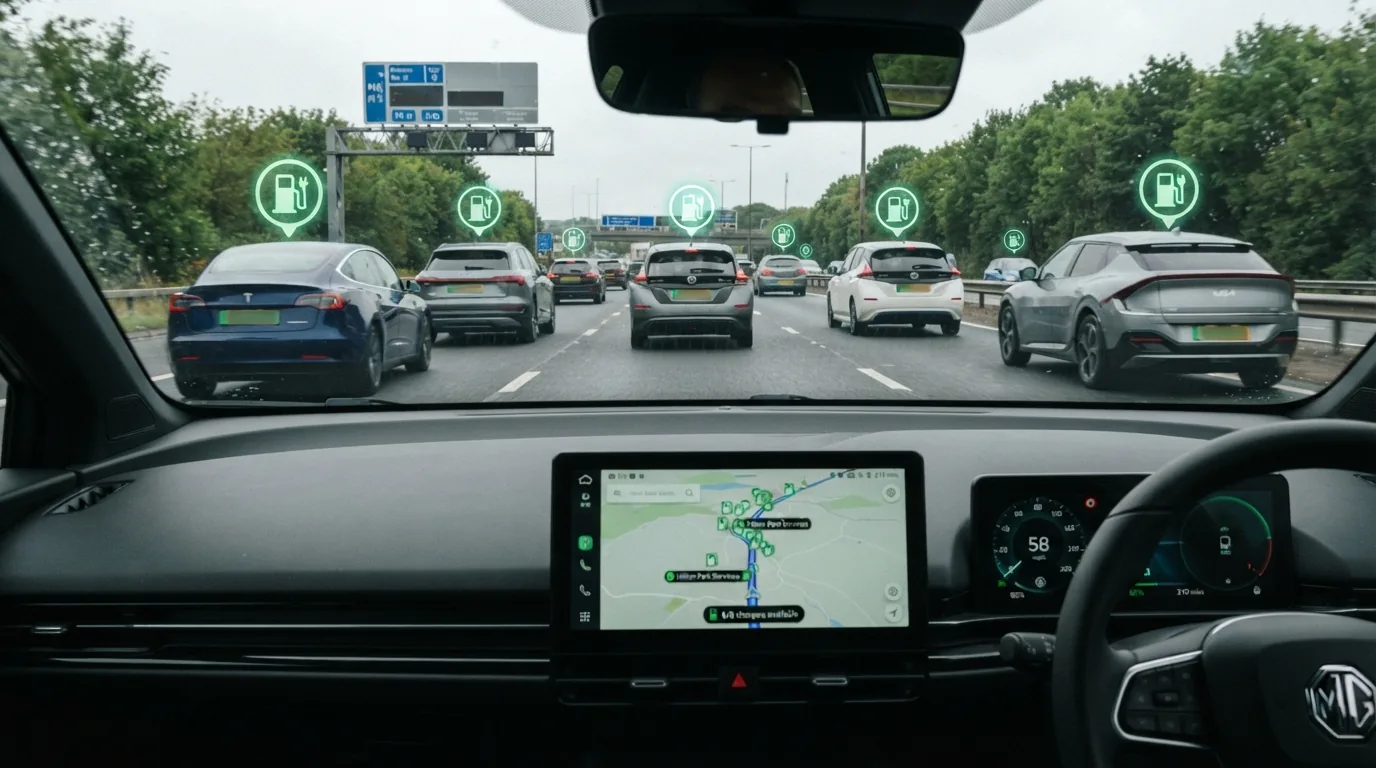
Quick answers
- The UK electric car market crossed a landmark in May 2026: the two-millionth fully electric car was registered, making Britain only the third country in Europe to hit that figure. That is the headline number.
- Across the first four months of 2026, BEV registrations reached 176,698 units, up 22.1% year on year, with an average 23.1% market share.
- Which brands are leading UK EV sales: Tesla's Model Y and Model 3 remain the two best-selling electric cars year to date in 2026, though Tesla's overall volumes are under pressure.
- Is the ZEV mandate actually working: The mandate is meeting its immediate objective of boosting EV registrations, but it is also creating distortions in the market that buyers should understand.
- What about plug-in hybrids: Under current UK rules, new PHEVs can be sold until 2035, provided they meet a minimum zero-emission range threshold.
- The most widespread misunderstanding is that EV prices are still falling as they were in 2023-24.
The UK electric car market crossed a landmark in May 2026: the two-millionth fully electric car was registered, making Britain only the third country in Europe to hit that figure. That is the headline number. But behind it lies a more complicated picture of record registration months, a demanding ZEV mandate, Chinese brand growth and a used-car supply wave that is beginning to reshape what value looks like for ordinary buyers.
Here is what the latest data actually says — and what it means if you are thinking about buying, owning or charging an electric vehicle right now.
How many electric cars are being sold in the UK right now?
UK EV registrations have risen sharply in 2026. In March alone, 86,120 new battery electric vehicles (BEVs) were registered — a new all-time monthly record, up 24.2% on March 2025. The month accounted for a 22.4% share of all new-car sales.
April continued strongly. A further 39,084 new electric cars were registered, representing a 26.2% share of the new-car market in a quieter plate-change month.
Across the first four months of 2026, BEV registrations reached 176,698 units, up 22.1% year on year, with an average 23.1% market share.
For the full year, the Society of Motor Manufacturers and Traders (SMMT) currently forecasts approximately 2.093 million total new-car registrations, with BEVs taking around 26.8% of the market, or roughly 560,000 units. That is slightly below the 28.5% share originally expected, reflecting an underperforming January as consumers waited for plate-change incentives.
| Period | BEV registrations | Market share |
|---|---|---|
| Q1 2026 | ~137,600 | 22.1% |
| March 2026 (record) | 86,120 | 22.4% |
| April 2026 | 39,084 | 26.2% |
| Jan-Apr 2026 total | 176,698 | 23.1% |
| Full-year 2026 forecast | ~560,000 | ~26.8% |
What is driving the growth?
Three things are pushing registrations higher. First, the ZEV mandate. Manufacturers are legally required to ensure that 33% of their UK new-car sales are zero-emission in 2026 or face a £15,000 fine per excess petrol car sold. That creates a strong incentive to offer competitive EV deals, whether through list-price cuts, finance incentives or generous trade-in offers on ICE cars.
Second, the model range has expanded dramatically. A decade ago, a UK buyer could choose from roughly 14 fully electric models. By 2026 that number exceeds 167, according to AM Online data. More options across more price points means more buyers can find something that fits.
Third, the mainstream is genuinely ready. Battery technology has improved, public charging has grown (there are now more than 120,000 public charge points across the UK, per Zap-Map data from April 2026), and real-world range anxiety has reduced as network coverage improves.
Which brands are leading UK EV sales?
Tesla’s Model Y and Model 3 remain the two best-selling electric cars year to date in 2026, though Tesla’s overall volumes are under pressure. Registrations have dipped year on year as rivals have caught up on quality, range and software — and as Elon Musk’s public profile has influenced some buyers’ decisions.
The clearest shift in the league table is the rise of Chinese brands. MG remains the dominant Chinese nameplate with more than 153 UK dealer locations and strong MG4 sales. BYD has overtaken Tesla in cumulative UK registrations, registering 51,422 vehicles in 2025 versus Tesla’s 45,513 — the first time any Chinese brand has outsold Tesla in a major Western market. In early 2026 that trajectory has continued.
Newer entrants are also moving quickly. Leapmotor, which only entered the UK recently, saw registrations up 677% year on year in early 2026. Jaecoo — an SUV-focused Chinese brand — outsold Mini and Renault in January. These are still small absolute numbers, but the direction is clear.
Among European brands, Volkswagen Group’s EV portfolio is under pressure. The ID.3 is down 11% year on year, the ID.4 down 15% and the ID.7 down 24%. Volkswagen is preparing new model launches and pricing revisions for H2 2026, but the numbers show a brand being squeezed between cheaper Chinese rivals and premium German competitors.
Is the ZEV mandate actually working?
The mandate is meeting its immediate objective of boosting EV registrations, but it is also creating distortions in the market that buyers should understand.
Some manufacturers have raised petrol car prices — or applied what Autocar has called a “shadow tax” — to make EVs look more competitively priced by comparison. Volkswagen’s UK sales director confirmed publicly that the mandate would push up ICE car prices. For buyers who still want petrol, this means paying more than they would in a market without the mandate.
For buyers who are ready to go electric, the mandate creates genuine opportunities. Some manufacturers are offering discounts of £5,000 to £10,000 on EV models to hit their quota. That helps explain why headline EV prices feel more competitive than they did two years ago.
The fine for non-compliance is £15,000 per excess petrol car sold. Most dealers and analysts expect the 2026 target to be broadly met across the industry, with some manufacturers banking surplus credits from earlier years or trading credits with rivals.
What about plug-in hybrids?
PHEVs are growing faster than pure EVs in 2026. Plug-in hybrid registrations rose 46.4% year on year in the first four months, taking a 13.8% market share. For buyers who are not ready to go fully electric, a PHEV offers real-world electric-only running for daily commutes while retaining petrol range for longer journeys.
Under current UK rules, new PHEVs can be sold until 2035, provided they meet a minimum zero-emission range threshold. The government is expected to clarify the exact mileage requirement before the end of 2026. PHEVs registered before 2035 can continue to be driven indefinitely.
What is a common mistake UK buyers make about the EV market?
The most widespread misunderstanding is that EV prices are still falling as they were in 2023-24. The reality is more nuanced. New EV list prices have stabilised or even risen slightly for some models in 2026, pushed up by the removal of the VAT exemption on new EVs (they now attract 20% VAT like all other cars) and input cost increases. However, the deals available through finance, salary sacrifice and ZEV mandate-driven manufacturer incentives mean the effective transaction price — what buyers actually pay — has continued to come down for many models.
A second myth worth correcting: some buyers still believe they cannot afford an electric car. New BEVs are available in the UK from around £14,495 (Leapmotor T03) and from around £18,650 (BYD Dolphin Surf). The sub-£30,000 market is now genuinely competitive, with cars offering 200-plus miles of real-world range.
What should you do next?
If you are researching your first electric car, the buying process is different enough from a petrol purchase to be worth reading through properly. Our Buying and Owning guide covers everything from understanding whole-life costs to what to check on a used EV.
If you are ready to compare specific models, our best electric cars to buy page is regularly updated with current prices, real-world range figures and our editorial recommendations across every budget.
The two-million milestone tells you the UK market has passed the early-adopter stage. The real question now is not whether electric cars work — it is which one works for you.
How we test and where our numbers come from
Range figures are official WLTP combined values taken from manufacturer UK specification pages, with real-world estimates drawn from independent comparative testing. Prices are UK list prices at the time of the latest update. Tax, grant and charging-scheme figures come from GOV.UK and HMRC publications. We re-check every guide when pricing, specification or policy changes. Last checked 11 August 2026.
Frequently asked questions
How many electric cars are being sold in the UK right now?
UK EV registrations have risen sharply in 2026. In March alone, 86,120 new battery electric vehicles (BEVs) were registered -- a new all-time monthly record, up 24.2% on March 2025.
What is driving the growth?
Three things are pushing registrations higher. First, the ZEV mandate.
Which brands are leading UK EV sales?
Tesla's Model Y and Model 3 remain the two best-selling electric cars year to date in 2026, though Tesla's overall volumes are under pressure. Registrations have dipped year on year as rivals have caught up on quality, range and software -- and as Elon Musk's public profile has influenced some buyers' decisions.
Is the ZEV mandate actually working?
The mandate is meeting its immediate objective of boosting EV registrations, but it is also creating distortions in the market that buyers should understand.
What about plug-in hybrids?
PHEVs are growing faster than pure EVs in 2026. Plug-in hybrid registrations rose 46.4% year on year in the first four months, taking a 13.8% market share.
Sources and further reading
- smmt.co.ukSMMT / Zap-Map / DfTPrimary source referenced in this article.

EV Compared
The EV Compared editorial team tracks the UK electric vehicle market full time: new model launches, list prices, WLTP and real-world range, public charging tariffs and the tax rules that decide what an EV actually costs to run. Every guide is checked against manufacturer specifications and official GOV.UK figures, and updated whenever the numbers move.
Related reading
View all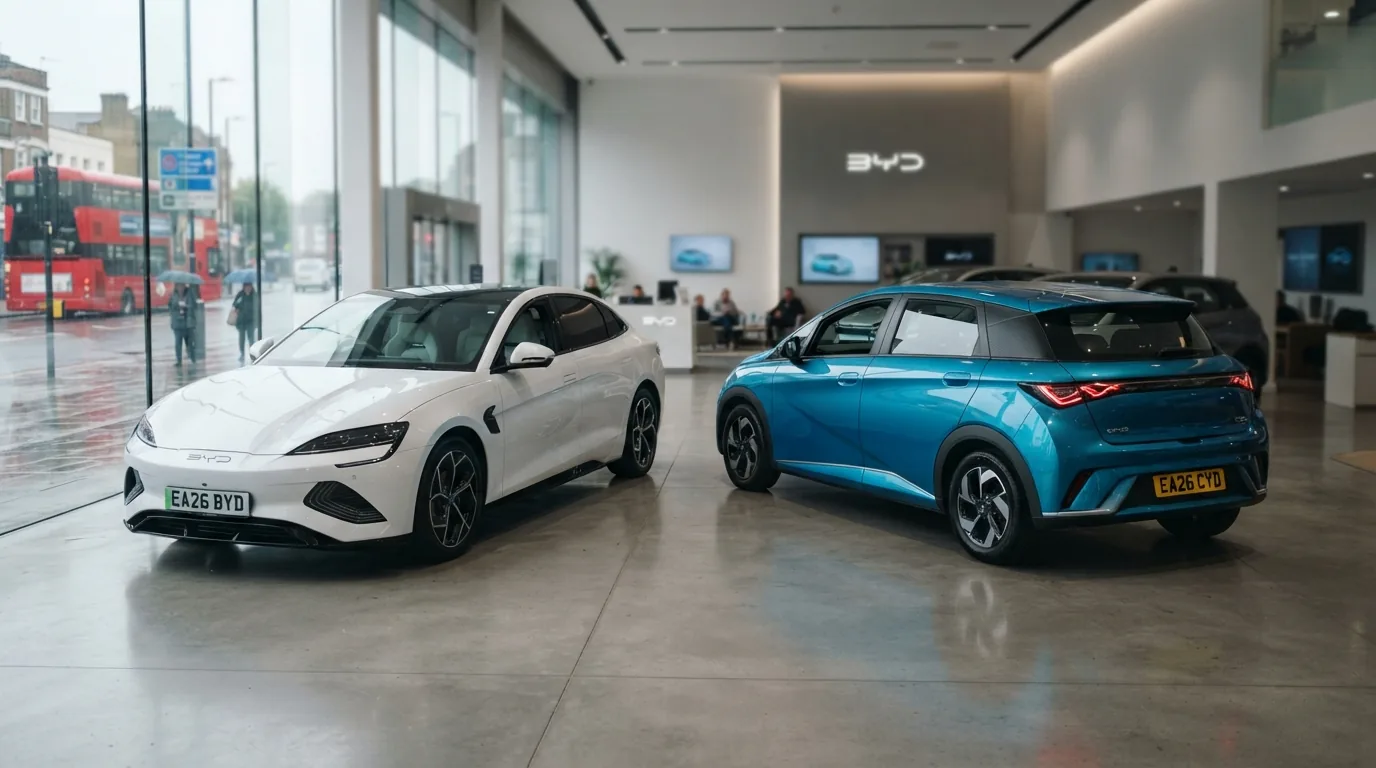
BYD in the UK: Full Model Range and Prices for 2026
From the £18,650 Dolphin Surf to the £47,025 Sealion 7 -- a complete guide to every BYD you can buy in Britain right now
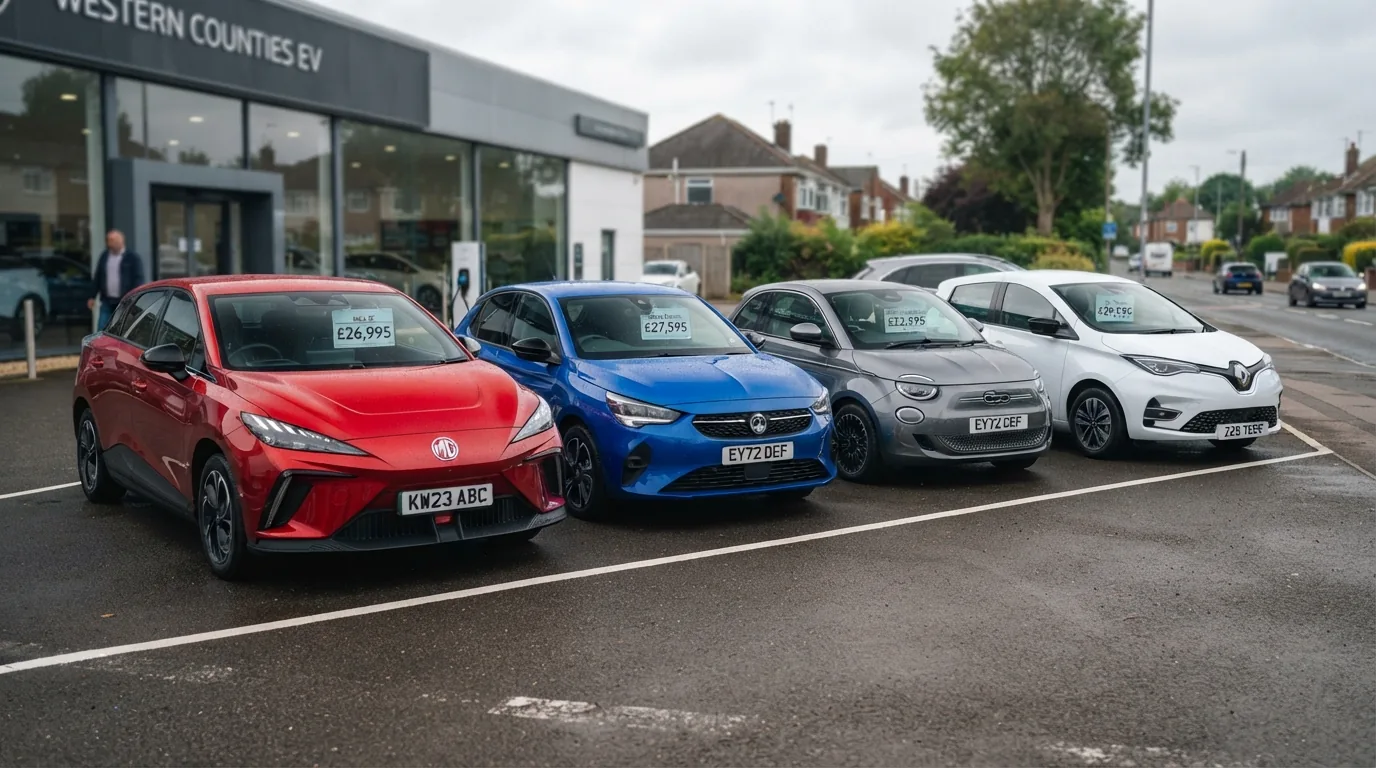
Cheapest New EVs You Can Buy in the UK Right Now
From £14,495 to £30,000: the new electric cars that offer the most genuine value in the current market
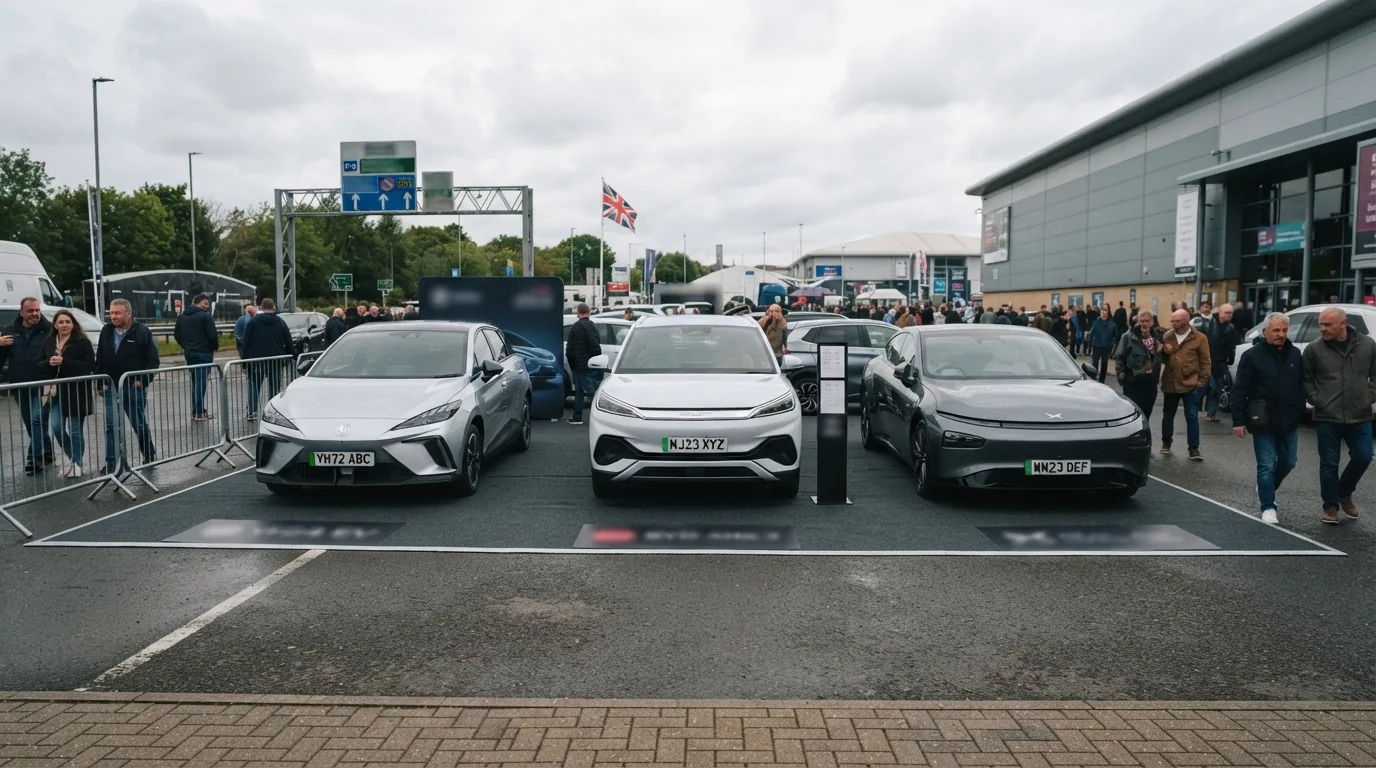
Chinese EV Brands in the UK: Who Is Here and Are They Any Good?
BYD, MG, Xpeng, NIO, Leapmotor and Jaecoo are all selling in Britain -- here is an honest assessment of what each offers