Best EV Charging Tariffs in the UK for 2026
Every major UK EV electricity tariff compared by rate, window, compatibility, and annual saving
Quick answers
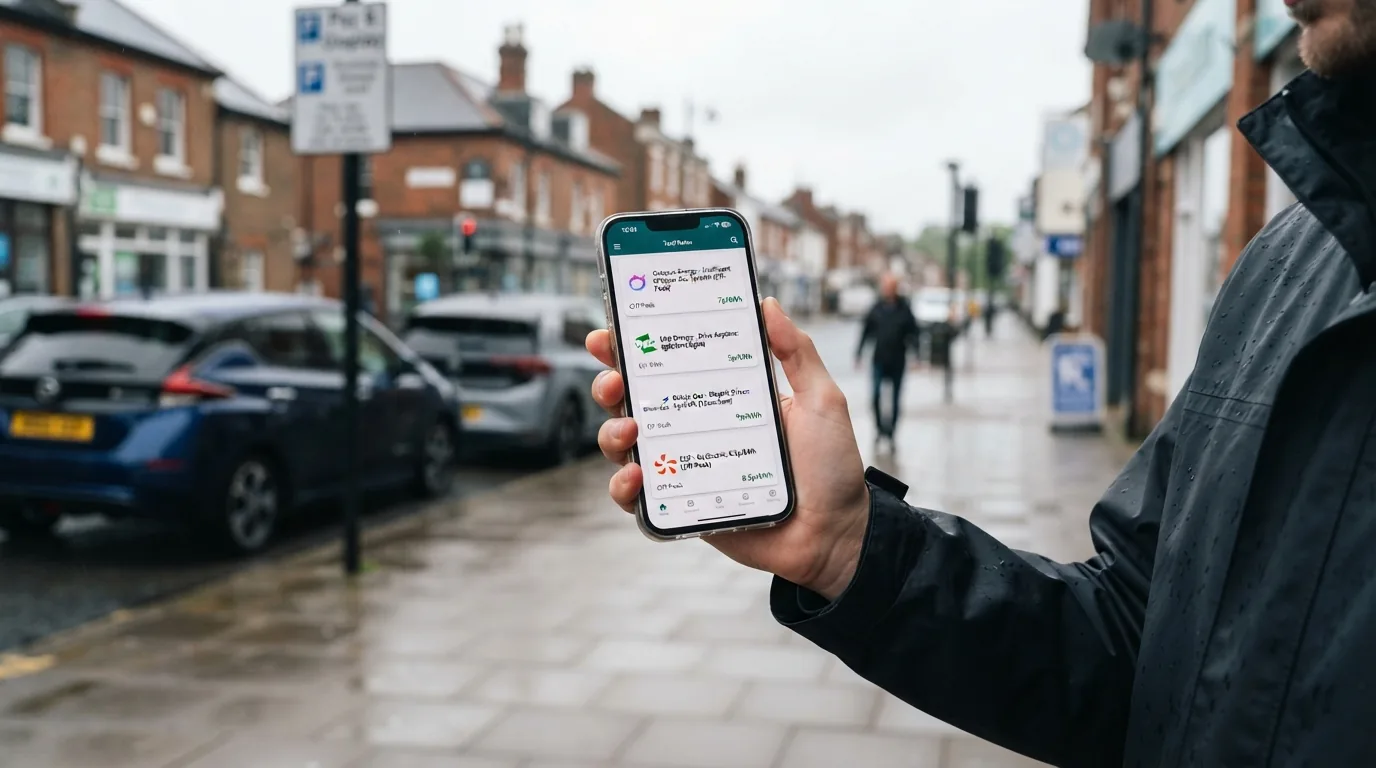
- The best EV charging tariff in the UK for 2026 is Intelligent Octopus Go for drivers with a compatible car or charger: 8p per kWh overnight, an extra sixth hour compared with Octopus Go, and a smart-dispatch system that finds bonus cheap slots when renewables are high.
- The April 2026 Ofgem price cap sets the standard variable rate at 24.67p per kWh.
- UK EV tariff comparison table (May 2026): Annual saving estimates are approximate and based on 9,000 miles per year at 3.5 miles/kWh efficiency.
- Intelligent Octopus Go in detail: Intelligent Octopus Go is the UK's most popular EV tariff and the one we recommend for most drivers.
- Octopus Go in detail: Octopus Go is the best option for drivers who want cheap overnight charging without the API setup, or whose charger or car is not on the Intelligent Octopus Go compatibility list.
- EDF GoElectric in detail: EDF GoElectric offers the lowest advertised overnight rate of any mainstream UK EV tariff: 6.99p per kWh between 11pm and 6am (seven hours).
The best EV charging tariff in the UK for 2026 is Intelligent Octopus Go for drivers with a compatible car or charger: 8p per kWh overnight, an extra sixth hour compared with Octopus Go, and a smart-dispatch system that finds bonus cheap slots when renewables are high. For drivers without a compatible charger or car, Octopus Go at 9.5p per kWh is a strong alternative. EDF GoElectric at 6.99p per kWh offers the lowest advertised overnight rate, but requires an EDF supply throughout. The most important single action any UK EV owner can take is switching from the standard variable rate to any dedicated EV tariff: the annual saving typically runs to £400-£800.
Why does your electricity tariff matter so much for EV charging?
The April 2026 Ofgem price cap sets the standard variable rate at 24.67p per kWh. The best overnight EV tariff rates sit at 6.99p-9.5p per kWh. That is a difference of 15-18p per unit.
For a driver covering 9,000 miles per year at typical EV efficiency (3.5 miles per kWh), this difference equates to:
- Standard variable rate: ~£634 per year
- EV tariff (8p/kWh): ~£206 per year
- Saving: ~£428 per year
Octopus reported that Intelligent Octopus Go customers saved an average of £771 in the 12 months to April 2026 versus the standard flexible tariff. The higher figure reflects the whole-home benefit of the overnight off-peak rate (heating the hot water cylinder overnight, running the dishwasher, etc.), not just the EV charging saving.
UK EV tariff comparison table (May 2026)
| Tariff | Provider | Off-peak rate | Off-peak window | Whole-home benefit? | Smart charger required? | Annual EV saving (est.) |
|---|---|---|---|---|---|---|
| Intelligent Octopus Go | Octopus Energy | 8p/kWh | 11:30pm-5:30am (6 hrs) | Yes | Compatible car/charger | ~£771 vs flexible |
| Octopus Go | Octopus Energy | 9.5p/kWh | 12:30am-5:30am (5 hrs) | Yes | Any smart charger | ~£680 vs flexible |
| EDF GoElectric | EDF | 6.99p/kWh | 11pm-6am (7 hrs) | Yes | Any smart charger | ~£720 vs standard |
| E.ON Next Drive Smart | E.ON Next | 8.5p/kWh | Midnight-6am (6 hrs) | Yes | Any smart charger | ~£650 vs standard |
| OVO Charge Anytime | OVO Energy | 14p/kWh (EV only) | Any time | No (EV only) | Compatible car | ~£350 vs standard |
| British Gas Electric Driver | British Gas | Varies | Set window | Yes | Any smart charger | ~£400 vs standard |
Annual saving estimates are approximate and based on 9,000 miles per year at 3.5 miles/kWh efficiency. Actual savings depend on standing charges, daytime rates, household consumption, and regional variation.
Intelligent Octopus Go in detail
Intelligent Octopus Go is the UK’s most popular EV tariff and the one we recommend for most drivers. It works by connecting to your car or charger via API (not just a timer) and dispatching charging intelligently:
- Guaranteed off-peak window: 11:30pm to 5:30am every night at 8p per kWh.
- Smart dispatch: Octopus identifies additional cheap slots outside the guaranteed window when renewable generation is high, scheduling extra charging at the same 8p rate.
- Whole-home benefit: any electricity consumed during the off-peak window is billed at 8p, not just EV charging.
- Six-hour daily cap: from 2026, up to six hours of smart-dispatch charging per 24-hour period at the off-peak rate. Beyond six hours, standard daytime rates apply.
Compatible chargers include Ohme Home Pro, Ohme ePod, Hypervolt Home 3 Pro, Zappi (via myenergi Hub), Easee One, Pod Point Solo 3S, Indra Smart Pro/Lux, and several others. If your car itself is compatible (most Teslas, some VW, BMW, Hyundai, Kia models), you can use the car’s own scheduling rather than a specific charger.
Octopus Go in detail
Octopus Go is the simpler sibling of Intelligent Octopus Go:
- Fixed off-peak window: 12:30am to 5:30am every night.
- Fixed rate: 9.5p per kWh during the window.
- No API integration required: works with any smart charger with a scheduled timer.
- No smart dispatch: only the five-hour guaranteed window.
Octopus Go is the best option for drivers who want cheap overnight charging without the API setup, or whose charger or car is not on the Intelligent Octopus Go compatibility list.
EDF GoElectric in detail
EDF GoElectric offers the lowest advertised overnight rate of any mainstream UK EV tariff: 6.99p per kWh between 11pm and 6am (seven hours). The daytime rate is higher than Octopus (typically around 28-32p/kWh), which is why it only wins on total annual cost if you are disciplined about timing most usage to the off-peak window.
The longer seven-hour window (versus six for Intelligent Octopus Go and five for Octopus Go) adds flexibility for very large batteries. No smart dispatch: you set a manual overnight schedule. Compatible with all smart chargers.
Best for: Drivers who want the lowest overnight rate and do not need the Octopus smart dispatch features.
OVO Charge Anytime in detail
OVO Charge Anytime works differently. It is an add-on to your existing OVO home tariff rather than a separate dual-rate tariff. You pay 14p per kWh for EV-only charging at any time, compared with your home rate (which is OVO’s standard variable rate, currently around 24.67p). The discount applies only to your car, not to general household consumption.
OVO Charge Anytime requires a compatible car (most major EVs) connected via the OVO app. No specific smart charger is required.
Best for: OVO customers who want a simpler add-on solution without switching supplier, and who charge at varied times rather than consistently overnight.
What about Agile tariffs?
Octopus Agile is a fully variable rate tariff where electricity prices change every 30 minutes, based on wholesale market prices. Rates can go as low as zero (or even negative, meaning Octopus pays you to use electricity) during high renewable periods, and as high as 100p per kWh during peak demand events.
The Ohme Home Pro can read Agile’s half-hourly pricing and automatically schedule charging into the cheapest slots, including very cheap windows at 2-5am when rates are often under 5p. For drivers willing to accept price variability, Agile can beat Intelligent Octopus Go in total annual cost, particularly in 2025-2026 when renewable generation has been high.
Best for: Tech-confident drivers with an Ohme Home Pro or compatible car, willing to engage with a variable tariff for maximum potential saving.
Should you switch to an EV tariff?
Yes, almost certainly. The difference between the standard variable rate (24.67p) and the best EV tariff (6.99-9.5p overnight) is so large that switching is the highest-value action available to an EV owner, typically ahead of any charger upgrade.
To switch:
- Ensure you have a SMETS2 smart meter (contact your supplier if not).
- Check whether your charger or car is compatible with Intelligent Octopus Go.
- Apply to your chosen tariff provider online.
- Once switched, set your overnight schedule in the charger app.
The switch is free and straightforward. There is no hardware change required unless you want to upgrade from a basic charger to a smart-integrated one.
See our smart EV charging guide for the mechanics behind how tariff scheduling works, and our best home EV chargers guide for the chargers that integrate best with these tariffs. The complete guide to charging at home covers the whole picture.
How we test and where our numbers come from
Range figures are official WLTP combined values taken from manufacturer UK specification pages, with real-world estimates drawn from independent comparative testing. Prices are UK list prices at the time of the latest update. Tax, grant and charging-scheme figures come from GOV.UK and HMRC publications. We re-check every guide when pricing, specification or policy changes. Last checked 11 August 2026.
Frequently asked questions
Why does your electricity tariff matter so much for EV charging?
The April 2026 Ofgem price cap sets the standard variable rate at 24.67p per kWh. The best overnight EV tariff rates sit at 6.99p-9.5p per kWh.
What about Agile tariffs?
Octopus Agile is a fully variable rate tariff where electricity prices change every 30 minutes, based on wholesale market prices. Rates can go as low as zero (or even negative, meaning Octopus pays you to use electricity) during high renewable periods, and as high as 100p per kWh during peak demand events.
Should you switch to an EV tariff?
Yes, almost certainly. The difference between the standard variable rate (24.67p) and the best EV tariff (6.99-9.5p overnight) is so large that switching is the highest-value action available to an EV owner, typically ahead of any charger upgrade.
Sources and further reading
- ofgem.gov.ukOfgem, Octopus EnergyPrimary source referenced in this article.

EV Compared
The EV Compared editorial team tracks the UK electric vehicle market full time: new model launches, list prices, WLTP and real-world range, public charging tariffs and the tax rules that decide what an EV actually costs to run. Every guide is checked against manufacturer specifications and official GOV.UK figures, and updated whenever the numbers move.
Related reading
View all
BP Pulse vs Shell Recharge: Which UK Network Wins?
Two of the UK's biggest charging networks compared on price, reliability and which type of driver each suits
Can You Charge Any EV at Any Public Charger in the UK?
Why almost any new EV works at almost any UK public charger, and the two exceptions you need to know
Can You Charge an EV From a Three-Pin Plug in the UK?
Yes, most cars ship with the cable, but speed and safety limits mean it works best for occasional or emergency use