EO Mini Pro vs Easee One: UK Home Charger Comparison
Two compact, smart chargers at similar price points, which one suits your home and charging setup?
Quick answers
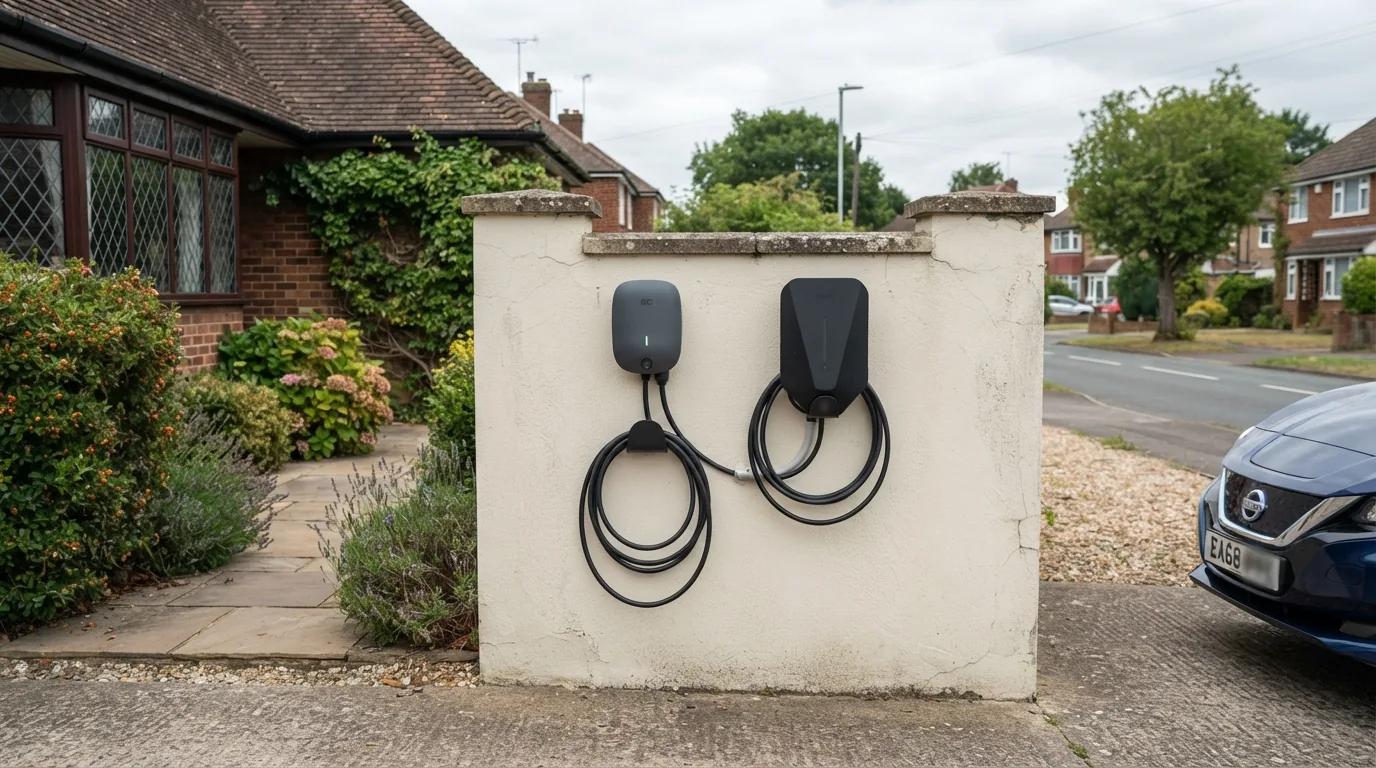
- The EO Mini Pro 3 and Easee One are both compact, well-specified smart home EV chargers that appeal to the same type of buyer: someone who wants a reliable, connected wallbox without paying for features they do not need, but who also wants something more capable than the bare minimum.
- Connectivity: Easee wins: The Easee One has a built-in 4G eSIM with lifetime connectivity at no extra cost.
- Solar integration: EO Mini Pro 3 wins: This is the most significant difference between the two chargers.
- Tariff integration: Easee edges ahead: The EO Mini Pro 3 also supports preset tariff schedules for Octopus Go and EDF GoElectric.
- Load balancing: Easee wins: The Easee One's dynamic load balancing is a standout feature.
- Physical size: EO Mini Pro 3 wins: At 215mm x 140mm x 100mm, the EO Mini Pro 3 is the smallest home EV charger on the UK market.
The EO Mini Pro 3 and Easee One are both compact, well-specified smart home EV chargers that appeal to the same type of buyer: someone who wants a reliable, connected wallbox without paying for features they do not need, but who also wants something more capable than the bare minimum. The Easee One wins on connectivity (4G eSIM built in), flexibility (lockable socket = tethered or untethered from one unit), and Octopus Intelligent Go support. The EO Mini Pro 3 wins if you have solar panels (CT clamp included, the only one at this price with proper solar mode), want the smallest physical footprint, or need three-phase support for future flexibility.
Head-to-head spec comparison
| Spec | EO Mini Pro 3 | Easee One |
|---|---|---|
| Output | 7.2kW (single-phase) / 22kW (three-phase) | 7.4kW (single-phase only) |
| Tethered/socket | Both (5m tethered or socket) | Untethered (lockable socket = semi-tethered) |
| IP rating | IP55 | IP54 |
| Connectivity | Wi-Fi + Bluetooth + Ethernet (4G optional extra) | Built-in 4G eSIM (lifetime, no Wi-Fi needed) |
| Solar diversion | Yes (CT clamp included) | No |
| Intelligent Octopus Go | Yes (via schedule) | Yes (native API) |
| Dynamic load balancing | Basic | Yes (up to 3 units, 1 fuse) |
| Size | 215mm x 140mm x 100mm (UK’s smallest) | Compact, 1.5kg (UK’s lightest) |
| App | EO Smart Charging | Easee |
| Warranty | 3 years | 3 years |
| Unit price | ~£550 | ~£405 |
| Price difference | EO costs ~£145 more |
Connectivity: Easee wins
The Easee One has a built-in 4G eSIM with lifetime connectivity at no extra cost. This means it never depends on your home Wi-Fi network. If your router goes down, the Easee’s smart charging schedules continue to run. If the charger is installed at a distance from the house (long driveway, detached garage), no Wi-Fi extender is needed.
The EO Mini Pro 3 connects via Wi-Fi, Bluetooth, and Ethernet as standard. 4G is available but costs extra (a 4G module add-on). For most homes with reliable Wi-Fi near the charger position, this is adequate. For longer cable runs or properties with patchy Wi-Fi coverage, the Easee’s built-in 4G is a meaningful advantage.
Verdict on connectivity: Easee One wins with built-in 4G eSIM.
Solar integration: EO Mini Pro 3 wins
This is the most significant difference between the two chargers. The EO Mini Pro 3 includes a CT clamp for solar diversion as standard. It can monitor your solar generation and household consumption in real time, diverting surplus solar electricity to your car rather than exporting it to the grid.
The Easee One has no solar mode at all. If you have solar panels, the Easee One is not the right charger.
The EO Mini Pro 3’s solar mode is not as sophisticated as the myenergi Zappi’s dedicated Eco/Eco+ system (which is the benchmark for solar diversion), but it provides a functional solar divert capability at a price that undercuts the Zappi significantly.
Verdict on solar: EO Mini Pro 3 wins. It is the most affordable solar-capable home charger in the UK market.
Tariff integration: Easee edges ahead
Both chargers integrate with Octopus Energy. The Easee One has a native API connection to Intelligent Octopus Go, enabling full smart dispatch. The EO Mini Pro 3 can also be used with Intelligent Octopus Go but relies on schedule-based operation rather than a direct API link, meaning it participates in the guaranteed overnight window but may not capture all the smart dispatch bonus slots.
The EO Mini Pro 3 also supports preset tariff schedules for Octopus Go and EDF GoElectric.
Verdict on tariff integration: Easee One has a marginal edge for Octopus Intelligent Go users. Both work adequately on scheduled overnight charging.
Load balancing: Easee wins
The Easee One’s dynamic load balancing is a standout feature. Up to three Easee chargers can share a single fuse, with power distributed automatically between vehicles depending on how many are connected and charging simultaneously. If one car is at 90% and slowing its charge, that freed capacity is automatically redirected to the other car.
This makes the Easee particularly attractive for:
- Households with two EVs.
- Managed residential properties where multiple charge points are needed.
- Installations where adding a second charger in future is anticipated.
The EO Mini Pro 3 has basic load balancing but not the multi-unit coordination that the Easee offers.
Verdict on load balancing: Easee One wins clearly.
Physical size: EO Mini Pro 3 wins
At 215mm x 140mm x 100mm, the EO Mini Pro 3 is the smallest home EV charger on the UK market. If the installation position has limited wall space, or aesthetics strongly favour a minimal footprint, the EO wins.
The Easee One is also compact and at 1.5kg is the lightest charger on the UK market, but its form factor is slightly larger than the EO. Both are smaller and lighter than most competitors.
Verdict on size: EO Mini Pro 3 is the smallest; Easee One is the lightest.
Three-phase capability: EO Mini Pro 3 only
The EO Mini Pro 3 supports up to 22kW AC on a three-phase supply. The Easee One is single-phase only (7.4kW maximum). For the small number of UK homes that already have a three-phase supply and may want 11kW or 22kW charging in future, the EO is the more future-proof choice.
For all other buyers (the vast majority of UK homes on single-phase), this is irrelevant to the buying decision.
Price comparison
| Item | EO Mini Pro 3 | Easee One |
|---|---|---|
| Unit only | ~£550 | ~£405 |
| Standard installation | £400-£500 | £400-£500 |
| Total installed | ~£1,000-£1,100 | ~£850-£950 |
| OZEV grant (if eligible) | Up to £500 | Up to £500 |
| After grant | ~£500-£600 | ~£350-£450 |
The Easee One is the more affordable choice by approximately £145 in unit cost.
Which should you choose?
Choose the EO Mini Pro 3 if:
- You have solar panels and want solar diversion without paying Zappi prices.
- You need the smallest possible physical footprint.
- You might upgrade to three-phase power in future.
- You want Ethernet connectivity for a more reliable wired connection.
Choose the Easee One if:
- You have no solar panels and need a well-connected smart charger.
- Your charger is far from the Wi-Fi router (4G eSIM handles this).
- You have or plan two EVs (load balancing across units).
- Budget is a consideration (£145 cheaper unit cost).
- You want the lockable socket flexibility (semi-tethered operation).
Consider the Zappi instead if: Solar diversion is your primary need and you want the best implementation available. The Zappi’s dedicated Eco/Eco+ modes are significantly more sophisticated than EO’s solar mode, for a higher unit price.
See the best home EV chargers guide for the full ranking. The best EV chargers for solar panel owners guide covers the solar charger market in detail. The complete guide to home EV charging covers everything from installation to tariffs.
How we test and where our numbers come from
Range figures are official WLTP combined values taken from manufacturer UK specification pages, with real-world estimates drawn from independent comparative testing. Prices are UK list prices at the time of the latest update. Tax, grant and charging-scheme figures come from GOV.UK and HMRC publications. We re-check every guide when pricing, specification or policy changes. Last checked 11 August 2026.
Frequently asked questions
Which should you choose?
See the best home EV chargers guide for the full ranking. The best EV chargers for solar panel owners guide covers the solar charger market in detail.
Sources and further reading
- gov.ukManufacturer specs, GOV.UK OZEVPrimary source referenced in this article.

EV Compared
The EV Compared editorial team tracks the UK electric vehicle market full time: new model launches, list prices, WLTP and real-world range, public charging tariffs and the tax rules that decide what an EV actually costs to run. Every guide is checked against manufacturer specifications and official GOV.UK figures, and updated whenever the numbers move.
Related reading
View all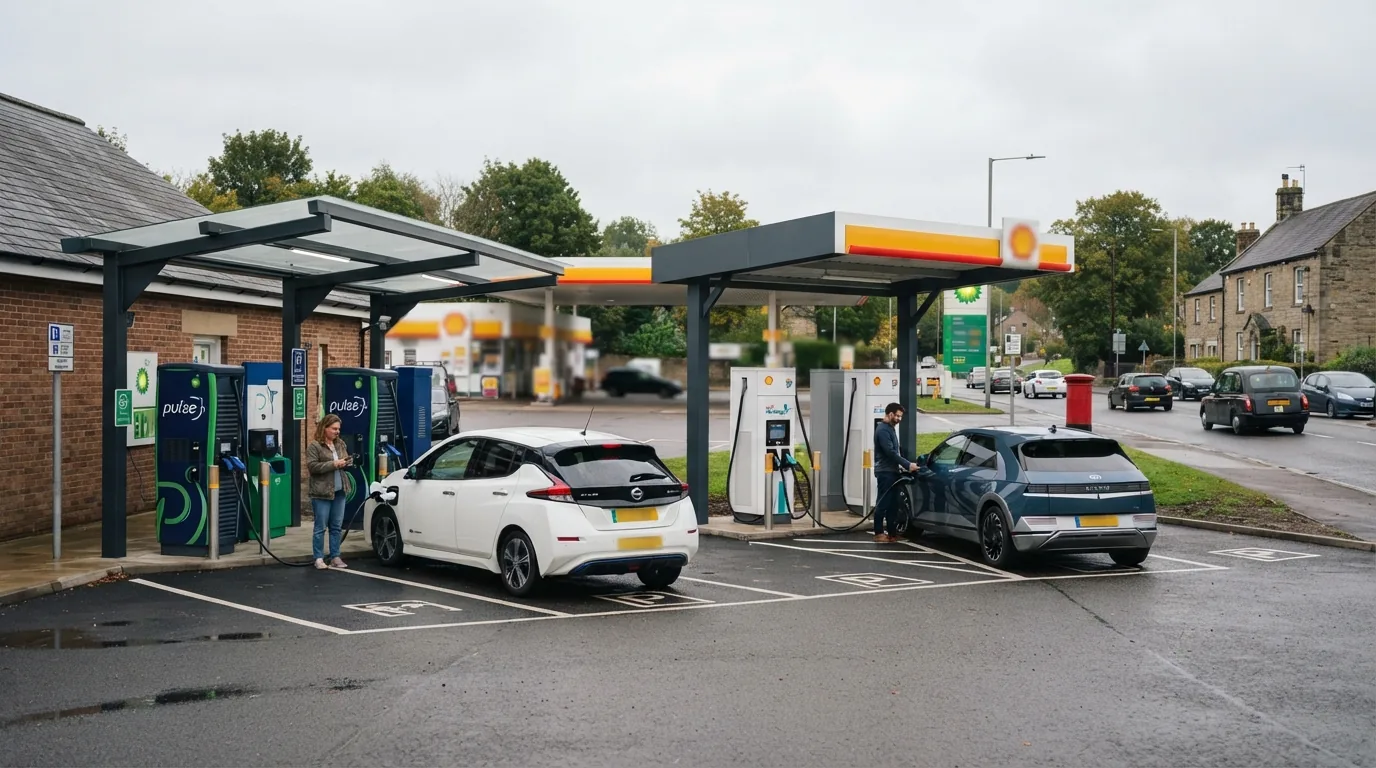
BP Pulse vs Shell Recharge: Which UK Network Wins?
Two of the UK's biggest charging networks compared on price, reliability and which type of driver each suits
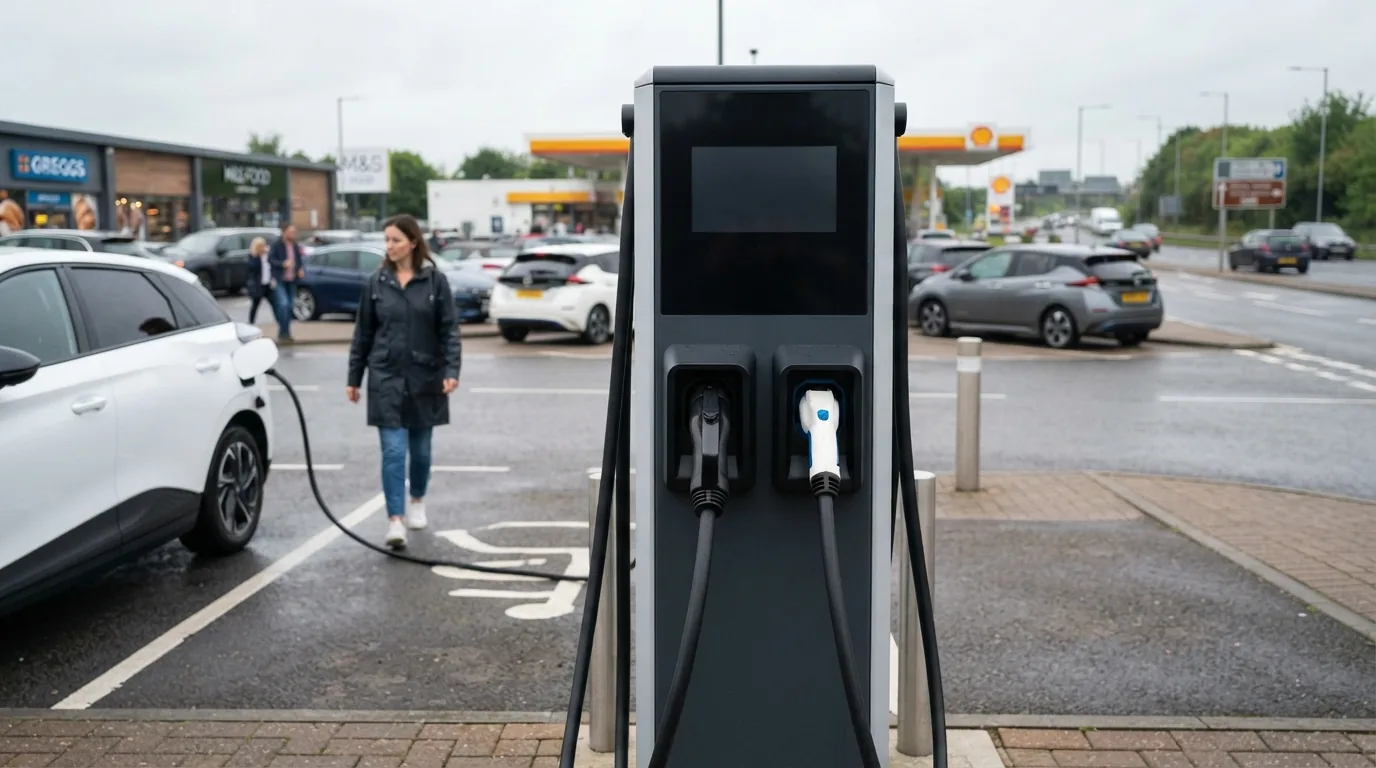
Can You Charge Any EV at Any Public Charger in the UK?
Why almost any new EV works at almost any UK public charger, and the two exceptions you need to know
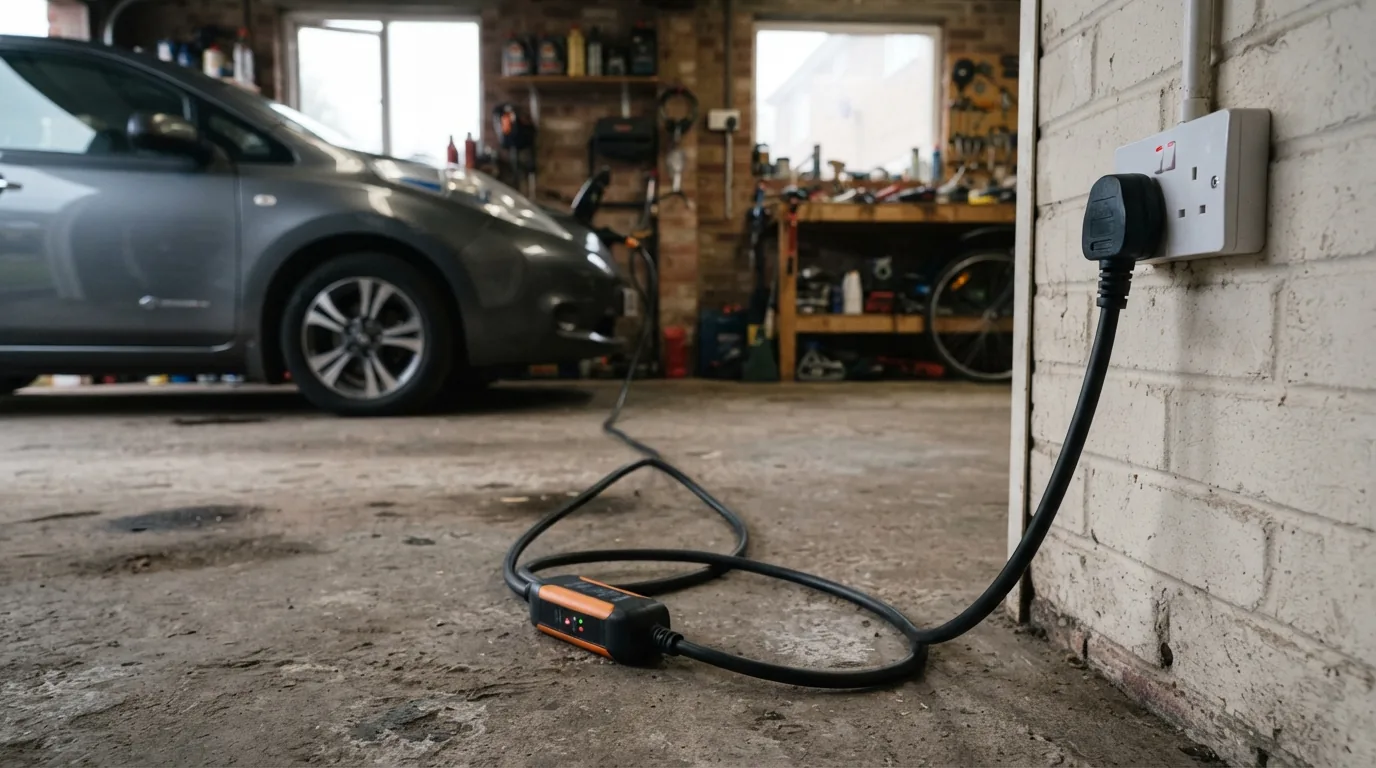
Can You Charge an EV From a Three-Pin Plug in the UK?
Yes, most cars ship with the cable, but speed and safety limits mean it works best for occasional or emergency use