Used Nissan Leaf vs Used Renault Zoe: Which Budget EV Should You Buy?
Both are among the cheapest ways into an EV in the UK, but they suit very different buyers. Here is the data-led head-to-head to help you decide.
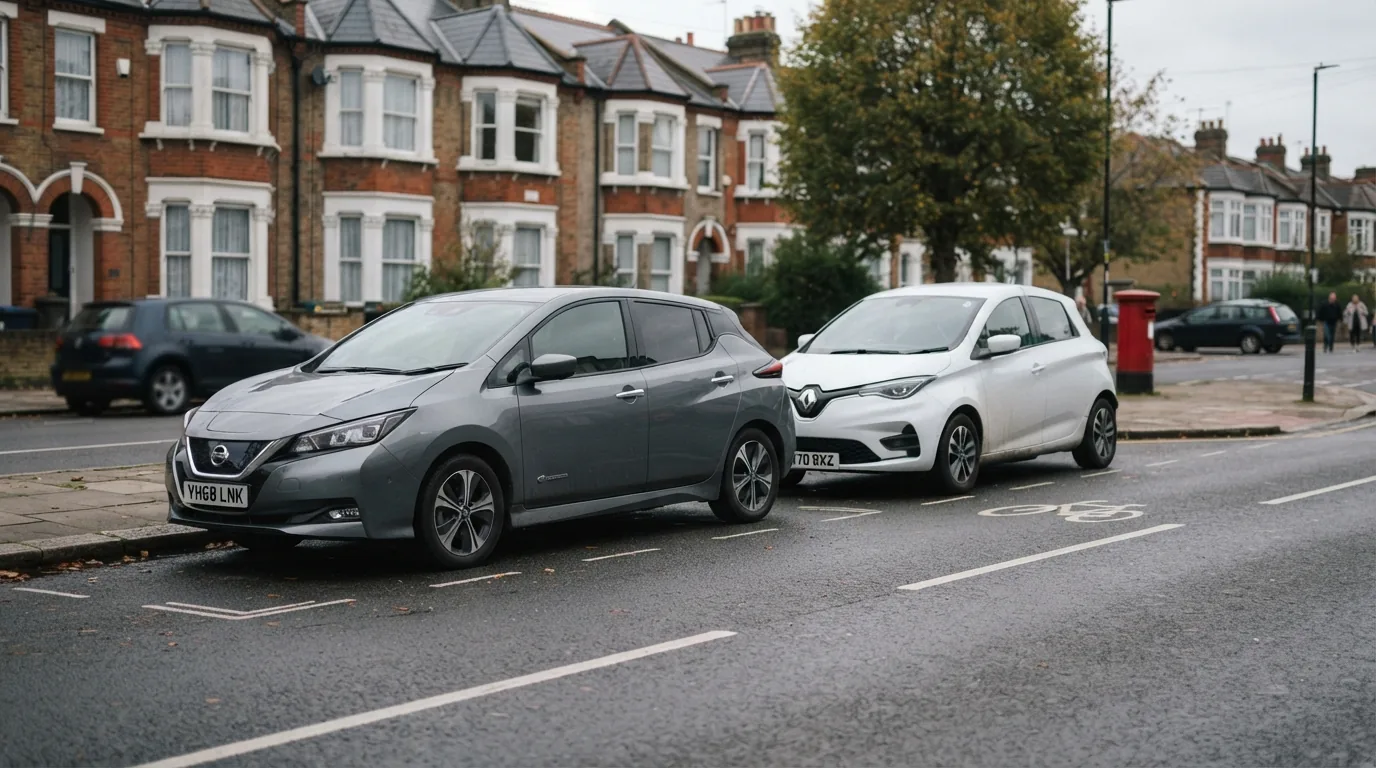
Quick answers
- The Leaf is the more practical, family-friendly choice with around 435 litres of boot space and a 5-star Euro NCAP rating from 2018.
- The Zoe goes further on a charge (52kWh vs 40kWh, roughly 180--210 miles real-world vs 120--150 miles) and charges much faster on AC: up to 22kW vs around 6.6kW.
- The Leaf's CHAdeMO rapid-charging connector is being phased out in the UK and cannot be upgraded to CCS, which is a genuine long-term consideration for public rapid charging.
- A cheap used Zoe may carry a monthly battery lease of £49--£110; always confirm whether the battery is owned or leased before buying (figures vary, verify current data).
- Both cars use air-cooled batteries with no liquid thermal management, so a verified battery state-of-health reading matters more than the model year.
- For most UK buyers the Leaf is the safer all-rounder; the Zoe suits urban drivers who have done the battery ownership homework.
The used Nissan Leaf and used Renault Zoe are two of the most affordable electric cars you can buy in the UK right now. Both have loyal followings, both regularly appear at the top of budget used EV shortlists, and together they make up a large share of the sub-£12,000 used EV market.
But they are genuinely different cars. The Leaf is the more practical, family-friendly all-rounder with a battery that is always owned outright. The Zoe offers more range and far better public AC charging speed, but it only makes financial sense if you confirm the battery is owned outright before you buy. That distinction matters more than any other single factor in this comparison.
Two big gotchas run through this article: the Leaf’s CHAdeMO rapid-charging connector is being phased out across the UK, and many used Zoes carry a monthly battery lease that can quietly inflate the real cost. Both deserve your full attention before you commit.
Here is the full, data-led head-to-head.
Specs and pricing at a glance
The table below compares the most common used picks: the 40kWh Leaf (2018 onwards) and the 52kWh Zoe (2020 onwards, battery owned). Both cars have come in multiple generations and battery sizes, so check which variant you are looking at on any specific listing. Prices shown are indicative ranges based on market data and will vary with condition, mileage and market timing.
| Nissan Leaf (40kWh, 2018—2022) | Renault Zoe (52kWh, 2020+, battery owned) | |
|---|---|---|
| Battery (usable) | 40 kWh | 52 kWh |
| WLTP range | ~168 miles | ~238—245 miles (R110 / R135) |
| Realistic real-world range | ~120—150 miles | ~180—210 miles |
| Battery cooling | Air-cooled (passive) | Air-cooled (passive) |
| AC charging (max) | ~6.6 kW (Type 2) | up to 22 kW (Type 2) |
| DC rapid charging | CHAdeMO, ~50 kW | CCS, ~46—50 kW (optional on some trims) |
| Boot space | ~435 litres | ~338 litres |
| Euro NCAP | 5 stars (2018) | 5 stars (2013) / 0 stars (2021 retest) |
| Indicative used price | from ~£5,000 (older); 40kWh from ~£8,000+ (figures vary, verify current data) | avg ~£9,600; from ~£2,500 (older, check lease status) (figures vary, verify current data) |
| Battery warranty | 8yr / 100,000 miles (capacity) | 8yr / 100,000 miles (or buy-out terms on lease cars) |
All figures are indicative and source-dependent. Verify each against live listings and manufacturer data before purchasing.
The Zoe’s range advantage on paper is significant: roughly 70 more miles at WLTP, and a similar gap in real-world conditions. If you occasionally need to drive between cities or want a larger buffer in winter, that matters.
Range and battery: Zoe goes further, Leaf has the longer track record
The Zoe’s 52kWh pack gives meaningfully more real-world range than the 40kWh Leaf. In mixed UK driving, a good 52kWh Zoe will typically cover around 180—210 miles, compared with around 120—150 miles for the 40kWh Leaf. On a small pack, every percentage point of degradation bites hard: losing 10% of a 40kWh battery cuts your real-world range by 12—15 miles, which can make the difference between reaching your destination or stopping to charge.
Both cars use air-cooled (passive) batteries with no liquid thermal management. That makes both more sensitive to heat and heavy rapid charging than liquid-cooled rivals such as a Kia EV6 or Tesla Model 3. In the UK’s relatively mild climate this is less of a concern than it would be in hotter countries, but it is still worth knowing.
Leaf degradation varies by generation. The earliest 24kWh cars degrade fastest, and the 30kWh generation has documented issues. The 40kWh and 62kWh variants hold up considerably better. A typical degradation rate for a well-used 40kWh Leaf in temperate conditions is roughly 2—3% per year after the first year, though individual history matters enormously.
Whichever car you go for, a verified battery state-of-health reading matters more than the model year on the plate, so always check the battery health before buying any used EV.
Charging: the Zoe wins on AC, but the Leaf’s rapid charging is on borrowed time
These two cars tell very different charging stories, and this section deserves more attention than most comparison pieces give it.
AC charging at home and at destination points
The Zoe charges at up to 22kW on AC, which is genuinely fast for a car of this size. At a public Type 2 destination charger, the Zoe can add around 60 miles of range per hour. The Leaf’s onboard charger is capped at around 6.6kW, adding roughly 20—25 miles per hour at the same charger. Over a two-hour lunch stop or an overnight hotel charge, that gap compounds quickly.
At home on a 7kW wallbox, both cars charge overnight without issue and the difference is less relevant. But if you regularly use public destination chargers, shopping centre points or workplace charging, the Zoe’s AC speed is a genuine daily convenience.
DC rapid charging and the CHAdeMO problem
The Leaf uses the CHAdeMO connector for rapid DC charging, rated at around 50kW. CHAdeMO was once common, but it is being phased out of new UK installations. The connector base is shrinking, and ageing units are increasingly left unrepaired rather than replaced. Key points to understand:
- CHAdeMO is not the UK standard; CCS (Combined Charging System) is now the dominant connector at new rapid sites.
- Nissan has confirmed it will not retrofit CCS to existing Leafs. The only workaround is a CHAdeMO-to-CCS adapter, which adds cost and inconvenience.
- The connector base will likely continue to contract over the coming years.
The Zoe uses CCS, which is the UK’s standard rapid-charging connector. Its DC rapid charging is optional on some trims and tops out around 46—50kW, so it is not especially fast at rapid sites. The Zoe’s real strength is AC, not DC. But at least its connector is part of the expanding UK network rather than a contracting one.
The practical takeaway: if you rely on public rapid charging regularly or want a car that will work at rapid points in five to seven years, the Leaf’s CHAdeMO connector is a genuine long-term consideration. If you charge mostly at home or at destination AC points, the Zoe’s AC speed is the bigger day-to-day advantage.
Practicality and safety: Leaf is bigger, and safer on paper
The Leaf sits in the Focus class, the Zoe in the Fiesta class. The Leaf’s boot is around 435 litres, compared with the Zoe’s 338 litres. The Leaf’s rear seat is more spacious for adult passengers and it feels closer to a conventional family hatchback, which helps buyers transitioning from petrol cars. The Zoe is more compact at 4.08 metres, making it easier to park in tight city streets and residential areas.
Safety
The Leaf holds a 5-star Euro NCAP rating from 2018, with AEB, lane-departure warning and blind-spot monitoring included as standard on most UK trims.
The Zoe’s safety record is more complicated. It scored 5 stars in a 2013 Euro NCAP test, but Renault subsequently removed the driver head-protecting side airbag and made some active-safety kit optional on later versions. When retested by Euro NCAP in 2021 under updated protocols, the Zoe scored 0 stars, with an adult occupant protection score of 43%.
This deserves a fair framing: the zero-star result reflects the way Renault changed the specification and the way tests evolved, not that every Zoe is immediately unsafe. The car passed regulatory requirements to be sold. But it is a documented and significant consideration, particularly if you are buying for a family with children. The Leaf is the clearer choice on safety.
The Zoe battery-lease trap: check this before you buy
This section is the most important thing to understand before buying a used Renault Zoe.
Many early and mid-generation Zoes were sold on a scheme called Z.E. Battery Rental. Under this arrangement, you owned the car but Renault owned the battery. You paid a monthly lease fee to Renault Financial Services of roughly £49—£110 per month, depending on the contract length and annual mileage allowance (figures vary, verify current data). That lease transferred to any new owner when the car was sold.
A used Zoe priced attractively at, say, £6,000 can therefore carry an ongoing monthly bill of £49—£110 that pushes the true total cost well above buying a battery-owned car at a higher headline price. Battery-leased cars also tend to have weaker resale values because the lease obligation puts off buyers.
What to check before buying any used Zoe:
- Is the battery owned by the car’s owner, or is it leased from Renault?
- If leased: what is the monthly cost, how long remains on the term, and what is the buy-out figure?
- Get confirmation in writing from the seller before committing.
Battery-included Zoes (sometimes designated with an ‘i’ suffix, from around 2015 onwards) and most of the later Zoes built before Renault ended the leasing scheme on newer models are owned outright. Renault confirmed it ended battery leasing on later Zoe models, citing improved residual values.
The Leaf has no equivalent scheme. Every Leaf sold in the UK includes the battery as part of the car. There is no monthly cost and no ownership complexity.
Verdict: who should buy which?
For most UK buyers, the Leaf is the safer all-rounder. The Zoe rewards the buyer who does their homework on the battery.
Buy the used Nissan Leaf if:
- You want more boot space and a more practical family hatchback.
- The stronger 5-star Euro NCAP safety rating matters to you.
- You want a battery that is always owned outright, with no hidden monthly cost.
- You charge mostly at home and can accept the CHAdeMO question on public rapid charging.
- You prefer the car with the longer reliability track record in the UK.
Buy the used Renault Zoe if:
- You want more range and the 52kWh pack’s extra buffer matters for your regular drives.
- You frequently use public Type 2 AC destination chargers and want faster top-ups.
- You mostly drive and charge in town and value the Zoe’s more compact dimensions.
- You have confirmed in writing that the battery is owned outright, not on lease.
One overall steer: the Leaf is the right answer for most people buying a first used EV. The Zoe is the better car in specific situations, but only when the battery ownership question has been resolved first.
On any budget used EV, a verified battery state-of-health check matters more than the badge or the model year. For the Zoe, confirming battery ownership comes first. Once those boxes are ticked, both cars offer genuine value as affordable entry points into electric driving.
How we test and where our numbers come from
Range figures are official WLTP combined values taken from manufacturer UK specification pages, with real-world estimates drawn from independent comparative testing. Prices are UK list prices at the time of the latest update. Tax, grant and charging-scheme figures come from GOV.UK and HMRC publications. We re-check every guide when pricing, specification or policy changes. Last checked 11 August 2026.
Frequently asked questions
Is a used Nissan Leaf or Renault Zoe better?
For most buyers, the Leaf is the safer choice: more boot space, a stronger safety rating, and a battery that is always owned outright with no monthly cost. The Zoe is better for drivers who want more range and fast AC charging, but only makes sense once you have confirmed the battery is owned outright rather than leased.
Does the Renault Zoe have a battery lease?
Many older Zoes were sold on a Z.E. Battery Rental scheme, where Renault owned the battery and the driver paid roughly £49--£110 a month (figures vary, verify current data). That lease transferred to new owners when the car was sold.
Is the Nissan Leaf's CHAdeMO charging being phased out?
Yes. CHAdeMO is being phased out of new UK rapid-charging installations and the connector base is shrinking. Nissan has confirmed it will not retrofit CCS to existing Leafs.
How many miles can a used Leaf or Zoe really do on a charge?
In realistic UK mixed driving, a 40kWh Leaf in good condition covers around 120--150 miles. A 52kWh Zoe in good condition covers around 180--210 miles. Both figures assume normal conditions and a battery without significant degradation.
What should I check before buying a used Leaf or Zoe?
For both: get a verified battery state-of-health reading, not just a visual inspection. For the Zoe specifically: confirm in writing whether the battery is owned outright or on a monthly lease, and if it is leased, get the monthly cost and remaining term. For the Leaf: consider how much you rely on public rapid charging and whether you are comfortable with the CHAdeMO connector's declining UK network coverage.
Sources and further reading
- drivingelectric.comDrivingElectricPrimary source referenced in this article.
- renaultgroup.comRenault Group: battery leasing explainer-- manufacturer-level confirmation of lease terms and the capacity guarantee.
- recharged.comRecharged: Nissan Leaf battery degradation guide-- degradation by generation and air-cooling context (note US climate framing; UK conditions are milder).
- ev-boy.co.ukEV-BOY: Leaf CHAdeMO vs CCS guide-- UK charging network context and CHAdeMO decline detail with adapter options.
- autocar.co.ukEuro NCAP coverage via Autocar-- the 2021 zero-star retest detail and what it means for buyers.

EV Compared
The EV Compared editorial team tracks the UK electric vehicle market full time: new model launches, list prices, WLTP and real-world range, public charging tariffs and the tax rules that decide what an EV actually costs to run. Every guide is checked against manufacturer specifications and official GOV.UK figures, and updated whenever the numbers move.
Related reading
View all
Do Bigger Wheels Reduce Electric Car Range?
Yes, significantly. Here is the data on how much wheel size costs in miles and why it happens
BMW i4 vs Tesla Model 3: UK Range and Efficiency Test
The BMW costs more and goes less far, but is it worth it? A data-led head to head for UK buyers
How Far Can an Electric Car Really Go on One Charge?
Real-world range figures for UK drivers: what the numbers mean and which cars go furthest