Used Jaguar I-Pace vs Used Audi e-tron: Premium Used EV Compared
Two early premium electric SUVs that have depreciated dramatically. Which one offers the better used buy in 2026 and what are the risks?
Quick answers
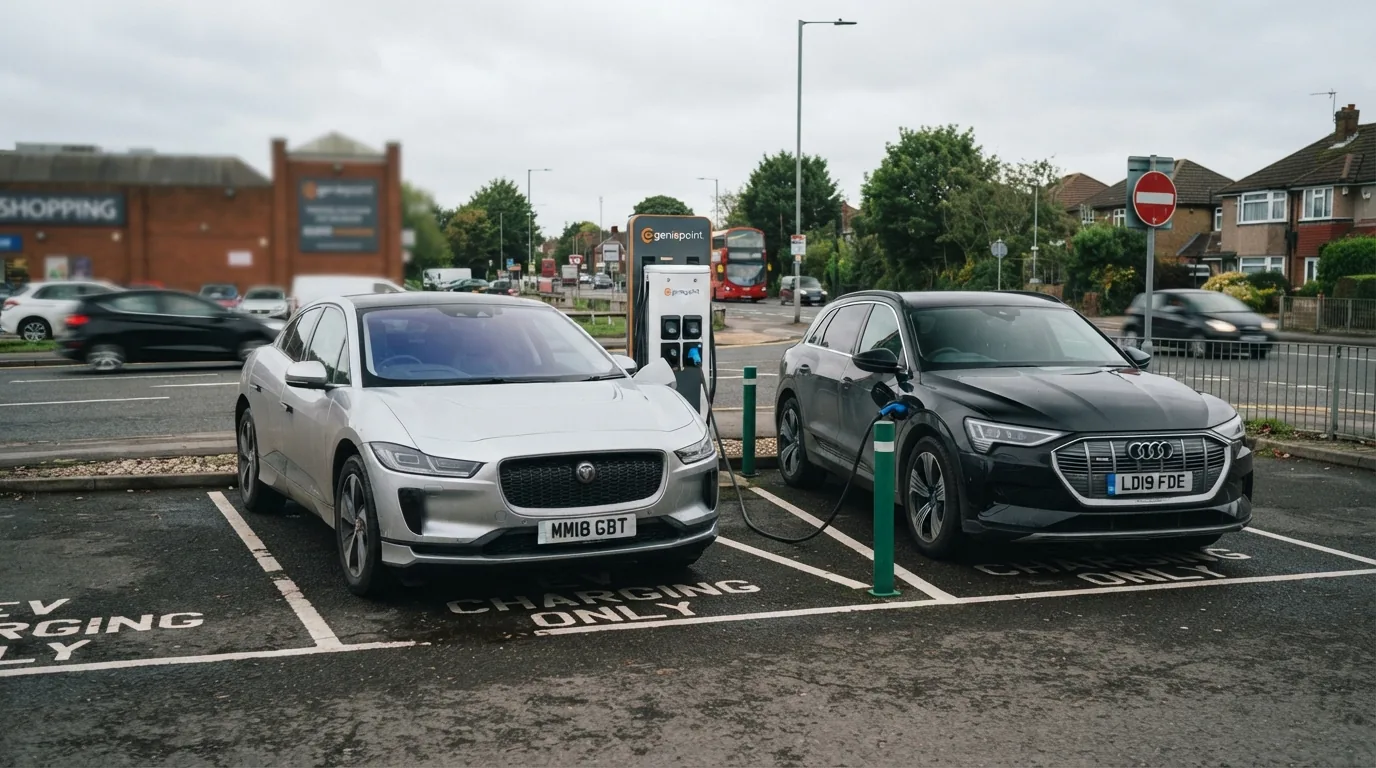
- The Jaguar I-Pace and Audi e-tron were both launched in 2018 as serious attempts by established premium manufacturers to challenge Tesla in the luxury electric SUV market. Both cost between £60,000 and £80,000 when new.
- Range: I-Pace delivers significantly more: This is the clearest differentiator between the two cars, and it matters considerably at this price point.
- Driving dynamics: I-Pace is outstanding: The I-Pace is one of the finest driving electric cars of its generation, full stop.
- Interior and technology: The e-tron has the better interior by conventional luxury standards.
- Depreciation: both have fallen hard: Both the I-Pace and e-tron have experienced dramatic depreciation from their new prices.
- If buying either car privately, commission a specialist pre-purchase inspection including a full high-voltage electrical assessment.
The Jaguar I-Pace and Audi e-tron were both launched in 2018 as serious attempts by established premium manufacturers to challenge Tesla in the luxury electric SUV market. Both cost between £60,000 and £80,000 when new. Both have depreciated dramatically. And in 2026 both are available as used cars for between £25,000 and £45,000, offering a genuinely interesting proposition for buyers who want premium EV ownership at a fraction of the original cost.
They are very different cars. Here is an honest comparison.
Head to head: specs and pricing
| Spec | Jaguar I-Pace EV400 (2018-2022) | Audi e-tron 55 quattro (2019-2022) |
|---|---|---|
| Battery (usable) | 84.7kWh (90kWh gross) | 86.5kWh (95kWh gross) |
| WLTP range | 246 miles (I-Pace); up to 260 miles | 218 miles (e-tron 55) |
| Real-world range (mixed) | 190 to 220 miles | 145 to 175 miles |
| Real-world motorway range | 160 to 190 miles | 130 to 160 miles |
| Max DC charging | 100 kW | 150 kW |
| Max AC charging | 11 kW | 11 kW |
| Boot space | 656 litres | 660 litres |
| Body length | 4.68 m | 4.90 m |
| Battery cooling | Liquid | Liquid |
| Typical used price (2026) | £28,000 to £45,000 | £25,000 to £40,000 |
| 3-year residual value | ~45% | ~50% |
Range: I-Pace delivers significantly more
This is the clearest differentiator between the two cars, and it matters considerably at this price point.
The I-Pace delivers 190 to 220 miles in real-world mixed UK driving. The e-tron, despite having a similar gross battery capacity, delivers 145 to 175 miles in the same conditions. The reason is energy consumption: the e-tron’s large, heavy body (2.5 tonnes) and conventional SUV proportions demand significantly more energy per mile than the I-Pace’s more purposefully designed shape.
At motorway speeds, the gap widens. The e-tron’s real-world motorway range at 70 mph is often 130 to 160 miles. The I-Pace achieves 160 to 190 miles in equivalent conditions. For a premium SUV buyer who regularly drives longer distances, this is not a trivial difference.
The e-tron partially compensates with 150 kW DC charging capability versus the I-Pace’s 100 kW. Both cars charge relatively slowly by modern standards (the Hyundai Ioniq 5 and Kia EV6 reach 220 to 233 kW), but the e-tron’s faster DC charging partially offsets its lower efficiency.
Driving dynamics: I-Pace is outstanding
The I-Pace is one of the finest driving electric cars of its generation, full stop. Jaguar built it as a dedicated electric vehicle on a bespoke platform, not as an electrified version of an existing petrol car. The result is a car with near-perfect 50:50 weight distribution, a low centre of gravity (the battery sits beneath the floor), and responsive, precise handling.
It is a genuinely engaging driver’s car. The steering is accurate and provides useful feedback. The chassis handles corners confidently for a car of its size and weight. The performance (0 to 62 mph in 4.8 seconds for the dual-motor EV400) is delivered smoothly and with impressive composure.
The e-tron is a very different driving experience: extremely comfortable, smooth and serene, but not engaging. It prioritises isolation from the road, and it does that extremely well. The e-tron is more comfortable on motorways, better at absorbing long-distance fatigue. It is not a car that encourages driver involvement.
If driving enjoyment matters to you, the I-Pace is the clear choice. If maximum long-distance comfort is the priority, the e-tron competes.
Interior and technology
The e-tron has the better interior by conventional luxury standards. The Virtual Cockpit digital instrument cluster, dual-screen centre console and wide availability of Audi’s MMI technology system make it feel every inch a modern Audi inside. Material quality is excellent and very consistent.
The I-Pace’s interior is attractive but arguably less successful. The Touch Pro Duo infotainment system (the dual-screen set-up used on pre-2021 models) had mixed reviews for reliability and intuitiveness. Later 2021 onwards I-Pace models received an improved Pivi Pro system that significantly enhanced the experience. If buying a pre-2021 I-Pace, factor in the older infotainment as a consideration.
Neither car has the over-the-air update capability that Tesla offers. Both received dealer-administered software updates over their production lives.
Reliability and known issues
This is where both cars require careful attention.
Jaguar I-Pace (2019 model year): There is a safety recall affecting the high-voltage battery on 2019 I-Pace models. Jaguar issued a notice requiring charging capacity to be reduced by 20% to prevent a potential fire risk during charging. This recall must be checked on any 2019 I-Pace before purchase. Run the VIN through Jaguar’s official recall database. Many affected cars have been remediated at dealers; confirm the status specifically for the car you are considering.
2020 and later I-Pace models are not affected by this recall.
Audi e-tron: The e-tron has experienced issues with charging system components, minor electrical faults and occasional water ingress in some earlier examples. Reliability claim rates for the e-tron are around 3.23% according to 2026 warranty data, which is moderate for this class.
Both cars are expensive to repair when they do go wrong. High-voltage system work, software diagnostics and brand-specific components command premium labour rates. An independent warranty that covers electrical and high-voltage system faults is strongly recommended for any private purchase.
Depreciation: both have fallen hard
Both the I-Pace and e-tron have experienced dramatic depreciation from their new prices. A 2020 I-Pace that cost £70,000 new is now available for approximately £35,000. A 2020 e-tron that cost £75,000 new is available for around £30,000 to £38,000.
This represents extraordinary value for a buyer who wanted to own a premium electric SUV but could not justify the new car price. The question is whether the depreciation trajectory will continue.
On balance, the answer is: probably some further modest falls on older examples, with stabilisation on 2021 and newer cars. Both cars remain capable premium vehicles. Neither is obsolete. The I-Pace in particular has aged better in terms of real-world range relevance.
The verdict
| Category | Winner |
|---|---|
| Real-world range | I-Pace (significantly) |
| Driving dynamics | I-Pace (clearly) |
| Charging speed | e-tron |
| Interior quality | e-tron |
| Long-distance comfort | e-tron |
| Reliability (no recall) | e-tron (slight edge) |
| Purchase price | e-tron (slightly lower) |
| Residual value retention | e-tron (slightly better) |
| 2019 recall concern | I-Pace (check VIN carefully) |
Buy the used Jaguar I-Pace if: You want the most driver-rewarding premium used EV, do not regularly drive more than 200 miles in a day, and are buying a 2020 or later model free from the recall. The I-Pace is genuinely special to drive and holds its character well as a used purchase.
Buy the used Audi e-tron if: You prioritise interior luxury and long-distance refinement over driving engagement, want to avoid the 2019 I-Pace recall concern, and value the Audi brand ecosystem and dealer support. The lower price also makes it accessible to buyers who want premium EV motoring at the lowest possible entry cost.
Overall verdict: For buyers who can accept the lower range, the I-Pace is the more rewarding car and the one that will age better as a driver’s choice. For buyers who cover long motorway miles regularly and want the most comfortable experience, the e-tron is the pragmatic choice despite its efficiency shortcomings.
If buying either car privately, commission a specialist pre-purchase inspection including a full high-voltage electrical assessment. The stakes are higher at this price level.
Where to next?
Return to the used EVs guide for the complete buying framework, or visit our best used electric cars for our full shortlist across every budget and category.
How we test and where our numbers come from
Range figures are official WLTP combined values taken from manufacturer UK specification pages, with real-world estimates drawn from independent comparative testing. Prices are UK list prices at the time of the latest update. Tax, grant and charging-scheme figures come from GOV.UK and HMRC publications. We re-check every guide when pricing, specification or policy changes. Last checked 11 August 2026.

EV Compared
The EV Compared editorial team tracks the UK electric vehicle market full time: new model launches, list prices, WLTP and real-world range, public charging tariffs and the tax rules that decide what an EV actually costs to run. Every guide is checked against manufacturer specifications and official GOV.UK figures, and updated whenever the numbers move.
Related reading
View all
Do Bigger Wheels Reduce Electric Car Range?
Yes, significantly. Here is the data on how much wheel size costs in miles and why it happens
BMW i4 vs Tesla Model 3: UK Range and Efficiency Test
The BMW costs more and goes less far, but is it worth it? A data-led head to head for UK buyers
How Far Can an Electric Car Really Go on One Charge?
Real-world range figures for UK drivers: what the numbers mean and which cars go furthest