Why Are Used Electric Cars So Cheap in the UK Right Now?
Prices have fallen dramatically since 2022. Here is the clear explanation of what has driven the decline and whether further falls are likely
Quick answers
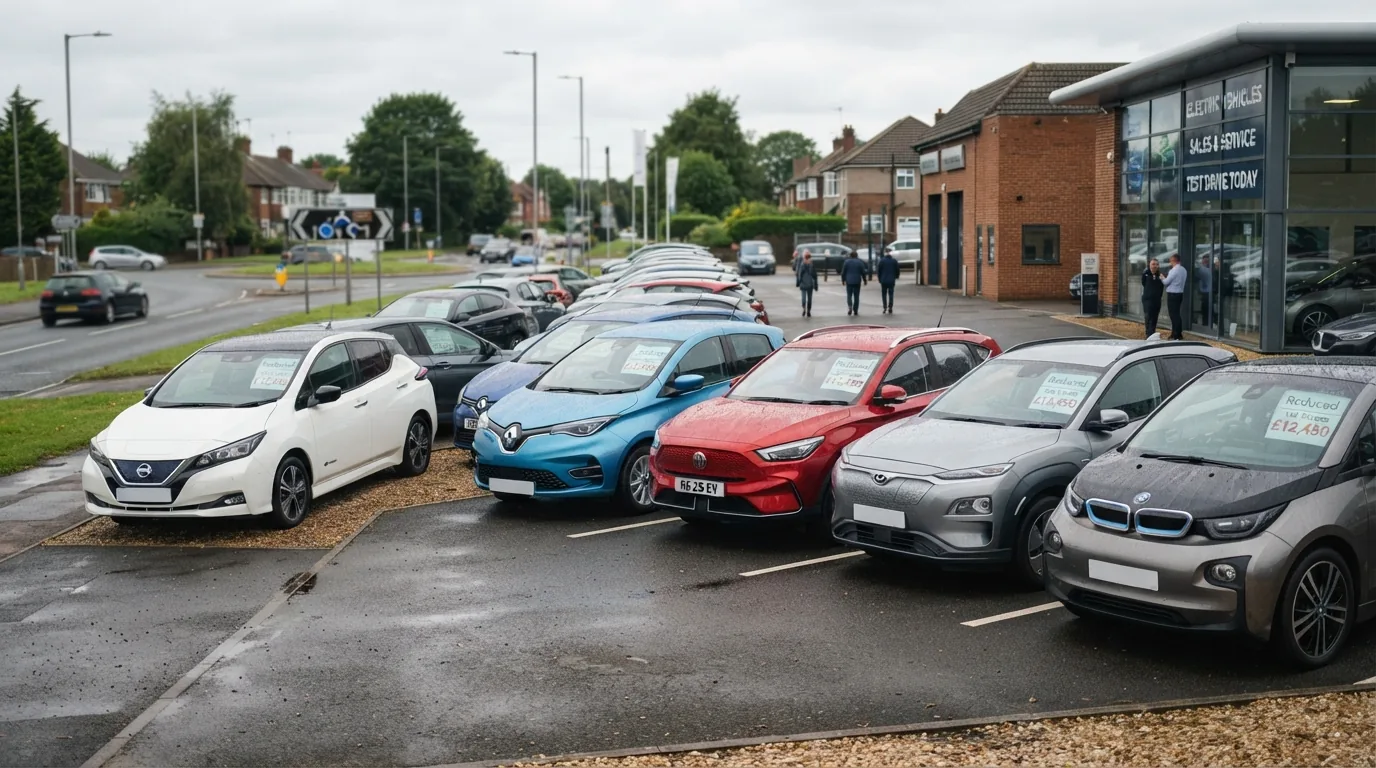
- Used electric car prices in the UK have fallen sharply since 2022, and in many segments they continue to fall. Average used EV prices on Auto Trader dropped roughly 10% year-on-year in early 2026, with some individual models down 40% or more from their peak prices two years ago.
- When supply grows at double the rate of demand, prices fall.
- Which models have fallen furthest in price: These are approximate market-based figures and will vary by mileage, specification and condition.
- Kia and Hyundai models have also held value relatively well compared to older British and European competition, partly because their transferable warranties give buyers confidence.
- Is this a good time to buy: However, waiting for the bottom of any market is difficult, and the fuel and running cost savings begin on day one.
- Some continued depreciation on older models is probable, particularly for those with limited range, outdated charging standards or poor battery history.
Used electric car prices in the UK have fallen sharply since 2022, and in many segments they continue to fall. Average used EV prices on Auto Trader dropped roughly 10% year-on-year in early 2026, with some individual models down 40% or more from their peak prices two years ago. A car that cost £38,000 new is now available for under £22,000.
This is not one thing going wrong. It is several factors combining at the same time. Understanding them helps you decide whether now is the right time to buy or whether further falls are likely.
The five reasons used EV prices have fallen
1. A flood of lease returns hitting the market at once
The single largest driver is supply. Thousands of businesses and individuals who took EVs on two to four year leases in 2020 to 2022, partly encouraged by company car tax benefits and partly by manufacturer offers, have been returning those vehicles in 2023, 2024 and 2025. Used EV listings have grown around 76% year-on-year as a result.
When supply grows at double the rate of demand, prices fall. This is straightforward economics, and it is the dominant force in the current market. The scale of it has surprised even the remarketing industry.
2. New EVs are being sold with unprecedented discounts
The ZEV mandate requires manufacturers to ensure that 22% of new cars sold in the UK in 2024 are zero-emission, rising to 28% in 2025 and continuing upward. To hit these targets, manufacturers have offered aggressive discounts on new EVs, particularly toward year-end when they are scrambling to avoid penalties.
When you can buy a new Volkswagen ID.3 with a £4,000 manufacturer discount, the used equivalent looks less attractive. New car price cuts immediately drag down used values for the same model.
3. Competition from newer and cheaper new EVs, particularly from China
Chinese manufacturers including BYD, Xpeng, SAIC (which owns MG) and others have brought a wave of competitively priced new EVs to the UK market. A brand new BYD Dolphin or updated MG4 at £25,000 to £30,000 directly competes with three to four year old European EVs in the used market. Buyers who might once have defaulted to a used Nissan Leaf or Renault Zoe now have access to a new car with better range, more modern features and a full warranty for a similar or only modestly higher price.
4. Battery anxiety has suppressed demand
Concern about battery degradation, range in cold weather, and the cost of a replacement battery has kept some buyers away from the used EV market entirely. The demand side of the equation has not grown as fast as supply, partly because of these concerns. In reality, as we explain in our battery degradation guide, the data is considerably more positive than the headlines suggest, but perception has driven behaviour.
5. Technology has moved fast
A 2019 EV with a 200-mile range and 50 kW maximum DC charging speed feels noticeably dated next to a 2024 car offering 350 miles and 200 kW charging. Software interfaces, connectivity features and the charging experience have all improved quickly. Buyers weighing up a five-year-old EV against a newer alternative may judge the older technology a significant step back, pushing demand toward newer cars.
Which models have fallen furthest in price?
| Model | Approximate new price (2021) | Approximate used price (2026) | Approximate fall |
|---|---|---|---|
| Renault Zoe 52kWh | £28,000 | £9,000 to £13,000 | 55% to 68% |
| Nissan Leaf 40kWh | £27,000 | £9,000 to £14,000 | 48% to 67% |
| Hyundai Kona Electric 64kWh | £34,000 | £15,000 to £20,000 | 41% to 56% |
| Kia e-Niro 64kWh | £33,000 | £15,000 to £21,000 | 36% to 55% |
| Volkswagen ID.3 | £33,000 | £16,000 to £22,000 | 33% to 52% |
| Tesla Model 3 Long Range | £48,000 | £22,000 to £30,000 | 37% to 54% |
| Jaguar I-Pace | £68,000 | £28,000 to £40,000 | 41% to 59% |
These are approximate market-based figures and will vary by mileage, specification and condition. They illustrate the scale of the falls that have occurred.
Are there any models that have held their value better?
Yes. Tesla has consistently outperformed the market on residual values. The Model 3 is retaining approximately 71% of its value after three years according to Cap HPI data, the strongest performance among mainstream EVs. The Porsche Taycan retains around 66%, and premium German brands (BMW iX, i4) are around 63%.
Kia and Hyundai models have also held value relatively well compared to older British and European competition, partly because their transferable warranties give buyers confidence.
Is this a good time to buy?
Yes, for most buyers. The used EV market is as buyer-friendly as it has ever been. Prices are meaningfully lower than their 2022 peak, supply is plentiful, and the technology on even three to four year old models is mature enough to be practical.
The counterargument is that some prices may fall further. The ZEV mandate escalates through 2030, meaning manufacturer discounting on new EVs is unlikely to ease soon. Further lease returns are expected as salary-sacrifice schemes from 2022 and 2023 unwind.
However, waiting for the bottom of any market is difficult, and the fuel and running cost savings begin on day one. A buyer who delays a year to save another 8% on the purchase price but pays £1,200 more in fuel in the meantime is not necessarily better off.
Should you be worried about depreciation on the used car you buy today?
Some continued depreciation on older models is probable, particularly for those with limited range, outdated charging standards or poor battery history. For newer models (2021 onwards) with liquid-cooled batteries and CCS charging, the evidence suggests price stabilisation is underway.
Tesla values in particular appear to be finding a floor. The Model 3’s combination of software, Supercharger access and battery longevity gives it sustainable demand that purely spec-driven alternatives cannot match.
The myth to correct
Many buyers assume that cheap used EV prices signal something fundamentally wrong with electric cars. The actual cause is a supply-and-demand imbalance driven by specific market factors, not evidence that EVs are unreliable or impractical. Large-scale battery data consistently shows healthy state of health on the majority of used EVs. The cars are not cheap because they are broken. They are cheap because there are a lot of them.
That creates an unusual opportunity for buyers who understand the market.
Where to next?
Return to the used EVs guide for a full buying framework, or go straight to our best used electric cars page for ranked recommendations at every price point.
How we test and where our numbers come from
Range figures are official WLTP combined values taken from manufacturer UK specification pages, with real-world estimates drawn from independent comparative testing. Prices are UK list prices at the time of the latest update. Tax, grant and charging-scheme figures come from GOV.UK and HMRC publications. We re-check every guide when pricing, specification or policy changes. Last checked 11 August 2026.
Frequently asked questions
Which models have fallen furthest in price?
These are approximate market-based figures and will vary by mileage, specification and condition. They illustrate the scale of the falls that have occurred.
Are there any models that have held their value better?
Yes. Tesla has consistently outperformed the market on residual values.
Is this a good time to buy?
Yes, for most buyers. The used EV market is as buyer-friendly as it has ever been.
Should you be worried about depreciation on the used car you buy today?
Some continued depreciation on older models is probable, particularly for those with limited range, outdated charging standards or poor battery history. For newer models (2021 onwards) with liquid-cooled batteries and CCS charging, the evidence suggests price stabilisation is underway.

EV Compared
The EV Compared editorial team tracks the UK electric vehicle market full time: new model launches, list prices, WLTP and real-world range, public charging tariffs and the tax rules that decide what an EV actually costs to run. Every guide is checked against manufacturer specifications and official GOV.UK figures, and updated whenever the numbers move.
Related reading
View all
What Are the Biggest Myths About Switching to an EV?
The claims that put UK drivers off going electric, and what the evidence actually says
Should You Buy an EV in 2026 or Wait for Cheaper Models?
An honest look at where EV prices are heading and whether the wait is worth it for UK buyers
Buying and Owning an Electric Car in the UK: The Complete 2026 Guide
Everything you need to know about costs, charging, depreciation and day-to-day life with an EV