How Much Battery Degradation Is Normal on a Used EV?
The data on EV battery capacity loss is more reassuring than the headlines suggest. Here is what normal degradation actually looks like and when to be concerned
Quick answers
- Around 2% capacity loss per year is normal for a used electric car in typical UK use. That means a five-year-old EV in good condition should still have roughly 90% of its original battery capacity, and an eight-year-old car should retain around 85%.
- What is battery degradation: Battery degradation is the gradual loss of a battery's ability to hold charge.
- These are indicative ranges based on large-scale fleet data and owner-reported figures.
- What accelerates degradation beyond normal: Using high-power DC rapid charging for more than roughly 12% of total charging sessions has been linked to roughly doubling the annual degradation rate to around 3% to 4% per year.
- Most manufacturer battery warranties guarantee at least 70% capacity retention for 8 years or 100,000 miles.
- Tesla has also issued over-the-air software updates that adjust charge management parameters to extend battery life, and other manufacturers have followed suit.
Around 2% capacity loss per year is normal for a used electric car in typical UK use. That means a five-year-old EV in good condition should still have roughly 90% of its original battery capacity, and an eight-year-old car should retain around 85%. These figures are more reassuring than many prospective buyers expect.
Battery degradation is the single biggest concern for used EV buyers, so it is worth understanding exactly what the data shows and where the real risks lie.
What is battery degradation?
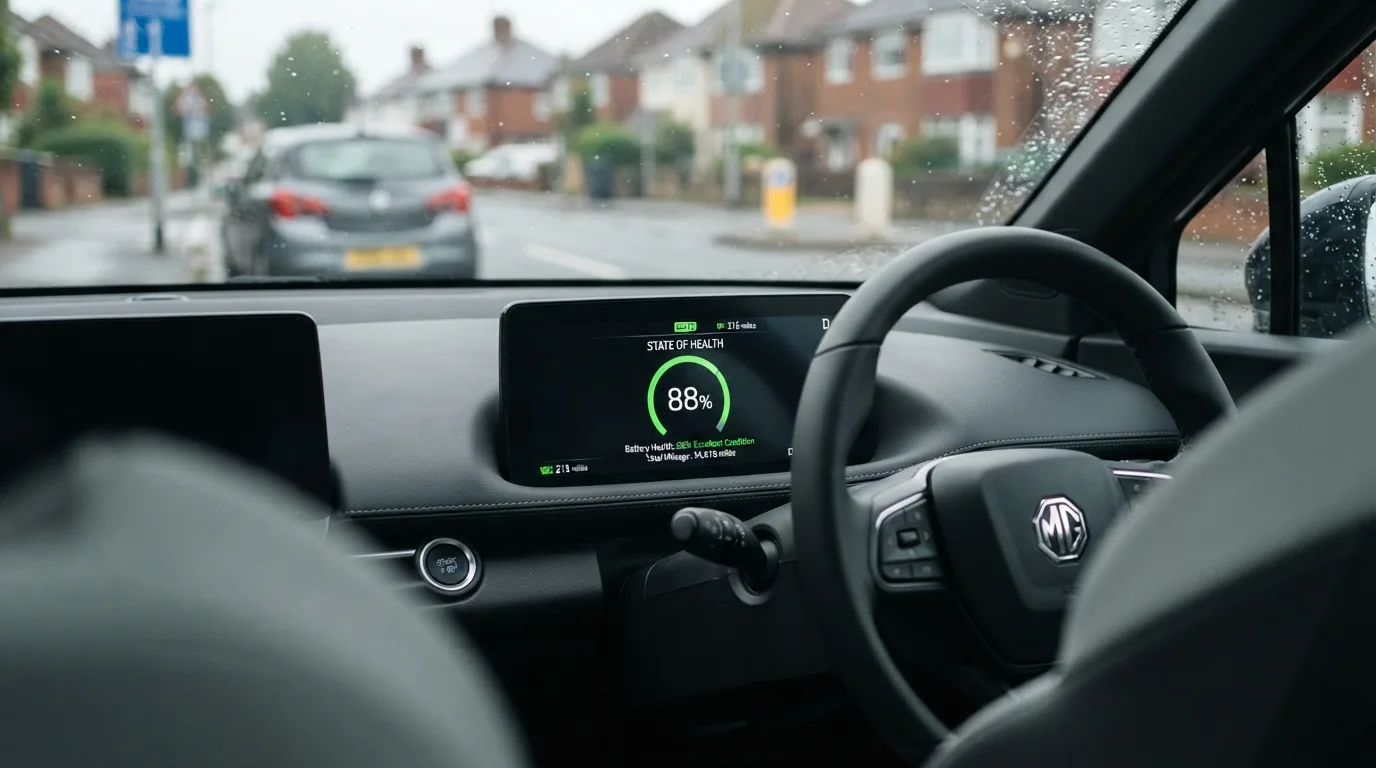
Battery degradation is the gradual loss of a battery’s ability to hold charge. It is measured as state of health (SoH), expressed as a percentage of original capacity. A car with 100% SoH can hold exactly as much energy as it could when new. At 80% SoH, the battery holds 80% of its original energy and delivers roughly 80% of the original range under equivalent conditions.
Degradation is irreversible under normal use, though it progresses slowly in most EVs. It is caused by chemical changes inside the lithium-ion cells: the growth of a solid-electrolyte interphase (SEI) layer on the anode, lithium plating, and gradual loss of active lithium.
What does normal degradation look like by model?
| Model | Typical SoH after 5 years | Typical SoH after 8 years | Battery type |
|---|---|---|---|
| Tesla Model 3 / Model Y | 91% to 95% | 87% to 91% | Liquid cooled |
| Hyundai Ioniq 5 / Kia EV6 | 93% to 96% | Data limited (newer models) | Liquid cooled |
| Nissan Leaf (30/40kWh, post-2016) | 83% to 90% | 78% to 85% | Air cooled |
| Renault Zoe (52kWh, 2020+) | 88% to 93% | Data limited | Air cooled with some thermal management |
| BMW i3 (60Ah/94Ah) | 88% to 93% | 84% to 90% | Liquid cooled |
| Kia e-Niro / Hyundai Kona Electric | 92% to 96% | 87% to 93% | Liquid cooled |
These are indicative ranges based on large-scale fleet data and owner-reported figures. Individual cars vary. The key takeaway: liquid-cooled systems consistently outperform air-cooled designs over time.
What accelerates degradation beyond normal?
Several factors push degradation faster than the average 2% per year:
Frequent DC rapid charging
Using high-power DC rapid charging for more than roughly 12% of total charging sessions has been linked to roughly doubling the annual degradation rate to around 3% to 4% per year. The heat generated during rapid charging stresses the cells. This is most relevant for anyone who relies heavily on public rapid chargers rather than home charging.
Regularly charging to 100%
Most manufacturers recommend charging to 80% for daily use and reserving 100% charges for long journeys. Keeping a battery at very high charge states accelerates the chemical processes that cause degradation.
Leaving the battery deeply discharged for extended periods
Sitting at or near 0% state of charge for days at a time accelerates cathode degradation. This is less common in practice but is a risk for cars that have been stored.
Extreme temperatures
Very hot climates are the biggest thermal threat to battery longevity. The UK’s moderate climate is generally kind to EV batteries compared to, say, Arizona or southern Spain. However, repeated exposure to temperatures above 35 degrees Celsius (rare in the UK but possible in heatwaves or when parked in the sun for extended periods) can accelerate cell degradation.
Air cooling versus liquid cooling
This is the biggest structural difference between models. The Nissan Leaf and early Renault Zoe use passive air cooling, meaning the battery temperature is moderated only by airflow. In extreme conditions or under sustained rapid charging, the battery gets hot, and heat is the enemy of longevity.
Liquid-cooled systems (Tesla, Kia, Hyundai, BMW i3) pump coolant around the battery pack, maintaining a more consistent temperature and dramatically reducing thermal degradation over time.
What degradation level should make you walk away?
There is no universal rule, but here is a practical framework:
- Above 90% SoH: Very good. Pay close to market rate.
- 85% to 90%: Good. A small discount is reasonable but not necessary.
- 80% to 85%: Fair. Negotiate a 5% to 10% discount from asking price.
- 75% to 80%: Moderate. Negotiate 10% to 15% off. Range impact is real but the car remains practical for shorter commutes.
- 70% to 75%: Poor. Significant range reduction. Negotiate 20% to 30% off or look elsewhere.
- Below 70%: The battery is approaching the end of its viable automotive life. Factor in the cost of a replacement battery (£5,000 to £12,000 depending on model and supplier) before making any offer.
Most manufacturer battery warranties guarantee at least 70% capacity retention for 8 years or 100,000 miles. If you are buying a car still within its warranty period and it is below the guaranteed threshold, the manufacturer may be obligated to replace it. Check this carefully.
How do you know if degradation is higher than claimed?
The seller tells you the battery is healthy. How do you verify it?
- Use the manufacturer app during the viewing. Tesla, Kia, Hyundai and others display SoH clearly.
- Use an OBD2 diagnostic tool. A £15 to £40 Bluetooth dongle paired with an appropriate app (LeafSpy for Nissan, Car Scanner for many models) gives you a precise SoH reading within minutes.
- Commission a professional battery health inspection. The AA and RAC offer these, as do specialist EV workshops. A formal written report costs roughly £60 to £150 and is the gold standard for a private purchase.
- Ask for a battery health certificate. Many franchised dealers now issue these. If a dealer cannot produce one, ask why.
Is degradation getting better with newer models?
Yes, clearly. Cars built from 2020 onwards use more advanced cell chemistry, better battery management software, and improved thermal regulation. Data from 2026 suggests degradation rates for post-2020 EVs are measurably lower than for cars built before 2018.
Tesla has also issued over-the-air software updates that adjust charge management parameters to extend battery life, and other manufacturers have followed suit. This means some older cars on the used market have better battery management than they left the factory with.
The myth to correct
Many buyers still worry that EV batteries are inherently fragile and will fail catastrophically. The data does not support this. Large-scale studies consistently show EV batteries degrading slowly and predictably, with the vast majority of used EVs maintaining usable capacity well beyond 100,000 miles.
The risk is not catastrophic failure. It is gradual range reduction that you do not notice because you did not check the SoH before buying. Check it, understand what you are getting, and price accordingly.
Where to next?
For details on how to carry out a battery check, read how to check an electric car battery before buying used. For the full used EV buying framework, return to the used EVs guide or browse our best used electric cars shortlist.
How we test and where our numbers come from
Range figures are official WLTP combined values taken from manufacturer UK specification pages, with real-world estimates drawn from independent comparative testing. Prices are UK list prices at the time of the latest update. Tax, grant and charging-scheme figures come from GOV.UK and HMRC publications. We re-check every guide when pricing, specification or policy changes. Last checked 11 August 2026.
Frequently asked questions
What is battery degradation?
Battery degradation is the gradual loss of a battery's ability to hold charge. It is measured as state of health (SoH), expressed as a percentage of original capacity.
What does normal degradation look like by model?
These are indicative ranges based on large-scale fleet data and owner-reported figures. Individual cars vary.
What accelerates degradation beyond normal?
Using high-power DC rapid charging for more than roughly 12% of total charging sessions has been linked to roughly doubling the annual degradation rate to around 3% to 4% per year. The heat generated during rapid charging stresses the cells.
What degradation level should make you walk away?
Most manufacturer battery warranties guarantee at least 70% capacity retention for 8 years or 100,000 miles. If you are buying a car still within its warranty period and it is below the guaranteed threshold, the manufacturer may be obligated to replace it.
How do you know if degradation is higher than claimed?
The seller tells you the battery is healthy. How do you verify it?

EV Compared
The EV Compared editorial team tracks the UK electric vehicle market full time: new model launches, list prices, WLTP and real-world range, public charging tariffs and the tax rules that decide what an EV actually costs to run. Every guide is checked against manufacturer specifications and official GOV.UK figures, and updated whenever the numbers move.
Related reading
View all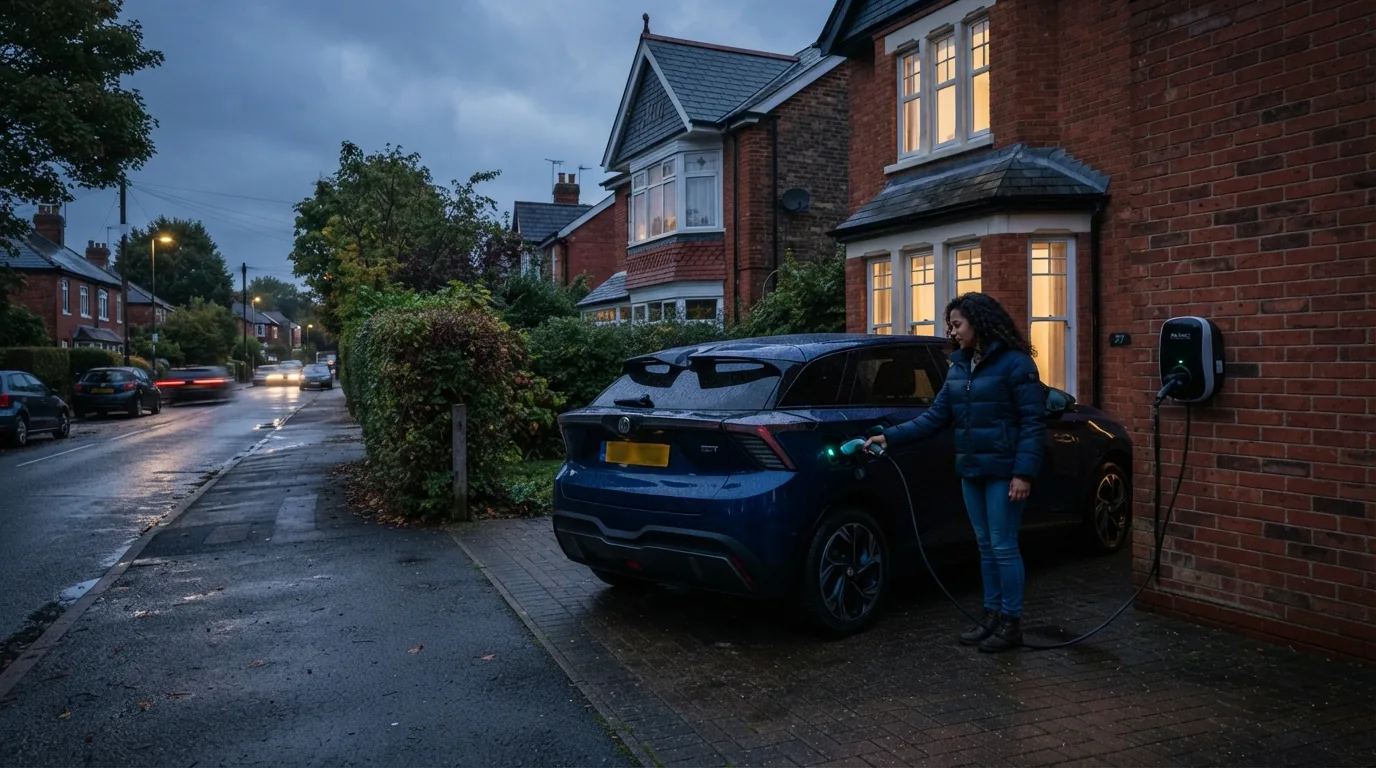
What Are the Biggest Myths About Switching to an EV?
The claims that put UK drivers off going electric, and what the evidence actually says
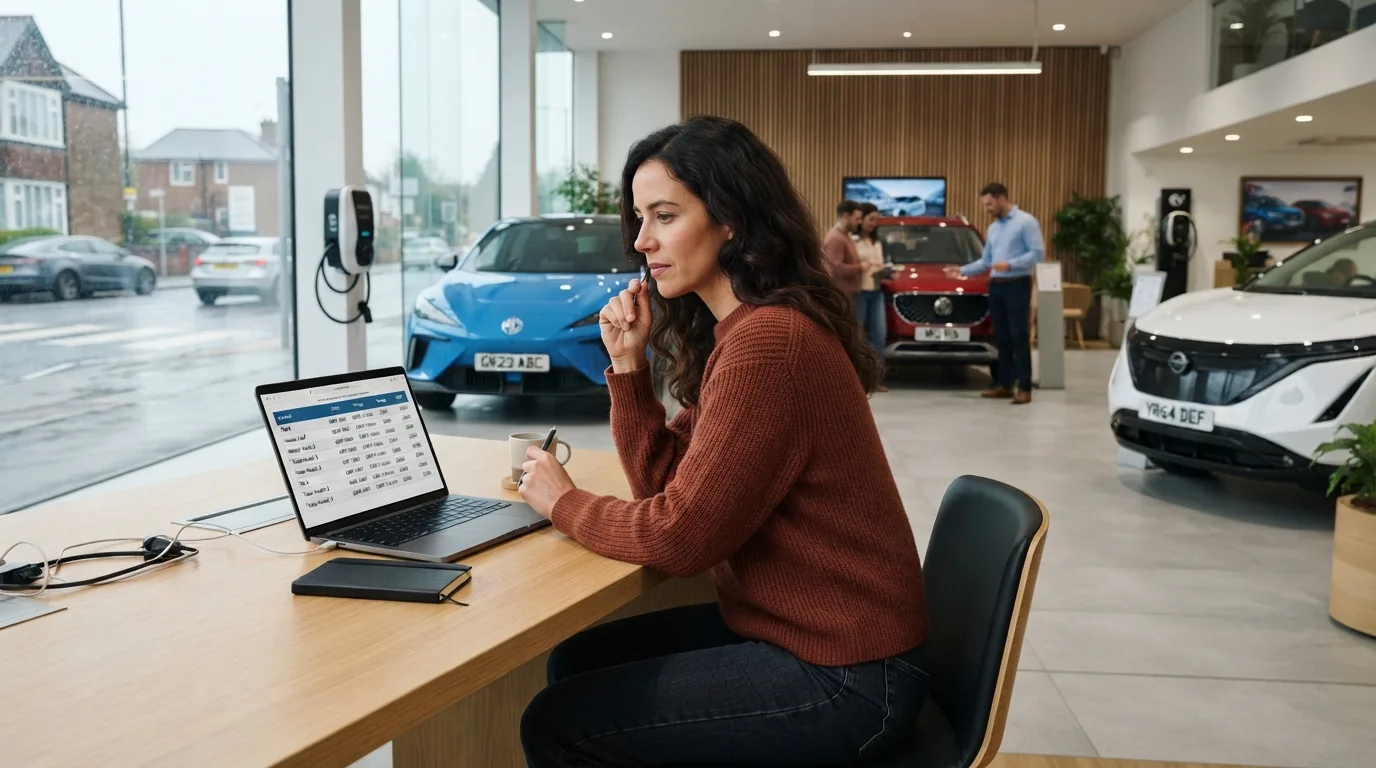
Should You Buy an EV in 2026 or Wait for Cheaper Models?
An honest look at where EV prices are heading and whether the wait is worth it for UK buyers
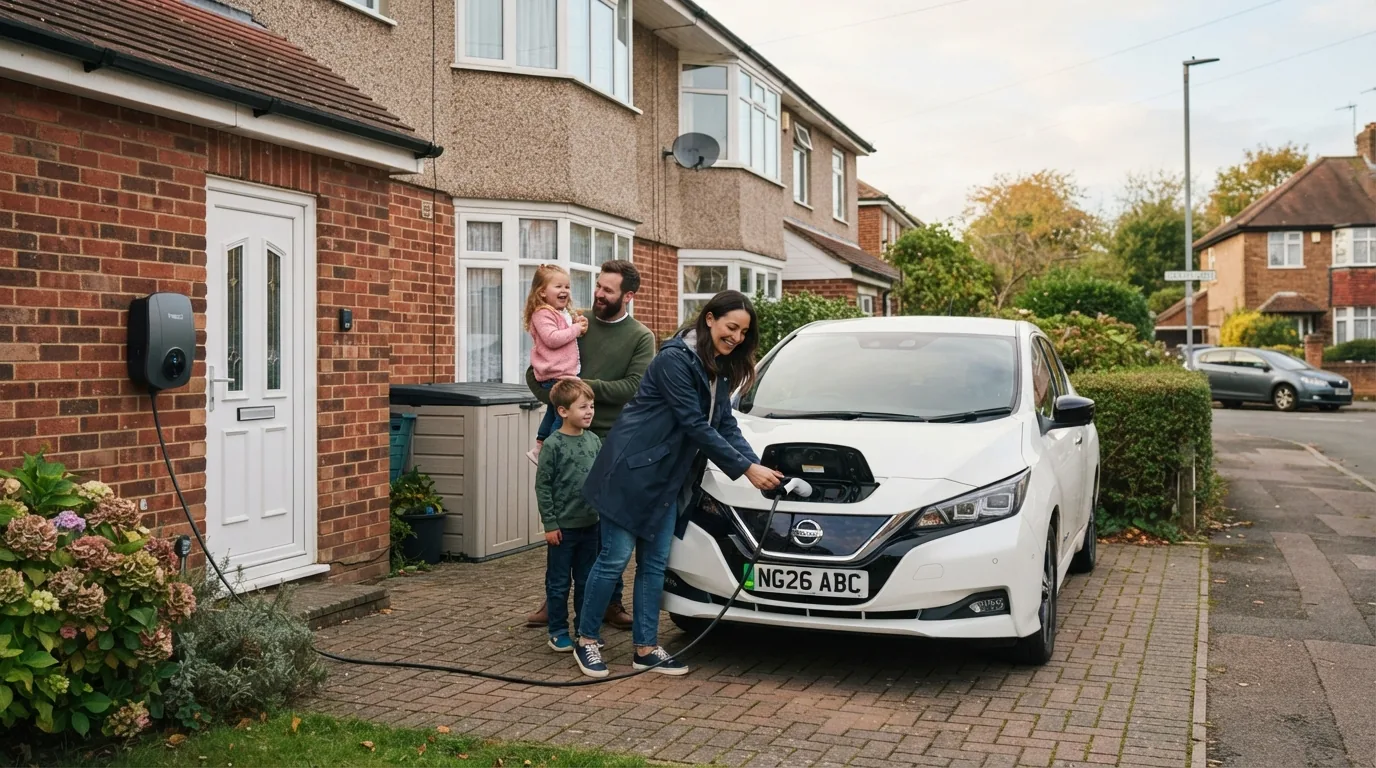
Buying and Owning an Electric Car in the UK: The Complete 2026 Guide
Everything you need to know about costs, charging, depreciation and day-to-day life with an EV