Untethered EV Chargers for Homes: The Socketed Charger Guide
Everything you need to know about socketed home EV chargers, including the best UK models, cable guidance, smart tariff compatibility and the EV Chargepoint Grant.
Quick answers
- An untethered (socketed) home charger has a Type 2 socket and no fixed cable; you plug in your own Type 2 to Type 2 cable each time you charge.
- It is the more flexible choice for households with more than one EV, guests who charge, or anyone who wants a tidy wall when not plugged in.
- The trade-off is handling and storing the cable yourself each session, plus a typical £80–£200 cable cost if your car did not come with one.
- Socketed smart chargers work with smart tariffs such as Intelligent Octopus Go in exactly the same way as tethered units.
- The EV Chargepoint Grant (renters and flat owners) treats socketed and tethered units the same, worth up to £500 per socket from 1 April 2026 (figures vary, verify current data).
- Most new-build homes default to untethered because Building Regulations Part S requires a universal socket for new construction with parking.
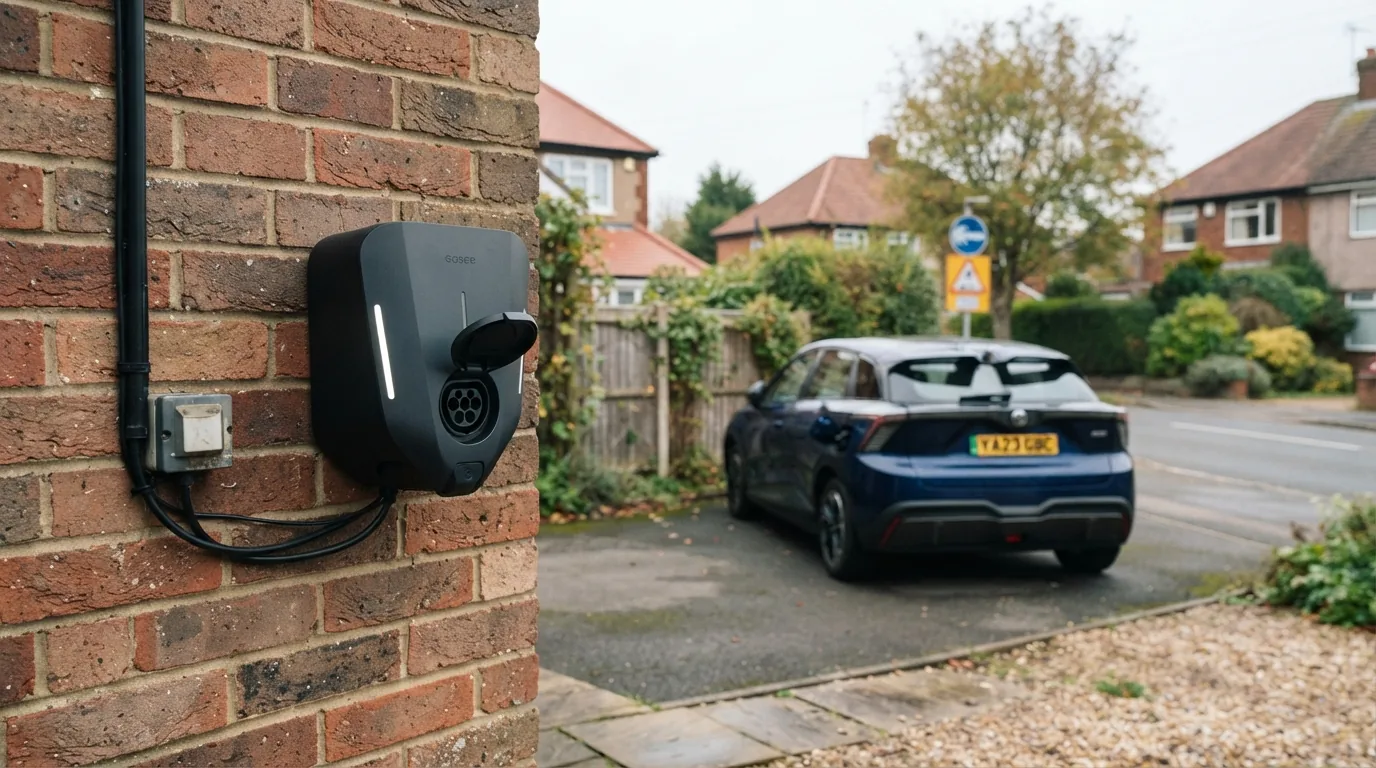
An untethered (or socketed) home EV charger is a wall unit with a Type 2 socket rather than a fixed cable. You plug in your own Type 2 to Type 2 cable each time you charge, which lets you swap cable lengths and suit multiple cars. The main trade-off is flexibility and a tidy wall when not charging, versus the small daily routine of handling your own cable.
This guide covers the socketed option specifically: what it is, who it suits, the best UK models, which cable to buy and how grant eligibility works. If you are still deciding between the two formats, read our full tethered vs untethered EV chargers compared guide for the head-to-head.
What is an untethered (socketed) home charger?
An untethered home charger is a wall unit that has a Type 2 socket built into the front, with no cable permanently attached. You bring your own Type 2 to Type 2 cable, plug one end into the charger and the other into your car, then unplug and store the cable when you are done.
The Type 2 connector is the UK and European standard for AC home charging. It is a seven-pin plug with a defined locking mechanism, and every modern electric car sold in the UK accepts it. The socket on an untethered charger is weatherproofed (typically rated IP54 or above) and usually lockable, so the unit is secure when not in use.
Most untethered home chargers deliver 7.4kW on a single-phase supply, which is the standard residential output in the UK. This charges the average EV battery overnight from a typical state of charge. The unit is sometimes called a “universal socket” charger, which is the term used in Building Regulations Part S (more on that below).
Most modern EVs come with a Type 2 to Type 2 cable in the boot. If yours did, you already have everything you need to use a socketed charger from day one.
Untethered charger pros and cons
Pros
- Flexibility for multiple EVs. One socketed charger works for any car with a Type 2 inlet, which covers all modern UK EVs. If you run two EVs or have guests who charge, the same unit suits everyone.
- Tidier wall. Without a cable hanging from the unit, the charger has a cleaner look between sessions.
- Cable is upgradeable. If you want a longer cable, a higher-amperage cable, or simply a replacement, you change the cable rather than the charger itself.
- Older cars. With the right adapter cable (Type 1 to Type 2), a socketed charger can also suit older EVs that use a Type 1 inlet.
- Unit price. Untethered units are often priced slightly lower than the tethered equivalent from the same brand, because the cable is not included.
Cons
- Cable handling. You must fetch the cable, plug it in, unplug it, and store it after every session. For some drivers this is a minor inconvenience; for others, the daily routine of a tethered charger is preferable.
- Risk of leaving the cable behind. The cable is a separate item that can be left in a car boot after a trip, or in the wrong place when you need it.
- Cable cost if your car did not come with one. A Type 2 to Type 2 cable typically costs £80–£200, depending on length and quality. Budget for this alongside the unit and installation.
- Storage. A five-metre cable needs somewhere dry to live, whether that is a boot, a garage hook or a dedicated cable tidy.
For most households, the choice comes down to whether the daily cable step bothers you. If you are still weighing this up, the tethered vs untethered EV chargers compared guide sets out the decision in full.
Who should choose an untethered charger?
An untethered charger is the better choice in several situations:
- You own or plan to own more than one EV. A single socketed unit serves both without needing to match a cable to a specific car.
- You want a tidy wall. Without a cable coiled under the unit, a socketed charger looks clean between sessions.
- You already own a quality cable. If your EV came with a Type 2 to Type 2 cable, you have no extra cost.
- You want to keep your options open. As connector standards continue to settle across the market, a socketed unit gives you flexibility to swap cables if your next car has different needs.
- You have guests or family members who also charge. A universal socket suits any visitor with a Type 2 inlet.
If you have one car, charge in the same spot every day, and would rather not handle the cable, a tethered charger is the simpler option. See the comparison guide linked above for a direct look at both.
Best untethered home chargers in the UK (2026)
The models below are all available in a socketed configuration in the UK. Prices and outputs are approximate; verify current figures with the installer or manufacturer before purchasing (figures vary, verify current data).
| Model | Max output (kW) | Socket option | Standout feature | Approx unit price (£) | Best for |
|---|---|---|---|---|---|
| Easee One | 7.4kW | Socket only (lockable Type 2) | Lifetime 4G eSIM, dynamic load balancing | ~£400–£450 | Flexibility-first buyers, multi-car homes |
| Ohme ePod | 7.4kW | Socket as standard | Smart tariff integration, compact, screenless | ~£400–£500 | Smart tariff users, clean installs |
| Wallbox Pulsar (socket) | 7.4kW | Socket or tethered | Compact, app control, Octopus Intelligent Go | ~£500–£550 | Small installs, app-centric buyers |
| myenergi Zappi (socket) | 7.4kW | Socket or tethered | Solar/eco diversion modes | ~£700–£800 | Solar panel owners |
| Hypervolt Home 3 (socket) | 7.4kW | Socket or tethered | Design-led, strong IP rating, app monitoring | ~£650–£700 | Design-conscious buyers |
Easee One. The Easee One runs in socket mode by default, with a lockable Type 2 port. It comes with a built-in lifetime 4G eSIM so it does not rely on your home Wi-Fi (figures vary, verify current data). Dynamic load balancing means up to three Easee chargers can share a single fuse and automatically distribute power between vehicles. It is a compact, lightweight unit and one of the tidiest on the market.
Ohme ePod. The ePod is untethered as standard, with no screen and a deliberately minimal design. Ohme offers a five-metre and an eight-metre Type 2 cable as optional extras, which is useful if you want to source your cable and charger from the same place. It integrates tightly with Intelligent Octopus Go and similar smart tariffs, scheduling overnight charging automatically.
Wallbox Pulsar (socket version). The Pulsar is one of the more compact chargers on the market. The socket version gives you the same app control and Octopus Intelligent Go compatibility as the tethered model. Useful if wall or driveway space is limited.
myenergi Zappi (socket version). The Zappi’s solar diversion and eco charging modes work identically in socket or tethered configuration. If you have solar panels, the Zappi adjusts charge rate to use surplus generation before drawing from the grid. The socket version costs marginally less than the tethered variant.
Hypervolt Home 3 (socket version). The Hypervolt has a strong IP rating and a design-forward casing. The app includes energy monitoring and smart tariff scheduling. The socket version has the same internals as the tethered model with a cleaner wall look when the cable is stored away.
What cable do you need for an untethered charger?
For a modern UK EV, you need a Type 2 to Type 2 cable. Both ends of the cable are the same connector type. Most new EVs sold in the UK include one in the boot; check before you order a cable separately.
Length. Five metres suits the majority of driveways where the charger and parking spot are close together. Choose eight metres if the distance between the socket and your car’s inlet is greater, or if you park at an angle. Measure the actual run from the charger to where your car’s charging port sits, then add some slack.
Amperage. Match the cable’s amperage rating to your charger’s output. A 7.4kW charger at 32 amps needs a 32A-rated cable. Most cables sold for home charging are rated accordingly, but check the spec before buying.
Cost. A Type 2 to Type 2 cable typically costs £80–£200, depending on length, amperage and build quality. Shorter 5m cables tend to sit at the lower end of that range; longer 8m cables at the higher end. Buy from a reputable UK supplier.
Storage. Store the cable somewhere dry, either coiled in the boot, on a garage hook or in a dedicated cable tidy box. Leaving it coiled outside in standing water will shorten its life.
Untethered chargers, smart tariffs and the EV Chargepoint Grant
Smart tariff compatibility. Socketed smart chargers, including the Ohme ePod, Easee One, Zappi and Hypervolt, work with Intelligent Octopus Go and similar smart tariffs in exactly the same way as tethered units. The socket does not change how the charger schedules charging, communicates with your energy provider, or responds to off-peak signals. Smart tariff access is determined by the charger’s software and connectivity, not whether it has a fixed cable.
The EV Chargepoint Grant. The EV Chargepoint Grant for renters and flat owners gives up to £500 per socket from 1 April 2026, extended until 31 March 2027 (figures vary, verify current data). The grant applies the same to socketed and tethered charger installations; the cable arrangement makes no difference to eligibility. To qualify, you must use an OZEV-approved installer and have access to off-street parking. This is the renters and flat owners scheme; it is not a general homeowner-with-driveway grant.
- Smart tariff scheduling works identically on socketed and tethered smart chargers.
- The EV Chargepoint Grant treats socketed and tethered installations the same.
- Verify the current grant amount and dates on GOV.UK before applying, as these figures are subject to change.
Building Regulations Part S. Since 15 June 2022, most new-build homes in England with associated parking must be fitted with a charge point that has a universal (untethered) socket. This is why new-build properties almost always come with a socketed charger already installed. Part S applies to new construction; it is not a requirement to retrofit existing homes. If you have recently moved into a new build, your charger is almost certainly already an untethered unit.
Untethered chargers suit flexibility-first households: anyone running more than one EV, hosting guests who charge, or simply wanting a tidy wall between sessions. The trade-off is a small daily routine of handling your own cable and, if your car did not come with one, a one-off cable cost of typically £80–£200.
For a full side-by-side look at both formats, see our tethered vs untethered EV chargers compared guide. If you want to compare the full range of home charger options, our best home EV chargers guide covers tethered and untethered models across all budgets.
Useful Resources
- GOV.UK / find-government-grants: EV Chargepoint Grant for renters and flat owners (https://find-government-grants.service.gov.uk/grants/electric-vehicle-chargepoint-grant-for-renters-and-flat-owners-2): authoritative source for grant value, eligibility and dates; verify current figures here before applying.
- Zapmap: tethered vs untethered EV chargers (https://www.zapmap.com/ev-guides/tethered-vs-untethered): trusted UK reference for connector standards and the definition of both formats.
- Ohme: chargers and smart charging FAQs (https://ohme-ev.com/our-chargers/): manufacturer source for the ePod specification, cable options and smart tariff integration detail.
- Homebuilding: Building Regulations Part S explained (https://www.homebuilding.co.uk/advice/building-regulations-part-s): plain-language summary of the universal socket requirement for new builds.
How we test and where our numbers come from
Range figures are official WLTP combined values taken from manufacturer UK specification pages, with real-world estimates drawn from independent comparative testing. Prices are UK list prices at the time of the latest update. Tax, grant and charging-scheme figures come from GOV.UK and HMRC publications. We re-check every guide when pricing, specification or policy changes. Last checked 11 August 2026.
Frequently asked questions
Are untethered EV chargers any good?
Yes. Socketed chargers are reliable, use the same smart software as tethered units, and deliver the same 7.4kW output on a standard home supply. The difference between a tethered and an untethered charger is the cable arrangement, not the charging quality or speed.
Do you have to buy your own cable for an untethered charger?
Yes, unless your EV came with one. You need a Type 2 to Type 2 cable. Most new EVs sold in the UK include one; check your car's documentation before buying separately.
What length cable do I need for an untethered home charger?
Five metres suits most driveways where the charger and parking spot are close. Choose eight metres if the charger and your car's charging port are further apart. Measure the distance from the wall socket to where the cable connects to your car, then allow some slack.
Can you use a smart tariff with an untethered charger?
Yes. Socketed smart chargers schedule off-peak charging on tariffs like Intelligent Octopus Go exactly as tethered units do. The socket format has no effect on smart tariff scheduling or app control.
Why do new-build homes have untethered chargers?
Because Building Regulations Part S, which came into force in June 2022, requires new homes in England with associated parking to have a charge point with a universal (untethered) socket. This is a construction requirement for new builds, not a rule that applies to existing homes.
Sources and further reading
- zapmap.comZapmap, Ohme, GOV.UK OZEVPrimary source referenced in this article.

EV Compared
The EV Compared editorial team tracks the UK electric vehicle market full time: new model launches, list prices, WLTP and real-world range, public charging tariffs and the tax rules that decide what an EV actually costs to run. Every guide is checked against manufacturer specifications and official GOV.UK figures, and updated whenever the numbers move.
Related reading
View all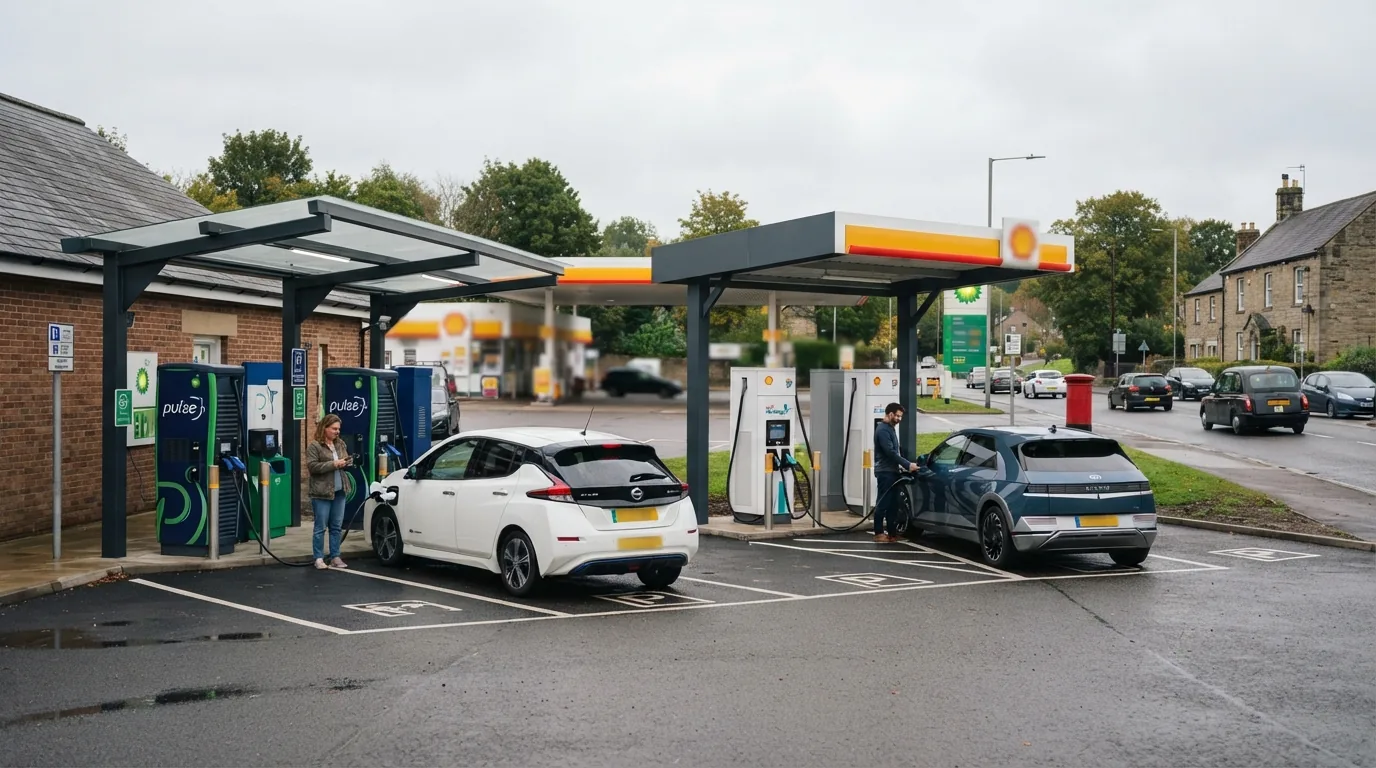
BP Pulse vs Shell Recharge: Which UK Network Wins?
Two of the UK's biggest charging networks compared on price, reliability and which type of driver each suits
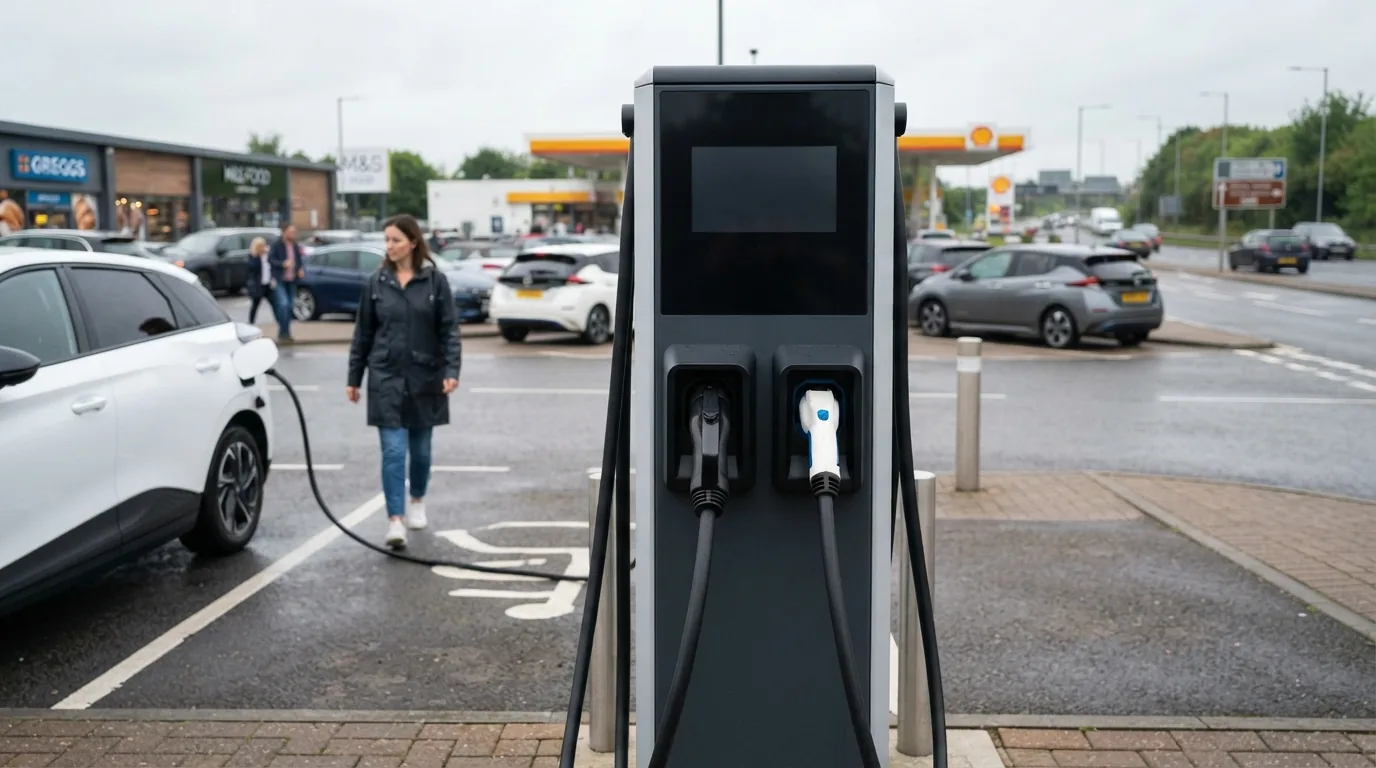
Can You Charge Any EV at Any Public Charger in the UK?
Why almost any new EV works at almost any UK public charger, and the two exceptions you need to know
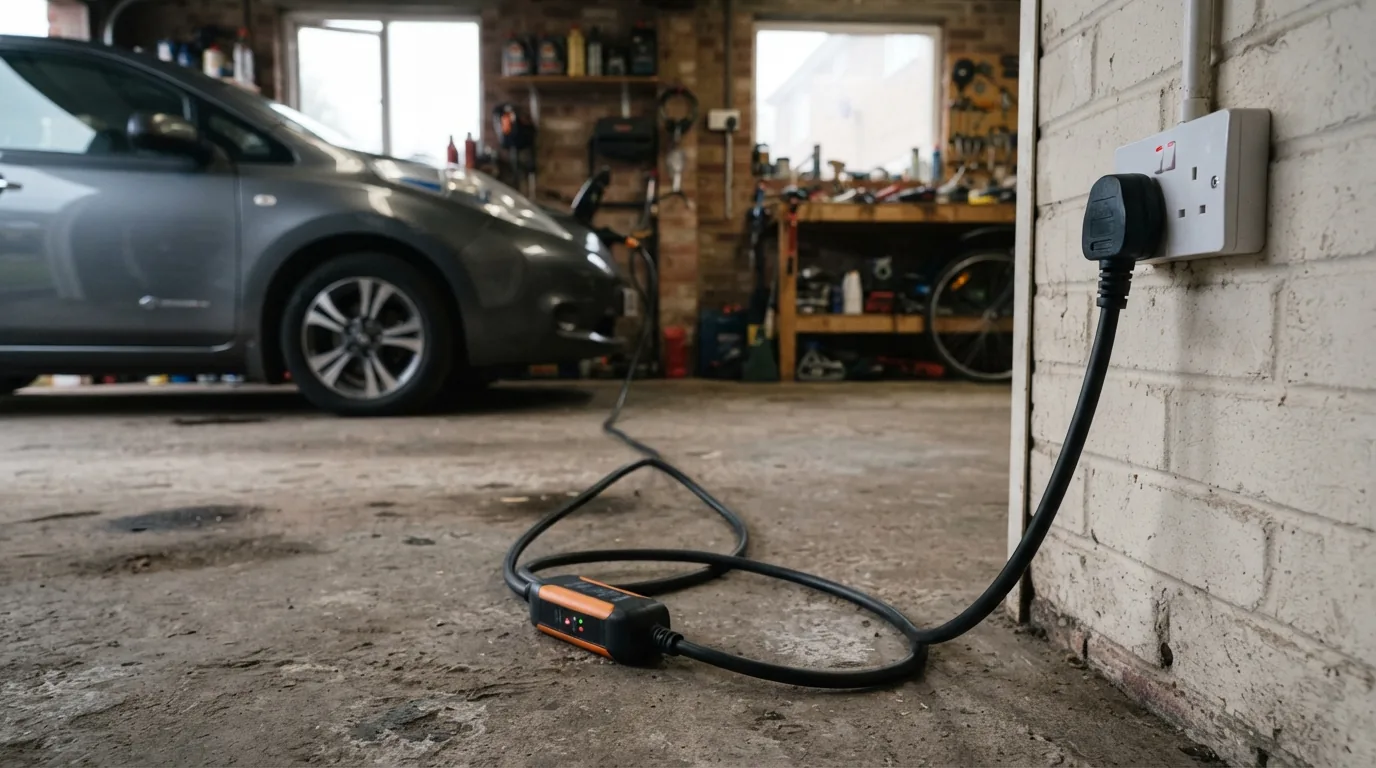
Can You Charge an EV From a Three-Pin Plug in the UK?
Yes, most cars ship with the cable, but speed and safety limits mean it works best for occasional or emergency use