Tethered vs Untethered Home EV Chargers: Which Should You Choose?
The practical differences explained, with real UK costs and a clear recommendation for most UK households
Quick answers
- A tethered charger has a permanently attached Type 2 cable; an untethered charger is a socket you plug your own lead into.
- Charging speed and smart-tariff savings are identical for both formats, so the choice is about convenience, cost and tidiness, not performance.
- Tethered wins on daily convenience and cable security; untethered wins on flexibility, future-proofing and a tidier wall unit.
- A tethered unit typically costs around £100 to £200 more upfront, but a separate Type 2 lead from around £120 narrows the real-world gap.
- The EV chargepoint grant (up to £500 per socket from 1 April 2026, for renters and flat owners with off-street parking) applies to either format.
- Most UK single-car households pick tethered; choose untethered if you may change cars or want a neater look.
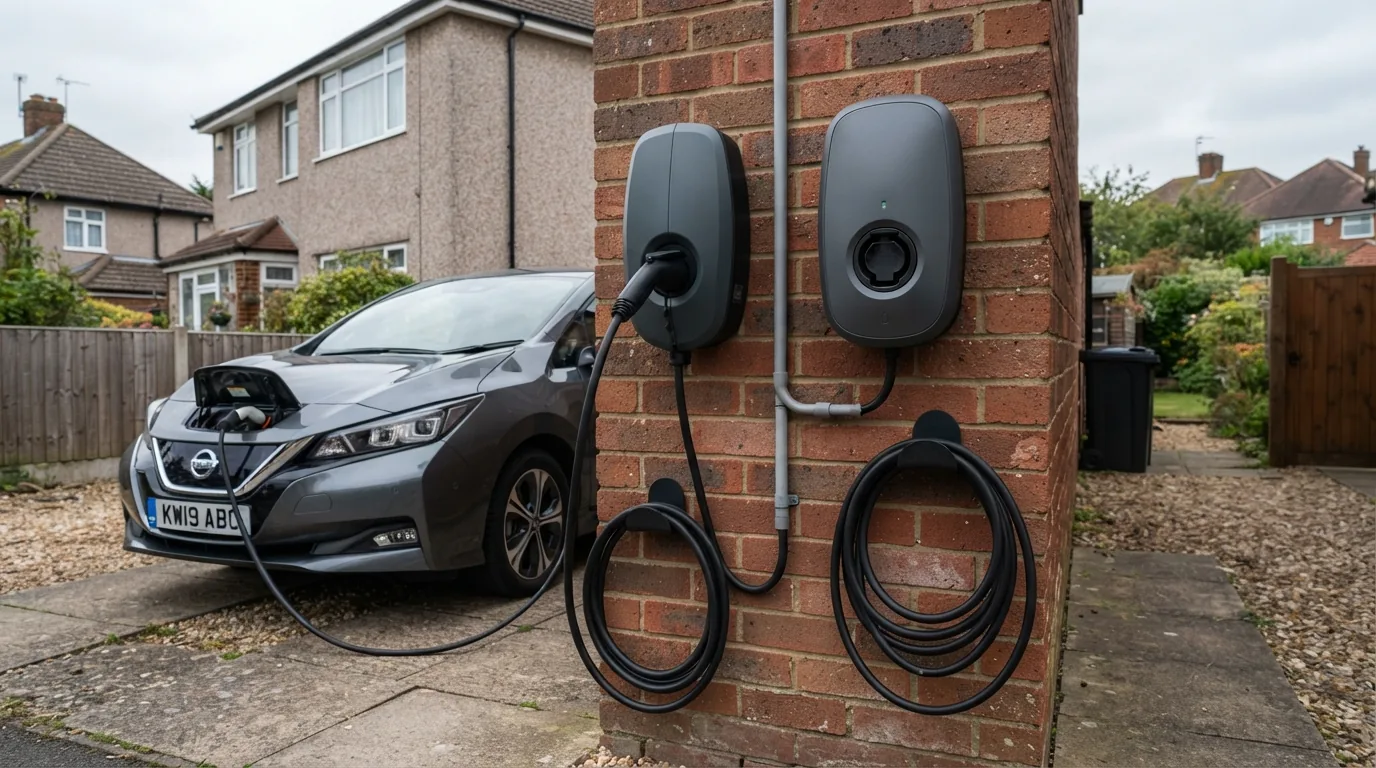
A tethered home EV charger has a cable permanently attached to the wall unit. An untethered charger has a socket only and you plug in your own Type 2 lead each time. Both formats deliver the same charging speed, both qualify as smart chargers by law, and both give you identical access to off-peak tariff savings. The choice is about convenience, cost and tidiness, not performance.
For most UK households with one electric car, tethered wins on everyday convenience. If you want flexibility, a neater look, or may change cars, untethered is the better long-term pick. Read on for a full breakdown and a clear decision framework.
What is a tethered home charger?
A tethered charger has a Type 2 charging cable built directly into the wall unit. You walk up, lift the cable from its hook, and plug it into your car. Nothing to fetch, nothing to store.
Standard tethered cables are around 5 metres, with most units offering a range of 2 to 10 metres depending on the model. Because the cable is always at the charger, the process is as close to plugging in a kettle as home EV charging gets.
Pros:
- Plug-and-charge convenience, nothing to bring out or put away
- Cable cannot be unplugged and walked off with, reducing theft risk
- Lower daily friction, especially useful if multiple people share the car
Cons:
- If the cable is damaged, replacement usually means an engineer visit or a new unit
- Fixed connector type, so if you change to an EV with a different cable requirement you may need a new charger
- Cable hanging from the unit is less tidy when not in use
What is an untethered home charger?
An untethered charger (also called a socketed charger) has a Type 2 socket on the wall unit. You plug one end of your own cable into the charger and the other end into your car. When charging is finished, you store the lead in your boot, garage or hallway.
A separate Type 2 lead costs from around £120, which closes much of the apparent price gap between the two formats.
Pros:
- Tidier wall unit when not charging, just a flush socket visible
- Future-proof: if you change cars or need a longer cable, you simply buy a new lead rather than replacing the unit
- Useful if you own two EVs with different cable lengths or occasionally need to lend the charger to a visitor with their own cable
Cons:
- You need to connect at both ends each time, adding a small but real step to your routine
- Storing and retrieving the lead becomes part of your daily habit
- If you leave the cable in the socket outdoors, there is a theft risk
The difference at a glance
| Feature | Tethered | Untethered |
|---|---|---|
| Daily convenience | Grab and plug | Connect at both ends |
| Cable storage | Always at charger | Stored separately when not in use |
| Theft risk | Lower (cable fixed to unit) | Low if stored indoors; higher if left out |
| Future-proofing | Limited by fixed connector | Swap lead as needed |
| Tidiness | Cable visible when idle | Clean socket-only look |
| Multi-car or visitor use | One connector type | Any compatible cable can be used |
| Upfront cost | Typically £100–£200 more than equivalent untethered | Cheaper unit; add cable cost from ~£120 |
| Charging speed | Identical | Identical |
Cost: which is more expensive?
A typical 7kW home charger installation in the UK costs £800 to £1,200 in total, made up of the unit (roughly £400 to £700) plus labour (roughly £300 to £500). That range applies to both formats.
Tethered units typically cost around £100 to £200 more upfront than the equivalent untethered model from the same brand, because the cable is included. However, if you buy a separate Type 2 lead for an untethered charger, the real-world gap narrows considerably.
The EV chargepoint grant gives eligible households up to £500 per socket from 1 April 2026. The grant is open to renters and flat owners with off-street parking, and runs until 31 March 2027. It applies equally to tethered and untethered chargers, so neither format gives you any advantage on grant eligibility.
Once you have settled on a format, our guide to the best home EV chargers compares the leading tethered and untethered units on price, cable length, app quality and warranty.
Security and theft: does it matter?
A tethered cable is fixed to the unit and cannot be unplugged and walked off with, so it removes one obvious theft vector entirely. That said, cable theft from home chargers is not a widespread problem in the UK.
With an untethered charger, you store the lead indoors when not charging, which also removes any theft risk. Theft only becomes a concern if you leave an untethered cable plugged into the outdoor socket and do not lock it in place. If your charger is in a secure garage or inside a gated driveway, the security difference between the two formats is negligible.
Connector types: Type 1 vs Type 2
Virtually all new UK electric vehicles use the Type 2 connector for AC home charging, and all home wallbox chargers are wired for Type 2. If you have a modern EV, either format will work without any adaptation.
Some older EVs, such as early Nissan Leaf models from approximately 2012 to 2017, use the Type 1 connector. If you own one of these, an untethered charger suits you better: you buy a Type 1 to Type 2 lead and use it with any socketed unit, rather than being locked to a tethered Type 1 cable that limits your future options.
Smart features and tariff access
Both formats are smart chargers by law. All home chargers sold and installed in Great Britain from 30 June 2022 must comply with the Electric Vehicles (Smart Charge Points) Regulations 2021, which require built-in scheduling, default off-peak presets and randomised delay to balance grid load. Tethered or untethered, your unit will be smart.
That matters for tariff savings. Both formats connect to apps and energy tariffs in exactly the same way. Off-peak tariffs such as Intelligent Octopus Go offer rates of around 7p/kWh during cheap overnight windows, saving most drivers roughly £400 to £600 a year compared to a standard household tariff. Rates vary by region and tariff terms change over time, so check the current rate directly with your supplier.
Which should you choose?
Pick tethered if:
- You have one electric car and charge in the same spot every day
- You value plug-and-charge convenience and do not want to handle a cable
- Your parking spot is within around 7 metres of the wall unit
- Multiple people share the car and you want the simplest possible routine
Pick untethered if:
- You may change cars in the next few years and want to future-proof your install
- You prefer a tidy, minimal look on the wall when the charger is not in use
- You need a cable length that a standard tethered unit does not offer
- You occasionally share the charger with a visitor who brings their own lead
- You own an older EV with a Type 1 connector
The verdict: most UK single-car households are best served by a tethered charger. Untethered is the smarter long-term pick if flexibility or aesthetics matter more than day-to-day convenience.
Decided on a format? Our guide to the best home EV chargers compares the top tethered and untethered models on price, cable length, app quality and warranty, so you can buy with confidence.
How we test and where our numbers come from
Range figures are official WLTP combined values taken from manufacturer UK specification pages, with real-world estimates drawn from independent comparative testing. Prices are UK list prices at the time of the latest update. Tax, grant and charging-scheme figures come from GOV.UK and HMRC publications. We re-check every guide when pricing, specification or policy changes. Last checked 11 August 2026.
Frequently asked questions
What is the difference between a tethered and untethered EV charger?
A tethered charger has a charging cable permanently attached to the wall unit, so you simply plug it into your car. An untethered charger has a socket only; you supply and store your own Type 2 cable and plug in at both ends each time. The charging speed and smart features are identical.
Is a tethered or untethered charger more expensive?
A tethered model usually costs around £100 to £200 more upfront than the same untethered unit because the cable is included. However, a separate Type 2 lead for an untethered charger costs from around £120, so the real difference is smaller than it first appears. A full 7kW installation typically runs £800 to £1,200 either way.
Are untethered EV charger cables more likely to be stolen?
A tethered cable is fixed to the unit and cannot be unplugged and walked off with, so it is the lower-risk option if you leave a cable out. With an untethered charger you store your lead indoors when not charging, which removes the risk entirely. Theft is only a real concern if you leave the cable plugged into the outdoor socket and unattended.
Can I change the cable on a tethered charger later?
Not easily. The cable is fixed to the unit and replacing it usually requires an engineer visit or a new unit. If you expect to need a longer cable or a different connector in future, an untethered charger is more practical because you simply buy a new lead.
Do both types work with smart tariffs like Intelligent Octopus Go?
Yes. All new home chargers in Great Britain must be smart by law, and both tethered and untethered units schedule charging during off-peak windows automatically. Either format lets you access tariffs such as Intelligent Octopus Go, where off-peak rates of around 7p/kWh save most drivers roughly £400 to £600 a year compared to a standard tariff.
Sources and further reading
- gov.ukGOV.UKPrimary source referenced in this article.
- legislation.gov.uklegislation.gov.uk: Electric Vehicles (Smart Charge Points) Regulations 2021the legal requirement for smart home chargers
- octopus.energyOctopus Energy: Intelligent Octopus Gooff-peak EV tariff details and current rates

EV Compared
The EV Compared editorial team tracks the UK electric vehicle market full time: new model launches, list prices, WLTP and real-world range, public charging tariffs and the tax rules that decide what an EV actually costs to run. Every guide is checked against manufacturer specifications and official GOV.UK figures, and updated whenever the numbers move.
Related reading
View all
BP Pulse vs Shell Recharge: Which UK Network Wins?
Two of the UK's biggest charging networks compared on price, reliability and which type of driver each suits
Can You Charge Any EV at Any Public Charger in the UK?
Why almost any new EV works at almost any UK public charger, and the two exceptions you need to know
Can You Charge an EV From a Three-Pin Plug in the UK?
Yes, most cars ship with the cable, but speed and safety limits mean it works best for occasional or emergency use