What Is the Best Time to Charge Your EV at Home in the UK?
For most UK drivers, overnight off-peak charging cuts costs to around 7-8p/kWh, and a smart charger handles the scheduling automatically
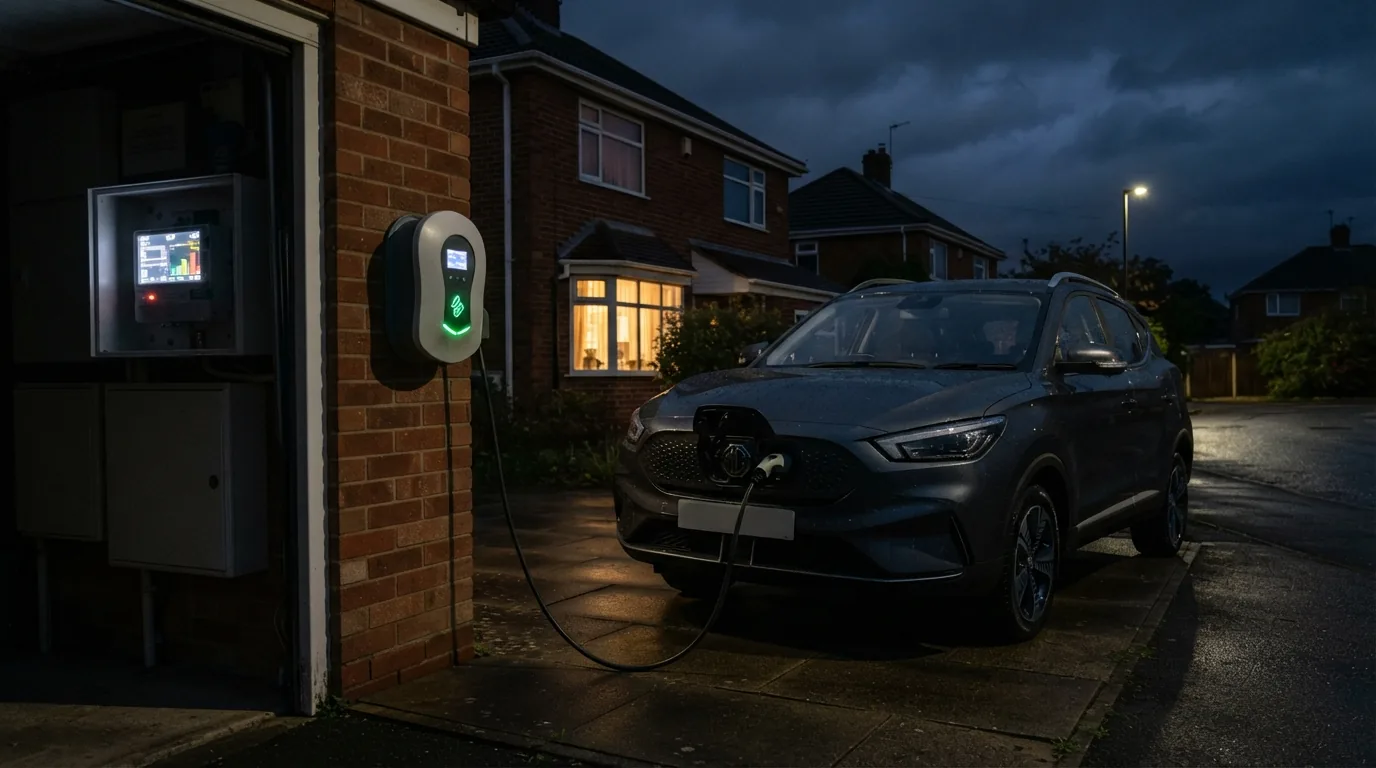
Quick answers
- Overnight off-peak, roughly 11pm to 6am, is the cheapest time to charge for almost every UK home; rates fall to around 7-8p/kWh versus the 24.67p/kWh standard Ofgem price cap rate (April to June 2026).
- Intelligent Octopus Go charges at 8p/kWh between 11:30pm and 5:30am; EDF GoElectric runs 11pm to 6am; Economy 7 gives seven off-peak hours usually from midnight.
- A smart charger paired with a compatible tariff hits the cheap window automatically, with potential savings of up to around 70% on charging costs according to Ohme (figures vary, verify current data).
- Avoid the 4pm to 8pm peak, when electricity is most expensive and the grid is most carbon-intensive.
- Solar owners are the main exception: midday charging on self-generated surplus power can beat the overnight grid rate, depending on generation.
- Set a 70-80% daily limit and a "ready by" time so the car finishes inside the cheap window and does not sit full for hours before you drive.
For most UK drivers, the cheapest time to charge your EV at home is overnight, typically between 11pm and 6am, on a specialist EV or off-peak tariff. Rates on tariffs like Intelligent Octopus Go and EDF GoElectric fall to around 7-8p/kWh in that window, against the Ofgem price cap standard rate of 24.67p/kWh (April to June 2026). Solar owners and drivers on dynamic tariffs are the main exception to the overnight rule.
When is the cheapest time to charge an EV at home?
Overnight off-peak hours represent by far the largest cost saving available to home chargers. The gap between the standard variable rate and a specialist EV tariff is not marginal; it is the difference between paying full price and paying roughly a quarter of it.
On the Ofgem price cap, the average standard unit rate sits at 24.67p/kWh for April to June 2026. Specialist EV and off-peak tariffs drop that figure dramatically during overnight hours:
- Intelligent Octopus Go: 8p/kWh between 11:30pm and 5:30am, with additional cheap smart slots available during the day at the same rate
- EDF GoElectric: 6.49-6.99p/kWh for seven hours between 11pm and 6am
- Good Energy EV Fixed: 6.75p/kWh between midnight and 5am (five hours overnight)
- Economy 7: seven off-peak hours, usually midnight to 7am, though the window and rate vary by supplier and region
Charging a car with a 60kWh battery overnight at 8p/kWh rather than at the 24.67p/kWh standard rate saves roughly three-quarters of the cost of a full charge. For most daily driving, that makes the cheapest time to charge unmistakably overnight.
Which off-peak tariff windows and rates apply?
The exact window depends on your tariff, so comparing them side by side makes the differences clear. All rates and times were correct at the time of research in May 2026, but these figures change. Confirm current pricing directly with the supplier before switching.
| Tariff | Off-peak rate | Off-peak window | Window length |
|---|---|---|---|
| Intelligent Octopus Go | 8p/kWh | 11:30pm to 5:30am | 6 hours (plus smart daytime slots) |
| EDF GoElectric | 6.49-6.99p/kWh | 11pm to 6am | 7 hours |
| Good Energy EV Fixed | 6.75p/kWh | Midnight to 5am | 5 hours |
| Economy 7 | Varies by supplier | Usually midnight to 7am | 7 hours |
Rates vary by region and tariff version; figures vary, verify current data with each supplier. The standard Ofgem price cap rate of 24.67p/kWh (April to June 2026) applies outside off-peak hours on most variable tariffs.
Intelligent Octopus Go stands out because it pairs a fixed overnight window with extra cheaper daytime slots, scheduled automatically when grid energy is cleaner and less expensive. Economy 7 is the longest-established off-peak option, useful if you do not want a dedicated EV tariff, though rates and windows differ across suppliers.
All specialist EV tariffs require a smart meter and a compatible smart charger so that charging can be scheduled and verified within the off-peak window.
How does a smart charger get you the cheap rate automatically?
You should not need to stay up until midnight to start a charge. A smart charger syncs with your tariff and departure time to handle the scheduling without any intervention from you.
Ohme chargers, for example, use live grid data and a “ready by” deadline to schedule charging automatically into the cheapest available hours. A “Price cap” setting in the Ohme app restricts charging to off-peak periods so the unit never draws power at the full standard rate unless you override it. According to Ohme, smart charging can cut charging costs by up to around 70% compared with standard electricity rates (figures vary, verify current data based on your tariff and mileage).
With Intelligent Octopus Go, scheduling goes a step further: the tariff itself takes control, finding slots when energy is cheaper and greener, and bills the off-peak rate even for smart slots outside the core 11:30pm to 5:30am window. You set a target charge level and a departure deadline in the Octopus app; the system does the rest.
To charge automatically in that window without setting an alarm, you need a smart unit that syncs with your tariff, which is exactly what our pick of the best home EV chargers is built around.
When should you avoid charging at home?
The hours to avoid are the late afternoon and early evening. UK household electricity demand peaks roughly between 4pm and 8pm, making this the most expensive and most carbon-intensive time to draw power from the grid.
Charging during that window on a standard tariff costs the most per kWh, and it adds pressure to the National Grid at exactly the moment demand is already high. Spreading EV charging across overnight hours reduces that demand spike and helps balance load across the 24-hour cycle, a point EDF Energy makes in explaining the case for off-peak tariffs.
If you arrive home at 6pm and want to charge, the straightforward move is to plug in straight away and let a smart charger delay the session until the cheap window opens. The car sits ready without drawing power at the expensive rate.
Is overnight always best, or should solar owners charge by day?
For drivers without solar panels, overnight off-peak charging is almost always the right answer. For homes with solar photovoltaic panels, the calculation changes.
A solar owner who generates surplus electricity around midday can charge the car using that free self-generated power rather than paying the overnight grid rate. Some solar-compatible smart chargers can detect surplus generation and divert it directly into the battery, so the car charges on power that would otherwise be exported to the grid at a lower rate than you would pay to import it.
Some smart tariffs, including Intelligent Octopus Go, also add cheaper daytime slots based on grid conditions, which can overlap with peak solar generation hours. Whether midday solar charging beats the overnight tariff rate depends on your panel output, battery size and local weather, so treat this as a conditional saving rather than a fixed rule.
Should you charge your EV every night, and to what level?
For most daily drivers, plugging in most evenings with a moderate charge limit is a sound default. According to bp pulse, a daily charge limit around 70-80% and plugging in regularly protects battery health better than running the pack low and then charging to 100%. Lithium-ion cells are most comfortable in roughly the 20-80% state of charge range, and most modern EVs let you set a limit so charging stops at that level automatically.
The smart way to pair health and cost is to set your charge limit at around 80% and your “ready by” time close to your usual departure. That way the car finishes charging inside the off-peak window and is not left sitting at full capacity for several hours before you drive. Most smart chargers and car apps support both settings alongside each other.
Charge to 100% before a long journey that needs the range, but for everyday use the 80% limit is a sensible baseline. Electrifying notes that LFP battery chemistry, used in some models, tolerates higher states of charge better than NCA or NCM cells, so the guidance depends slightly on which battery your car uses (figures vary, verify current data for your specific model).
Once you know the cheapest window, the next question is whether your charger can actually hit it without manual input each evening. Our guide to the best home EV chargers covers which smart units integrate cleanly with Intelligent Octopus Go, Ohme scheduling and EDF GoElectric, so the overnight rate works for you from day one. For a broader look at home charging setup and costs, see our home EV charging guide.
Useful Resources
Ofgem energy price cap (Apr-Jun 2026) https://www.ofgem.gov.uk/news/changes-energy-price-cap-between-1-april-and-30-june-2026
Intelligent Octopus Go https://octopus.energy/smart/intelligent-octopus-go/
EDF GoElectric EV tariff https://www.edfenergy.com/electric-cars/ev-tariffs/goelectric
Ofgem Economy 7 guide https://www.ofgem.gov.uk/information-consumers/energy-advice-households/economy-7-consumer-guide
Zapmap EV energy tariffs guide https://www.zapmap.com/charge-points/ev-energy-tariffs/
Ohme off-peak charging support https://ohme-ev.com/support/how-can-i-charge-at-my-off-peak-times/
How we test and where our numbers come from
Range figures are official WLTP combined values taken from manufacturer UK specification pages, with real-world estimates drawn from independent comparative testing. Prices are UK list prices at the time of the latest update. Tax, grant and charging-scheme figures come from GOV.UK and HMRC publications. We re-check every guide when pricing, specification or policy changes. Last checked 11 August 2026.
Frequently asked questions
Is it cheaper to charge an electric car at night?
Yes, significantly so. On a specialist EV or off-peak tariff, overnight rates fall to around 7-8p/kWh, well below the Ofgem standard price cap rate of 24.67p/kWh (April to June 2026). Charging between roughly 11pm and 6am on a tariff like Intelligent Octopus Go or EDF GoElectric is the cheapest way to top up at home.
Should you charge your electric car every night?
For most daily drivers, yes. Plugging in most evenings with a charge limit of around 70-80% is a sensible default that also protects battery health, as bp pulse notes that lithium-ion packs are healthiest when kept in roughly the 20-80% range. You do not need a full charge every night; if your commute is short, the car may barely have moved from the previous charge level.
What is the best time of day to avoid charging an EV?
Avoid the late afternoon and early evening, roughly 4pm to 8pm, when UK household electricity demand peaks. This is when grid electricity is most expensive and most carbon-intensive, and adding EV charging to that period increases pressure on National Grid infrastructure.
Do you need a smart charger to get cheap overnight rates?
Most specialist EV and off-peak tariffs, including Intelligent Octopus Go and EDF GoElectric, require a smart meter and a compatible smart charger so that charging can be scheduled and verified within the off-peak window. A smart unit like an Ohme charger lets you set a "ready by" time and syncs to your tariff automatically, so the cheap rate is applied without manual input.
When is the best time to charge an EV if you have solar panels?
With solar PV, the cheapest time is often the middle of the day, when you can use free self-generated surplus power rather than paying for overnight grid electricity. A solar-compatible smart charger can detect excess generation and divert it into the car. How much this saves depends on your panel output, the season and local conditions, so treat it as a conditional saving rather than a guaranteed figure.
Sources and further reading
- ofgem.gov.ukOfgemPrimary source referenced in this article.

EV Compared
The EV Compared editorial team tracks the UK electric vehicle market full time: new model launches, list prices, WLTP and real-world range, public charging tariffs and the tax rules that decide what an EV actually costs to run. Every guide is checked against manufacturer specifications and official GOV.UK figures, and updated whenever the numbers move.
Related reading
View all
BP Pulse vs Shell Recharge: Which UK Network Wins?
Two of the UK's biggest charging networks compared on price, reliability and which type of driver each suits
Can You Charge Any EV at Any Public Charger in the UK?
Why almost any new EV works at almost any UK public charger, and the two exceptions you need to know
Can You Charge an EV From a Three-Pin Plug in the UK?
Yes, most cars ship with the cable, but speed and safety limits mean it works best for occasional or emergency use