Tesla Supercharger vs InstaVolt: Cost, Speed and Coverage Compared (2026)
Tesla Superchargers are cheaper overall, especially for Tesla owners, while InstaVolt offers wider geographic coverage and tap-and-go contactless simplicity. Here is how to choose.
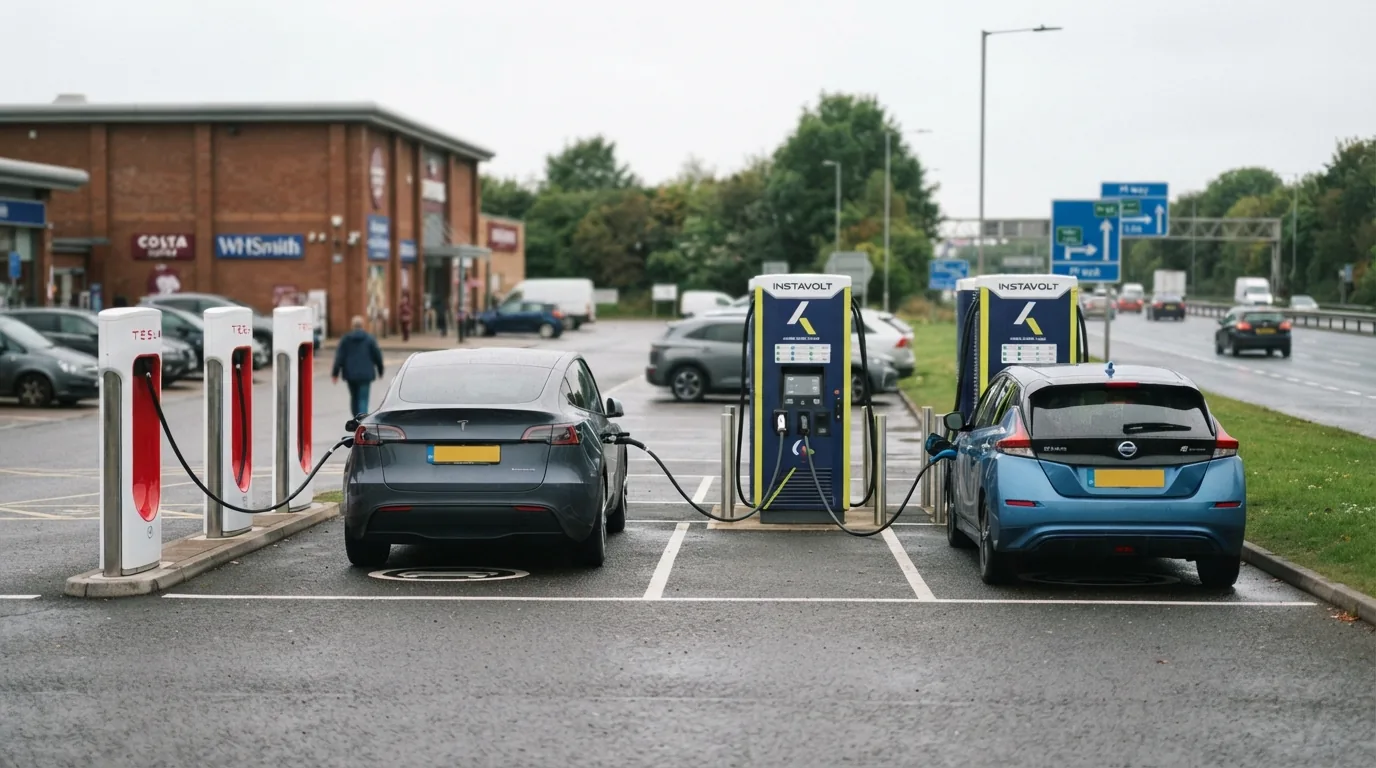
Quick answers
- Tesla Superchargers are the cheaper network overall, especially for Tesla owners on a membership, with rates from roughly 29p per kWh (figures vary, verify current data).
- InstaVolt is more expensive at peak, ranging from 70p to 89p per kWh, but its app off-peak rate drops to around 55p per kWh between 8pm and 7am (figures vary, verify current data).
- InstaVolt has more locations, around 2,439 chargers across 849 sites, giving wider geographic coverage. Tesla has fewer sites but larger hubs, around 2,896 chargers across 485 locations.
- Tesla V3/V4 Superchargers peak at 250kW. InstaVolt typically runs 50-160kW, though your car's own charge rate is usually the real limiting factor.
- Non-Tesla EVs can access only around 42 UK Supercharger sites and must be CCS-equipped and use the Tesla app. Most Superchargers remain Tesla-only.
- InstaVolt is fully tap-and-go contactless with no app required at standard rates, which suits drivers who do not want another account to manage.
Tesla Superchargers are the cheaper network in the UK, particularly for Tesla owners on a membership, with rates from around 29p per kWh (figures vary, verify current data). InstaVolt costs more at peak, with standard rates of 70p-89p per kWh, but it has more locations and is fully contactless with no app or account needed. The comparison between these two networks hinges on one key question: do you drive a Tesla, and is there an open Supercharger site near you?
All prices in this article are correct at the time of writing. Charging tariffs change frequently, so always check the network app or website before you rely on a specific rate.
Tesla Supercharger vs InstaVolt at a glance
The table below gives you the full picture before diving into the detail. Every price cell carries a verification note because both networks adjust their rates regularly.
| Metric | Tesla Supercharger | InstaVolt |
|---|---|---|
| UK chargers (March 2026) | ~2,896 | ~2,439 |
| UK locations (March 2026) | ~485 | ~849 |
| Peak charging speed | Up to 250kW (V3/V4) | 50kW-160kW (verify per site) |
| Standard price per kWh | From ~29p/kWh (members, verify current price) | 70p-89p/kWh (verify current price) |
| Off-peak or app price | No separate off-peak rate | 55p/kWh, 8pm-7am, app required (verify current price) |
| Payment method | Tesla app | Contactless card; app for off-peak |
| Non-Tesla access | ~42 UK sites only | All chargers, all CCS EVs |
The summary in one sentence: Tesla wins on price and raw speed; InstaVolt wins on location spread and access simplicity.
Network size and coverage
Tesla had around 2,896 chargers across 485 UK locations at the end of March 2026, according to Zapmap’s Tesla network guide. Those numbers look impressive, but with fewer locations, the sites tend to be larger hubs, often at motorway service areas. That concentration works in your favour on a long motorway run, where multiple bays reduce the chance of a queue.
InstaVolt had around 2,439 chargers across 849 UK locations over the same period, according to Zapmap’s InstaVolt network guide. More locations but fewer chargers per site means InstaVolt is typically spread across retail parks, A-roads and smaller towns rather than clustered at a handful of major hubs. For drivers who travel off the main motorway corridors, that broader geographic footprint is a practical advantage.
Zapmap notes that the Tesla network has “passed the 50% mark” for public accessibility, meaning more than half of UK Supercharger locations now allow non-Tesla EVs to charge (figures vary, verify current data). The important caveat is that passing 50% of sites is not the same as fully open access. A significant number of Supercharger locations remain Tesla-only.
For context on how both networks fit within the wider picture of UK public charging options, our guide to UK public charging networks covers every major operator.
Price per kWh: who is actually cheaper
Tesla is cheaper. The degree of that advantage, however, depends on membership and whether you own a Tesla.
Tesla members pay from around 29p per kWh (figures vary, verify current data). Membership costs approximately £8.99 per month, down from the previous £10.99, or £90 per year, and saves roughly 10-20p per kWh compared with non-member rates (figures vary, verify current data). Non-Tesla drivers using an open Supercharger site no longer pay a higher per-kWh rate than Tesla drivers at those locations, according to Zapmap reporting, though all pricing should be checked before you charge.
InstaVolt’s standard rate is 70p-89p per kWh on a contactless card (figures vary, verify current data). Since 22 April 2026, InstaVolt has offered an app off-peak rate of 55p per kWh for 11 hours each day between 8pm and 7am, with no subscription required (figures vary, verify current data). That off-peak rate narrows the gap with Tesla meaningfully, but you need the InstaVolt app to access it.
To illustrate the difference: a 10-80% top-up on a typical EV adds around 55kWh. At a Tesla membership rate of 29p per kWh, that session costs roughly £16. At InstaVolt’s standard peak rate of 89p per kWh, the same session costs roughly £49. At InstaVolt’s off-peak 55p rate, it comes down to around £30. These figures are illustrative, derived from the rates above, and will vary by location and time. Check both networks before charging.
The headline: InstaVolt’s off-peak rate is more competitive than its peak rate suggests, but Tesla membership remains the cheaper option if you Supercharge regularly and your car qualifies.
Charging speed compared
Tesla V3 and V4 Superchargers deliver up to 250kW, making them among the fastest public chargers in the UK. A Tesla Model Y Long Range charges from 10-80% in roughly 25-30 minutes on a V3 or V4 unit.
InstaVolt units run from 50kW at some older sites to around 160kW at newer installations, with Zapmap listing tiers of 50-149kW and 150-400kW across the network (figures vary, verify per site). A typical EV on a 150kW-plus InstaVolt charger completes a 10-80% charge in around 30 minutes.
The practical nuance is that your car’s own maximum charge rate is usually the limiting factor, not the charger’s headline output. InstaVolt charging speed is adequate for the majority of non-Tesla EVs, which accept 100-150kW at best. If your car accepts 150kW, you will not notice much difference between a 160kW InstaVolt and a 250kW Supercharger in real-world session time.
Reliability and the charging experience
Tesla ranked first for user satisfaction in recent Driver Power surveys, with around 94% of users reporting they were satisfied (figures vary, verify survey year). InstaVolt ranked second with approximately 86% satisfaction in the same surveys. Both are well ahead of most rival networks.
InstaVolt cites uptime of approximately 99.8% and operates a 24-hour customer helpline (figures vary, verify current data). The biggest practical advantage InstaVolt holds over Tesla, for non-Tesla drivers at least, is the payment method. InstaVolt is fully contactless: tap your debit or credit card at the unit and charge. There is no app required, no account to create and no RFID card to carry. The off-peak 55p rate does require the app, but the standard rate does not.
For Tesla drivers, the experience at a Supercharger is effortless in a different way. The car communicates with the network automatically, pre-conditions the battery on the route to a Supercharger, and billing is handled without any interaction at the charger itself. That integration is only available to Tesla owners.
Can non-Tesla cars use Tesla Superchargers?
The short answer is: yes, but only at certain sites, only with the right connector, and only via the Tesla app. The common assumption that all Superchargers are now open to all EVs is incorrect.
Around 42 UK Supercharger sites, accounting for approximately 477 individual chargers, are currently open to non-Tesla vehicles (figures vary, verify current data, this number is expanding). Only CCS-equipped vehicles can use these sites. If your car uses CHAdeMO or any other connector type, Supercharger access is not available.
To charge a non-Tesla EV at an open Supercharger site:
- Download the Tesla app and create an account.
- Add a payment method.
- At the site, select “Charge Your Non-Tesla” in the app.
- Choose your stall number from the map on screen.
- Start the session through the app.
You cannot start a session by plugging in and using a card at the unit, as you would at InstaVolt. The app is mandatory for non-Tesla charging.
The key point: you cannot simply turn up at any Supercharger in a Kia EV6 or a Hyundai IONIQ 5 and plug in. Check the Tesla app or Zapmap before routing to a Supercharger if you do not drive a Tesla.
Who should use which?
If you drive a Tesla: Superchargers are your default choice. They are cheaper, the charging experience is effortless, and the network is designed around your car. Use InstaVolt as a contactless backup when no open Supercharger is nearby or when a Supercharger site is full.
If you drive a non-Tesla EV: InstaVolt is the simpler default. The contactless payment, wide location coverage and no-account-needed access make it the easiest rapid charging experience for any CCS car. Where an open Supercharger site is available nearby and the per-kWh rate undercuts InstaVolt’s peak price, the Tesla app route is worth considering, but it requires advance setup.
Comparing your options? Tesla and InstaVolt are only two of the networks you will encounter day to day. Our guide to the best public EV charging networks in the UK ranks every major operator by cost, speed and reliability so you can plan your charging with confidence.
How we test and where our numbers come from
Range figures are official WLTP combined values taken from manufacturer UK specification pages, with real-world estimates drawn from independent comparative testing. Prices are UK list prices at the time of the latest update. Tax, grant and charging-scheme figures come from GOV.UK and HMRC publications. We re-check every guide when pricing, specification or policy changes. Last checked 11 August 2026.
Frequently asked questions
Is InstaVolt cheaper than a Tesla Supercharger?
In most cases, no. Tesla is cheaper, particularly for Tesla owners on a membership paying from around 29p per kWh. InstaVolt's peak rate of 70p-89p per kWh is among the higher rates on the public network.
Can any electric car use a Tesla Supercharger in the UK?
Only CCS-equipped EVs can use Tesla Superchargers, and only at the limited number of UK sites Tesla has opened to non-Tesla cars, currently around 42 locations (figures vary, verify current data). You must download the Tesla app and select "Charge Your Non-Tesla" to start a session. Most UK Supercharger sites remain Tesla-only, so check before routing to one.
How fast is InstaVolt charging?
InstaVolt units range from 50kW to around 160kW depending on the site, with Zapmap listing tiers of 50-149kW and 150-400kW across the network (figures vary, verify per site). A typical EV charges from 10-80% in around 30 minutes on a 150kW-plus unit, though your car's own maximum charge rate may cap the speed below the charger's rated output.
Do you need an app to use InstaVolt?
No. InstaVolt is contactless tap-and-go at standard rates. You can pay with any debit or credit card directly at the charger, with no account or app required.
How much is Tesla Supercharger membership in the UK?
Around £8.99 per month, reduced from the previous £10.99, or £90 per year (figures vary, verify current data). Membership saves roughly 10-20p per kWh compared with non-member rates and is worth it if you Supercharge regularly. If you only charge occasionally in public, the saving may not justify the monthly fee.
Sources and further reading
- zapmap.comZapmapPrimary source referenced in this article.
- zapmap.comZapmap Tesla network guidecurrent Tesla UK charger counts and public-access status
- tesla.comTesla: Non-Tesla Superchargingofficial guidance on which cars can use Superchargers and how to set up charging
- instavolt.co.ukInstaVolt off-peak 55p announcementprimary source for the current off-peak rate and hours

EV Compared
The EV Compared editorial team tracks the UK electric vehicle market full time: new model launches, list prices, WLTP and real-world range, public charging tariffs and the tax rules that decide what an EV actually costs to run. Every guide is checked against manufacturer specifications and official GOV.UK figures, and updated whenever the numbers move.
Related reading
View all
BP Pulse vs Shell Recharge: Which UK Network Wins?
Two of the UK's biggest charging networks compared on price, reliability and which type of driver each suits
Can You Charge Any EV at Any Public Charger in the UK?
Why almost any new EV works at almost any UK public charger, and the two exceptions you need to know
Can You Charge an EV From a Three-Pin Plug in the UK?
Yes, most cars ship with the cable, but speed and safety limits mean it works best for occasional or emergency use