Tesla Model 3 vs BYD Seal: Which Is the Better UK Buy in 2026?
Two saloon-shaped electric contenders compared on price, range, charging and real-world ownership
Quick answers
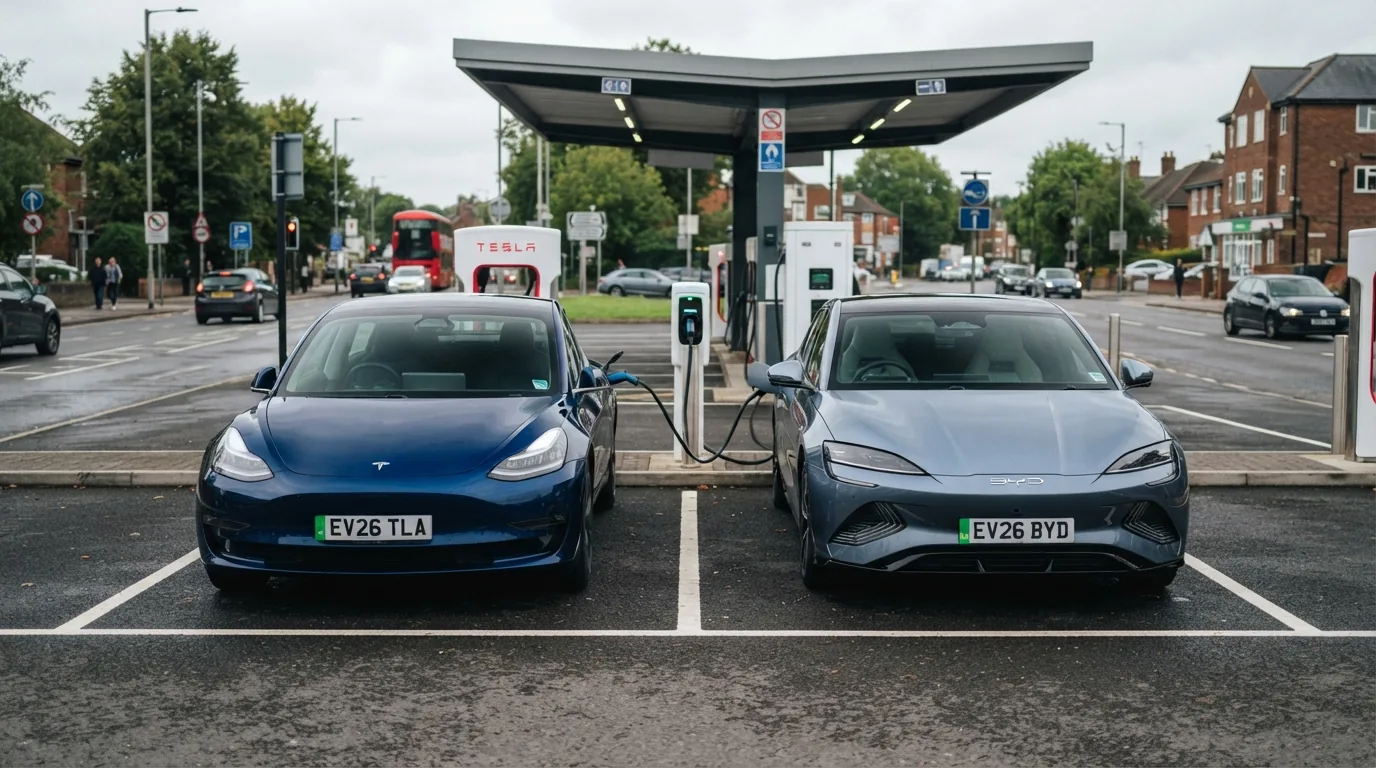
- The BYD Seal launched in the UK in 2023 with one explicit goal: to compete directly with the Tesla Model 3. It looks similar in profile, targets the same buyers, and has steadily improved its UK sales since arrival.
- Price: advantage Tesla: At the base specification, the Tesla Model 3 Standard Range costs £39,990 versus the BYD Seal Dynamic's £41,681.
- Range: advantage BYD Seal: The BYD Seal Dynamic's 82.5 kWh battery delivers 354 miles WLTP compared to the Model 3 Standard Range's 305 miles.
- The BYD Seal's 150 kW peak DC charging takes 10 to 80% in approximately 37 minutes.
- The Seal's interior quality surprised reviewers at launch and continues to impress.
- Warranty: advantage BYD Seal: BYD offers a six-year, 93,000-mile vehicle warranty compared to Tesla's four-year, 50,000-mile equivalent.
The BYD Seal launched in the UK in 2023 with one explicit goal: to compete directly with the Tesla Model 3. It looks similar in profile, targets the same buyers, and has steadily improved its UK sales since arrival. In 2026, this is a genuinely competitive head-to-head. Here is the clear verdict.
The short answer: the Tesla Model 3 Standard Range is the better buy for most UK drivers, primarily because the Supercharger network advantage is decisive for long-trip usability and the total cost advantage in the base specification is significant. The BYD Seal wins on standard equipment, warranty and charging speed on DC rapids, and it is the right choice for buyers who mostly charge at home and want maximum specification for the money.
Specifications head to head
| Feature | Tesla Model 3 RWD | BYD Seal Dynamic |
|---|---|---|
| Price from | £39,990 | £41,681 |
| Battery (usable) | 57.5 kWh | 82.5 kWh |
| WLTP range | 305 miles | 354 miles |
| Real-world range (motorway) | 225–255 miles | 260–295 miles |
| Peak DC charge rate | 170 kW | 150 kW |
| 10–80% charge time | ~28 min | ~37 min |
| AC charge rate | 11 kW | 11 kW |
| 0–62 mph | 6.1 sec | 5.9 sec |
| Boot space | 594 litres | 400 litres |
| Vehicle warranty | 4 years / 50,000 miles | 6 years / 93,206 miles |
| Battery warranty | 8 years / 150,000 miles | 8 years / 100,000 miles |
Note: the BYD Seal Dynamic represents the best-value specification. The Tesla Model 3 Long Range AWD costs £44,990 and delivers 466 miles WLTP with a 250 kW peak charge rate; the comparison above focuses on the base price point where they compete most directly.
Price: advantage Tesla
At the base specification, the Tesla Model 3 Standard Range costs £39,990 versus the BYD Seal Dynamic’s £41,681. That is a £1,691 difference, but the cars are not in the same specification tier. The BYD Seal Dynamic includes heated front and rear seats, a 360-degree camera system, powered tailgate, a 15.6-inch rotating central screen, and ventilated front seats as standard. The Tesla Model 3 Standard Range requires optional extras to match several of these.
When comparing equivalent specifications, the price gap narrows to under £1,000. Neither car is dramatically cheaper than the other at comparable specification levels.
Range: advantage BYD Seal
The BYD Seal Dynamic’s 82.5 kWh battery delivers 354 miles WLTP compared to the Model 3 Standard Range’s 305 miles. In real-world motorway driving, that translates to approximately 260 to 295 miles versus 225 to 255 miles. For drivers making regular long-distance runs, the Seal’s larger battery provides more comfortable headroom between charge stops.
However, the Model 3 Long Range at £44,990 delivers 466 miles WLTP with a 250 kW peak charging rate, which is better than the Seal on both measures and undercuts the Seal by £3,000 on a like-for-like all-in basis. If range is the primary concern and budget allows, the Model 3 Long Range is the clear winner over the Seal.
Charging: advantage Tesla (network), advantage BYD (CCS peak rate comparison)
The BYD Seal’s 150 kW peak DC charging takes 10 to 80% in approximately 37 minutes. The Tesla Model 3 Standard Range charges at up to 170 kW, achieving the same in around 28 minutes. On a standalone DC rapid charger comparison, the Tesla charges faster.
The more significant factor is the Supercharger network. Tesla’s UK Supercharger network of over 1,000 stalls at more than 200 locations is the most reliable and best-distributed fast-charging network in the UK. Non-Tesla EVs can now use Superchargers via the app, but Tesla owners receive seamless navigation integration and typically better reliability. For high-mileage drivers who regularly make long trips, this network advantage is worth paying for.
The BYD Seal uses CCS as standard and works with all major UK charging networks: Gridserve, bp pulse, Osprey, Pod Point, Osprey, Shell Recharge. If you are primarily charging at home and use public charging occasionally, the Supercharger advantage is less material.
Standard equipment and interior: advantage BYD Seal
The Seal’s interior quality surprised reviewers at launch and continues to impress. The rotating central screen is a genuinely clever feature. Heated rear seats and ventilated front seats as standard on the Dynamic specification are not available on the Tesla Model 3 Standard Range without options. Build quality is good and interior material quality is competitive with the Tesla.
The Tesla Model 3 Highland (2024 facelift) improved on the original’s build quality significantly, but its minimalist approach means fewer physical controls and a more demanding learning curve for new EV buyers.
Boot space is a meaningful difference: the Tesla’s 594-litre boot is substantially larger than the Seal’s 400 litres. If you carry large loads regularly, this matters.
Warranty: advantage BYD Seal
BYD offers a six-year, 93,000-mile vehicle warranty compared to Tesla’s four-year, 50,000-mile equivalent. The battery warranties are comparable (8 years for both), but Tesla’s covers 150,000 miles versus BYD’s 100,000 miles. For high-mileage buyers, the Tesla battery warranty is actually superior; for lower-mileage buyers, the Seal’s longer vehicle warranty provides better long-term peace of mind.
Depreciation: advantage Tesla
Tesla Model 3 values have proven more resilient than the BYD Seal in the UK used market. The Seal is a newer market entrant with less established residual value data, and there is residual uncertainty around BYD’s long-term UK parts and support infrastructure. The Tesla’s established track record, active owner community and over-the-air update history support stronger used values.
The verdict by use case
Choose the Tesla Model 3 if:
- You regularly drive long distances and want the best charging network experience
- Boot space matters (594 litres vs 400 litres)
- You plan to own for fewer than four years (Tesla’s warranty term)
- You want stronger resale value in the used market
Choose the BYD Seal if:
- You primarily charge at home and use public charging occasionally
- You want the highest standard specification for the money
- A longer vehicle warranty (six years) provides important reassurance
- You prefer a more feature-rich interior over a minimalist approach
What should you read next?
For the full picture of electric saloons and fastbacks, see our best electric cars to buy in 2026. For everything about the cost of ownership for both models, the electric car cost to own guide covers the numbers. Full buying and owning context is in our hub.
How we test and where our numbers come from
Range figures are official WLTP combined values taken from manufacturer UK specification pages, with real-world estimates drawn from independent comparative testing. Prices are UK list prices at the time of the latest update. Tax, grant and charging-scheme figures come from GOV.UK and HMRC publications. We re-check every guide when pricing, specification or policy changes. Last checked 11 August 2026.
Frequently asked questions
What should you read next?
For the full picture of electric saloons and fastbacks, see our best electric cars to buy in 2026. For everything about the cost of ownership for both models, the electric car cost to own guide covers the numbers.

EV Compared
The EV Compared editorial team tracks the UK electric vehicle market full time: new model launches, list prices, WLTP and real-world range, public charging tariffs and the tax rules that decide what an EV actually costs to run. Every guide is checked against manufacturer specifications and official GOV.UK figures, and updated whenever the numbers move.
Related reading
View all
Do Bigger Wheels Reduce Electric Car Range?
Yes, significantly. Here is the data on how much wheel size costs in miles and why it happens
BMW i4 vs Tesla Model 3: UK Range and Efficiency Test
The BMW costs more and goes less far, but is it worth it? A data-led head to head for UK buyers
How Far Can an Electric Car Really Go on One Charge?
Real-world range figures for UK drivers: what the numbers mean and which cars go furthest