How Long Does It Take to Charge an Electric Car at Home?
Charge times by battery size and charger speed, and why overnight on a 7kW wallbox is all most UK drivers need
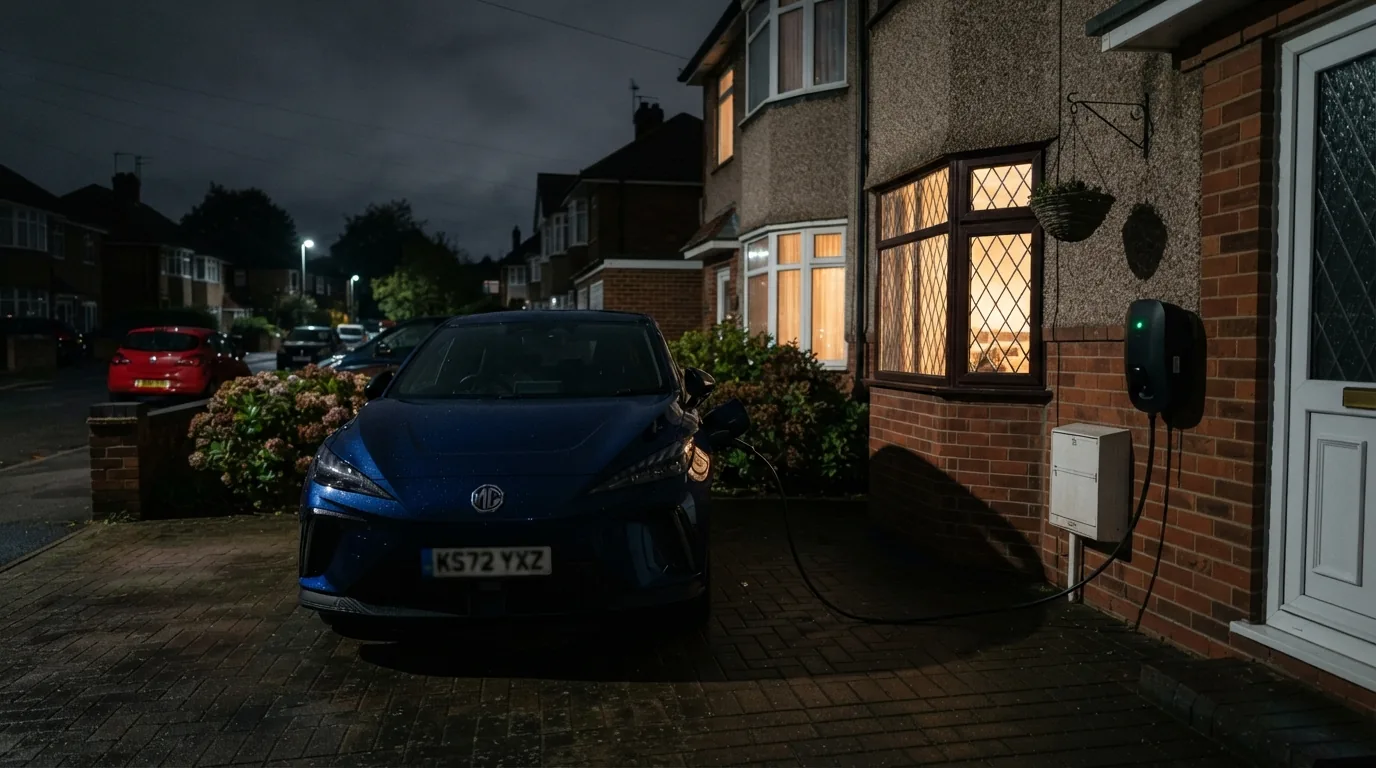
Quick answers
- A 60kWh electric car charges in just under 8 hours on a standard 7kW home charger, easily an overnight job.
- A 7kW unit adds roughly 25 to 30 miles of range per hour, depending on how efficient your car is.
- A three-pin plug works at about 2.3kW (up to around 18 hours for a full charge on many batteries) and should be a backup, not your daily method.
- 22kW charging needs three-phase power, which most UK homes do not have, so 7kW is the practical ceiling at home.
- The last 10 to 20% charges slowest, which is why most owners top up overnight rather than charging to 100%.
- Charging on an EV smart tariff overnight (around 7p/kWh on some tariffs, figures vary) makes timing both cheap and convenient.
A typical electric car with a 60kWh battery takes just under 8 hours to charge from empty to full on a 7kW home charger. On a standard three-pin plug at around 2.3kW, that same battery can take up to 26 hours. In practice, most drivers top up overnight rather than charging from empty, so actual charging time is much shorter. The table below lets you apply these figures to your own car.
Pod Point and the RAC both frame 7kW as the benchmark for UK home charging, adding roughly 25 to 30 miles of range per hour. A three-pin socket works but is better treated as a backup. The rest of this guide explains the spread, the 20% slowdown, and why overnight timing on a smart tariff makes the whole thing straightforward.
How long does a typical home charge actually take?
For most UK drivers, a 7kW home charger is the starting point for any calculation. A 60kWh battery, which covers a large share of electric cars sold in the UK, takes just under 8 hours empty to full on a 7kW unit. That is roughly three times faster than a domestic socket, according to Pod Point.
The RAC’s figures show the spread by car: a ~63kWh Nissan Ariya takes around 10 hours on 7kW, which reflects how the car’s own onboard charger limit and battery management affect real charge times. So while “just under 8 hours” is a reliable headline figure, the actual time for your car depends on its battery size and the rate it accepts from the charger.
For most people, that distinction matters less than the practical point: plug in before bed, and the car is full by morning. The table below lets you cross your battery size against charger speed for a more precise estimate.
Charge time by battery size and charger speed
The figures below assume empty-to-full charging and that the car accepts the full charger power. They do not account for the slower final 10 to 20% (covered in a separate section below). Figures vary; verify current data for your specific model.
| Battery size | 3-pin (2.3kW) | Slow (3.6kW) | Standard home (7kW) | Three-phase (22kW)* |
|---|---|---|---|---|
| 40 kWh | ~17 hrs | ~11 hrs | ~6 hrs | ~2 hrs |
| 60 kWh | ~26 hrs | ~17 hrs | ~8 hrs | ~3 hrs |
| 82 kWh | ~35 hrs | ~22 hrs | ~12 hrs | ~4 hrs |
*22kW requires three-phase power, which is rare and expensive at a UK home. Times are empty-to-full approximations and do not account for the slower final 10 to 20%.
In terms of range added per hour: a 3.6kW slow charger adds up to around 15 miles; a 7kW standard home charger adds roughly 25 to 30 miles (the RAC puts this at around 22 to 30 miles depending on car efficiency); and a 22kW unit adds up to around 90 miles per hour. As an example, an 82kWh VW ID.5 takes around 22 hours at 3.6kW, around 12 hours at 7.4kW, and around 8 hours at 22kW (figures vary, verify current data).
Can you just use a three-pin plug?
A domestic three-pin socket delivers around 2.3kW, which adds only about 8 miles of range per hour. For a 60kWh battery, that means up to around 26 hours for a full charge, and for larger batteries the time stretches further.
The practical answer is yes, it works, but it is intended as a backup rather than a daily method. Running a standard socket at near its capacity for many consecutive hours puts sustained strain on household wiring that it was not designed for. The risk is overheating, and manufacturers generally advise treating three-pin charging as a last resort rather than a routine solution.
If you find yourself relying on a three-pin plug regularly, a dedicated wallbox makes daily charging significantly faster and safer.
Why a 7kW home charger is the sweet spot
A 7kW wallbox delivers roughly three times the power of a domestic socket and recharges a 60kWh car fully in a single overnight window. That covers the vast majority of what UK drivers actually need day to day.
Some wallboxes are advertised at 22kW, but that speed requires a three-phase electrical supply, which is rare and expensive to install at a UK home. Most UK homes run on single-phase supply, which caps AC charging at 7kW or 7.4kW regardless of what the wallbox is rated for. As the RAC notes, three-phase supply is simply not a realistic option for the great majority of homeowners.
Because nearly all home chargers sold in the UK deliver 7kW, the speed difference between models is small. What varies is smart-tariff control, build quality and price, which is why it pays to compare the best home EV chargers before you buy.
Why the last 20% takes the longest
Charge speed tapers as the battery approaches full. This is a deliberate protection mechanism, not a fault: the battery management system slows the incoming current to reduce heat and preserve long-term battery health. In practice, the final 10 to 20% can take a disproportionately long time compared to the earlier stages of charging.
This is one reason most owners do not charge to 100% every night. Topping up from 30% to 80% is both quicker and easier on the battery than running it empty and filling it completely. Many manufacturers recommend keeping daily charging within the 20 to 80% range and only going to 100% before a long trip. The empty-to-full figures in the table above are useful for comparison, but they do not reflect how most people actually charge.
When is the cheapest time to charge at home?
Overnight is both the most convenient and, on the right tariff, the cheapest time to charge. EV-specific smart tariffs offer off-peak rates for overnight charging, with Intelligent Octopus Go offering an off-peak rate of around 7p/kWh (figures vary by region and can change over time; check the current rate for your postcode before switching).
That overnight window is ample for a 7kW charger to fully recharge most batteries from a normal daily top-up point. You set your target charge level and departure time in the app, and the charger manages the rest.
For renters and flat owners who want to install a home charger, the EV chargepoint grant provides up to £350 toward the cost of a unit and installation (figures vary, verify current data on GOV.UK as the grant value and the end date, currently 31 March 2027, can change). The grant is administered by OZEV and is available to eligible applicants in England, Scotland and Wales.
Since home charge time is largely determined by the 7kW standard rather than the charger brand, the real decision is which charger gives you the best smart-tariff integration, reliability and value. Browse our comparison of the best home EV chargers to find the right wallbox for your situation, and see our guide to charging at home for a broader look at the process.
Useful Resources
RAC charging speeds guide https://www.rac.co.uk/drive/electric-cars/charging/electric-car-charging-speeds/
Intelligent Octopus Go https://octopus.energy/smart/intelligent-octopus-go/
EV chargepoint grant for renters and flat owners https://find-government-grants.service.gov.uk/grants/electric-vehicle-chargepoint-grant-for-renters-and-flat-owners-2
Pod Point charging time guide https://podenergy.com/guides/how-long-to-charge-an-electric-car
How we test and where our numbers come from
Range figures are official WLTP combined values taken from manufacturer UK specification pages, with real-world estimates drawn from independent comparative testing. Prices are UK list prices at the time of the latest update. Tax, grant and charging-scheme figures come from GOV.UK and HMRC publications. We re-check every guide when pricing, specification or policy changes. Last checked 11 August 2026.
Frequently asked questions
How long does it take to charge an electric car with a 7kW charger?
A typical electric car with a 60kWh battery takes just under 8 hours to charge from empty to full on a 7kW home charger, adding roughly 25 to 30 miles of range per hour. Cars with larger batteries take longer: an 82kWh battery takes around 12 hours. In practice, most people top up overnight rather than charging from empty, so real charge times are often much shorter.
How long does it take to charge an electric car using a three-pin plug?
A domestic three-pin socket charges at around 2.3kW, adding only about 8 miles of range per hour and taking up to around 26 hours for a 60kWh battery to charge from empty. It is best treated as an emergency option: manufacturers recommend a dedicated wallbox for regular daily charging, partly because running a socket near its limit for many hours can strain household wiring.
Is it cheaper to charge an electric car at night?
Yes, in most cases. Overnight off-peak windows on EV smart tariffs are significantly cheaper than peak daytime rates, with tariffs such as Intelligent Octopus Go offering rates around 7p/kWh for overnight charging. Rates vary by region and change over time, so it is worth checking current figures for your postcode.
Can you charge an electric car to 100% at home?
Yes, but the last 10 to 20% charges more slowly because the battery management system reduces the incoming current to protect the battery. Many owners charge to around 80% for daily use and top up to 100% only before longer trips. This is both quicker and generally better for long-term battery health.
Do you need a special charger to charge an EV at home?
You do not strictly need one, but a dedicated 7kW wallbox is far faster and safer than a three-pin plug for daily charging. A three-pin socket adds around 8 miles of range per hour; a 7kW charger adds 25 to 30 miles per hour. Renters and flat owners may qualify for an EV chargepoint grant of up to £350 toward a home charger installation (check current GOV.UK figures, as the grant value and end date can change).
Sources and further reading
- podenergy.comPod PointPrimary source referenced in this article.

EV Compared
The EV Compared editorial team tracks the UK electric vehicle market full time: new model launches, list prices, WLTP and real-world range, public charging tariffs and the tax rules that decide what an EV actually costs to run. Every guide is checked against manufacturer specifications and official GOV.UK figures, and updated whenever the numbers move.
Related reading
View all
BP Pulse vs Shell Recharge: Which UK Network Wins?
Two of the UK's biggest charging networks compared on price, reliability and which type of driver each suits
Can You Charge Any EV at Any Public Charger in the UK?
Why almost any new EV works at almost any UK public charger, and the two exceptions you need to know
Can You Charge an EV From a Three-Pin Plug in the UK?
Yes, most cars ship with the cable, but speed and safety limits mean it works best for occasional or emergency use