Renault 5 E-Tech vs Citroen e-C3: Best Budget EV for the UK?
The two most disruptive affordable electric cars of 2025 to 2026 go head to head
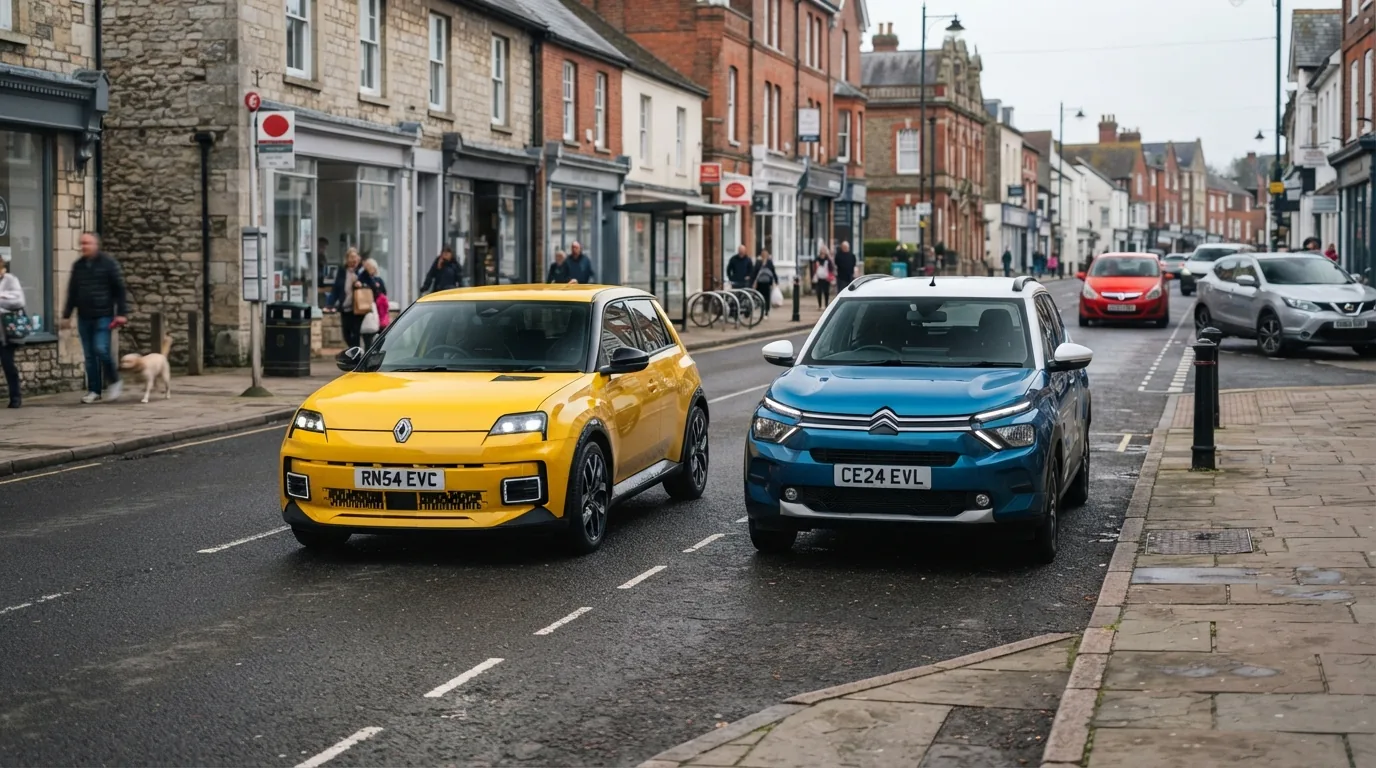
Quick answers
- The Renault 5 E-Tech and Citroën ë-C3 are the two most significant affordable electric cars of the past two years in the UK. Both arrived at a time when the sub-£25,000 EV market was thin and disappointing, and both made a compelling case that practical electric cars do not need to cost £35,000.
- The relevant comparison: These cars sit in different sub-segments at their base specifications.
- Range: marginal advantage Renault 5 E-Tech: Both cars offer approximately 249 to 255 miles WLTP in their main specifications.
- Charging: advantage Renault 5 E-Tech: The Renault 5 has a 22 kW on-board AC charger, which is the highest in the class at this price.
- The Renault 5 interior is more ambitious and more successful.
- Ride comfort: advantage Citroën ë-C3: The ë-C3's Progressive Hydraulic Cushion suspension is Citroën technology at its best.
The Renault 5 E-Tech and Citroën ë-C3 are the two most significant affordable electric cars of the past two years in the UK. Both arrived at a time when the sub-£25,000 EV market was thin and disappointing, and both made a compelling case that practical electric cars do not need to cost £35,000. Here is the direct comparison.
The short answer: the Renault 5 E-Tech (52 kWh) is the better car overall, with more range, a more engaging driving character, and a stronger design. The Citroën ë-C3 wins on value after the Electric Car Grant, rear passenger space and ride comfort. If the £3,000 price difference matters to your budget, the ë-C3 is the obvious choice. If you can absorb it, the Renault 5 is the more complete car.
Specifications head to head
| Feature | Renault 5 E-Tech 40 kWh | Renault 5 E-Tech 52 kWh | Citroën ë-C3 Standard | Citroën ë-C3 Extended Range |
|---|---|---|---|---|
| Price from | £22,995 | £25,495 | £19,995 | £23,495 |
| After EV Grant | £19,245 | £21,745 | £16,245 | £19,745 |
| Battery (usable) | 40 kWh | 52 kWh | 29.4 kWh | 44 kWh |
| WLTP range | 188 miles | 255 miles | 133 miles | 249 miles |
| Real-world range | 145–170 miles | 190–225 miles | 100–120 miles | 185–215 miles |
| Peak DC charge | 80 kW | 100 kW | 30 kW | 100 kW |
| AC charge | 22 kW | 22 kW | 7.4 kW | 11 kW |
| Boot space | 326 litres | 326 litres | 310 litres | 310 litres |
| 0–62 mph | 9.9 sec | 7.9 sec | 11.0 sec | 11.0 sec |
| Vehicle warranty | 5 years / 100,000 miles | 5 years / 100,000 miles | 3 years | 3 years |
Electric Car Grant of £3,750 applied. Eligibility requires both the car and buyer to meet OZEV criteria. The Standard ë-C3 at £19,995 is the entry-level model with a smaller 29.4 kWh battery; most buyers should consider the Extended Range at £23,495.
The relevant comparison
These cars sit in different sub-segments at their base specifications. The Citroën ë-C3 Standard (£19,995) is more of a city runabout with 133 miles WLTP range and 30 kW DC charging. The relevant head-to-head for most buyers is the Renault 5 E-Tech 52 kWh (£25,495) versus the Citroën ë-C3 Extended Range (£23,495).
At net prices after the Electric Car Grant: the Renault 5 costs £21,745, the ë-C3 Extended Range costs £19,745. A £2,000 difference for two cars that both deliver around 250 miles WLTP. What does that money buy you?
Range: marginal advantage Renault 5 E-Tech
Both cars offer approximately 249 to 255 miles WLTP in their main specifications. In real-world conditions, both deliver 185 to 225 miles depending on driving pattern, speed and temperature. This is effectively a draw on the metric that matters most to first-time EV buyers.
The Renault 5’s 52 kWh battery is slightly larger than the ë-C3’s 44 kWh. The real-world advantage is modest but real: slightly more buffer on longer days, slightly less anxiety about battery level.
Charging: advantage Renault 5 E-Tech
The Renault 5 has a 22 kW on-board AC charger, which is the highest in the class at this price. At a 22 kW public AC charger (increasingly common in car parks and town centres), the car fills from 20 to 80% in approximately two hours. The ë-C3 Extended Range’s 11 kW AC charger takes double that time at the same charger.
For DC rapid charging, both peak at 100 kW. The ë-C3 takes slightly longer due to its smaller battery (fewer kWh to add), which in practice means charge stops are roughly equivalent in time for similar real-world range restoration.
The 22 kW AC advantage is the Renault 5’s clearest technical edge over the ë-C3 and particularly useful for drivers who use destination chargers at workplaces, shopping centres or hotels.
Driving: advantage Renault 5 E-Tech
The Renault 5 drives the way it looks: with character. Its steering is more direct, the body control is tighter, and it rewards enthusiastic driving in a way the ë-C3 never attempts. The Renault 5 won the Urban Living category at the 2026 Carwow Car of the Year Awards, and its driving experience contributes to that recognition.
The ë-C3, by contrast, prioritises comfort. The soft suspension irons out UK road imperfections extremely well; the ride quality is genuinely impressive for a car at this price. It does not encourage spirited driving, but it makes daily urban commuting comfortable and relaxed. Citroën’s design brief was explicitly to prioritise comfort over dynamics, and it succeeds.
Interior and design: advantage Renault 5 E-Tech
The Renault 5 interior is more ambitious and more successful. The retro design cues extend to the cabin with good results, the materials feel appropriately premium for the price, and the 10.1-inch screen with built-in Google Maps is well-integrated. The physical shortcut buttons below the screen are a practical touch.
The ë-C3’s interior is more utilitarian. It is well-designed for ease of use rather than style, and the materials are honest rather than impressive. It does not feel cheap, but it does not match the Renault 5’s interior distinction.
Boot space is virtually identical: 326 litres (Renault 5) versus 310 litres (ë-C3). The ë-C3’s taller body creates more rear headroom and a more upright seating position for rear passengers, making it easier for six-footers to sit in the back. The Renault 5’s rear bench is tight for tall adults.
Ride comfort: advantage Citroën ë-C3
The ë-C3’s Progressive Hydraulic Cushion suspension is Citroën technology at its best. On UK roads, particularly in cities and on ageing A-roads, the ë-C3 filters out bumps and surface noise better than the Renault 5. This matters daily, not occasionally.
The Renault 5 is not uncomfortable; it is simply more driver-focused and less comfort-focused than the ë-C3.
Warranty: advantage Renault 5 E-Tech
Renault’s five-year, 100,000-mile vehicle warranty significantly outpaces the Citroën’s three-year standard warranty. For a budget EV that will likely be kept for several years, this difference matters. Both include the mandatory 8-year battery warranty.
Value after the Electric Car Grant: advantage Citroën ë-C3
At £19,745 effective price (after the £3,750 grant) for a car with 249 miles WLTP and 100 kW rapid charging, the ë-C3 Extended Range is one of the best value propositions in the new car market regardless of fuel type. No other car available at this net price offers comparable range, charging capability and refinement.
The verdict by use case
Choose the Renault 5 E-Tech 52 kWh if:
- Driving enjoyment matters to you, even in a city car
- You regularly use 22 kW public AC chargers at work or destinations
- A five-year warranty provides important long-term reassurance
- The additional £2,000 is within budget
Choose the Citroën ë-C3 Extended Range if:
- Maximum value for money is the primary criterion
- Rear passenger comfort and ease of entry and exit matter
- The softer, more comfortable ride suits your daily driving
- Budget is tight and the £3,750 grant needs to go as far as possible
What to read next
Both cars are covered in our best electric cars under £30,000 guide, and the full context of affordable EV ownership is in the buying and owning hub. For broader EV recommendations, see best electric cars to buy in 2026.
How we test and where our numbers come from
Range figures are official WLTP combined values taken from manufacturer UK specification pages, with real-world estimates drawn from independent comparative testing. Prices are UK list prices at the time of the latest update. Tax, grant and charging-scheme figures come from GOV.UK and HMRC publications. We re-check every guide when pricing, specification or policy changes. Last checked 11 August 2026.

EV Compared
The EV Compared editorial team tracks the UK electric vehicle market full time: new model launches, list prices, WLTP and real-world range, public charging tariffs and the tax rules that decide what an EV actually costs to run. Every guide is checked against manufacturer specifications and official GOV.UK figures, and updated whenever the numbers move.
Related reading
View all
Do Bigger Wheels Reduce Electric Car Range?
Yes, significantly. Here is the data on how much wheel size costs in miles and why it happens
BMW i4 vs Tesla Model 3: UK Range and Efficiency Test
The BMW costs more and goes less far, but is it worth it? A data-led head to head for UK buyers
How Far Can an Electric Car Really Go on One Charge?
Real-world range figures for UK drivers: what the numbers mean and which cars go furthest