UK Petrol and Diesel Ban: Where the 2030 and 2035 Rules Stand
The 2030 ban on new pure-petrol and diesel cars is confirmed under Labour. Hybrids get a window until 2035. Here is what the rules actually say
Quick answers
- The UK ban on selling new petrol and diesel cars comes into force from 2030. The ban applies to the sale of new cars powered solely by internal combustion engines -- it does not apply to used cars, and it does not mean you will be forced to stop driving your existing petrol or diesel car.
- What is actually banned and when: From 1 January 2030, you will no longer be able to buy a brand-new car powered solely by petrol or diesel from a UK franchise dealer.
- The original 2030 ban date was set under the Conservative government in November 2020.
- Does the ban apply to used cars: This is perhaps the most important misunderstanding to correct.
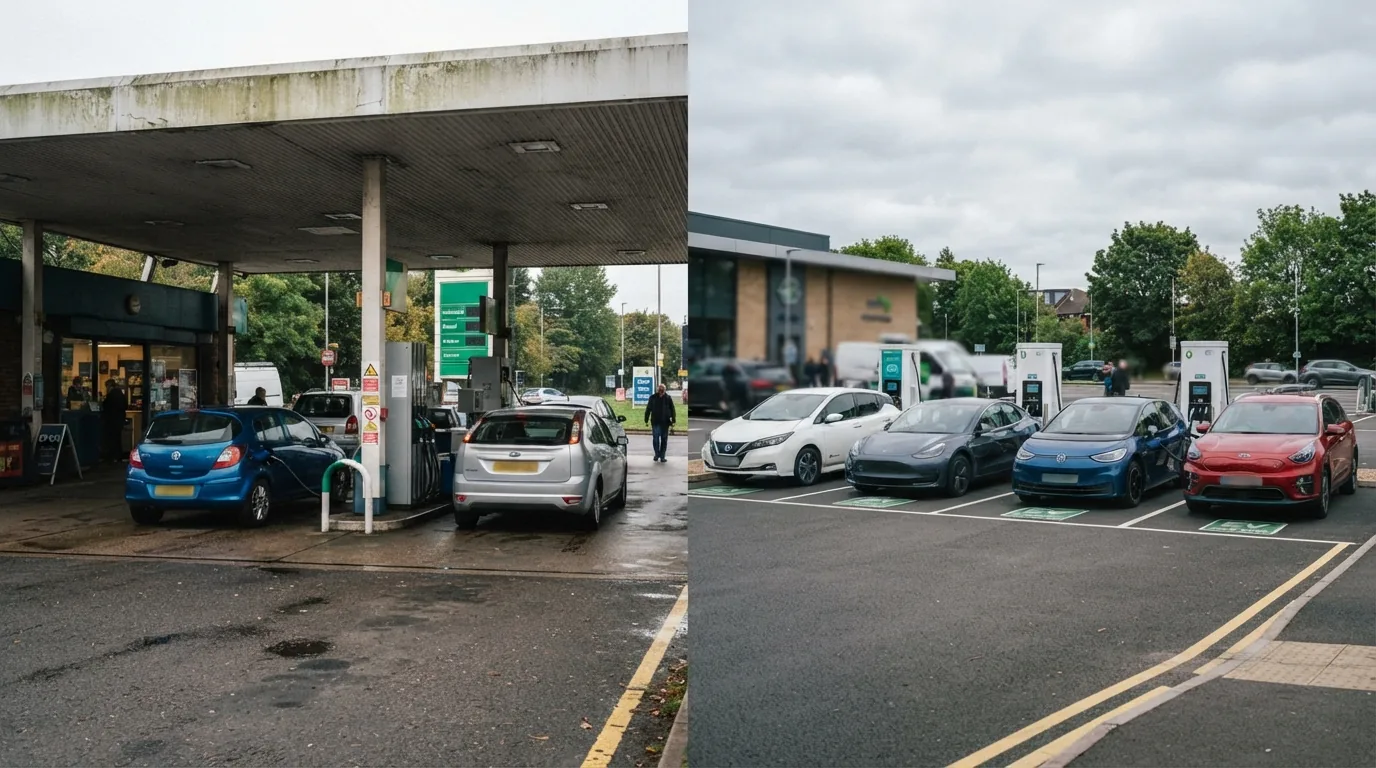
- Petrol forecourts are not going to disappear immediately in 2030.
- The EU's own 2035 zero-emission mandate for new cars has faced political challenges in 2026, with some member states and manufacturers pushing for a review or delay, particularly around the question of e-fuels (synthetic fuels that could allow internal combustion engines to operate with zero net carbon emissions).
The UK ban on selling new petrol and diesel cars comes into force from 2030. The ban applies to the sale of new cars powered solely by internal combustion engines — it does not apply to used cars, and it does not mean you will be forced to stop driving your existing petrol or diesel car. Between 2030 and 2035, new plug-in and full hybrids will remain available. From 2035, every new car sold in the UK must be zero-emission at the tailpipe.
These are the confirmed rules as of May 2026, under the current Labour government. Here is what they mean in plain language.
What is actually banned and when?
The legislation creates two distinct deadlines:
2030: end of new pure-petrol and pure-diesel car sales
From 1 January 2030, you will no longer be able to buy a brand-new car powered solely by petrol or diesel from a UK franchise dealer. Cars that are already manufactured and in stock before that date may be registered for a short transition period, but the date of manufacture and registration will both have limits.
2035: end of new hybrid car sales
From 1 January 2035, every new car sold in the UK must be 100% zero-emission at the tailpipe — in practice, this means battery electric vehicles (BEVs) or hydrogen fuel cell vehicles (FCEVs). Plug-in hybrids (PHEVs) and full hybrids (HEVs) will no longer be available new from 2035.
The 2030-2035 window: hybrids with conditions
Between 2030 and 2035, plug-in hybrids and full hybrids can still be sold new, provided they meet a minimum zero-emission range requirement. The specific mileage threshold — how many miles a PHEV must be able to travel on electric power alone — has not been finally confirmed for all hybrid types. The government was expected to clarify this detail by the end of 2026. Broadly, PHEVs that can cover meaningful urban distances on electric power should qualify; mild hybrids (which cannot drive on electricity alone) are expected to be excluded.
History: why the 2030 date changed and came back
The original 2030 ban date was set under the Conservative government in November 2020. In September 2023, then-Prime Minister Rishi Sunak announced that the ban would be moved to 2035, delaying it by five years. This decision was controversial, attracting criticism from the car industry, environmental groups and business groups who had been planning on the 2030 timeline.
When Labour won the July 2024 general election, the government reversed the Sunak decision and reinstated the 2030 date. This was confirmed in formal policy documents and is currently UK government policy.
The EU has had its own 2035 ban date but in 2026 faced political pressure to soften or delay it. The UK’s reinstatement of 2030 puts Britain ahead of the EU on the phase-out timeline, creating some complexity for manufacturers who sell in both markets.
Does the ban apply to used cars?
No. The 2030 and 2035 bans apply only to the sale of new cars. You will be able to buy, sell, drive and use a petrol or diesel car that already exists indefinitely. There is no plan to ban used ICE car sales, no plan to force existing ICE vehicles off the road, and no confirmed date by which petrol cars must be taken off UK roads entirely.
This is perhaps the most important misunderstanding to correct. The 2030 ban affects what you can buy new, not what you can drive. A petrol car bought today will remain road-legal for as long as it passes its MOT.
What does the ban mean for fuel availability?
Petrol forecourts are not going to disappear immediately in 2030. Given that millions of petrol and diesel cars will remain on UK roads for many years after 2030 (the average age of a used car at purchase is about 8 years; a car bought new in 2029 might not be scrapped until 2050), fuel retailers will need to continue supplying petrol and diesel for decades.
However, it is reasonable to expect that fuel retail will evolve. The major fuel retailers — bp, Shell, Esso — are all investing in EV charging infrastructure at their forecourt sites, partly in anticipation of this shift. Fuel availability will remain adequate but its prominence in the retail landscape will diminish over time.
What about the EU’s 2035 deadline? Does it affect UK buyers?
The EU’s own 2035 zero-emission mandate for new cars has faced political challenges in 2026, with some member states and manufacturers pushing for a review or delay, particularly around the question of e-fuels (synthetic fuels that could allow internal combustion engines to operate with zero net carbon emissions). A formal EU review is expected in 2026.
For UK buyers, the EU position is relevant primarily because many car manufacturers are pan-European operations. If the EU softens its 2035 deadline, manufacturers might lobby the UK government to align with any amended position. The current Labour government has indicated its commitment to the 2030 date and has not indicated any intention to revisit it in response to EU developments. But the broader political environment bears watching if you are making very long-term purchasing decisions.
What does the 2030 ban mean for car buyers right now (in 2026)?
For new car buyers: You have until the end of 2029 to buy a new petrol or diesel car. After that, if you want a new car with a combustion engine, you will be looking at hybrids only (until 2035). For most buyers this is not an immediate decision — very few people buy a new car specifically to stockpile the option of buying another new petrol car in eight years’ time.
For used car buyers: No direct effect. Buy whatever suits your needs and budget.
For business buyers: The timeline is more relevant. Company car fleets typically run on 3-4 year replacement cycles. A fleet replacing company cars in 2028 will be among the last to buy new petrol models; a fleet replacing them in 2030 or later will need to be electric-ready. Many large fleets already have EV transition plans in place.
For property owners and landlords: If you own a home with a driveway or a property with parking, installing EV charging capability now (even a standard 7 kW home wallbox) adds value and future-proofs the property. OZEV’s EV chargepoint grant (up to £350) helps with installation costs.
The ZEV mandate: the mechanism enforcing the transition before 2030
The 2030 ban tells you where the market ends up. The ZEV mandate is the mechanism driving the transition in the years leading there.
In 2026, 33% of every manufacturer’s new car sales must be zero-emission or they face a £15,000 fine per excess ICE car sold. The target rises each year: 38% in 2027, 52% in 2028, and so on to 80% by 2030. By the time 2030 arrives, the market will have been substantially reshaped by several years of mandatory ZEV quotas.
This means that the most significant market disruption from the phase-out rules is happening now, not in 2030. Petrol car pricing is already being affected by manufacturer ZEV compliance costs. EV deals are already being shaped by the mandate. The rules are live.
What is the most common mistake buyers make about the ban?
The most persistent mistake is conflating the ban on new petrol car sales with a ban on driving petrol cars. These are entirely different things. Millions of petrol and diesel vehicles will remain on UK roads for decades after 2030. The ban is on new sales only.
A related mistake is assuming that the rules are settled and will not change. They have already changed once (from 2030 to 2035 under Sunak, then back to 2030 under Labour). Monitoring official government announcements is sensible if long-term planning decisions depend on the exact dates.
What should you do next?
For the full picture on grants, incentives and how government policy affects your EV purchasing decision, see our grants, policy and legislation guide. For guidance on the best-value EVs available with current incentives, see our value EVs that qualify for grants page.
The 2030 and 2035 dates are confirmed policy as of May 2026. Understanding what they do and do not mean helps you make rational decisions about your next car purchase without being driven by anxiety or misconception.
How we test and where our numbers come from
Range figures are official WLTP combined values taken from manufacturer UK specification pages, with real-world estimates drawn from independent comparative testing. Prices are UK list prices at the time of the latest update. Tax, grant and charging-scheme figures come from GOV.UK and HMRC publications. We re-check every guide when pricing, specification or policy changes. Last checked 11 August 2026.
Frequently asked questions
What is actually banned and when?
From 1 January 2030, you will no longer be able to buy a brand-new car powered solely by petrol or diesel from a UK franchise dealer. Cars that are already manufactured and in stock before that date may be registered for a short transition period, but the date of manufacture and registration will both have limits.
Does the ban apply to used cars?
No. The 2030 and 2035 bans apply only to the sale of new cars.
What does the ban mean for fuel availability?
Petrol forecourts are not going to disappear immediately in 2030.
What about the EU's 2035 deadline? Does it affect UK buyers?
The EU's own 2035 zero-emission mandate for new cars has faced political challenges in 2026, with some member states and manufacturers pushing for a review or delay, particularly around the question of e-fuels (synthetic fuels that could allow internal combustion engines to operate with zero net carbon emissions).
What is the most common mistake buyers make about the ban?
The most persistent mistake is conflating the ban on new petrol car sales with a ban on driving petrol cars. These are entirely different things.
Sources and further reading
- rac.co.ukGOV.UK / RAC / AutocarPrimary source referenced in this article.

EV Compared
The EV Compared editorial team tracks the UK electric vehicle market full time: new model launches, list prices, WLTP and real-world range, public charging tariffs and the tax rules that decide what an EV actually costs to run. Every guide is checked against manufacturer specifications and official GOV.UK figures, and updated whenever the numbers move.
Related reading
View all
BYD in the UK: Full Model Range and Prices for 2026
From the £18,650 Dolphin Surf to the £47,025 Sealion 7 -- a complete guide to every BYD you can buy in Britain right now
Cheapest New EVs You Can Buy in the UK Right Now
From £14,495 to £30,000: the new electric cars that offer the most genuine value in the current market
Chinese EV Brands in the UK: Who Is Here and Are They Any Good?
BYD, MG, Xpeng, NIO, Leapmotor and Jaecoo are all selling in Britain -- here is an honest assessment of what each offers