Octopus Go vs Intelligent Octopus Go: Which EV Tariff Should You Choose?
A clear, honest comparison of both Octopus EV tariffs, including rates, eligibility, a real-world cost example, and a plain verdict on which one suits your setup.
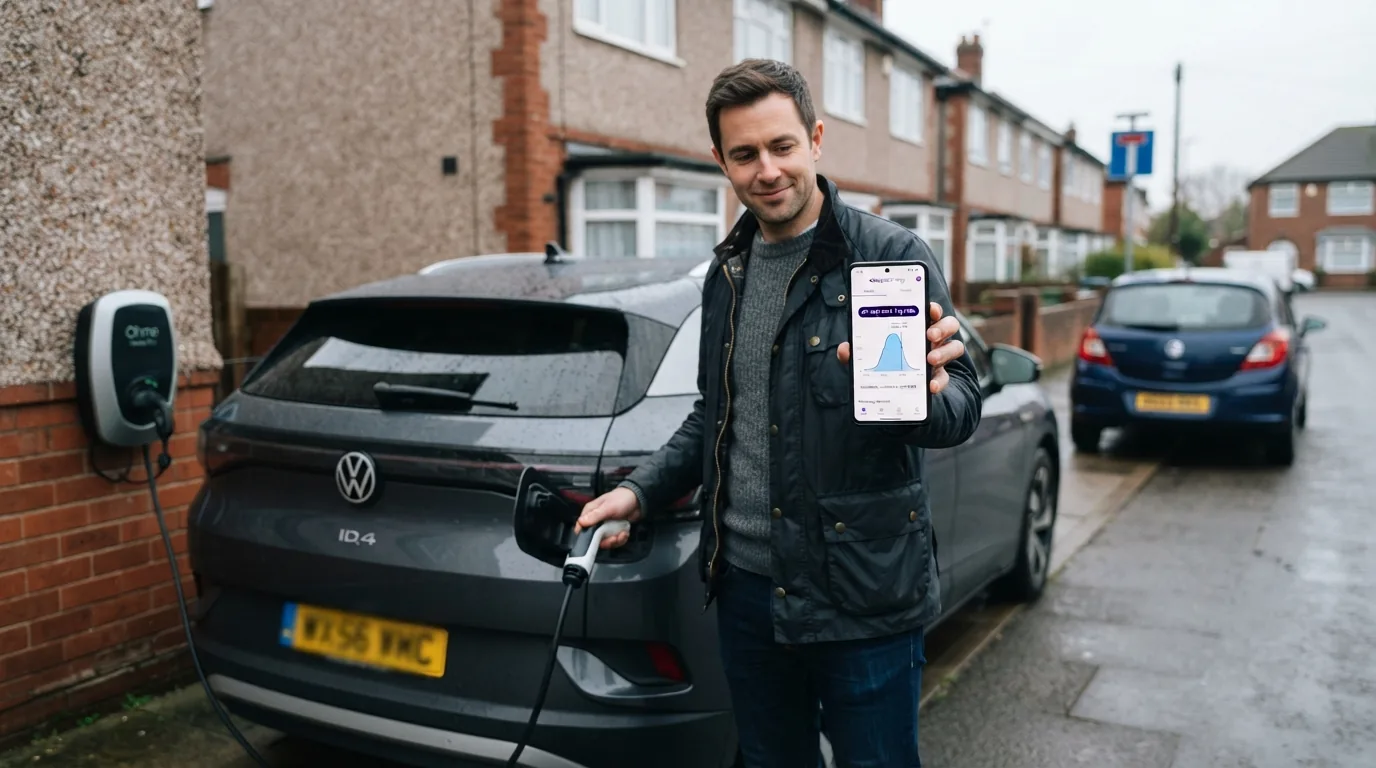
Quick answers
- Intelligent Octopus Go usually has a lower off-peak rate and a longer six-hour window (23:30 to 05:30) than Octopus Go's five hours (00:30 to 05:30), but it needs a compatible car or charger.
- Octopus Go works with any EV and any charger; you schedule charging yourself via your charger or the car's own timer.
- For a typical 10,000-mile driver the gap between the two is roughly £40 to £90 a year; the far bigger saving, around £400 to £600, comes from moving off the standard variable rate.
- With both tariffs the whole home gets the cheap rate during the fixed overnight window, so running big appliances overnight adds further value.
- Both tariffs carry a higher daytime rate than the standard cap, so they only pay off if you shift most usage into the cheap hours. All rates and windows vary by region and change over time, so verify current figures with Octopus before switching.
Both Octopus Go and Intelligent Octopus Go are EV tariffs from Octopus Energy that give you a cheap overnight unit rate for charging your car and running your home. The core difference in one line: Intelligent Octopus Go is the smart, usually-cheaper version with a longer overnight window and automatic scheduling, but it only works if your car or charger is compatible; Octopus Go is the universal option that works with any EV and any charger, and you handle the timing yourself.
The bigger point is this: being on either tariff saves far more than the gap between them. If you are currently on the standard variable rate, switching to an EV tariff is where the real money is.
Rates vary by DNO region and change over time. The figures in this article are current at the time of writing, so verify current rates with Octopus Energy before switching.
Octopus Go vs Intelligent Octopus Go at a glance
Intelligent Octopus Go is usually the cheaper tariff overall: it carries a lower off-peak unit rate and a six-hour window rather than five hours, and the car charges itself automatically. The catch is eligibility. If your car or charger is not on Octopus’s compatibility list, Intelligent Octopus Go is not available to you and Octopus Go is your option.
| Feature | Octopus Go | Intelligent Octopus Go |
|---|---|---|
| Off-peak unit rate | ~6.99p/kWh (figures vary, verify current data) | ~5.49p to 8p/kWh (figures vary, verify current data) |
| Off-peak window | 00:30 to 05:30 (5 hours) | 23:30 to 05:30 (6 hours) |
| Day (peak) rate | ~33.71p/kWh (figures vary, verify current data) | ~33.71p/kWh (figures vary, verify current data) |
| Smart/automatic scheduling | No, you set the timer | Yes, Octopus schedules the car |
| Charging outside window at off-peak rate | No | Yes, when smart-scheduled |
| Cheap rate covers whole home in window | Yes | Yes |
| Compatible cars/chargers required | No, any EV, any charger | Yes, compatible car or charger required (figures vary, verify current data) |
| Standing charge | Standard regional rate | Standard regional rate |
All rates and windows vary across the 14 DNO regions and change over time. Figures reflect April 2026 regional examples. Verify current rates on Octopus Energy’s website before switching.
What is Octopus Go?
Octopus Go is Octopus Energy’s universal EV tariff. Every night it gives you a fixed five-hour off-peak window, from 00:30 to 05:30, at a single cheap unit rate. Outside that window you pay a higher flat day rate for all your home’s electricity.
A few key points:
- The off-peak rate applies to your whole home during that window, not just the car. Run your dishwasher, washing machine or any other heavy load overnight and you pay the cheaper rate on all of it.
- It works with any EV and any home charger. There is no API connection, no app integration, no compatibility requirement.
- You schedule charging yourself, using your charger’s built-in timer or the car’s own scheduled-charging function.
- You need an Octopus Energy supply and a compatible smart meter (SMETS2, or some SMETS1 meters, so confirm with Octopus before switching).
The representative off-peak rate is around 6.99p/kWh (figures vary, verify current data), with the day rate considerably higher at around 33.71p/kWh in some regions (figures vary, verify current data). Check the exact figure for your postcode, as it differs across the 14 DNO regions.
What is Intelligent Octopus Go?
Intelligent Octopus Go is Octopus Energy’s smart EV tariff. It builds on Octopus Go with a lower unit rate, a longer overnight window and automatic scheduling through the Octopus app.
Key differences from standard Go:
- The off-peak window runs from 23:30 to 05:30, giving you six hours rather than five. That extra hour matters if your car has a large battery and charges at a slower rate.
- The off-peak unit rate is typically lower than Octopus Go’s rate (figures vary, verify current data). According to Octopus Energy, rates vary significantly by region.
- You set a “ready-by” time and a target charge level in the Octopus app. Octopus then schedules the car automatically across the hours it is plugged in, within and sometimes outside the core window.
- Intelligent Octopus Go can schedule car charging outside the 23:30 to 05:30 core window when the grid is running on greener or cheaper energy, and that additional charging still bills at the off-peak rate.
- “Bump charge” lets you demand an immediate charge at any time, for example before an unexpected journey. A bump charge is billed at the day rate, and you can stop it from the app.
- As with Octopus Go, the whole home gets the cheap rate during the fixed overnight window.
The smart scheduling applies to your car only. The off-peak rate on the rest of your home applies during the fixed 23:30 to 05:30 window, not during any additional smart-scheduled sessions.
Intelligent Octopus Go requires a compatible car or charger (see the next section).
Which cars and chargers work with Intelligent Octopus Go?
This section is the deciding factor for many people. If neither your car nor your charger is on Octopus’s compatibility list, Intelligent Octopus Go is not an option for you.
According to Octopus Energy, the tariff connects to over 280 EV and charger models (figures vary, verify current data). Eligibility can come through the car itself, via its manufacturer API, or through a compatible home charger.
Examples of supported car brands include Tesla, plus models from Audi, BMW, Mini, Renault and Volkswagen (figures vary, verify current data). Examples of compatible chargers include Ohme, Zappi and Andersen (figures vary, verify current data). Both lists change as Octopus adds new integrations, so do not treat this as exhaustive.
How to check your eligibility:
- Use the compatibility checker on the Intelligent Octopus Go page on the Octopus Energy website before you switch.
- If your car qualifies, you do not necessarily need a specific charger and vice versa.
- If neither qualifies, Octopus Go is your Octopus EV tariff.
How much does the difference actually cost you?
Here is a worked example using a mainstream EV with a 60kWh usable battery and an average real-world efficiency of 3.5 miles per kWh. At 10,000 miles per year, that car uses approximately 2,860kWh of charging energy annually.
| Octopus Go | Intelligent Octopus Go | |
|---|---|---|
| Annual EV charging energy | ~2,860 kWh | ~2,860 kWh |
| Representative off-peak rate used | ~6.99p/kWh (figures vary, verify current data) | ~6.5p/kWh mid-range example (figures vary, verify current data) |
| Approximate annual off-peak charging cost | ~£200 | ~£186 |
| Approximate annual difference | ~£14 to £90 cheaper (recompute from your actual regional rate) |
Car charging only, excluding standing charge and non-car home use. The gap between the two tariffs widens or narrows significantly depending on your region’s actual rates. Recompute this with the rates shown on your Octopus account or the regional rate page.
For context on the real saving, competitor analysis consistently puts the annual gap between Intelligent Octopus Go and Octopus Go at roughly £40 to £90 for a typical driver. The far larger figure is the saving either tariff delivers versus the standard variable rate, which is broadly in the region of £400 to £600 per year for a typical EV driver, depending on mileage and region.
The whole-home off-peak benefit adds to that. If you time your dishwasher, washing machine, immersion heater or home battery to run during the cheap window, you reduce your total electricity bill beyond the car-charging saving alone.
To see your full picture including standing charges and any non-car overnight use, read our guide to the cost to charge an EV at home and plug in your own mileage.
What about the daytime rate?
Both tariffs carry a notably higher day rate outside the off-peak window than the standard variable rate, with a representative figure of around 33.71p/kWh in some regions (figures vary, verify current data). This is the trade-off for the cheap overnight rate.
If most of your electricity use happens during the day and you cannot move it into the cheap hours, the higher day rate can erode the savings from overnight charging. That applies to both tariffs equally.
The day rates on Octopus Go and Intelligent Octopus Go are broadly similar to each other, so the day rate is not usually the deciding factor between the two. It is more relevant to whether either tariff suits your household at all. If a significant share of your consumption is fixed in the daytime and you cannot move it, compare the day rate against the standard variable cap rate for your region before switching.
Which Octopus EV tariff should you choose?
Choose Intelligent Octopus Go if:
- Your car or charger is on Octopus’s compatibility list.
- You are comfortable letting Octopus schedule your charging automatically.
- You want the lowest available off-peak unit rate and the longer six-hour window.
- Hands-off, set-and-forget charging suits your routine.
Choose Octopus Go if:
- Your car or charger is not supported by Intelligent Octopus Go.
- You want full manual control and a predictable, fixed overnight window.
- You prefer to manage timing through your own charger’s app or the car’s built-in scheduler.
- You charge at different locations (work, public) and want a simpler home tariff without app integration.
Edge cases worth noting: If you have solar panels or a home battery, tariffs such as Octopus Flux or Octopus Cosy may be worth comparing alongside an export tariff. That is a separate decision and not covered here, but it is worth knowing those options exist before committing to either Go tariff.
The bottom line is straightforward: if you are eligible for Intelligent Octopus Go, it is usually the better pick. If you are not, Octopus Go captures most of the available saving with less complexity.
Get the current rates for your postcode from the Octopus Energy website, check your car or charger against the compatibility list, and then work out your own annual figure using the mileage and efficiency numbers for your vehicle. The real decision is usually made at that compatibility check. If Intelligent Octopus Go is open to you, it generally wins on both price and convenience. If it is not, Octopus Go is a solid, straightforward alternative that still moves you well clear of the standard variable rate.
How we test and where our numbers come from
Range figures are official WLTP combined values taken from manufacturer UK specification pages, with real-world estimates drawn from independent comparative testing. Prices are UK list prices at the time of the latest update. Tax, grant and charging-scheme figures come from GOV.UK and HMRC publications. We re-check every guide when pricing, specification or policy changes. Last checked 11 August 2026.
Frequently asked questions
What is the difference between Octopus Go and Intelligent Octopus Go?
Octopus Go gives you a fixed five-hour off-peak window (00:30 to 05:30) at a cheap unit rate and works with any EV and any charger, with you setting the timer. Intelligent Octopus Go has a lower off-peak rate, a six-hour window (23:30 to 05:30), and automatic scheduling through the Octopus app, but it requires a compatible car or charger.
Is Intelligent Octopus Go cheaper than Octopus Go?
Usually yes. The off-peak unit rate is typically lower, and the longer six-hour window means more potential cheap charging. For a typical 10,000-mile driver the annual gap is roughly £40 to £90 in Intelligent Octopus Go's favour, though this depends on your region and household routine.
Which cars and chargers are compatible with Intelligent Octopus Go?
According to Octopus Energy, over 280 EV and charger models are supported (figures vary, verify current data). Supported brands include Tesla and models from Audi, BMW, Mini, Renault and Volkswagen; compatible chargers include Ohme, Zappi and Andersen. These lists are updated regularly, so use the compatibility checker on the Octopus Energy website to confirm your specific car or charger before switching.
Can I get Intelligent Octopus Go with any car?
No. If neither your car nor your home charger is on the Octopus compatibility list, you cannot use Intelligent Octopus Go. In that case, Octopus Go is the Octopus EV tariff available to you.
Does the cheap overnight rate apply to my whole house or just the car?
During the fixed off-peak window, the cheap rate applies to all your home's electricity, not just the car. This means you can save further by running your dishwasher, washing machine or other heavy loads during those hours. With Intelligent Octopus Go, smart-scheduled car charging can also attract the off-peak rate outside the fixed window, but that applies to the car only, not the rest of the home.
Sources and further reading
- octopus.energyOctopus EnergyPrimary source referenced in this article.
- octopus.energyOctopus Go(Octopus Energy) - rates, off-peak window and smart meter eligibility
- octopus.energyOctopus Go rates by region(Octopus Energy) - look up the exact rate for your postcode
- energy-stats.ukenergy-stats.uk Intelligent Octopus Go guide- independent breakdown of rates and compatible models
- ofgem.gov.ukOfgem price cap- confirm the current standard variable rate to contextualise the EV tariff saving

EV Compared
The EV Compared editorial team tracks the UK electric vehicle market full time: new model launches, list prices, WLTP and real-world range, public charging tariffs and the tax rules that decide what an EV actually costs to run. Every guide is checked against manufacturer specifications and official GOV.UK figures, and updated whenever the numbers move.
Related reading
View all
BP Pulse vs Shell Recharge: Which UK Network Wins?
Two of the UK's biggest charging networks compared on price, reliability and which type of driver each suits
Can You Charge Any EV at Any Public Charger in the UK?
Why almost any new EV works at almost any UK public charger, and the two exceptions you need to know
Can You Charge an EV From a Three-Pin Plug in the UK?
Yes, most cars ship with the cable, but speed and safety limits mean it works best for occasional or emergency use