How to Maximise Your EV Range on UK Roads
Practical techniques and proven habits to get the most miles from every charge on British roads
Quick answers
- You can typically extend your EV's real-world range by 15 to 30 per cent compared with unrestricted driving simply by adjusting speed, managing climate control and using regenerative braking effectively.
- 1. Reduce motorway speed: If you are making a longer journey on a nearly depleted battery, reducing to 60 mph is far more effective than any other strategy for extending range.
- On a cold January morning, a preconditioned EV with a warm battery can significantly outperform a car that has sat cold overnight in terms of both range and performance in the first 10 to 15 minutes of driving.
- 3. Manage climate control actively: The cabin heater is the biggest non-speed drain on the battery in UK winters.
- In urban driving, setting maximum regen (one-pedal mode on most EVs) and planning your approach to junctions and roundabouts recovers significantly more energy than light regen or friction braking.
- 5. Keep tyre pressures correct: Cold air reduces tyre pressure naturally (approximately 1 psi per 10-degree temperature drop).
You can typically extend your EV’s real-world range by 15 to 30 per cent compared with unrestricted driving simply by adjusting speed, managing climate control and using regenerative braking effectively. For UK drivers, where motorways at 70 mph, cold winters and variable terrain all conspire to cut range, these habits make a meaningful difference.
The most impactful single change you can make: slow down on motorways. Dropping from 70 mph to 60 mph reduces energy consumption by around 15 per cent per mile. No app, setting or accessory comes close to that saving.
1. Reduce motorway speed
Aerodynamic drag increases with the square of velocity. At 70 mph, your car faces roughly four times more drag resistance than at 35 mph. The practical impact: every 10 mph you reduce on a motorway extends your range by approximately 10 to 15 per cent.
| Speed | Range Impact vs 70 mph |
|---|---|
| 80 mph | -10 to -15% |
| 70 mph | Baseline |
| 60 mph | +12 to +15% |
| 50 mph | +25 to +30% |
If you are making a longer journey on a nearly depleted battery, reducing to 60 mph is far more effective than any other strategy for extending range. On a car with 150 miles remaining at 70 mph, dropping to 60 mph can add 20 to 25 miles.
2. Precondition the cabin before setting off
Using the heater while driving on battery costs real range. Using it while the car is plugged in costs you nothing from your driving range. Most EVs allow you to set a departure time via the manufacturer app, which triggers preconditioning automatically. The car heats (or cools) the cabin and warms the battery to operating temperature before you unplug.
On a cold January morning, a preconditioned EV with a warm battery can significantly outperform a car that has sat cold overnight in terms of both range and performance in the first 10 to 15 minutes of driving.
3. Manage climate control actively
The cabin heater is the biggest non-speed drain on the battery in UK winters. A resistive heater (the type without a heat pump) draws 3 to 5 kW continuously, equivalent to driving at motorway speed in terms of energy consumption.
Strategies to reduce heating load:
Use heated seats and heated steering wheel instead of the fan heater. Heated seats draw around 100 to 200 watts per seat, versus 3,000 to 5,000 watts for the main heater. If you can keep the cabin temperature set at 18 degrees rather than 22 degrees, and compensate with seat heat, you can cut heating energy consumption by 30 to 50 per cent.
Use the rear demister briefly, not continuously. The heated rear window draws around 150 to 300 watts. It clears the screen within a minute or two; leaving it on for the full journey wastes energy.
Use cabin air recirculation mode. Once the cabin is warm, recirculation keeps warm air inside rather than constantly heating cold outside air.
4. Use maximum regenerative braking in town
In urban driving, setting maximum regen (one-pedal mode on most EVs) and planning your approach to junctions and roundabouts recovers significantly more energy than light regen or friction braking. Looking further ahead, lifting off the accelerator early, and coasting to a near-stop under regen alone can improve city range by 10 to 25 per cent compared with aggressive acceleration followed by late braking.
The technique: when you see a red light or junction 200 metres ahead, lift off the accelerator completely and let regen do the work. The car decelerates smoothly, recovers energy, and arrives at the junction with minimal additional brake input needed.
5. Keep tyre pressures correct
Cold air reduces tyre pressure naturally (approximately 1 psi per 10-degree temperature drop). Under-inflated tyres increase rolling resistance. The Department for Transport estimates that tyres at 75 per cent of recommended pressure increase energy consumption by 3 to 4 per cent. In winter, when cold weather is already hurting range, maintaining correct tyre pressure is low-effort but worth doing.
Check pressures monthly. Most modern EVs have tyre pressure monitoring, but alerts typically only trigger when the drop is significant. Maintaining the manufacturer’s recommended cold pressure (listed on the door sill label) is the target.
6. Avoid unnecessary weight
Every extra 100 kg of payload increases energy consumption by approximately 1 to 3 per cent in typical driving. A roof box adds weight and dramatically increases drag: a large roof box at 70 mph can increase energy consumption by 15 to 25 per cent. Remove roof bars and boxes when not in use.
7. Use Eco mode
Most EVs have an Eco or efficiency mode that limits maximum acceleration, adjusts regen and sometimes restricts climate control. On a motorway run, Eco mode reduces the energy available for sudden bursts of speed and often manages regen and climate more conservatively. Real-world savings from Eco mode range from 5 to 15 per cent depending on the model and driving pattern.
8. Charge overnight and start full
This is straightforward but often overlooked. If you have home charging, setting the car to charge overnight to 80 per cent means you start every day close to a full battery. You never need to make a detour for a public charge on short trips. For longer journeys, charge to 100 per cent the night before and leave early in the morning when the battery is at its warmest (having been plugged in and possibly preheating).
9. Use navigation with charging integration
Tesla, BMW, Mercedes and Hyundai all offer onboard navigation that accounts for remaining range and planned charging stops, and automatically preconditions the battery (warming or cooling it to optimal charging temperature) before arriving at a rapid charger. This not only makes charging faster but ensures the battery is at the right temperature for efficient driving after the charge stop.
10. Drive smoothly and progressively
Aggressive acceleration and hard braking, even with regen active, wastes energy. Regen recovers roughly 60 to 70 per cent of kinetic energy; the other 30 to 40 per cent is lost as heat in the motor. Smooth, gradual acceleration to a cruise speed, followed by a long regen coast when you need to slow, is always more efficient than hard acceleration and heavy braking.
What is the biggest mistake UK EV drivers make on range?
The most common error is driving at 70 mph on motorways without adjusting expectations. UK speed limits allow 70 mph, and most EV drivers use that allowance. But at 70 mph, range is 20 to 30 per cent below WLTP; at 80 mph (which many drivers use), the reduction is 30 to 35 per cent. A driver who bought a 300-mile WLTP car expecting 300 miles of motorway range will be surprised by a figure closer to 200 to 225 miles.
The solution is straightforward: understand that motorway range is not WLTP range, and plan charge stops accordingly. For more on this, see the motorway range drop explained article.
For full rankings of the most efficient EVs and those with the longest real-world range in the UK, visit longest range electric cars. The range and performance hub covers every related topic in detail.
Sources: Department for Transport tyre pressure research, EV efficiency testing from Autocar and What Car?, WLTP test cycle methodology, manufacturer eco mode documentation.
How we test and where our numbers come from
Range figures are official WLTP combined values taken from manufacturer UK specification pages, with real-world estimates drawn from independent comparative testing. Prices are UK list prices at the time of the latest update. Tax, grant and charging-scheme figures come from GOV.UK and HMRC publications. We re-check every guide when pricing, specification or policy changes. Last checked 11 August 2026.
Frequently asked questions
What is the biggest mistake UK EV drivers make on range?
The most common error is driving at 70 mph on motorways without adjusting expectations. UK speed limits allow 70 mph, and most EV drivers use that allowance.

EV Compared
The EV Compared editorial team tracks the UK electric vehicle market full time: new model launches, list prices, WLTP and real-world range, public charging tariffs and the tax rules that decide what an EV actually costs to run. Every guide is checked against manufacturer specifications and official GOV.UK figures, and updated whenever the numbers move.
Related reading
View all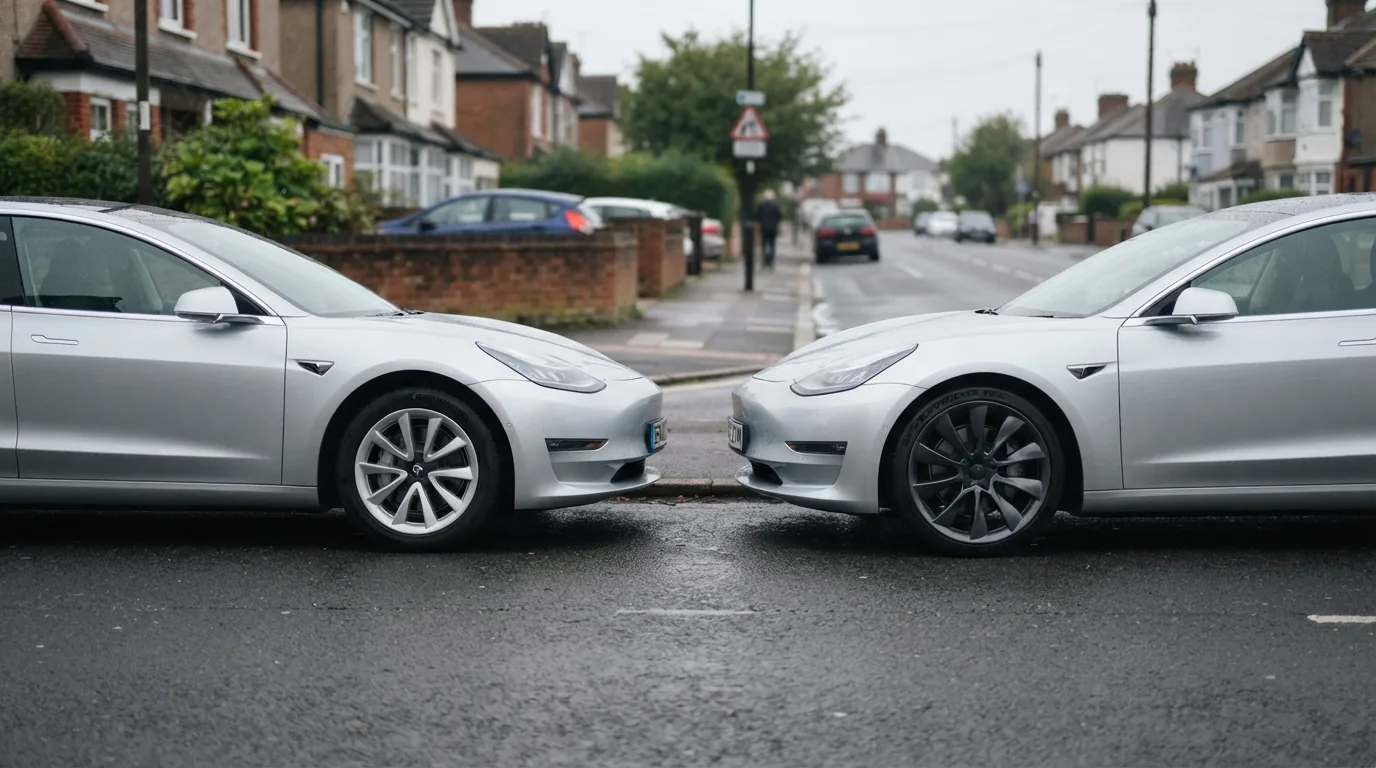
Do Bigger Wheels Reduce Electric Car Range?
Yes, significantly. Here is the data on how much wheel size costs in miles and why it happens
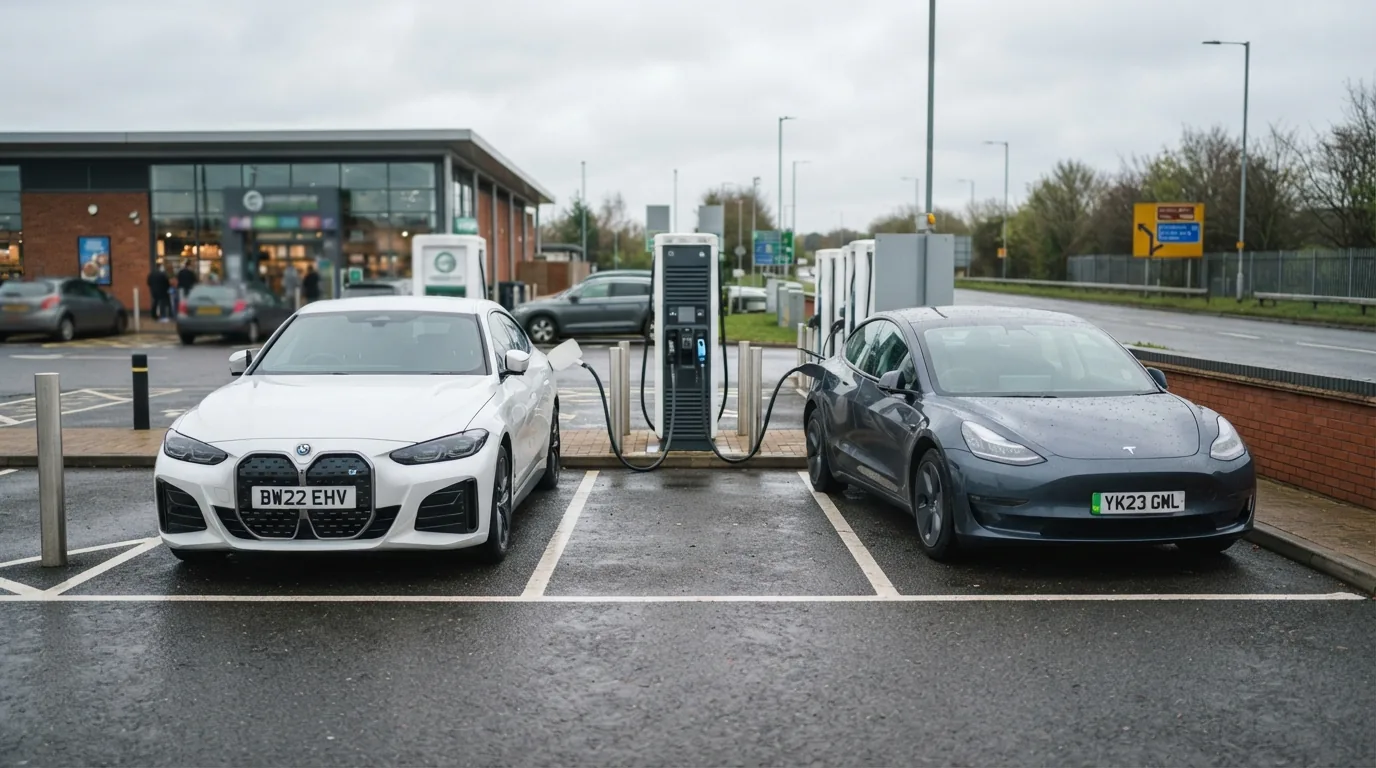
BMW i4 vs Tesla Model 3: UK Range and Efficiency Test
The BMW costs more and goes less far, but is it worth it? A data-led head to head for UK buyers
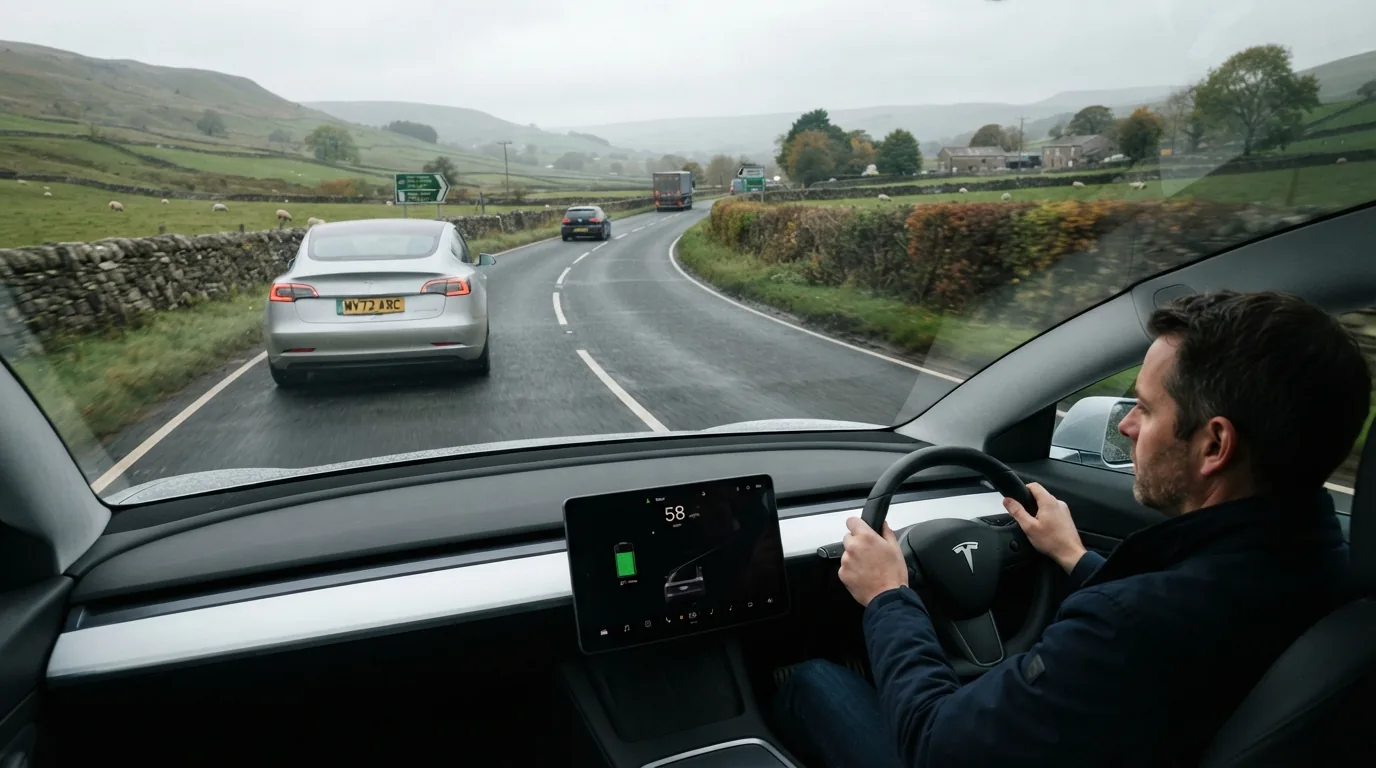
How Far Can an Electric Car Really Go on One Charge?
Real-world range figures for UK drivers: what the numbers mean and which cars go furthest