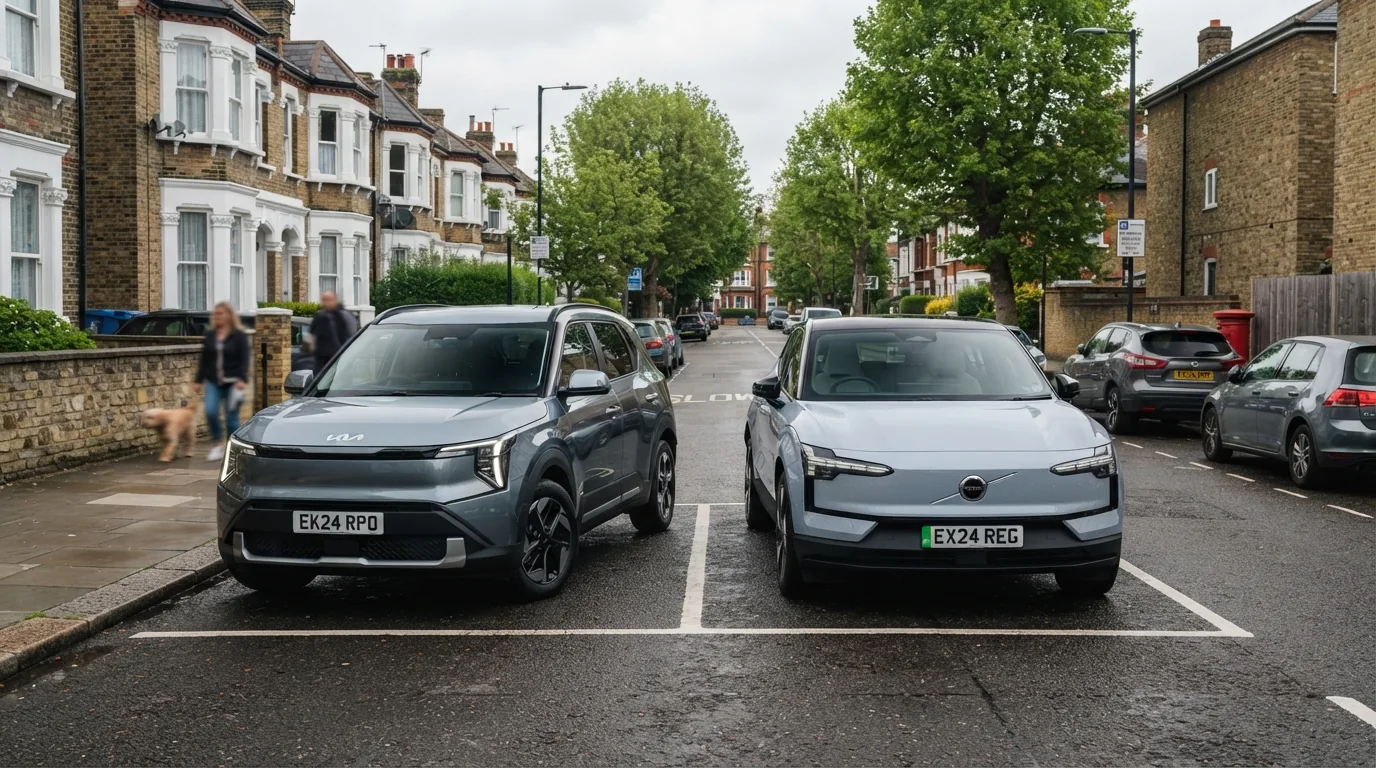
Kia EV3 vs Volvo EX30: The Compact Electric SUV Showdown
Value and practicality against premium brand appeal and performance, decided for UK buyers
Quick answers
- The Kia EV3 and Volvo EX30 are two of the most talked-about compact electric SUVs in the UK in 2026. They start at virtually the same price, target similar buyers, and compete on paper in a way that demands a direct comparison.
- Price: effectively a draw at entry level: The EV3 Standard Range starts at £32,995; the EX30 Single Motor at £33,060.
- Range: decisive advantage Kia EV3: For a driver covering 250 miles in a day, the EV3 Long Range completes that in a single charge.
- Charging: advantage Volvo EX30: The Volvo EX30 peaks at 153 kW DC charging, compared to the Kia EV3's 100 kW.
- Practicality: decisive advantage Kia EV3: The 460-litre boot of the EV3 is 45% larger than the Volvo EX30's 318 litres.
- Driving: advantage Volvo EX30: If driving enjoyment is a factor in your buying decision, the EX30 wins this category clearly.
The Kia EV3 and Volvo EX30 are two of the most talked-about compact electric SUVs in the UK in 2026. They start at virtually the same price, target similar buyers, and compete on paper in a way that demands a direct comparison. Here is the clear verdict.
The short answer: the Kia EV3 is the better all-round buy for most UK drivers. It offers dramatically more boot space, a significantly larger battery option with class-leading range, and Kia’s seven-year warranty. The Volvo EX30 wins on driving engagement, interior design, brand prestige and, in its dual-motor form, performance. Choose accordingly.
Specifications head to head
| Feature | Kia EV3 Standard | Kia EV3 Long Range | Volvo EX30 Single Motor | Volvo EX30 Single Motor Extended |
|---|---|---|---|---|
| Price from | £32,995 | £35,995 | £33,060 | £37,120 |
| Battery (usable) | 53 kWh | 81.4 kWh | 51 kWh | 64 kWh |
| WLTP range | 270 miles | 375 miles | 209 miles | 296 miles |
| Real-world range | 210–240 miles | 290–325 miles | 160–185 miles | 230–260 miles |
| Peak DC charge rate | 100 kW | 100 kW | 153 kW | 153 kW |
| 0–62 mph | 7.5 sec | 7.5 sec | 5.7 sec | 5.7 sec |
| Boot space | 460 litres | 460 litres | 318 litres | 318 litres |
| Vehicle warranty | 7 years / 100,000 miles | 7 years / 100,000 miles | 5 years / unlimited | 5 years / unlimited |
| Battery warranty | 7 years / 100,000 miles | 7 years / 100,000 miles | 8 years / 100,000 miles | 8 years / 100,000 miles |
Price: effectively a draw at entry level
The EV3 Standard Range starts at £32,995; the EX30 Single Motor at £33,060. A difference of £65 makes this a nominal draw on entry price. The relevant comparison is between the configurations most buyers actually choose.
The Kia EV3 Long Range at £35,995 is the sweet spot: its 81.4 kWh battery and 375-mile WLTP range make it genuinely class-leading for the money. The Volvo EX30 Extended Range at £37,120 delivers 296 miles WLTP from its 64 kWh battery. For the long-range variants, the Kia offers more range for less money.
Range: decisive advantage Kia EV3
This is where the EV3 wins most clearly. The Long Range version’s 375 miles WLTP is the highest figure of any compact SUV under £40,000 in the UK in 2026, and in real-world mixed driving it consistently delivers 290 to 325 miles. The Volvo EX30 Extended Range’s 296-mile WLTP translates to approximately 230 to 260 miles in real-world conditions.
For a driver covering 250 miles in a day, the EV3 Long Range completes that in a single charge. The EX30 Extended Range requires a top-up. Over a long ownership period and regular longer journeys, this difference accumulates.
The EV3 Standard Range and EX30 Single Motor are closer: 270 miles WLTP versus 209 miles. The Kia still leads significantly.
Charging: advantage Volvo EX30
The Volvo EX30 peaks at 153 kW DC charging, compared to the Kia EV3’s 100 kW. Despite the EX30’s smaller battery, its faster charging rate means the gap between stopping times is narrower than the battery size difference suggests. At a 150 kW rapid charger:
- EX30 Extended Range (10 to 80%): approximately 28 minutes
- EV3 Long Range (10 to 80%): approximately 50 minutes
For regular public rapid chargers, the Volvo’s charging speed advantage is genuinely useful. The Kia’s 100 kW rate is not slow by class standards, but it is clearly behind the EX30.
Practicality: decisive advantage Kia EV3
The 460-litre boot of the EV3 is 45% larger than the Volvo EX30’s 318 litres. This is a meaningful real-world difference: the EX30’s 318 litres is adequate for city use and weekend bags, but a family of four loading for a week away will feel the constraint. The EV3’s 460 litres is competitive with SUVs twice its price.
Rear legroom is also better in the EV3. The EX30’s rear bench is tight for adult occupants on journeys over 30 minutes; the EV3 is genuinely usable for adults in the back.
Driving: advantage Volvo EX30
The EX30 is the more engaging car to drive. Its 268 bhp (Single Motor) is meaningfully more powerful than the EV3’s 201 bhp, resulting in a 5.7-second 0 to 62 mph compared to the Kia’s 7.5 seconds. The EX30 handles with a directness and body-control precision that the Kia does not attempt to match.
If driving enjoyment is a factor in your buying decision, the EX30 wins this category clearly. The EV3 is composed and controlled; it is not exciting. The Volvo is something closer to genuinely fun.
The EX30’s suspension setup is firm, which creates a slightly uncomfortable ride on poorer UK road surfaces. The EV3’s softer suspension prioritises comfort.
Interior design: advantage Volvo EX30
Volvo’s interior design, always a strength, is especially well-executed in the EX30. The sustainable materials, clean layout and Scandinavian aesthetic are distinctively premium for the price. The EX30’s interior was widely praised on launch and remains one of the best-looking interiors in the class.
The EV3’s interior is more conventional, with good quality materials and a sensibly laid-out dashboard. It is better than its predecessors and competitive with the class average. But it does not match the EX30’s interior design distinction.
Warranty: advantage Kia EV3
Kia’s seven-year, 100,000-mile vehicle warranty is the best in the segment. Volvo’s five-year unlimited-mileage warranty is good, and the unlimited mileage is genuinely useful for high-mileage drivers. The Volvo’s battery warranty (8 years) is one year longer than the Kia’s vehicle warranty duration but covers the same period when you consider total ownership.
For buyers who plan to keep the car beyond five years, the Kia’s seven-year warranty provides superior peace of mind.
The verdict by use case
Choose the Kia EV3 Long Range if:
- You regularly drive longer distances and want maximum real-world range
- You carry four people or significant luggage regularly
- A seven-year warranty matters to you
- You charge mostly at home and prioritise range over charging speed
Choose the Volvo EX30 Extended Range if:
- You want a more engaging driving experience
- A distinctive premium interior matters
- You use rapid chargers regularly and want faster charging stops
- Volvo’s brand heritage is part of your decision
What to read next
For the broader compact EV market, see our best electric cars to buy in 2026 and electric cars under £30,000. The full EV ownership context is at the buying and owning guide.
How we test and where our numbers come from
Range figures are official WLTP combined values taken from manufacturer UK specification pages, with real-world estimates drawn from independent comparative testing. Prices are UK list prices at the time of the latest update. Tax, grant and charging-scheme figures come from GOV.UK and HMRC publications. We re-check every guide when pricing, specification or policy changes. Last checked 11 August 2026.

EV Compared
The EV Compared editorial team tracks the UK electric vehicle market full time: new model launches, list prices, WLTP and real-world range, public charging tariffs and the tax rules that decide what an EV actually costs to run. Every guide is checked against manufacturer specifications and official GOV.UK figures, and updated whenever the numbers move.
Related reading
View all
Do Bigger Wheels Reduce Electric Car Range?
Yes, significantly. Here is the data on how much wheel size costs in miles and why it happens
BMW i4 vs Tesla Model 3: UK Range and Efficiency Test
The BMW costs more and goes less far, but is it worth it? A data-led head to head for UK buyers
How Far Can an Electric Car Really Go on One Charge?
Real-world range figures for UK drivers: what the numbers mean and which cars go furthest