Can Your Home Wiring Handle an EV Charger? A UK Guide
What a qualified electrician checks during an EV charger survey, when an upgrade is needed, and what it costs
Quick answers
- Most UK homes built or rewired since the 1990s can handle a 7kW home EV charger without any significant electrical upgrades.
- A competent installer carries out a pre-installation survey before committing to a price.
- What size circuit does an EV charger need: The circuit must be dedicated to the charger and must not share its protective device with any other circuit.
- Does your consumer unit need upgrading: A consumer unit replacement costs approximately £400-£600 for a standard 10-16 way board in a typical domestic property.
- What if the main fuse is too small: If your home has a main fuse rated at 60A (common in older UK properties), adding a 7kW charger drawing up to 32A may take total potential load close to or over the fuse rating.
- There is no fixed maximum distance, but cable length affects cable size and cost.
Most UK homes built or rewired since the 1990s can handle a 7kW home EV charger without any significant electrical upgrades. The key requirements are a consumer unit (fuse box) with at least one spare way for a new circuit, a main fuse rated at 80A or above, and wiring in good enough condition to accept a new 32A radial circuit from the consumer unit to the charger position. Older homes with dated consumer units, rewirable fuse boards, or very old wiring may need a consumer unit upgrade before installation can proceed.
What does an EV charger electrician actually check?
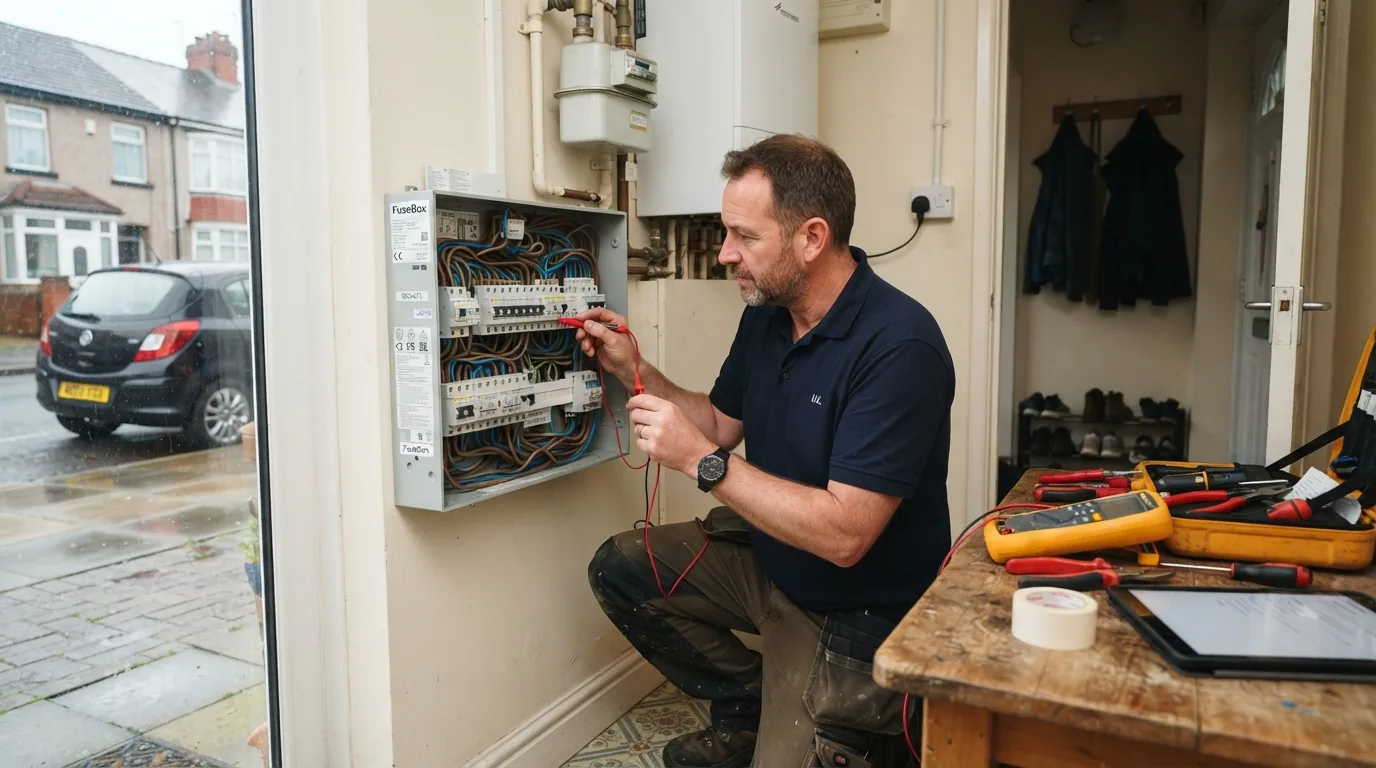
A competent installer carries out a pre-installation survey before committing to a price. The key things they assess:
- Consumer unit type and age: Is it a modern unit with MCBs (miniature circuit breakers) and RCDs? Or an older board with rewirable fuses and no residual current protection?
- Spare capacity: Is there a free way (slot) in the consumer unit for a new dedicated 32A circuit?
- Main fuse rating: Is the incoming main fuse rated at 60A, 80A, or 100A?
- Condition of existing wiring: Are there signs of deterioration, incorrect repairs, or non-compliant work?
- Cable run distance and route: How far is the charger position from the consumer unit, and is there a practical route for new cable?
- Earthing arrangement: Is the earthing system suitable for the new circuit?
What size circuit does an EV charger need?
A standard 7kW home EV charger requires:
- A dedicated 32A radial circuit (its own circuit from the consumer unit, not shared with other appliances).
- An RCBO (residual current breaker with overcurrent protection) or equivalent protection on that circuit.
- 6mm² twin-and-earth cable (suitable for a 32A circuit to the charger position).
- The circuit must comply with BS 7671 Section 722 (Electric Vehicle Charging Installations).
The circuit must be dedicated to the charger and must not share its protective device with any other circuit.
Does your consumer unit need upgrading?
| Consumer unit type | EV charger compatible? | Action needed |
|---|---|---|
| Modern unit with MCBs and RCBO/RCD (post-1990s) | Yes, if a spare way exists | Add RCBO and run new circuit |
| Modern unit with MCBs, no spare ways | Possibly | Add RCBO with parallel slot or replace unit |
| Older unit with MCBs but no RCD protection | Partial | Add RCBO for new EV circuit |
| Old rewirable fuse board | No | Consumer unit replacement required |
| Split-load consumer unit, full | Possibly | Electrician-dependent |
A consumer unit replacement costs approximately £400-£600 for a standard 10-16 way board in a typical domestic property. This is additional to the EV charger installation cost.
What if the main fuse is too small?
If your home has a main fuse rated at 60A (common in older UK properties), adding a 7kW charger drawing up to 32A may take total potential load close to or over the fuse rating. Your electrician should assess this.
If a main fuse upgrade is required, your Distribution Network Operator (DNO) replaces it free of charge. You or your installer contacts the DNO, requests an upgrade to 80A or 100A, and the DNO carries out the work (typically within a few weeks). This is the only part of the process that involves the grid operator rather than your electrician.
How far can the charger be from the consumer unit?
There is no fixed maximum distance, but cable length affects cable size and cost. For a 32A circuit:
- Up to 20-25 metres: standard 6mm² cable is usually adequate.
- Longer runs: voltage drop calculations may require larger cable (10mm²).
- Your installer will calculate this based on your specific layout.
Longer cable runs add cost to the installation (more cable and more labour). Installing a charger at the far end of a 60-metre driveway on a rural property with the consumer unit in the house is significantly more expensive than a standard 5-metre run to a garage wall.
What is a dynamic load balancer and do you need one?
Some smart chargers include dynamic load balancing, which monitors total household power draw and reduces the charger’s output if the home is approaching the supply limit. This prevents the main fuse from tripping when, say, the oven, kettle, and EV charger are all running simultaneously.
Dynamic load balancing is useful but not essential for most homes. It is most valuable where:
- The main fuse is 60A and cannot immediately be upgraded.
- The household has high simultaneous electrical loads.
- The property has a limited supply (e.g., older rural properties on single-phase).
Chargers with dynamic load balancing include the Easee One (which can balance across up to three chargers on one fuse), Hypervolt Home 3 Pro, and EO Mini Pro 3.
The common myth: “I’ll need to rewire my house”
No. A home EV charger installation does not require rewiring the house. It requires one new dedicated circuit from the consumer unit to the charger. The rest of the house wiring is unaffected.
If the consumer unit itself is very old and needs replacement, that affects only the distribution board and its immediate connections, not the ring mains or spur circuits throughout the house.
What does a survey cost?
Most OZEV-approved installers offer a free pre-installation survey as part of their quote process. Some charge £50-£100 for a survey visit, which is typically credited against the installation cost if you proceed.
A survey is worth doing before committing to a specific charger model, as the installer may identify wiring constraints that affect the choice (for example, recommending a charger with dynamic load balancing if the main fuse is borderline).
Typical installation cost breakdown
| Item | Typical cost (2026) |
|---|---|
| 7kW smart charger unit | £400-£800 |
| Installation labour (standard run) | £300-£500 |
| Consumer unit upgrade (if needed) | £400-£600 |
| Consumer unit RCBO addition only | £80-£150 |
| Extended cable run (per metre) | £20-£40 |
| DNO main fuse upgrade | Free (if required) |
Standard all-in installation cost where no consumer unit upgrade is needed: £800-£1,200. Where a consumer unit replacement is required: £1,200-£1,800.
See our complete guide to charging at home and our best home EV chargers for the full picture on what to buy and how to get it installed.
How we test and where our numbers come from
Range figures are official WLTP combined values taken from manufacturer UK specification pages, with real-world estimates drawn from independent comparative testing. Prices are UK list prices at the time of the latest update. Tax, grant and charging-scheme figures come from GOV.UK and HMRC publications. We re-check every guide when pricing, specification or policy changes. Last checked 11 August 2026.
Frequently asked questions
What size circuit does an EV charger need?
The circuit must be dedicated to the charger and must not share its protective device with any other circuit.
Does your consumer unit need upgrading?
A consumer unit replacement costs approximately £400-£600 for a standard 10-16 way board in a typical domestic property. This is additional to the EV charger installation cost.
What if the main fuse is too small?
If your home has a main fuse rated at 60A (common in older UK properties), adding a 7kW charger drawing up to 32A may take total potential load close to or over the fuse rating. Your electrician should assess this.
How far can the charger be from the consumer unit?
Longer cable runs add cost to the installation (more cable and more labour). Installing a charger at the far end of a 60-metre driveway on a rural property with the consumer unit in the house is significantly more expensive than a standard 5-metre run to a garage wall.
What is a dynamic load balancer and do you need one?
Some smart chargers include dynamic load balancing, which monitors total household power draw and reduces the charger's output if the home is approaching the supply limit. This prevents the main fuse from tripping when, say, the oven, kettle, and EV charger are all running simultaneously.
Sources and further reading
- gov.ukGOV.UK OZEVPrimary source referenced in this article.

EV Compared
The EV Compared editorial team tracks the UK electric vehicle market full time: new model launches, list prices, WLTP and real-world range, public charging tariffs and the tax rules that decide what an EV actually costs to run. Every guide is checked against manufacturer specifications and official GOV.UK figures, and updated whenever the numbers move.
Related reading
View all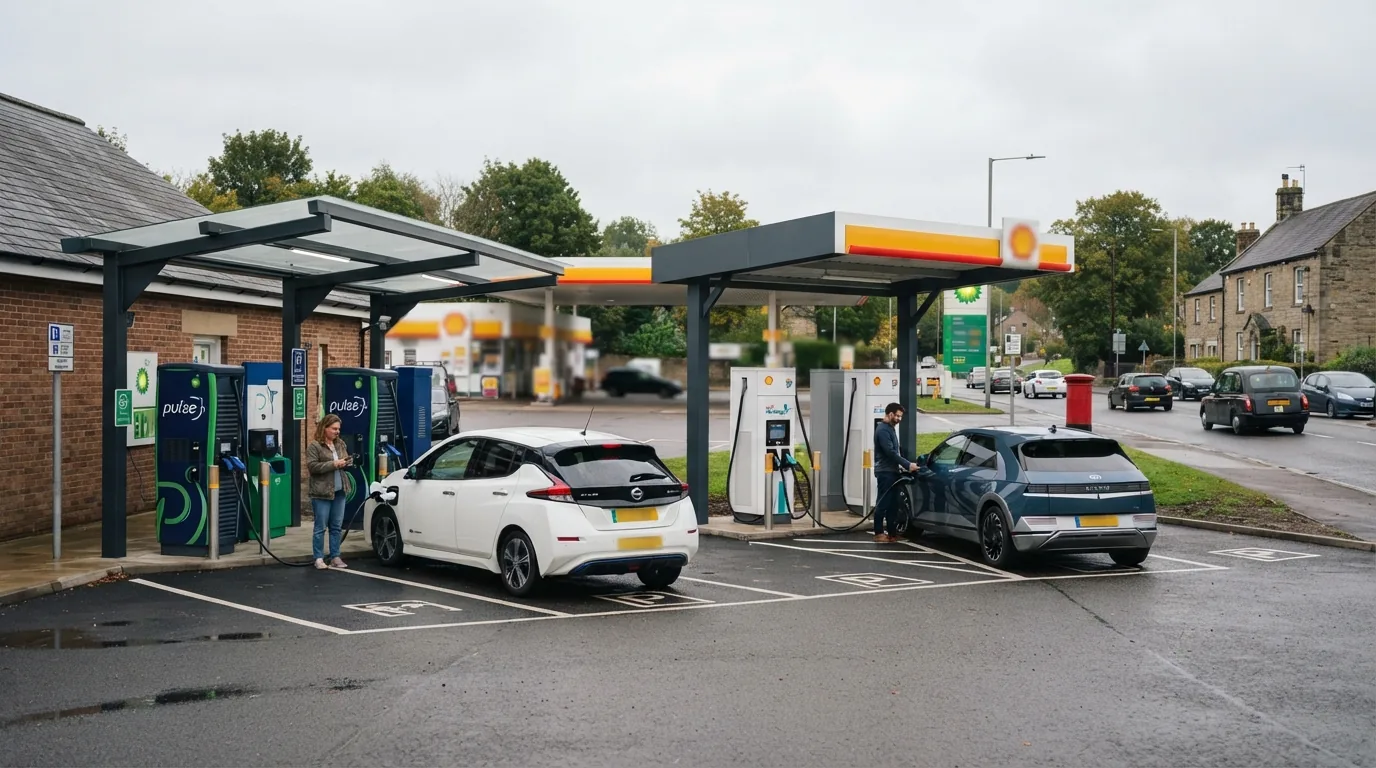
BP Pulse vs Shell Recharge: Which UK Network Wins?
Two of the UK's biggest charging networks compared on price, reliability and which type of driver each suits
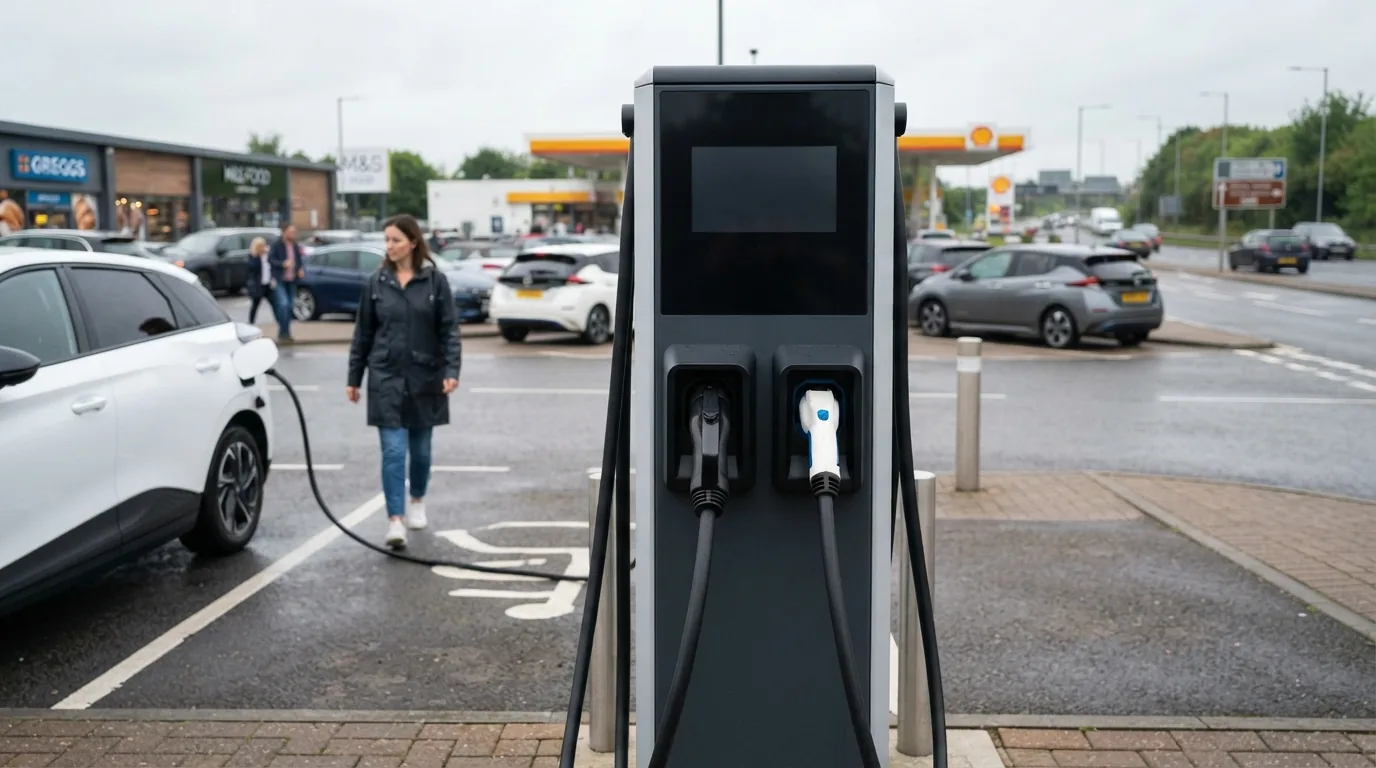
Can You Charge Any EV at Any Public Charger in the UK?
Why almost any new EV works at almost any UK public charger, and the two exceptions you need to know
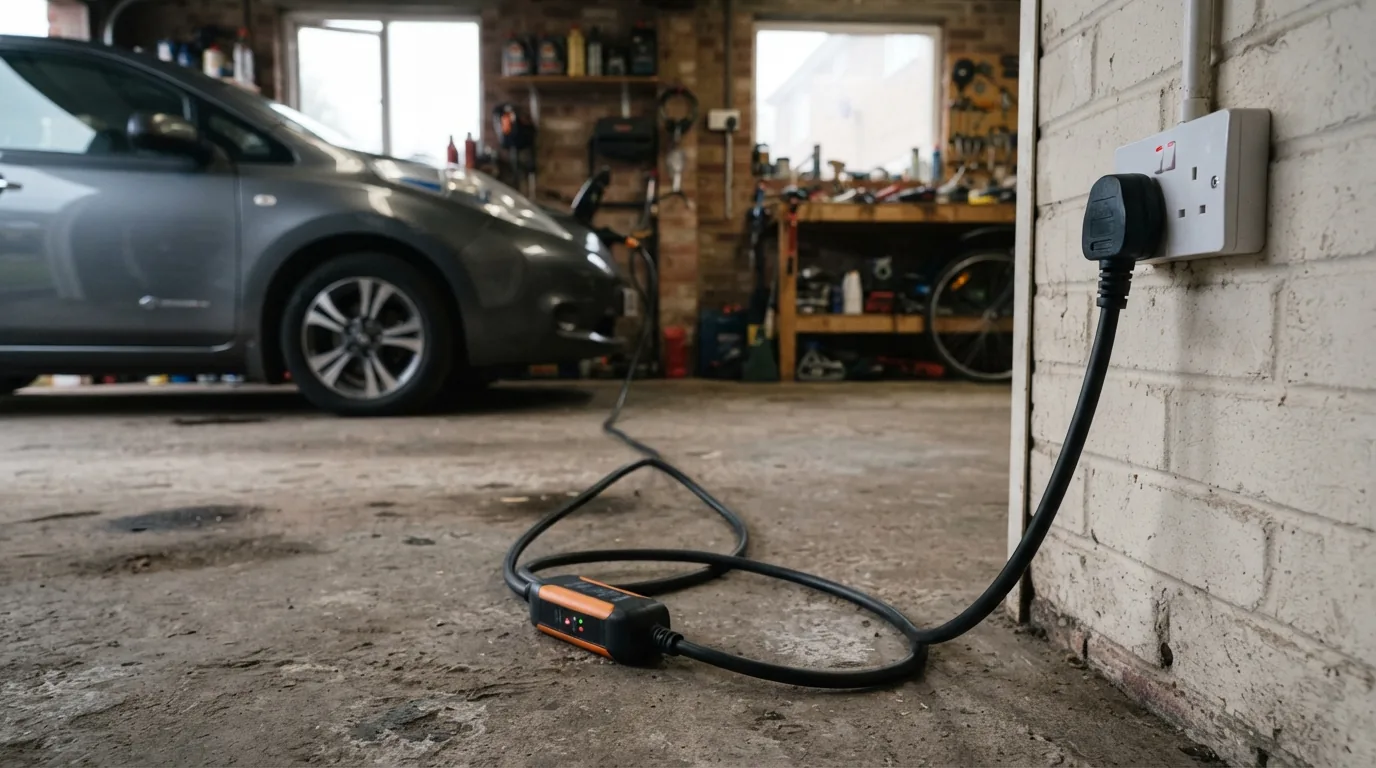
Can You Charge an EV From a Three-Pin Plug in the UK?
Yes, most cars ship with the cable, but speed and safety limits mean it works best for occasional or emergency use