Home EV Charging Cost Calculator for UK Tariffs
See exactly what you will pay to charge at home, and which tariff saves you the most money
Quick answers
- The honest answer is: it depends almost entirely on which electricity tariff you are on, not which car you drive or which charger you install.
- How the calculator works: For a car averaging 3.5 miles per kWh, covering 8,000 miles per year, on a 7p/kWh overnight tariff: (8,000 ÷ 3.5) × 0.07 × 1.15 = £184 per year
- The headline off-peak rates from Octopus Go and EDF GoElectric are similar at around 6.99-7p/kWh, making them the cheapest on pure unit cost.
- The most persistent myth is that switching to an EV tariff always raises your daytime electricity bill so much that the overnight saving is wiped out.
- Before you can use an EV overnight tariff efficiently, you need a smart wallbox that can be scheduled.
- What if you cannot charge at home: If you do not have off-street parking, you cannot install a home wallbox.
What will it cost to charge your EV at home?
The honest answer is: it depends almost entirely on which electricity tariff you are on, not which car you drive or which charger you install. A standard variable tariff at 24.67p/kWh (the Ofgem April 2026 price cap rate) will cost you roughly £1,150 a year if you charge 10,000 miles of an average EV at home. Switch to a dedicated EV overnight tariff at 7p/kWh and that falls to around £330 a year. That difference of over £800 per year is real money, and it is available to almost every UK driver with a smart meter and off-street parking.
Use the calculator above to enter your battery size, weekly mileage, and current or proposed tariff. The results table shows your estimated annual charging cost, cost per mile, and the saving available by switching.
How the calculator works
Enter three things:
-
Your EV’s usable battery capacity (kWh). This is printed in the car’s handbook or listed in any EV database. Usable capacity is typically 90-95% of the gross figure: for example, the Kia EV6 Long Range has a 77.4kWh usable battery from a 84kWh gross pack.
-
Your average weekly mileage. The UK average is around 127 miles per week (roughly 6,600 miles per year). You can use your actual figure.
-
Your tariff’s unit rate (p/kWh). Use your current tariff rate, or select from the preset tariffs in the dropdown. The calculator also applies a 15% charging loss factor, because no charger returns 100% of the energy drawn from the wall: some is lost as heat during the AC-to-DC conversion. Most 7kW home wallboxes deliver about 85-90% efficiency.
The formula the calculator uses is straightforward:
Annual charging cost = (annual miles ÷ real-world efficiency in miles/kWh) × tariff rate × 1.15 (charging loss)
For a car averaging 3.5 miles per kWh, covering 8,000 miles per year, on a 7p/kWh overnight tariff: (8,000 ÷ 3.5) × 0.07 × 1.15 = £184 per year
On the standard price cap rate of 24.67p/kWh: (8,000 ÷ 3.5) × 0.2467 × 1.15 = £648 per year
Results table: example tariff comparison
The table below shows sample outputs for a common EV (60kWh usable battery, 3.4 miles/kWh efficiency, 10,000 miles per year). Your personalised figures appear in the calculator above.
| Tariff | Rate (p/kWh) | Annual cost | Cost per mile | Saving vs standard |
|---|---|---|---|---|
| Standard variable (price cap, Apr 2026) | 24.67p | £1,080 | 10.8p | - |
| Octopus Go (off-peak) | 6.99p | £306 | 3.1p | £774 |
| Intelligent Octopus Go | 7p | £307 | 3.1p | £773 |
| EDF GoElectric (off-peak) | 6.99p | £306 | 3.1p | £774 |
| E.ON Next Drive Smart (off-peak) | 8.5p | £373 | 3.7p | £707 |
| British Gas Electric Driver | ~10p | £438 | 4.4p | £642 |
| Agile Octopus (average off-peak) | ~8p | £351 | 3.5p | £729 |
Rates as of May 2026. Tariff rates change and vary by DNO region. Always verify current rates directly with the supplier before switching.
Which tariff is best for EV charging in 2026?
The headline off-peak rates from Octopus Go and EDF GoElectric are similar at around 6.99-7p/kWh, making them the cheapest on pure unit cost. But there are differences worth knowing:
Intelligent Octopus Go works by communicating directly with your car (it supports most major makes via their connected apps) and automatically schedules charging during the cheapest window, typically 11:30pm to 5:30am. You do not need to manually set a charge timer. The rate for the whole home falls to 7p/kWh during this period, not just your car charger. This makes it the best option if you also want to run a dishwasher, washing machine or immersion heater overnight at the cheap rate.
Octopus Go is the simpler two-rate tariff: cheap overnight rate (currently 6.99p/kWh from around midnight to 5am or 6am depending on your region), and standard rate for the rest of the day. You set your car’s charging schedule yourself in the car’s own app or on the wallbox. The standing charge is separate and varies by region.
EDF GoElectric is worth checking if you are already an EDF customer. The seven-hour overnight window (23:00 to 06:00) is longer than Octopus Go’s, which can be useful if your car charges slowly.
E.ON Next Drive Smart charges the whole home at 8.5p/kWh overnight (midnight to 6am), which is slightly higher than the market leaders but may suit E.ON customers who do not want to switch supplier.
Agile Octopus is a dynamic tariff where unit rates fluctuate half-hourly based on wholesale electricity prices. In practice, overnight rates average around 5-10p/kWh, and occasionally go negative. If you are happy to automate charging around price signals, Agile can beat everything else. If you want predictability, stick with a fixed off-peak tariff.
The most important caveat: all EV tariffs require a smart meter capable of sending half-hourly data. If you do not have one, your supplier must install one free on request.
What is the common mistake about home charging costs?
The most persistent myth is that switching to an EV tariff always raises your daytime electricity bill so much that the overnight saving is wiped out.
This was partially true before 2023, when some EV tariffs had daytime rates significantly higher than the standard variable cap. That gap has narrowed considerably. In May 2026, Octopus Intelligent Go’s daytime rate sits at around 24-25p/kWh, very close to the standard cap, while the overnight rate is 7p/kWh. For most households that are not at home during the day, the switch is straightforwardly cheaper overall.
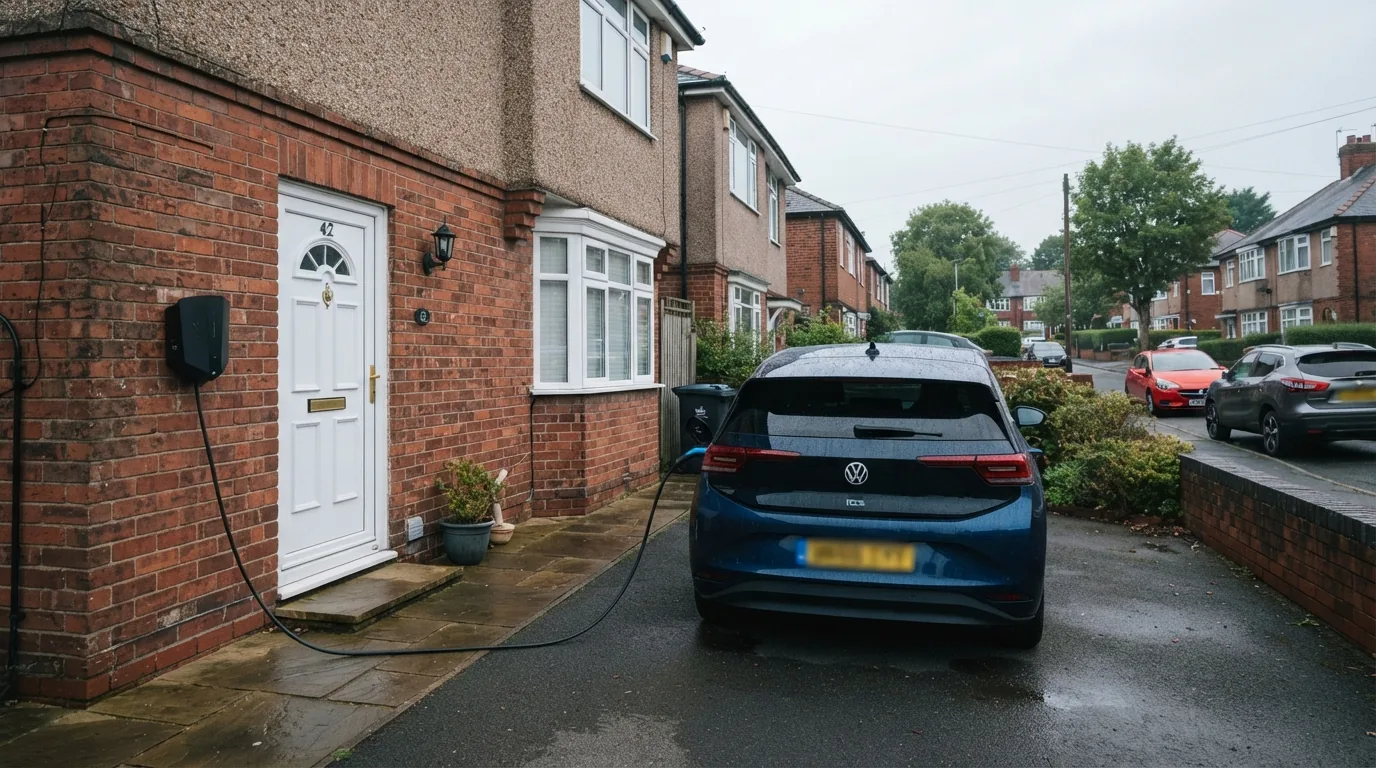
The second myth is that you need a smart wallbox to get the cheap rate. You do not. Many drivers simply set a departure time or charge schedule in their car’s own app, which controls the onboard charger. A standard 13-amp socket (Mode 2 charging cable) will also charge overnight if you use your car’s built-in schedule, though we strongly recommend a dedicated 7kW wallbox for speed, safety and smart tariff compatibility.
The cost of installing a home wallbox in 2026
Before you can use an EV overnight tariff efficiently, you need a smart wallbox that can be scheduled. The typical installed cost of a 7kW home wallbox in the UK in 2026 is £800 to £1,200, including the unit and a standard installation.
Popular units include the Ohme Home Pro, Wallbox Pulsar Plus and Pod Point Solo 3, all of which support smart tariff scheduling and direct integration with Octopus Energy. The Zappi by myenergi is the standout choice if you have solar panels, because it diverts surplus generation directly into your EV rather than exporting it at low rates.
An OZEV government grant of £350 is available, but eligibility changed in 2022. As of 2026, it applies mainly to:
- Renters in residential accommodation
- Flat owners (leasehold or share of freehold)
- Landlords installing chargers for tenants
Most homeowners with a private driveway and their own house no longer qualify for the residential OZEV grant. Check eligibility at GOV.UK before assuming you will receive it.
Payback period on a wallbox installation (say £900 after any grant) at a saving of £700 per year versus standard rate charging is well under two years.
What if you cannot charge at home?
If you do not have off-street parking, you cannot install a home wallbox. Your options are:
- Workplace charging if your employer offers it (many now do, often free or at a subsidised rate).
- Destination charging at supermarkets, leisure centres and hotels, typically 7kW AC at 45-60p/kWh but sometimes free.
- Lamp-post chargers in streets and council car parks, increasingly common in cities, usually at 35-50p/kWh.
- Public rapid chargers on the motorway network at 60-85p/kWh. These are for top-ups on long journeys, not routine charging.
Without home charging, your annual energy cost for 10,000 miles will be roughly £600 to £900 depending on the mix of charge points you use. That is still well below the equivalent petrol cost of around £1,600 to £1,900 at current pump prices, but the saving is smaller.
What should you do next?
If you already have an EV and a smart meter but are on a standard tariff, switching to Intelligent Octopus Go or EDF GoElectric is the single highest-return action available to you: a five-minute switch for a £600 to £800 annual saving.
If you are still choosing which EV to buy, our guide to buying and owning an electric car covers the full charging setup process from wallbox selection to grant applications. To compare home charger hardware, see our best home EV chargers page, where we test the leading units on installation quality, app reliability and smart tariff integration.
The numbers in 2026 are clear: home charging on the right tariff is the single biggest financial advantage of electric car ownership. The calculator above gives you the exact figure for your car, your mileage and your tariff.
How we test and where our numbers come from
Range figures are official WLTP combined values taken from manufacturer UK specification pages, with real-world estimates drawn from independent comparative testing. Prices are UK list prices at the time of the latest update. Tax, grant and charging-scheme figures come from GOV.UK and HMRC publications. We re-check every guide when pricing, specification or policy changes. Last checked 11 August 2026.
Frequently asked questions
What will it cost to charge your EV at home?
The honest answer is: it depends almost entirely on which electricity tariff you are on, not which car you drive or which charger you install. A standard variable tariff at 24.67p/kWh (the Ofgem April 2026 price cap rate) will cost you roughly £1,150 a year if you charge 10,000 miles of an average EV at home.
Which tariff is best for EV charging in 2026?
The most important caveat: all EV tariffs require a smart meter capable of sending half-hourly data. If you do not have one, your supplier must install one free on request.
What is the common mistake about home charging costs?
The most persistent myth is that switching to an EV tariff always raises your daytime electricity bill so much that the overnight saving is wiped out.
What if you cannot charge at home?
Without home charging, your annual energy cost for 10,000 miles will be roughly £600 to £900 depending on the mix of charge points you use. That is still well below the equivalent petrol cost of around £1,600 to £1,900 at current pump prices, but the saving is smaller.

EV Compared
The EV Compared editorial team tracks the UK electric vehicle market full time: new model launches, list prices, WLTP and real-world range, public charging tariffs and the tax rules that decide what an EV actually costs to run. Every guide is checked against manufacturer specifications and official GOV.UK figures, and updated whenever the numbers move.
Related reading
View all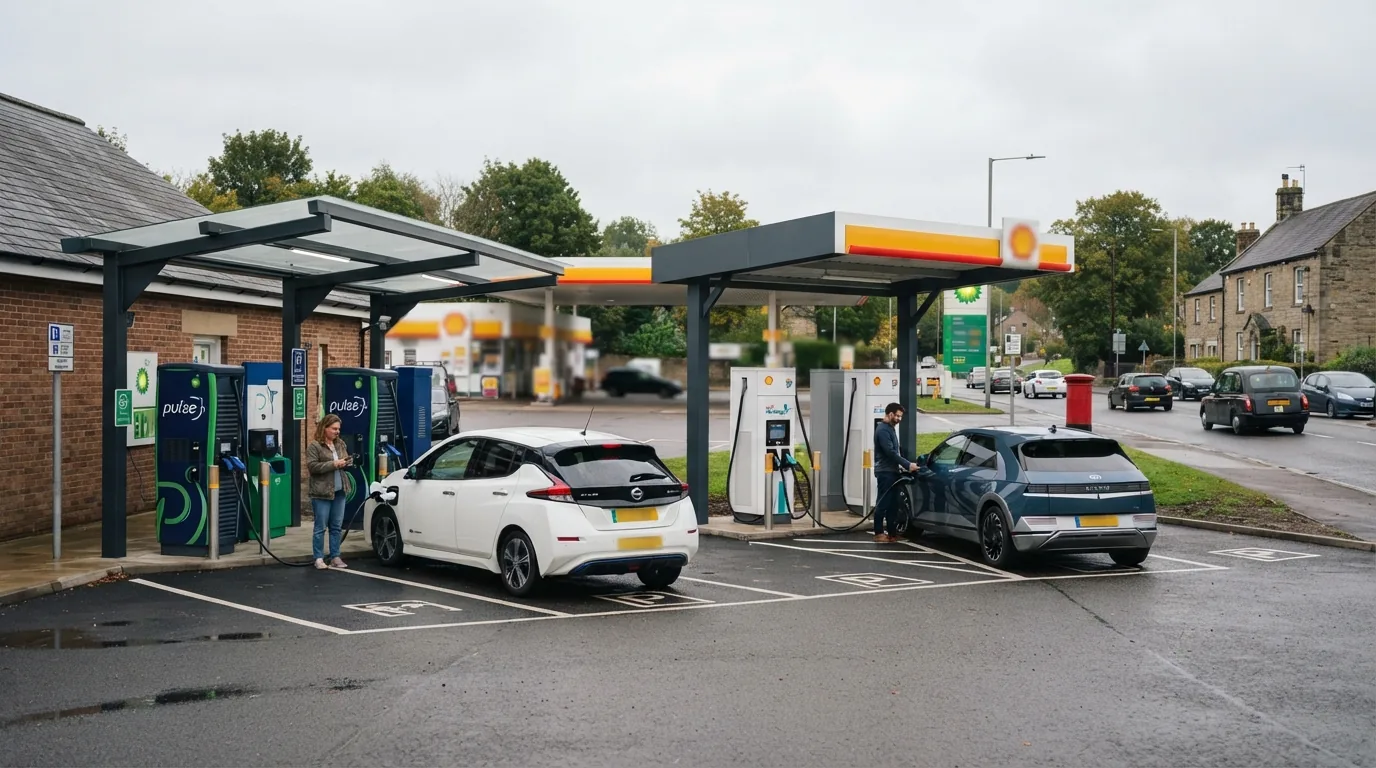
BP Pulse vs Shell Recharge: Which UK Network Wins?
Two of the UK's biggest charging networks compared on price, reliability and which type of driver each suits
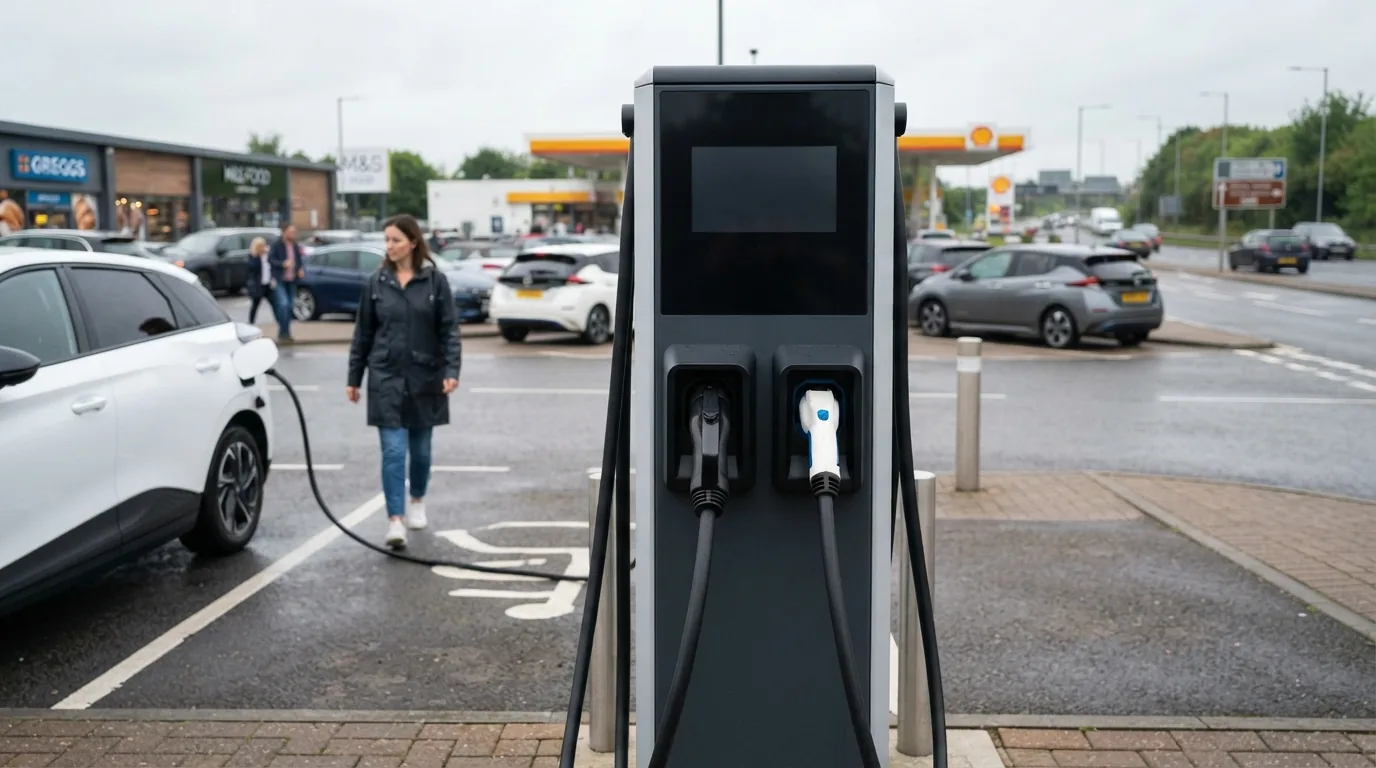
Can You Charge Any EV at Any Public Charger in the UK?
Why almost any new EV works at almost any UK public charger, and the two exceptions you need to know
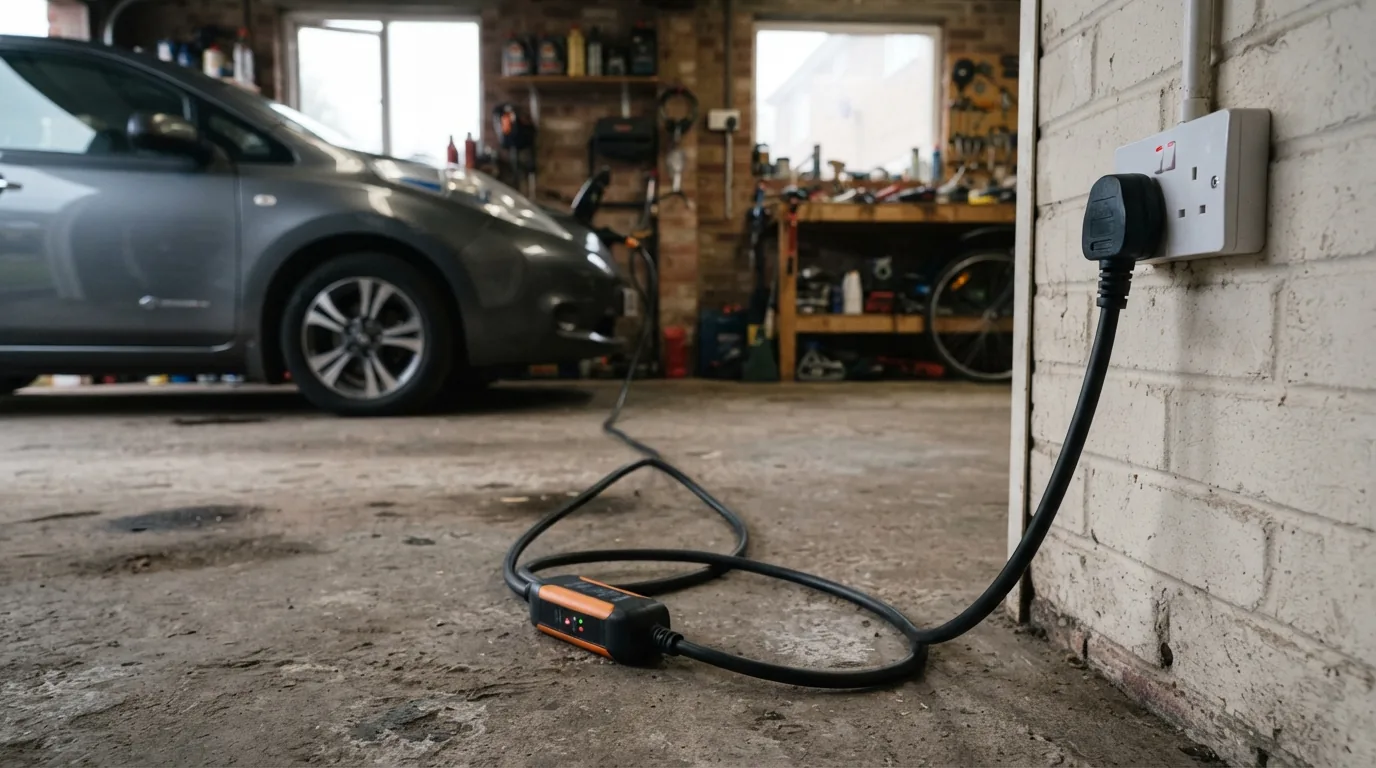
Can You Charge an EV From a Three-Pin Plug in the UK?
Yes, most cars ship with the cable, but speed and safety limits mean it works best for occasional or emergency use