What Are the Hidden Costs of Owning an Electric Car in the UK?
Beyond charging and VED -- the costs most EV guides skip over, with real UK figures for 2026
Quick answers
- Electric cars are genuinely cheaper to run than petrol equivalents for most UK drivers -- but the honest picture includes costs that rarely appear in the headline comparisons.
- The total cost is commonly £750 to £1,200 all-in, and occasionally higher if the property needs a consumer unit upgrade or extra cable runs.
- Higher insurance premiums: Electric car insurance costs roughly 15% more than equivalent petrol cover.
- Road tax: the exemption is gone: Until 31 March 2025, electric cars paid zero Vehicle Excise Duty (VED).
- Tyre wear and EV-specific tyres: Electric cars are heavier than equivalent petrol models, often by 200 to 400 kg.
- For outright buyers, depreciation is often the largest single cost of car ownership.
Electric cars are genuinely cheaper to run than petrol equivalents for most UK drivers — but the honest picture includes costs that rarely appear in the headline comparisons. Home charger installation, depreciation, higher insurance premiums, specialist tyre requirements, public charging dependency, and changes to road tax all add up. None of them are deal-breakers, but ignoring them produces an overly optimistic picture.
Home charger installation: a cost that arrives before you drive
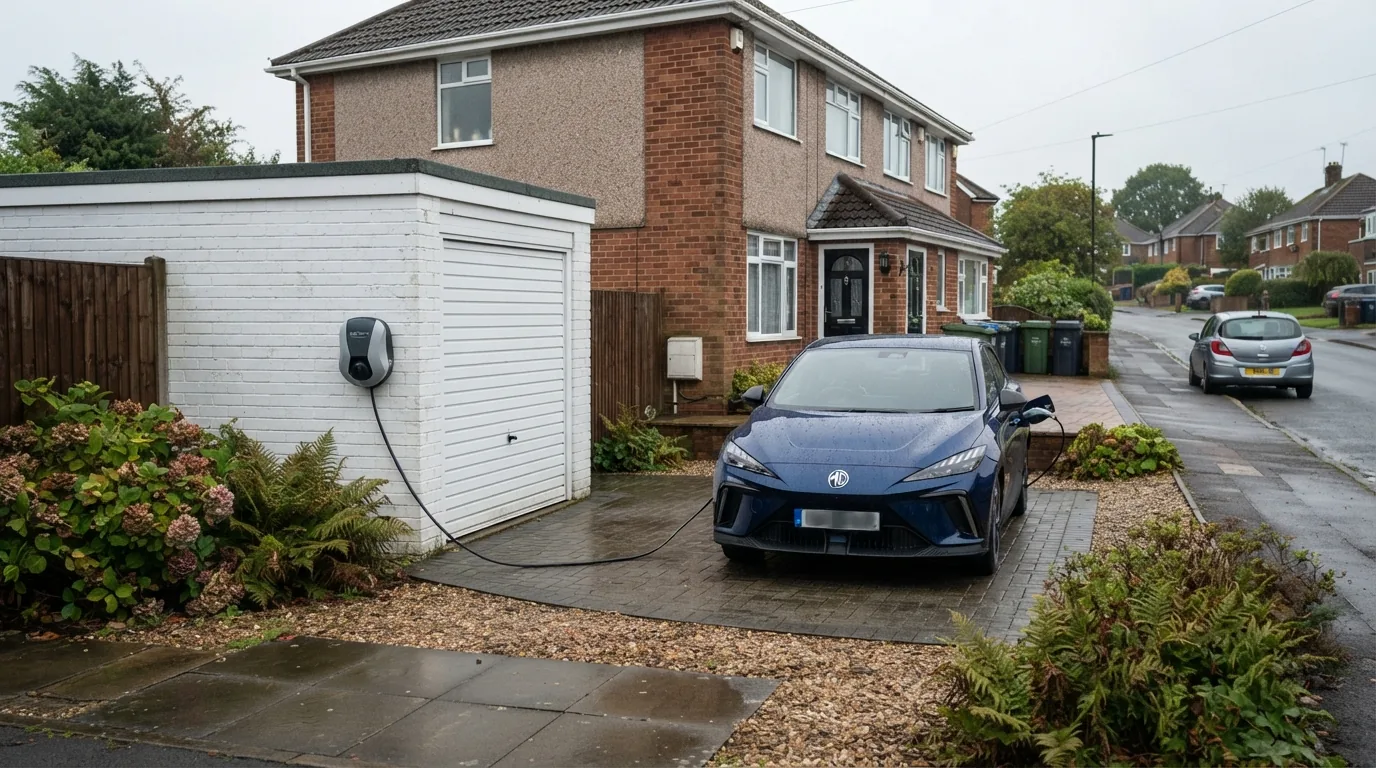
Most EV buyers need a home wallbox charger. A standard 7 kW tethered unit from a reputable brand (Ohme, Andersen, Hypervolt, Pod Point) costs £400 to £800 for the hardware. Professional installation by a registered electrician typically adds another £200 to £500, depending on the complexity of your property’s wiring.
The total cost is commonly £750 to £1,200 all-in, and occasionally higher if the property needs a consumer unit upgrade or extra cable runs. The government’s Electric Vehicle Homecharge Scheme grant, which previously contributed up to £350, was discontinued in 2022. There is no current equivalent for domestic buyers.
| Component | Typical cost |
|---|---|
| 7 kW tethered wallbox (hardware) | £400 — £800 |
| Installation (standard) | £200 — £400 |
| Additional cabling / consumer unit work | £100 — £500 extra |
| Total typical range | £750 — £1,200 |
Spread over five years of ownership, the charger adds roughly £150 to £240 per year to your cost base — still well below the saving from home charging versus public charging, but a cost that needs accounting for.
Drivers without off-street parking cannot install a home charger at all. On-street charging infrastructure exists in some areas through schemes such as Connected Kerb and Ubitricity lamppost chargers, but availability is patchy and overnight rates are higher than home charging.
Higher insurance premiums
Electric car insurance costs roughly 15% more than equivalent petrol cover. The average EV premium in 2026 is around £560 to £650 per year versus around £487 for a petrol car.
The premium reflects several factors: higher parts costs, longer repair times due to specialist EV technician shortages, battery damage assessment requirements after accidents, and the still-limited pool of approved EV repair centres. Insurers are learning faster as the EV parc grows, and the gap is gradually narrowing — but in 2026 it remains real and measurable.
Budget an extra £75 to £150 per year versus a comparable petrol car. Some models — particularly smaller, lower-powered EVs in groups 10 to 20 — are now insuring at parity with petrol equivalents.
Road tax: the exemption is gone
Until 31 March 2025, electric cars paid zero Vehicle Excise Duty (VED). From 1 April 2025, all EVs pay VED. Most pay the standard rate of £200 per year. Cars with a list price over £50,000 also pay a £440 Expensive Car Supplement for five years from registration, giving a combined annual bill of £640.
For buyers who budgeted on the assumption of free road tax, this is a material change worth £200 to £640 per year depending on model. See the full detail in our VED on EVs explainer.
Tyre wear and EV-specific tyres
Electric cars are heavier than equivalent petrol models, often by 200 to 400 kg. The combination of extra weight and instant torque delivery wears tyres faster. Some manufacturers specify EV-specific tyres with lower rolling resistance and reinforced sidewalls to handle the load rating — these carry a price premium over standard rubber.
Expect to budget an additional £50 to £100 per year in tyre costs versus a lighter petrol car. For larger EVs or performance models, the uplift can be higher.
Depreciation: improving but still a risk on some models
EV depreciation has been volatile. A surge in new supply in 2023 and 2024 — particularly from Chinese manufacturers — pushed used EV prices down sharply. MG, BYD and some budget models saw three-year depreciation of 45 to 55%. Mainstream models from Hyundai, Kia, BMW and Volkswagen have stabilised and now depreciate at broadly petrol-comparable rates.
For outright buyers, depreciation is often the largest single cost of car ownership. An EV depreciating faster than a petrol equivalent erodes the advantage from lower running costs. If you are buying outright on a five-year horizon, research the specific model’s residual value track record, not just class averages.
Battery degradation and replacement risk
Most EV batteries are warranted for eight years or 100,000 miles with a 70% capacity floor. In practice, modern lithium-ion packs degrade slowly under normal use, retaining 80 to 90% of original capacity after 100,000 miles. The chances of needing a replacement within a typical ownership period (three to five years) are low for a properly maintained car.
If a replacement is needed outside warranty, costs are significant. Replacement battery packs from main dealers range from around £5,000 for smaller models to £18,000 to £22,000 for large Tesla packs. Independent EV specialists offer refurbished packs at 30 to 40% less. For most buyers of current-generation EVs with manufacturers’ warranties intact, this is a low-probability risk rather than a near-term cost — but it is worth understanding before buying a used EV with an expired warranty.
Subscription costs on public charging networks
Drivers who regularly use public networks can reduce per-kWh costs by paying a monthly subscription — typically £5 to £12 per month depending on the network. If you are a frequent public charger user this can save money, but the subscription itself is an ongoing cost. It is also worth noting that some networks charge a connection fee on top of the per-kWh rate.
Changes to London costs
Electric cars lost their full exemption from the London Congestion Charge in January 2026. EVs registered on TfL Auto Pay now pay £13.50 per day — a 25% discount on the standard £18, but a significant change for London commuters who previously paid nothing. At five days per week, that is £3,240 per year versus £0 under the previous rules. The ULEZ exemption for EVs remains unchanged. See our full Congestion Charge explainer for details.
Software subscriptions and connected services
Several manufacturers — Tesla, BMW, Mercedes and others — charge ongoing subscription fees for features delivered over-the-air, including heated seat access, enhanced navigation, and some driver assistance features. These are optional but worth understanding before purchase. Costs range from £10 to £25 per month per feature package. Unlike petrol-car running costs, these subscriptions have no petrol equivalent and represent genuinely new cost categories.
Summary: the hidden costs in numbers
| Hidden cost | Annual estimate |
|---|---|
| Home charger (amortised over 5 years) | £150 — £240 |
| Insurance premium vs petrol | +£75 — £150 |
| VED (previously free) | +£200 — £640 |
| Tyre uplift vs petrol | +£50 — £100 |
| Network subscriptions (if used) | £60 — £144 |
| London Congestion Charge (5 days/week) | Up to £3,240 (was £0) |
| Total additional hidden costs (non-London) | ~£475 — £1,134 |
For most drivers, these hidden costs are more than offset by the fuel saving from home charging. But they close the gap considerably compared to a fuel-only comparison.
Where to go next
For the full picture of EV running costs including fuel, tax and maintenance, see the EV running costs and tax hub.
For which models have the lowest total running costs once all costs are included, see our cheapest electric cars to run rankings.
How we test and where our numbers come from
Range figures are official WLTP combined values taken from manufacturer UK specification pages, with real-world estimates drawn from independent comparative testing. Prices are UK list prices at the time of the latest update. Tax, grant and charging-scheme figures come from GOV.UK and HMRC publications. We re-check every guide when pricing, specification or policy changes. Last checked 11 August 2026.

EV Compared
The EV Compared editorial team tracks the UK electric vehicle market full time: new model launches, list prices, WLTP and real-world range, public charging tariffs and the tax rules that decide what an EV actually costs to run. Every guide is checked against manufacturer specifications and official GOV.UK figures, and updated whenever the numbers move.
Related reading
View all
What Are the Biggest Myths About Switching to an EV?
The claims that put UK drivers off going electric, and what the evidence actually says

Should You Buy an EV in 2026 or Wait for Cheaper Models?
An honest look at where EV prices are heading and whether the wait is worth it for UK buyers
Buying and Owning an Electric Car in the UK: The Complete 2026 Guide
Everything you need to know about costs, charging, depreciation and day-to-day life with an EV