Do Electric Cars Pay the London Congestion Charge?
The free ride ended in January 2026 -- here is what EVs now pay, how to register, and what ULEZ still exempts you from
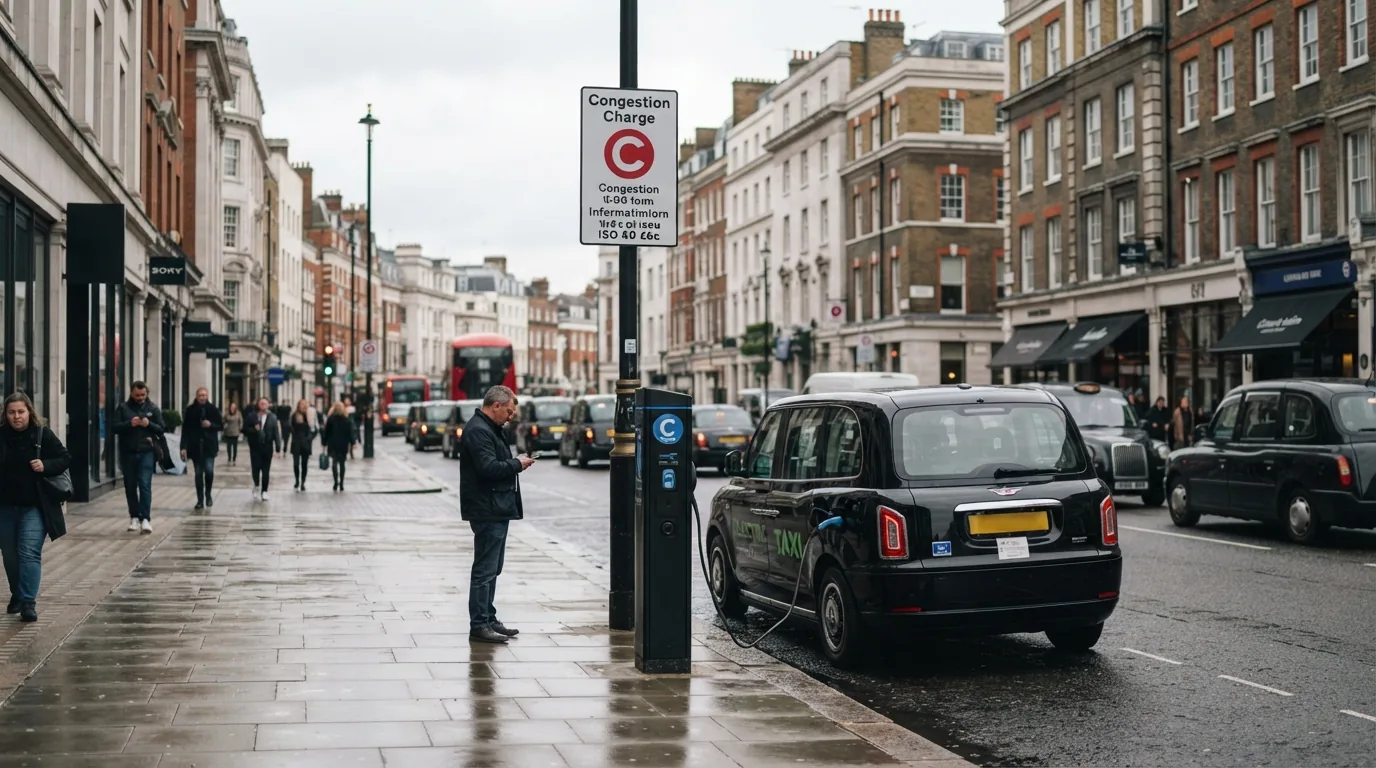
Quick answers
- Yes, electric cars now pay the London Congestion Charge. The 100% Cleaner Vehicle Discount that gave EVs free passage ended on 25 December 2025.
- The full charge increased from £15 to £18 per day as part of the same January 2026 revision.
- Why did the free exemption end: TfL confirmed the removal of the full exemption in late 2024.
- The registration process typically takes a few days to process.
- The ULEZ exemption is significant: it applies 24 hours a day, seven days a week, across a vastly larger geographic area than the Congestion Charge zone.
- The Dartford Crossing (Dart Charge) applies to vehicles using the M25 river crossing at Dartford and Thurrock.
Yes, electric cars now pay the London Congestion Charge. The 100% Cleaner Vehicle Discount that gave EVs free passage ended on 25 December 2025. From 2 January 2026, fully electric cars pay £13.50 per day in the Congestion Charge zone — a 25% discount on the full £18 charge — provided the vehicle is registered on TfL’s Auto Pay scheme. Unregistered EVs pay the same £18 as any petrol or diesel car. The separate ULEZ charge still does not apply to electric cars.
What does the Congestion Charge cost for an electric car in 2026?
| Vehicle type | Daily charge (registered Auto Pay) | Daily charge (not registered) |
|---|---|---|
| Fully electric car | £13.50 (25% discount) | £18.00 |
| Electric van / HGV | £9.00 (50% discount) | £18.00 |
| Petrol / diesel car (ULEZ compliant) | £18.00 | £18.00 |
| Petrol / diesel car (non-ULEZ compliant) | £18.00 + ULEZ £12.50 | £18.00 + ULEZ £12.50 |
The full charge increased from £15 to £18 per day as part of the same January 2026 revision. The discount for EVs applies only inside the Congestion Charge zone boundaries (roughly central London), on weekdays 7am to 6pm and weekends 12pm to 6pm.
The 25% discount is confirmed until 4 March 2030, when it reduces to 12.5% (paying £15.75 per day). Petrol and diesel cars that meet ULEZ standards continue to pay the full £18 with no discount.
Why did the free exemption end?
TfL confirmed the removal of the full exemption in late 2024. The rationale was twofold: EVs now represent a significant proportion of vehicles entering the zone, meaning the exemption was costing TfL substantial revenue; and the Congestion Charge’s purpose is traffic management, not solely emission reduction. Since EVs contribute to congestion in the same way as any other vehicle, Transport for London argued they should contribute to managing it.
The phased reduction — 25% discount now, down to 12.5% from 2030 — gives EV owners advance warning and avoids a cliff-edge change.
How do you register your EV for the Auto Pay discount?
You must register before entering the zone. Retroactive discounts are not available.
- Visit tfl.gov.uk and create a London road user charging account
- Add your vehicle registration number (up to five vehicles per account)
- Upload evidence that your car is fully electric — your V5C logbook showing fuel type as “electric” is the standard document
- Set up payment details — TfL will automatically debit £13.50 on any day your plate is detected entering the zone
The registration process typically takes a few days to process. If you have a lease car, check with your leasing company whether it needs to register on your behalf — some fleet and lease agreements handle this centrally.
Is there still a penalty if you forget to pay?
Yes. Failing to pay within 24 hours of entering the zone results in a penalty charge notice (PCN) of £160, reduced to £80 if paid within 14 days. This applies to EVs and petrol cars equally. Auto Pay eliminates this risk by charging automatically.
What about ULEZ — do EVs still get an exemption?
Yes, fully. The Ultra Low Emission Zone (ULEZ) operates separately from the Congestion Charge and covers a much larger area — broadly all of Greater London within the M25. Electric cars remain completely exempt from the ULEZ £12.50 daily charge indefinitely. There is no current plan to remove this exemption.
The ULEZ exemption is significant: it applies 24 hours a day, seven days a week, across a vastly larger geographic area than the Congestion Charge zone. For EV drivers making occasional trips into outer London, the ULEZ saving is worth far more than the Congestion Charge saving.
Are there other London charges to know about?
The Dartford Crossing (Dart Charge) applies to vehicles using the M25 river crossing at Dartford and Thurrock. Electric cars pay £2.50 per crossing during charging hours, the same as other cars at the standard rate — there is no longer an EV discount here either.
The Blackwall Tunnel and Silvertown Tunnel (the latter opened in 2024) use a separate road user charge. Electric cars receive the same 25% Auto Pay discount as on the Congestion Charge. Fully electric vehicles pay around £1.50 per tunnel crossing versus £2.00 for petrol or diesel.
What is the annual cost of driving into central London as an EV driver?
For a driver entering the zone five days per week, 48 weeks of the year:
| Driver profile | Annual Congestion Charge (EV, Auto Pay) | Annual Congestion Charge (petrol) |
|---|---|---|
| 5 days/week, 48 weeks | £3,240 (240 days x £13.50) | £4,320 (240 days x £18) |
| 3 days/week, 48 weeks | £1,944 | £2,592 |
| 1 day/week, 48 weeks | £648 | £864 |
The annual saving for a five-day commuter is £1,080 per year compared to an equivalent petrol car. This is a meaningful saving, though much smaller than the previous total exemption. Pre-2026, a five-day EV commuter saved the full £4,320 per year.
Is the Congestion Charge worth factoring into an EV purchase decision for London drivers?
For regular central London commuters, yes. The £1,080 annual saving over petrol (at current rates) is real money. But it should be viewed alongside the larger picture: fuel savings from home charging, lower maintenance, and company-car tax advantages are all worth more to most drivers than the Congestion Charge reduction alone.
For drivers who enter the zone occasionally, the Congestion Charge is a relatively small consideration compared to other EV running cost factors.
What about residents of the zone?
Residents living within the Congestion Charge zone receive a 90% discount on the daily charge. For EV residents, the 25% EV discount and the 90% resident discount do not stack — you receive whichever is greater, which is the 90% resident discount. This means a resident driving an EV pays £1.80 per day, and a resident in a petrol car pays £1.80 per day as well. For zone residents, the EV discount is irrelevant.
Summary
- EVs now pay £13.50 per day in the Congestion Charge zone if registered on Auto Pay (down from £0)
- Unregistered EVs pay the full £18 — registration is essential
- The 25% discount continues until March 2030, then reduces to 12.5%
- ULEZ exemption for electric cars remains fully in place — no charge anywhere in Greater London
- The Dartford Crossing no longer discounts EVs; Blackwall and Silvertown tunnels offer 25% discounts
For a full picture of what running an EV costs in the UK including tax and insurance, visit the EV running costs and tax hub.
To see which EVs offer the lowest total running costs overall, visit our cheapest electric cars to run rankings.
How we test and where our numbers come from
Range figures are official WLTP combined values taken from manufacturer UK specification pages, with real-world estimates drawn from independent comparative testing. Prices are UK list prices at the time of the latest update. Tax, grant and charging-scheme figures come from GOV.UK and HMRC publications. We re-check every guide when pricing, specification or policy changes. Last checked 11 August 2026.
Frequently asked questions
What does the Congestion Charge cost for an electric car in 2026?
The full charge increased from £15 to £18 per day as part of the same January 2026 revision. The discount for EVs applies only inside the Congestion Charge zone boundaries (roughly central London), on weekdays 7am to 6pm and weekends 12pm to 6pm.
Why did the free exemption end?
TfL confirmed the removal of the full exemption in late 2024. The rationale was twofold: EVs now represent a significant proportion of vehicles entering the zone, meaning the exemption was costing TfL substantial revenue; and the Congestion Charge's purpose is traffic management, not solely emission reduction.
How do you register your EV for the Auto Pay discount?
You must register before entering the zone. Retroactive discounts are not available.
Is there still a penalty if you forget to pay?
Yes. Failing to pay within 24 hours of entering the zone results in a penalty charge notice (PCN) of £160, reduced to £80 if paid within 14 days.
What about ULEZ -- do EVs still get an exemption?
Yes, fully. The Ultra Low Emission Zone (ULEZ) operates separately from the Congestion Charge and covers a much larger area -- broadly all of Greater London within the M25.

EV Compared
The EV Compared editorial team tracks the UK electric vehicle market full time: new model launches, list prices, WLTP and real-world range, public charging tariffs and the tax rules that decide what an EV actually costs to run. Every guide is checked against manufacturer specifications and official GOV.UK figures, and updated whenever the numbers move.
Related reading
View all
What Are the Biggest Myths About Switching to an EV?
The claims that put UK drivers off going electric, and what the evidence actually says
Should You Buy an EV in 2026 or Wait for Cheaper Models?
An honest look at where EV prices are heading and whether the wait is worth it for UK buyers
Buying and Owning an Electric Car in the UK: The Complete 2026 Guide
Everything you need to know about costs, charging, depreciation and day-to-day life with an EV