Best EV Charger Installers in the UK: How to Choose One
The accreditations to check, the questions to ask, and what a fair quote should always include
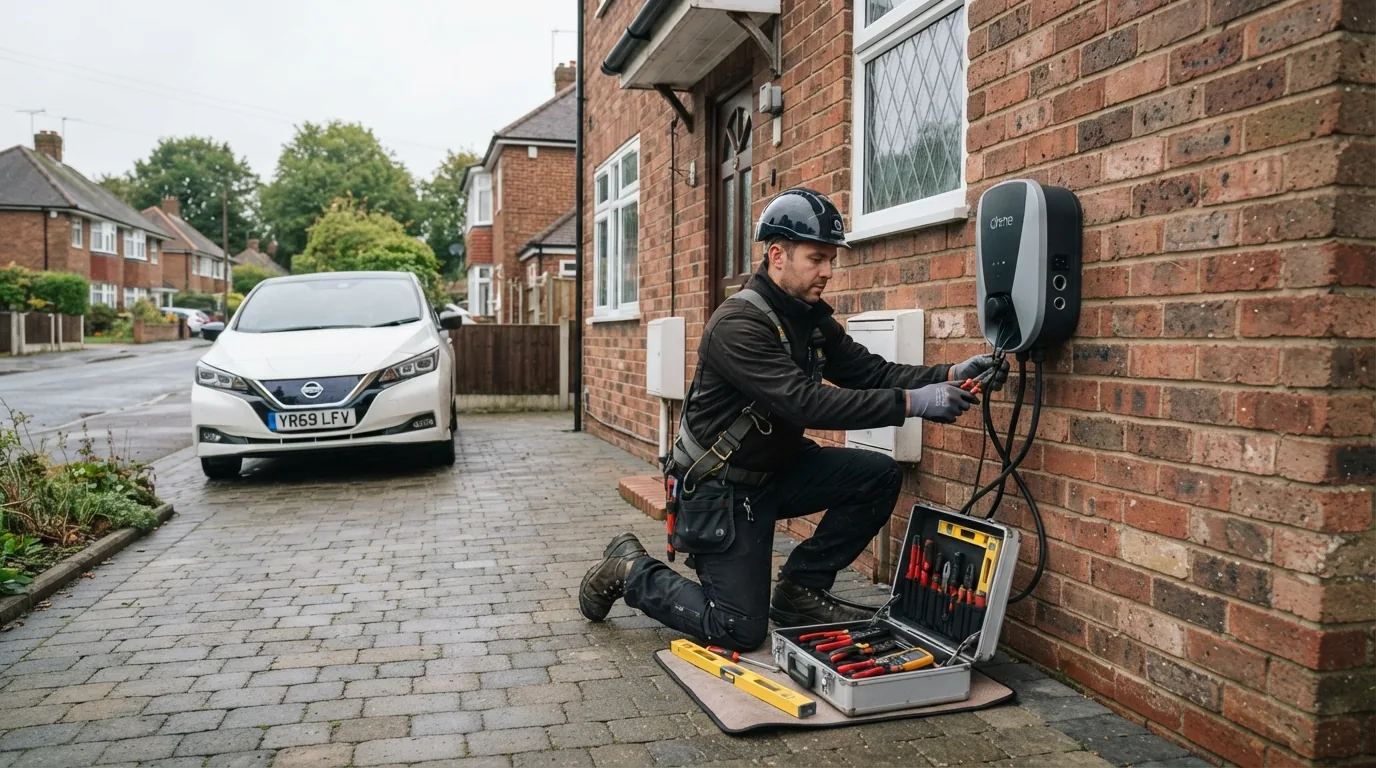
Quick answers
- A Competent Person Scheme registration (NICEIC, NAPIT, ECA or Stroma) is the one accreditation no UK installer should be without; it lets them self-certify Part P notifiable work.
- OZEV authorisation only matters if you can claim the grant, which from April 2026 mainly means flats, renters and landlords, not homeowners with off-street parking.
- A fair quote is itemised and includes DNO notification and Part P certification; if DNO notification is charged as an extra, push back.
- Expect roughly £700 to £1,100 fitted for a standard 7kW home install, more in London and the South East or for complex jobs (figures vary, verify current data).
- Your installer notifies the DNO for you via the ENA Connect platform; most approvals are instant or come within 10 working days.
- Get at least two written quotes and insist on a pre-installation survey before booking.
The right EV charger installer is one that holds a Competent Person Scheme registration such as NICEIC or NAPIT, can self-certify the work to BS 7671, gives you a written itemised quote that includes DNO notification, and is OZEV-authorised if you are claiming a grant. Those three checks, and a pre-installation survey, are what separate a safe, legal installation from one that could be ordered removed.
This guide is UK-specific. The rules around Part P of the Building Regulations, Competent Person Schemes, BS 7671 and the OZEV grant differ substantially from the US process you will find in most search results, so the detail here is aimed squarely at homeowners, renters and flat residents in England and Wales.
Why does choosing the right EV charger installer matter?
The stakes are higher than most buyers realise before they start comparing quotes. An EV charger installation is notifiable work under Part P of the Building Regulations in England and Wales. That means it must either be carried out by a registered competent person who self-certifies the work, or formally notified to your local building control office before work begins.
Get that wrong and you have an installation that cannot be signed off, which can affect your home insurance and becomes a problem when you sell. The risks stack up quickly:
- A non-compliant install can be ordered removed by building control.
- Distribution Network Operators (DNOs) are legally entitled to disconnect illegal connections under BS 7671 and the ENA process.
- An uncertified installation may void your charger manufacturer warranty.
- Failure to notify building control leaves you without an Electrical Installation Certificate, which buyers and solicitors will ask for.
A Competent Person Scheme registration is how the industry signals that an electrician is qualified to self-certify this kind of notifiable domestic work. It is not a nice-to-have.
What accreditations should a UK EV charger installer have?
This is the area where UK buyers most often go wrong, partly because the US-centric content that dominates search results uses different terminology entirely. There are three layers to understand.
Competent Person Scheme registration is the non-negotiable baseline. The installer must be registered with one of the approved schemes, NICEIC, NAPIT, ECA or Stroma, which allows them to self-certify notifiable domestic electrical work under Part P without separately notifying your local authority. Registration is publicly searchable, so you can verify it before you book.
18th Edition qualification and BS 7671:2018 compliance confirms the installer is working to the current UK wiring regulations, including the latest amendments. BS 7671 Section 722 covers EV charging installations specifically, and any competent EV charger installer should be familiar with it.
OZEV (Office for Zero Emission Vehicles) authorisation is the third layer, but it is only essential in specific circumstances. OZEV approval is required for an installer to submit a government chargepoint grant claim on your behalf. The official authorised installer list is published by government and is searchable by postcode. One further point that competitors mostly overlook: since 30 June 2022, all new private chargepoints sold and installed in Great Britain must meet the Electric Vehicles (Smart Charge Points) Regulations 2021, which require smart functionality and encrypted communications. Your installer must fit a compliant unit.
The key distinction that NICEIC EV charger installer searches often miss: Competent Person Scheme registration and OZEV approval are separate things. You need the former for a legal, certifiable install. You need the latter only to claim the grant.
Do you still need an OZEV-approved installer in 2026?
The honest answer depends on your situation, and the grant rules changed significantly from 1 April 2026.
From that date, the maximum chargepoint grant rose to £500 per socket for flats, renters, residential landlords and households with on-street parking. Education institutions can claim £2,000 per socket. The grant covers up to 75% of the cost to buy and install a socket, capped at those per-socket amounts, and you must use an OZEV-authorised installer to claim.
Homeowners with private off-street parking are no longer eligible for the home chargepoint grant (figures vary, verify current data with the GOV.UK grant page before booking). For the large majority of homeowners with a driveway or garage, OZEV approval is now mainly relevant as a quality signal rather than a grant prerequisite.
The practical conclusion for 2026: if you are a renter, flat resident, residential landlord, or you park on the street, OZEV authorisation is essential. If you own your home and have off-street parking, the Competent Person Scheme registration is the accreditation that actually matters.
Grant rules can change, so check the current eligibility criteria at the GOV.UK grant scheme page before you book.
How do the different types of installer compare?
Before you start comparing installers, it is worth settling on your charger hardware, because some routes limit your brand choice significantly. Our guide to the best home EV chargers walks through the units worth shortlisting in 2026.
A standard 7kW untethered home install runs roughly £700 to £1,100 fitted including labour and DNO notification, rising to £900 to £1,500 in London and the South East (figures vary, verify current data with an itemised quote). There are four main routes to installation, each with different trade-offs.
| Installer route | Typical installed price (7kW) | Charger brand choice | OZEV grant handling | Competent Person Scheme | Best for |
|---|---|---|---|---|---|
| Manufacturer-direct (e.g. Ohme, Hypervolt) | £700 to £1,000 | Single brand only | Handles claim if eligible | Yes (subcontracted) | Buyers set on one charger |
| Energy supplier (e.g. Octopus, E.ON, Pod) | £750 to £1,100 | Limited range | Handles claim if eligible | Yes | Bundling with a smart tariff |
| National installer network | £800 to £1,200 | Several brands | Handles claim if eligible | Yes | Wide brand choice, nationwide cover |
| Local NICEIC/NAPIT electrician | £700 to £1,100 | Any brand you supply | Only if OZEV-authorised | Yes | Tricky installs, flexibility, local aftercare |
Prices are indicative and vary by region and job complexity. Always get an itemised quote before committing.
Manufacturer-direct and energy-supplier routes such as Ohme, Hypervolt, Octopus Energy, E.ON and Pod bundle the charger and installation but limit brand choice to their own range. If you want flexibility, a local electrician with NICEIC or NAPIT registration can fit any charger you supply, though you will need to confirm they hold OZEV authorisation separately if you are claiming the grant.
What does a fair quote include, and what questions should you ask?
A well-run installer gives you an itemised written quote after a pre-installation survey. Any quote produced without seeing your property is not a firm price. Here is what to check for and ask about before you sign.
Your quote should include:
- Total installed price, not just the charger cost
- Confirmation that DNO notification is included, not an extra charge
- Part P certification and the Electrical Installation Certificate on completion
- The planned cable route (how far, through what, and what conduit)
- The exact charger brand and model being fitted
- Whether a consumer unit upgrade or earth rod is required, and if so, whether that cost is in the quote
- Extra works such as a long cable run, consumer unit upgrade or earth rod typically add £150 to £450 (figures vary)
Questions to ask your installer:
- Are you registered with NICEIC, NAPIT, ECA or Stroma?
- Is your OZEV authorisation reference number available to verify?
- Do you carry out the DNO notification on my behalf via ENA Connect?
- Is a pre-installation survey included?
- How long will the installation take?
- What warranty do you provide on workmanship and hardware?
On the DNO notification point: your installer should handle this for you via the ENA Connect platform. Over 80% of applications are approved instantly and most DNOs respond within 10 working days (figures vary, verify current data). If an installer wants to charge this as a separate line item, push back. A standard wallbox install takes 2 to 4 hours; complex jobs involving long underground cable runs or a consumer unit upgrade can take a full day or require a second visit.
EV charger workmanship and hardware warranties typically run 1 to 3 years. Ask what the installer covers and for how long before you book.
How do you find and verify a trustworthy installer?
Sourcing an installer is straightforward once you know what to check.
-
Search the OZEV authorised installer list on GOV.UK. For any grant-eligible work, this is your first stop. Only installers on that list can submit a grant claim. Search by postcode and confirm the reference number directly before signing anything.
-
Verify Competent Person Scheme registration. NICEIC and NAPIT both have public search tools on their websites. Check the installer’s registration is current, not lapsed.
-
Confirm public liability insurance. Ask for a certificate. A reputable installer will provide one without hesitation.
-
Get at least two written quotes. A single quote gives you no baseline for comparison. Two quotes, both produced after a site visit, let you compare like for like.
-
Insist on a pre-installation survey. An installer who quotes without visiting the property is either estimating blindly or planning to add costs later. Either way, it is a red flag.
-
Check recent reviews. Look for verified reviews that mention the installer’s certification, how they handled DNO notification, and whether they issued all the paperwork at completion.
Not sure which charger to fit yet? Settling that before you book an installer is sensible, because your choice of hardware affects which installer routes are open to you. Our best home EV chargers guide covers the units worth shortlisting for 2026 home installations. For a broader look at home charging options and how the process works end to end, the charging at home guide has the full picture.
Useful Resources
EV chargepoint grant scheme changes from 1 April 2026 https://www.gov.uk/guidance/changes-to-electric-vehicle-chargepoint-grant-schemes-from-1-april-2026
Regulations: electric vehicle smart charge points (GOV.UK) https://www.gov.uk/guidance/regulations-electric-vehicle-smart-charge-points
Connecting EV chargepoints to the electricity network (GOV.UK) https://www.gov.uk/government/publications/connecting-electric-vehicle-chargepoints-to-the-electricity-network/connecting-electric-vehicle-chargepoints-to-the-electricity-network
NICEIC find an installer https://www.niceic.com/find-a-contractor
NAPIT find an installer https://www.napit.org.uk/find-an-installer.aspx
How we test and where our numbers come from
Range figures are official WLTP combined values taken from manufacturer UK specification pages, with real-world estimates drawn from independent comparative testing. Prices are UK list prices at the time of the latest update. Tax, grant and charging-scheme figures come from GOV.UK and HMRC publications. We re-check every guide when pricing, specification or policy changes. Last checked 11 August 2026.
Frequently asked questions
How do I find an OZEV approved installer?
OZEV publishes an official list of authorised installers on GOV.UK, searchable by postcode. Only installers on that list can submit a government chargepoint grant claim on your behalf.
What questions should I ask an EV charger installer?
Ask for the total installed price, whether DNO notification and Part P certification are included in that price, the planned cable route, the exact charger brand and model being fitted, and whether a consumer unit upgrade is needed. Also confirm their Competent Person Scheme registration (NICEIC, NAPIT, ECA or Stroma) and whether they will carry out a pre-installation survey before giving a firm quote.
Do I need a NICEIC registered electrician to install an EV charger?
Your installer must be registered with a Competent Person Scheme to self-certify the work under Part P of the Building Regulations. NICEIC is one of the accepted schemes; NAPIT, ECA and Stroma are equally valid. If the installer is not registered with any of these schemes, the work must be formally notified to your local building control office before it begins, which adds time and cost.
How much does it cost to install an EV charger at home in the UK?
A standard 7kW untethered home install runs roughly £700 to £1,100 fitted, including labour and DNO notification. In London and the South East expect £900 to £1,500. Extra works such as a long cable run, consumer unit upgrade or earth rod typically add £150 to £450.
How long does it take to install an EV charger?
A standard wallbox installation takes 2 to 4 hours. Complex jobs, such as those involving long underground cable runs or a consumer unit upgrade, can take a full day of 6 to 8 hours or may need a second visit to complete.
Sources and further reading
- gov.ukGOV.UKPrimary source referenced in this article.

EV Compared
The EV Compared editorial team tracks the UK electric vehicle market full time: new model launches, list prices, WLTP and real-world range, public charging tariffs and the tax rules that decide what an EV actually costs to run. Every guide is checked against manufacturer specifications and official GOV.UK figures, and updated whenever the numbers move.
Related reading
View all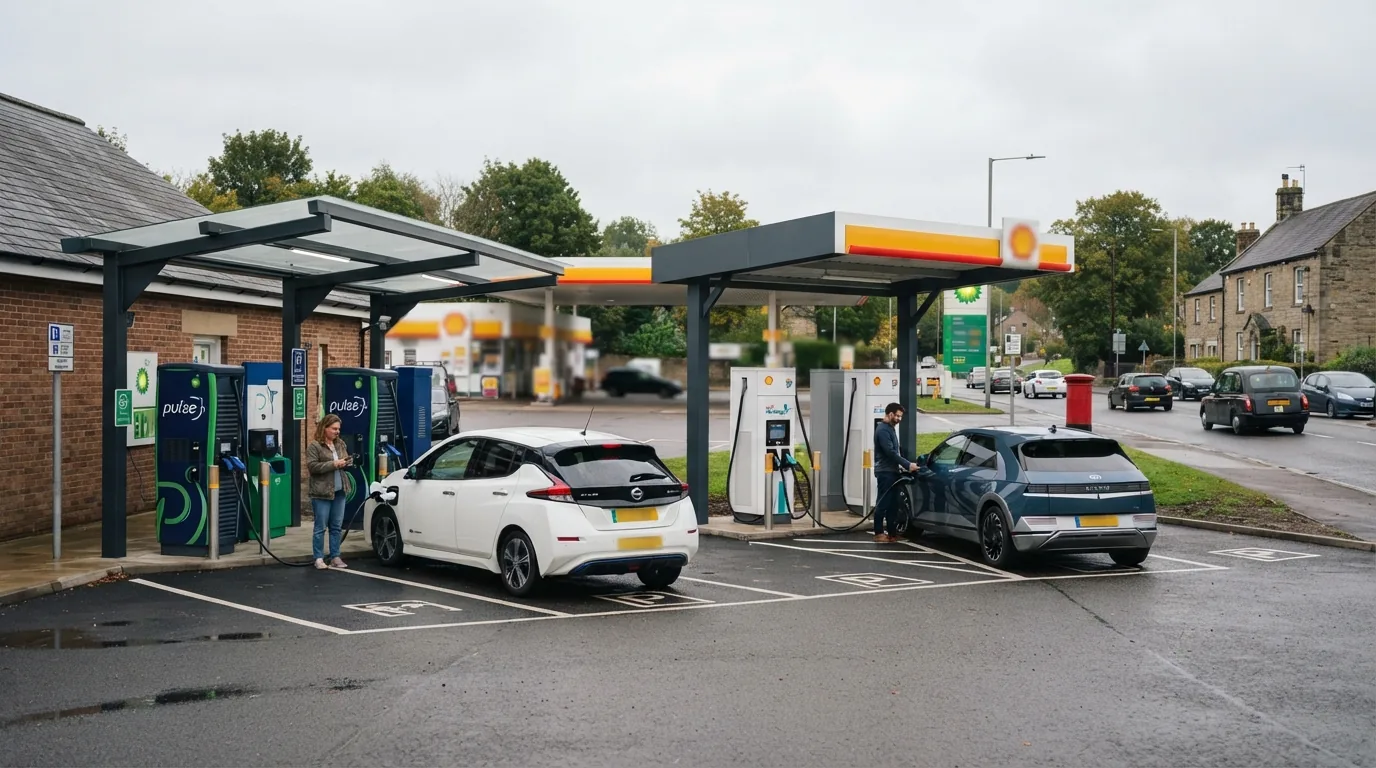
BP Pulse vs Shell Recharge: Which UK Network Wins?
Two of the UK's biggest charging networks compared on price, reliability and which type of driver each suits
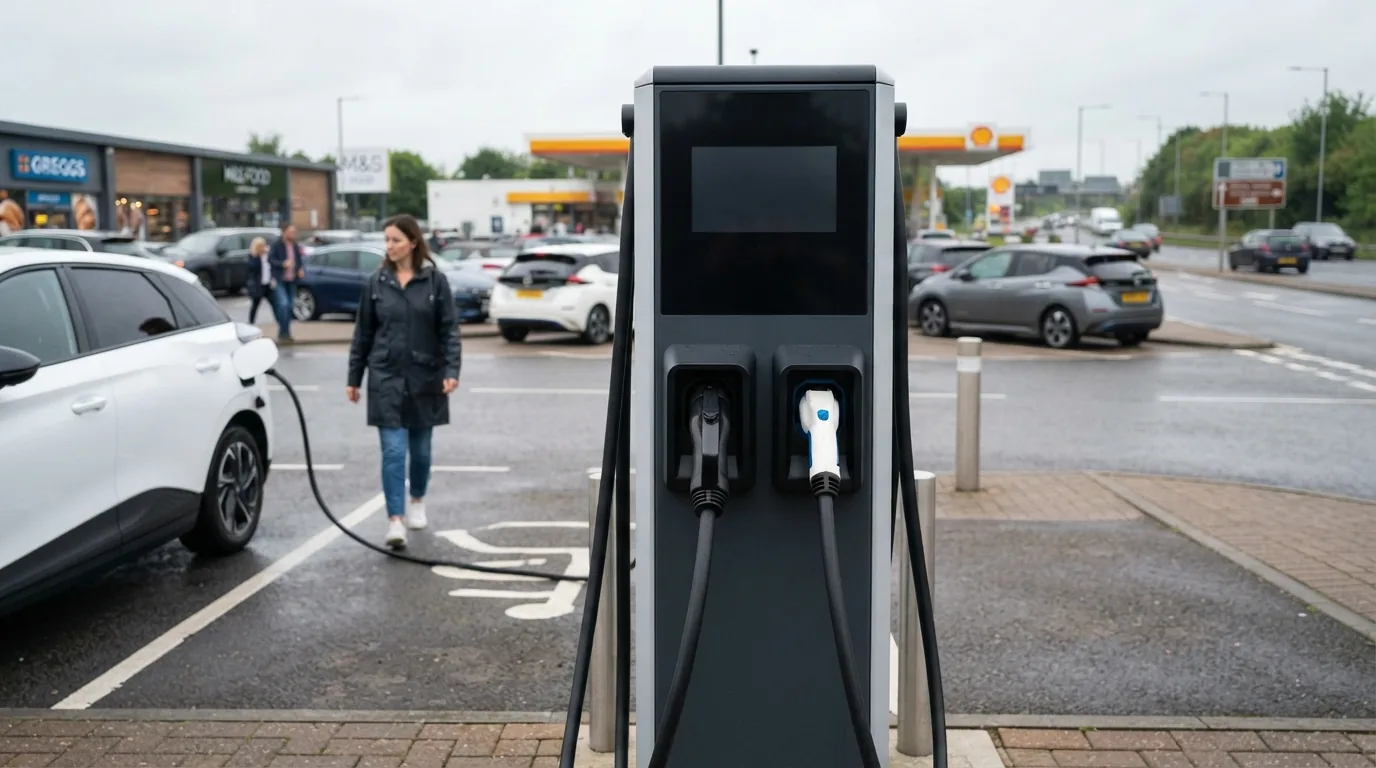
Can You Charge Any EV at Any Public Charger in the UK?
Why almost any new EV works at almost any UK public charger, and the two exceptions you need to know
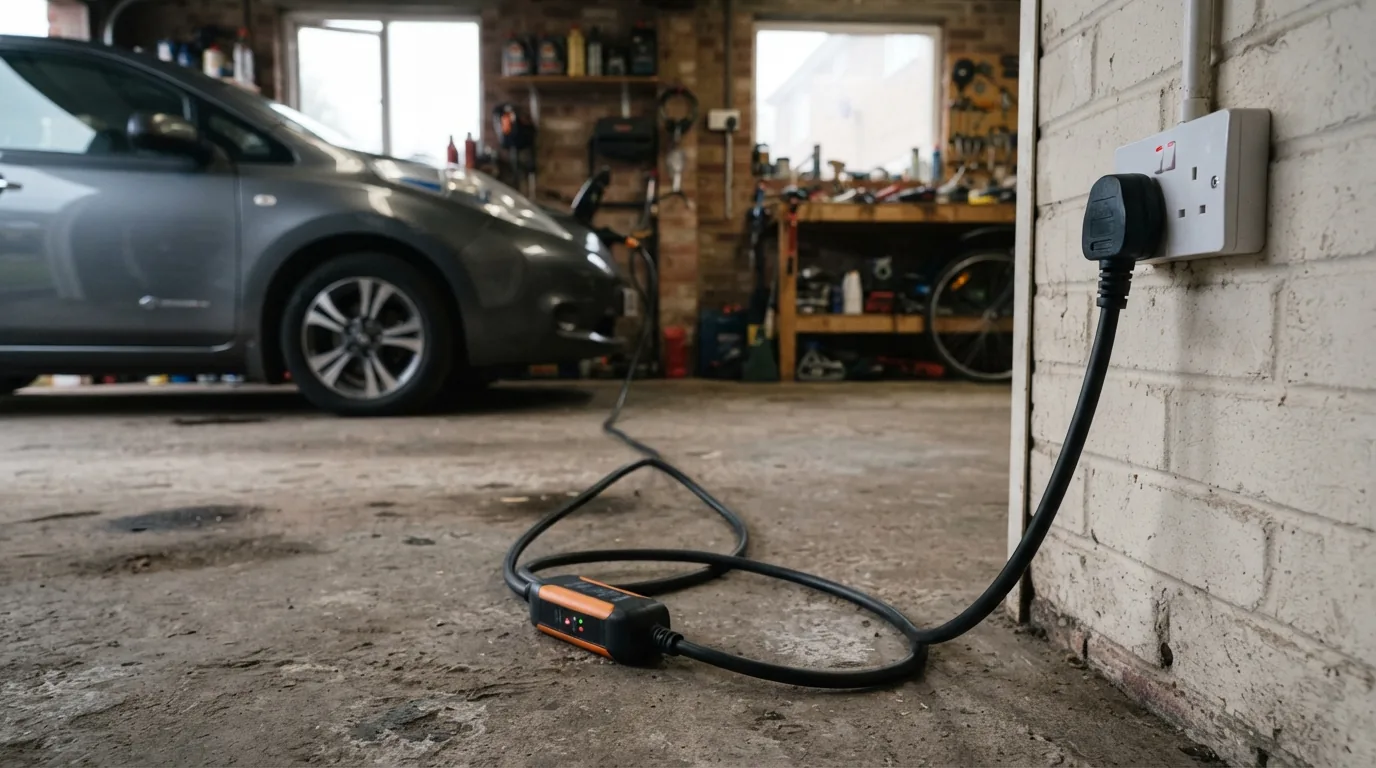
Can You Charge an EV From a Three-Pin Plug in the UK?
Yes, most cars ship with the cable, but speed and safety limits mean it works best for occasional or emergency use