What Size Home EV Charger Do You Need? 7kW vs 22kW Explained
For around 95% of UK homes, a 7kW single-phase charger is the practical maximum and the right choice. This guide explains why, covers the charging maths, and identifies the narrow cases where 11kW or 22kW is worth considering.
Quick answers
- For around 95% of UK homes, a 7kW (32A) single-phase charger is the practical maximum and the right choice (figures vary, verify current data).
- 22kW charging requires a three-phase supply that most homes do not have; a 22kW wallbox on single-phase only delivers around 7kW.
- Your car's onboard AC charger is often the real limit: most EVs cap AC charging at 7.4kW or 11kW, making a 22kW wallbox wasted capacity on them.
- A 7kW charger adds approximately 25 to 30 miles of range per hour and fully charges a typical EV overnight within an off-peak window.
- A three-phase supply upgrade typically costs £3,000 to £5,000 for a standard job, and considerably more for complex cases; G99 approval adds further time and process.
- Choose 11kW or 22kW only if you already have three-phase power, your car supports the higher rate, and you have high daily mileage or multiple EVs to charge.
For around 95% of UK homes, a 7kW (32A) single-phase charger is the practical maximum and the right choice. A 22kW charger needs a three-phase electrical supply that most UK homes do not have, and most electric cars cannot accept 22kW AC anyway. This guide explains why, shows the charging maths, and covers the narrow cases where 11kW or 22kW genuinely makes sense.
What does charger “size” actually mean?
The kilowatt figure on a home charger tells you how much power it can deliver. More power means faster charging. There are three reference points worth knowing:
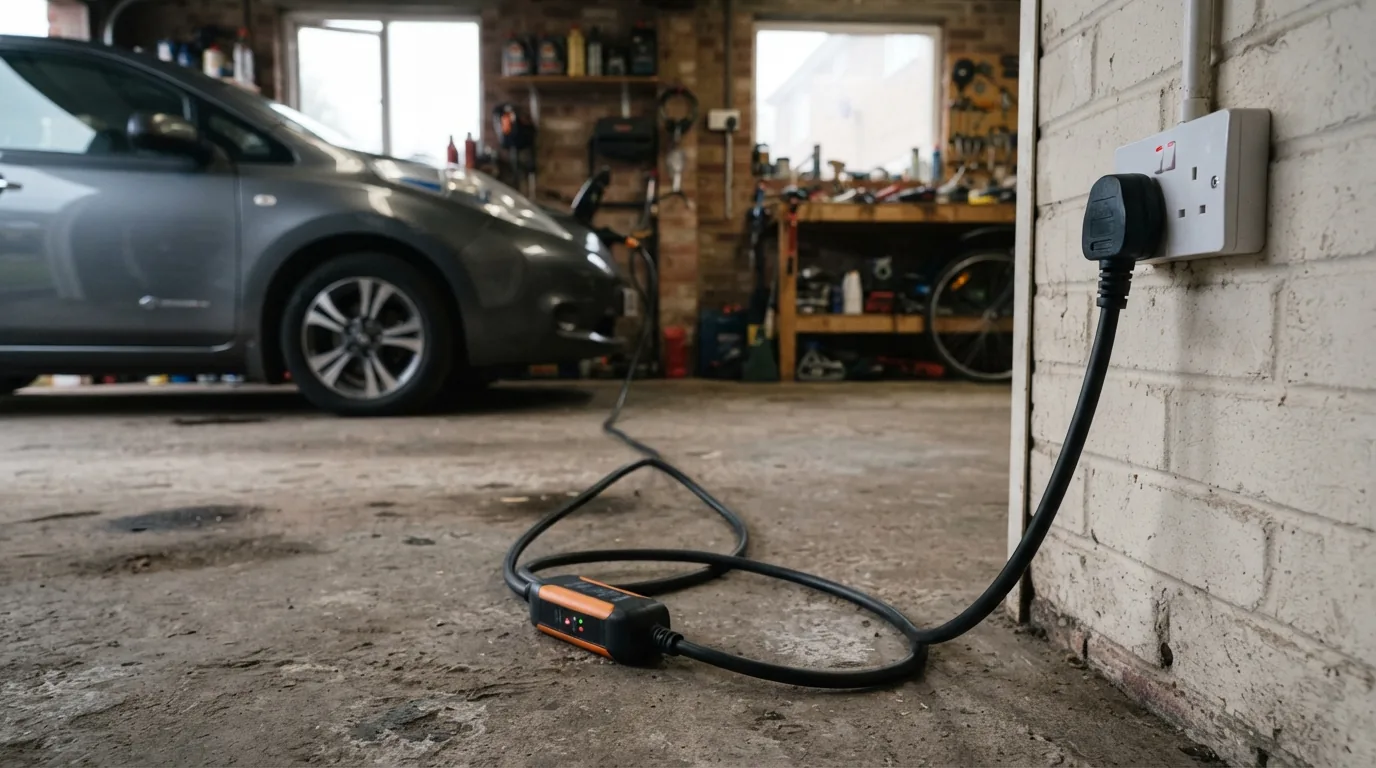
- 3kW (three-pin plug): The slowest option, adding around 8 to 10 miles of range per hour. Fine as a backup, but not a practical daily solution.
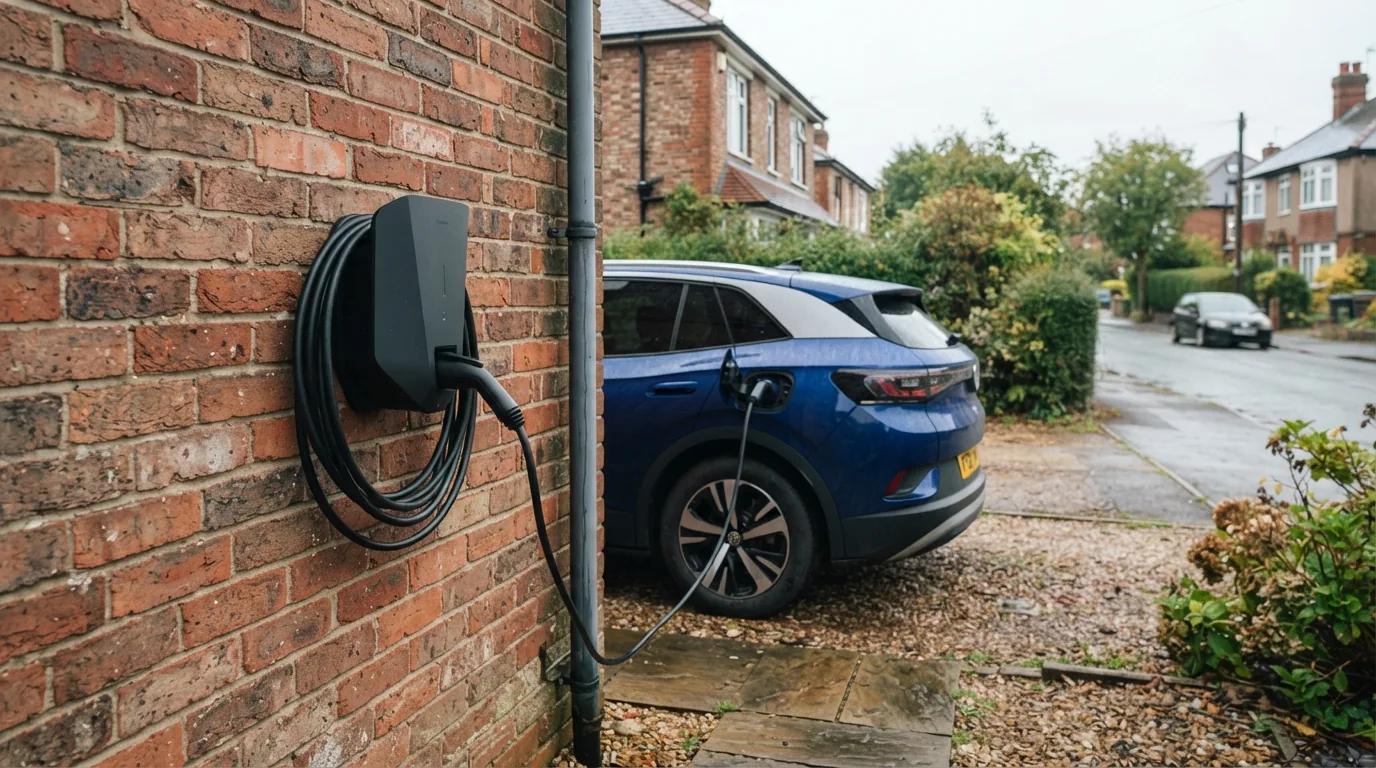
- 7kW (standard home wallbox): The standard for home installations, adding approximately 25 to 30 miles of range per hour. The true maximum on a single-phase 230V supply at 32A is 7.4kW.
- 22kW (three-phase wallbox): Adds roughly 70 to 90 miles of range per hour, but only if both the electrical supply and the car can support that rate.
Bear in mind that all these figures are approximate. Real-world charging speed depends on your car’s efficiency and its own onboard charger limit, which is covered in the next section.
| Charger output | Supply needed | Range added per hour* | Time to add 200 miles* |
|---|---|---|---|
| 3.0 kW (3-pin) | Single-phase | ~8–10 miles | ~20+ hours |
| 7.0–7.4 kW | Single-phase | ~25–30 miles | ~7–8 hours |
| 11 kW | Three-phase | ~40 miles | ~5 hours |
| 22 kW | Three-phase | ~70–90 miles | ~2.5–3 hours |
*Approximate; assumes a typical efficiency of around 3.5 to 4 miles per kWh and that the car’s onboard charger can accept the rate.
Single-phase vs three-phase: why most homes max out at 7kW
The type of electrical supply your home has sets a hard ceiling on charging speed. Around 95% of UK homes are connected to the grid via a single-phase supply (figures vary, verify current data). A single-phase supply uses one live conductor at 230V, which limits an AC home charger to a maximum of approximately 7.4kW at 32A.
Think of it as one lane of traffic versus three. A three-phase supply runs three live conductors simultaneously, which is why it can support 11kW and 22kW AC charging. Three-phase is standard in commercial and industrial premises, but it is rare in ordinary UK housing.
The practical implication is straightforward: buying a 22kW wallbox does not give you 22kW charging unless your home already has three-phase power. A 22kW unit wired to a single-phase supply will only deliver around 7kW, exactly the same as a standard 7kW wallbox, but at considerably greater cost.
If you are weighing up the options when choosing a home EV charger, this is the single most important fact to establish before comparing products.
Your car’s onboard charger is the real limit
Even if your home had a three-phase supply delivering 22kW, that would not mean your car charges at 22kW. Every electric car contains an onboard AC charger (OBC) that converts the AC power from the wallbox into the DC current the battery actually uses. The OBC has its own maximum power rating, and that rating is often lower than what a 22kW wallbox can offer.
Most mainstream electric cars sold in the UK cap their AC charging at 7.4kW or 11kW. Only a small number of models can accept 22kW AC. Fitting a 22kW wallbox to a car with an 11kW OBC means the car charges at 11kW regardless. The extra capacity of the wallbox is simply unused.
The table below shows the maximum AC onboard charger rating for a selection of common models. The single-phase home rate is 7.4kW for all of them, because the home supply is the binding constraint for most UK buyers.
| EV | Max AC onboard charger | Real home rate (single-phase) |
|---|---|---|
| Tesla Model 3 / Model Y | 11 kW (three-phase) | 7.4 kW |
| Typical 2024–26 mainstream EV (VW ID range, Kia EV6, Hyundai Ioniq 5, BMW i4) | 11 kW | 7.4 kW (figures vary, verify current data) |
| Renault Megane E-Tech / Scenic (optional) | 22 kW | 7.4 kW (figures vary, verify current data) |
| Porsche Taycan (optional 22kW) | 22 kW | 7.4 kW (figures vary, verify current data) |
Confirm each model’s specification against the manufacturer’s website before making a purchase decision; specs can change between model years.
The conclusion is clear: for the vast majority of UK drivers, a 7kW wallbox reaches the effective limit of both home supply and car capability. The 11kW models in the table above charge at 7.4kW at home because the single-phase supply caps the rate before the car’s OBC is even a factor.
Does a 7kW charger charge fast enough overnight?
Yes, for almost everyone. The maths are straightforward.
The average UK driver covers around 20 to 30 miles per day. A 7kW charger adds approximately 25 to 30 miles of range per hour, so replacing a typical daily commute takes roughly one hour. Over a standard overnight off-peak window of five to six hours, a 7kW charger delivers around 35 to 42kWh of energy. At typical EV efficiency, that translates to approximately 150 miles of range added, which is enough to fully top up most 60kWh batteries from a low state of charge.
A six-hour off-peak window (of the kind offered by dedicated EV tariffs) delivers around 42kWh at 7kW. A car with an 80kWh usable battery, charged from 20% to 80%, needs 48kWh, so two overnight sessions would cover it comfortably. For anyone driving high daily mileage and needing a faster top-up, a brief evening session before bedtime followed by an overnight charge covers it without any supply upgrade.
Charging overnight on a 7kW unit also aligns neatly with off-peak tariff windows, which is where the real savings sit. For the full breakdown, see what it actually costs to charge an EV at home.
What a three-phase upgrade actually costs
For anyone seriously considering 22kW home charging, the first obstacle is the cost of getting three-phase power to your property. This is not something you arrange with the charger installer; it requires your Distribution Network Operator (DNO) to physically upgrade your incoming supply.
Costs vary considerably depending on property type, distance from the local substation, and how much excavation is required:
- Standard upgrade: approximately £3,000 to £5,000 for a straightforward connection where the infrastructure is close by.
- More complex cases: £5,000 to £10,000 where additional cable runs or groundwork are needed.
- Exceptional cases: £10,000 and above where a transformer upgrade or significant excavation is required.
In addition to cost, a three-phase connection for EV charging at this power level requires G99 approval from your DNO. The G99 process involves a formal application and can take several weeks to several months to complete. There is no guaranteed timeline.
All costs are quote-dependent and vary by region. Get at least two independent quotes from your DNO and a registered electrician before budgeting for this work.
When 22kW (or 11kW) actually makes sense
The case for 22kW home charging is narrow but real. It is worth considering only when all of the following apply:
- You already have a three-phase supply at your property, or you can get one upgraded at a cost that makes financial sense.
- Your car’s onboard AC charger can accept 11kW or 22kW (not just 7.4kW).
- You drive very high daily mileage, meaning overnight 7kW charging is genuinely insufficient to restore a full charge.
- You run multiple EVs sharing a single supply, and you need faster turnaround between charges.
If all four criteria apply, a 22kW unit makes sense. If you meet only some of them, consider whether 11kW is the better middle ground.
11kW as a sensible compromise: For homes that already have three-phase power and cars that cap at 11kW AC, an 11kW wallbox is often the most practical upgrade. It roughly halves charge time compared with 7kW, costs less than a 22kW unit, and matches the capability of most current EVs without wasteful over-specification.
How to check what supply your home has
Before speaking to an installer or requesting quotes, you can check your supply type yourself in under a minute. Do this by inspecting your meter cabinet or consumer unit. You do not need to open any sealed equipment; a visual check is enough.
- Find your main incoming fuse. This is usually in a sealed unit near your electricity meter.
- Count the main fuses or live tails. A single-phase supply has one main fuse, typically rated at 60A, 80A, or 100A. A three-phase supply has three fuses or three separate live cable tails entering the property, each typically rated at 100A.
- Check your consumer unit (fuse box). A three-phase consumer unit will have separate busbars or two distinct sections fed from the different phases.
- If you are unsure: Contact your DNO directly. In England and Wales this is usually one of the large regional operators (UK Power Networks, National Grid Electricity Distribution, Northern Powergrid, and others depending on your area). Most DNOs will confirm your supply type at no charge.
- Ask your charger installer. Any reputable installation company will carry out a free pre-install survey and confirm your supply type before quoting.
Do not attempt to open sealed meter equipment or tamper with the incoming supply. Inspect visually only, and let a qualified electrician or your DNO confirm if you are in any doubt.
The verdict: which size should you choose?
For most UK drivers, the answer is a 7kW wallbox. It charges any current EV overnight, fits within off-peak tariff windows, requires no supply upgrade, and costs a fraction of the three-phase alternative. The table below covers the main scenarios:
| Your situation | Recommended charger |
|---|---|
| Single-phase supply (most UK homes) | 7kW |
| Three-phase supply, car caps at 11kW | 11kW |
| Three-phase supply, car accepts 22kW, very high daily mileage | 22kW |
| Unsure of supply type | 7kW (and book a survey) |
If your situation is straightforward, a 7kW unit is the right call without further investigation. If you believe you have three-phase power, confirm it with your DNO or installer before specifying a higher-rated charger.
For nearly every UK driver, a 7kW charger fully restores the car overnight, fits the off-peak tariff window, and avoids any need for a costly supply upgrade. To compare specific 7kW models and find the right unit for your home, see our guide to choosing a home EV charger.
Useful Resources
- Tesla UK onboard charger specification: tesla.com/en_gb/support/charging/onboard-charger: primary manufacturer source confirming the 11kW AC cap for Model 3 and Model Y.
- EV Tariff: 22kW vs 7kW home charger guide: evtariff.co.uk: detailed competitor guide covering cost tiers, G98/G99 approval, and supply-check steps.
- Energy Saving Trust: charging your electric vehicle: energysavingtrust.org.uk: neutral authority on home charging speeds and overnight adequacy.
- BestChargers: EVs with 11kW AC charging: bestchargers.co.uk/evs-11kw-ac-charging/: reference list of which current EVs accept 11kW AC onboard charging.
How we test and where our numbers come from
Range figures are official WLTP combined values taken from manufacturer UK specification pages, with real-world estimates drawn from independent comparative testing. Prices are UK list prices at the time of the latest update. Tax, grant and charging-scheme figures come from GOV.UK and HMRC publications. We re-check every guide when pricing, specification or policy changes. Last checked 11 August 2026.
Frequently asked questions
Is a 7kW charger enough for home use?
Yes, for almost everyone. A 7kW wallbox adds approximately 25 to 30 miles of range per hour, which means a typical day's driving (20 to 30 miles) is restored in around one hour. Over a standard overnight window, a 7kW charger delivers enough energy to fully charge most EVs from a low battery.
Can a 22kW charger work on a single-phase supply?
No. A 22kW charger connected to a single-phase supply will only deliver around 7kW, because the supply cannot physically provide more than 7.4kW at 32A and 230V. To get 22kW, you need a three-phase supply from your Distribution Network Operator.
How long does a 7kW charger take to fully charge an EV?
For a typical 60kWh battery charged from low (around 10%), a 7kW charger takes roughly eight to nine hours. Most drivers only top up rather than charge from empty, so in practice a two to three hour session covers a typical day's usage. The full charge comfortably fits within an overnight window.
Which EVs can actually charge at 22kW AC?
Very few current models. Most mainstream EVs cap AC charging at 7.4kW or 11kW. A small number of models offer 22kW AC as an option, including certain Renault Megane E-Tech and Scenic variants and the Porsche Taycan with optional equipment (figures vary, verify current data against manufacturer specifications before purchasing).
Do I need three-phase power for a home EV charger?
No, not for a 7kW charger. A standard single-phase domestic supply is perfectly suited to a 7kW wallbox, which is the right choice for the large majority of UK homes. Three-phase power is only needed if you want to charge at 11kW or 22kW, which requires both a three-phase supply upgrade via your DNO and an EV whose onboard charger can accept the higher rate.
Sources and further reading
- evtariff.co.ukEV TariffPrimary source referenced in this article.

EV Compared
The EV Compared editorial team tracks the UK electric vehicle market full time: new model launches, list prices, WLTP and real-world range, public charging tariffs and the tax rules that decide what an EV actually costs to run. Every guide is checked against manufacturer specifications and official GOV.UK figures, and updated whenever the numbers move.
Related reading
View all
BP Pulse vs Shell Recharge: Which UK Network Wins?
Two of the UK's biggest charging networks compared on price, reliability and which type of driver each suits
Can You Charge Any EV at Any Public Charger in the UK?
Why almost any new EV works at almost any UK public charger, and the two exceptions you need to know
Can You Charge an EV From a Three-Pin Plug in the UK?
Yes, most cars ship with the cable, but speed and safety limits mean it works best for occasional or emergency use